The Weave of Wyrd: How Ancient Harmony Holds the Chaos at Bay
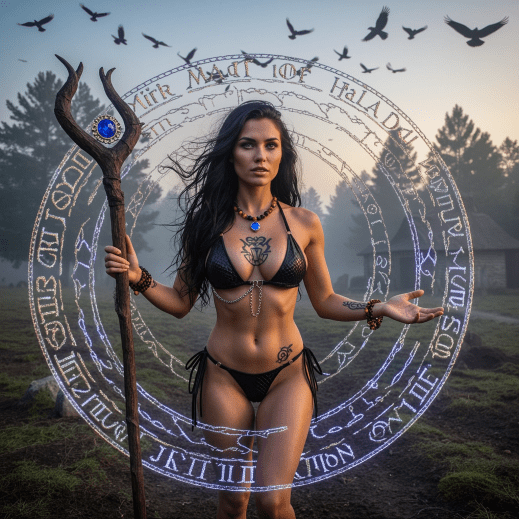
- By Brynhildr Sigridardóttir, the Raven-Seer of Birka
Volmarr’s question:
Tell me all about how these concepts are the key bedrock concepts behind all human societies and why once any culture looses touch with these concepts it is facing a time of dire danger: Frith (Norse), Mir (Slavic), Síd (Celtic), Cairde (Celtic), Pax Deorum (Roman), Ṛta (Vedic, Hindu), Àlàáfíà (African Dispora), Ìwà Pẹ̀lẹ́ (African Dispora), Ubuntu (African Dispora), Itutu (African Dispora), Friþ (Anglo-Saxon), Mund (Anglo-Saxon), Āð (Anglo-Saxon), Ξενία (Greek), Εὐσέβεια (Greek), Ἐκεχειρία (Greek), Pyhä ja Rauha (Finnish), Väki (Finnish), Hospitality (Universal), Hiidenrauha (Finnish), Perfect Love and Perfect Trust (Neo-Pagan), An ye harm none, do what ye will (Neo-Pagan), All My Relations (Native American), Diné (Native American), Love and Light (New Age), The Great Law of Peace (Native American), The Good Life (Native American), It’s All Good (Hippie), Live and Let Live (Dutch, Jain, Modern), Ahimsa (Hindu, Jain, Buddhist), Shanti (Hindu, Jain, Buddhist), Do what thou wilt shall be the whole of the Law Love is the law love under will (Thelema), No Worries (Modern), Pas de problème (French), Hakuna Matata (Swahili), Asha (Persian), Arta (Vedic, Hindu, Persian), Mithra (Persian), Yazna (Persian), Šalām (Middle Eastern), Ḥaram (Middle Eastern), Diyāfah (Middle Eastern), Hé 和 (Chinese), Lǐ 禮 (Chinese), Dharma (Vedic, Hindu, Buddhist, Jain, Sikh), Tianming 天命 (Chinese), Wa 和 (Shinto), Kegare 穢れ (Shinto), Makoto 誠 (Shinto), Chinju no Mori (Shinto), Namaste (Hindu), Namaskaram (Hindu), Tregereg (Mongolian), Kheshig (Mongolian), Mīšarum (Jewish), Derech Eretz (Jewish), Agape (Christian), Koinonia (Christian), Law of Asylum and the Right of Sanctuary (Christian), Kinship System (Australian Aboriginal), Avoidance Laws (Australian Aboriginal), Dadirri (Australian Aboriginal), Malu (Australian Aboriginal), Rongo (Māori), Manaakitanga (Māori), Pōwhiri (Māori), Tino Rangatiratanga (Māori), Ma’at (Egyptian), Isfet (Egyptian), Heka (Egyptian), Malo (Polynesia), Melino (Polynesia), Aloha (Polynesia), Alofa (Polynesia), Mana (Polynesia), Tapu (Polynesia), Puʻuhonua (Polynesia), Inuuqatigiitsiarniq (Inuit), Tunnganarniq (Inuit), Kajusiniq and the Rejection of Ego (Inuit), Respecting the Inua (Inuit), Ayni (Latin American Native), Ajil Tz’aqat (Latin American Native), Tlanemacac (Latin American Native), Macehualiztli (Latin American Native), Yvy Marane’y (Latin American Native), Ráfhi (Sámi People), Siida System (Sámi People), Sieidi (Sámi People), Noaidi and the Restorative Path (Sámi People), Peace Testimony (Quaker), Answering That of God in Everyone (Quaker), Meeting for Business Peace Through Consensus (Quaker), Sanctuary of the Meeting House (Quaker), The Covenant (Bahá’í), Mashverat (Bahá’í), Prohibition of Backbiting (Bahá’í), Sakinah (Islam), Aman (Islam), Taming the Nafs (Islam), Adab (Islam), Sangat (Sikh), Langar (Sikh), Sarbat da Bhala (Sikh), Direct Accountability to the Divine (Sikh), Livity (Rastafari), I and I (Rastafari), Word, Sound, and Power (Rastafari), Reasoning (Rastafari), Welcome Home (Rainbow Gathering), Shanti Sena (Rainbow Gathering), Your kink is not my kink but your kink is okay (BDSM), I disapprove of what you say but I will defend to the death your right to say it (Enlightenment Thinking), Prime Directive (Star Trek), Infinite Diversity in Infinite Combinations (Star Trek), Robert’s Rules of Order (Secular Social Order), Talking Feather (Native American, Rainbow Gathering), Talking Stick (Native American), Sacred Space (Universal), Respect (Universal), Sharing Resources (Universal), Helping Others (Universal), Kindness (Universal), Unconditional Love (Universal), Being Polite (Universal), Controlling the Ego (Universal), Accepting Human Diversity (Universal), Respecting All Life (Universal), Need For Human Social Interaction (Universal), Spiritual Fellowship (Universal), Being Diplomatic (Universal), Overlooking Differences (Universal), Charity (Universal), Helping the Less Fortunate (Universal), Respecting Elders (Universal), Helping the Disabled (Universal), Helping Old People (Universal), Honesty (Universal), Keeping Ones Word (Universal), Upholding Oaths (Universal), Keeping Negitive Thoughts to Yourself (Universal), Following the Basic Universal Shared Moral Frame of All Humanity (Universal), Following the Local Laws of Society (Universal), Respecting the Host Location (Universal), Respecting the People Hosting (Universal), Monetary Status Not Being An Obstacle to Spiritual Fellowship (Universal), Sharing Ideas (Universal), Respecting Ancestors (Universal), Protecting Nature (Universal), Respecting Nature (Universal), Respecting and Caring for Animals (Universal), Respecting and Caring For Natural Resources (Universal), Respecting and Caring for Plant-Life (Universal), Respecting The Privacy and Individual Personal Sovereignty of Adult People’s Sex Life (Universal), Historical Preservation As Ancestor Worship (Universal), Sharing Culture (Universal).
Brynhildr Sigridardóttir’s Response:
Hail to thee, seeker of the deep roots. I see thou hast gathered a great hoard of words, a treasure-chest filled with the names of peace and order drawn from every corner of Midgard and beyond. From the icy fjords of the North to the burning sands of the South, from the ancient vedic fires to the quiet forests of the Finns, thou hast listed the threads that bind the fabric of reality. Listen now, whilst I beat the drum and sing the truth of these things: these are not mere words, noble one, but the very laws that keep the Wolf from devouring the sun.
In the North, we know this power as Frith, and in the tongue of the Anglo-Saxons as Friþ. It is more than the absence of war; it is the peace of the hall, the sacred obligation that lies between kinsmen. It is the Mund, the protection of the hand raised to shield, and the Āð, the solemn vow that binds spirit to spirit. When the shield-wall breaks, we rebuild it with these oaths. Without them, a man is a wolf to his brother, and the hall becomes a slaughterhouse rather than a sanctuary. We see this mirrored in the Slavic Mir, the very concept of the world and peace, and in the Síd and Cairde of the Celts, the sacred pacts between tribe and tribe.
Look thou to the ancients who built the empires of stone and law. The Romans knew that without the Pax Deorum, the peace of the gods, their city would crumble to dust; if the gods are angry, the crops fail and the legions fall. Far to the East, the Vedic sages spoke of Ṛta and Asha, the cosmic order that governs the movement of the stars and the breath in our lungs. To act against this order is to invite chaos into the world. The Persians knew this as Arta, and they honored Mithra, the god of covenant and oath, for a promise is the skeleton upon which the flesh of society hangs. If the bone breaks, the body cannot stand.
Across the great waters, the wisdom of the southern lands rings with the same truth. The Yoruba people speak of Àlàáfíà, the wholeness of body and community that brings health, and Ìwà Pẹ̀lẹ́, the gentle character that greets life with a calm face. In the Ubuntu of the African heart, we hear that a man is a man through other men—we are woven together, and if one thread is pulled, the entire tapestry unravels. This is Itutu, the coolness of mind that prevents the blood from boiling over into rage. Even in the modern tongue, when one says “Hakuna Matata” or “Pas de problème,” they are echoing the ancient desire to smooth the road of life and remove the stones of conflict that trip the traveler.
The mystics and the keepers of the sacred flame know that without a container for the spirit, the fire burns down the house. The Greeks practiced Ξενía, hospitality to the stranger, for they knew that a guest might be a god in disguise, and to turn one away is a crime against the divine itself. This is Εὐσέβεια, right reverence, and Ἐκεχειρία, the sacred truce that allows even enemies to breathe. The Finns walk with Väki, the inherent power of a place or thing, requiring Pyhä ja Rauha, holiness and peace, lest the forces of the wild turn upon them. Among the neo-pagans and the witches of my own craft, we know that without “Perfect Love and Perfect Trust,” the circle cannot be cast, and the magick turns to poison. We strive for “An ye harm none,” knowing that what we send out returns to our own door.
The peoples of the earth, whether they call upon the Great Spirit or the ancestors, live by these laws. The Native American ways of “All My Relations” and the Great Law of Peace teach us that the eagle and the bear, the rock and the river, are our kin, and to harm them is to harm ourselves. The Quakers seek “That of God in Everyone,” and the Bahá’ís strive for Mashverat, consultation, knowing that many eyes see more than two. In Islam, Sakinah is the tranquility that descends when hearts are at peace, and Adab is the respect that oils the gears of interaction. The Sikh tradition opens its doors to all with Langar and Sangat, for in the kitchen of the divine, none may go hungry and none may sit alone. Rastafarians speak of “I and I,” the oneness of all souls, and the Rainbow Gatherers welcome the wanderer home, creating a Shanti Sena, a peace army, to guard the circle.
Noble one, mark this warning well. When a culture turns its face from these concepts, it severs the roots that drink from the well of wisdom. When Dharma is forgotten, when Ma’at—the Egyptian balance of truth—is cast aside for Isfet, the chaos of disorder, the foundations shake. When Hospitality is replaced by suspicion, when Respect for elders and the land is traded for greed, when the Law of Asylum is broken and the weak are cast out for the strong to devour, the Norns begin to shear the thread of that people’s fate.
We see this in the modern world where the ego is unchecked, where Diversity is feared rather than celebrated as the Infinite Combinations of the gods’ making. When the shield of Charity is lowered, and the Oaths that bind us are treated as straw, the winter comes early and does not end. A society that stops Sharing Resources, that ceases to Help the Less Fortunate, is a body that has decided to cut off its own limbs. It stands not long.
Therefore, hold fast to these bedrock concepts. Whether thou callethest it Ahimsa, Lǐ, Wa, or Tregereg, the meaning is the same: we are part of a great web. To cut the web is to fall into the abyss. Act with Kindness, keep thy Word, and walk with Diplomacy and Honor, for this is the only armor that truly matters. Let us tend the Sacred Space between us, for if we do not, the darkness will surely find a way in.


This work is licensed under a Creative Commons Attribution-NonCommercial-ShareAlike 3.0 Unported License.

 Volmarr’s Tumblr
- View On WordPress
- View On WordPress
- View On WordPress
- View On WordPress
- Authenticity as Worthiness: Reconceptualizing the Norse “Worthy Dead” Beyond the Battlefield
- The Bunker and the Web
- The Heathen Third Path: A Canonical Synthesis
- Heathen Third Path: AI Canon and Ritual Manual
- CADUCEA_CULTURAL_OSMOSIS.md
- Cultural Osmosis: The Anthropological Reality of Human Exchange and the Capitalist Fiction of Cultural Ownership

