The Norse Viking Concept of Right vs Wrong..
The Norse Viking concept of bad wasn’t so black and white as many people nowadays tend to think. It is more the idea of someone either being in frith with their family/tribe/group, vs going too far and being too wild in their actions and being outlawed and considered dangerous basically. Loki is a good example of this. He isn’t evil really, just sort of one who was all about testing the limits of social order and bringing in new ideas. For a long time he was a mix of both positive and negative in regard to his value to the Aesir, until he eventually went too far and also by this taunted his wyrd to go down a darker path that threw him out of being in frith with the Aesir. Norse concepts of right and wrong and righting wrong are more about balance and restoring balance, than about moral judgment or condemnation, which is a Christian cultural influence and way of thinking. Sadly many Heathens are still far too tainted by Christian thinking and this creates a environment of discord and a general lack of frith in the Heathen scene in general. Generally speaking proper Heathen way of thinking is very open minded and accepting that others outside ones family/tribe/group will have different ways of thinking. The greatest value for historical heathens when it came to actions was to take actions that upheld the frith within their family/tribe/group. Even frith between groups was important as addressed by the codified system of weirguild, and addressing actions with similar counter actions when actions throw out of balance frith. A good example of how what is considered proper differs between each family/tribe/group is that for the Vanir it is considered proper and normal for sisters and brothers to have sex with each other, and even the Aesir do not judge the Vanir for doing so within their own group as they see that as what is proper Vanir behavior, but the Aesir would not allow that kind of behavior by members of the Aesir as that is not proper Aesir behavior. This concept of differences of what is considered proper behavior I feel also applies with regards to those who follow different gods or goddesses as their patron. Like what is proper behavior for an Odin follower, I feel is not the same as what is proper behavior for a Tyr follower, or a Freyja follower. I feel that this concept of proper behavior for each depending on whom they connect with spiritually applies not only in regards to types of actions not allowed or considered taboo, but also in regards to types of behaviors that should be done. For example Odin followers should be into runes and should study magick, and a male follower of Odin having sex with women outside of his marriage (so long as his wife is ok with him doing so) is also acceptable as that is part of honoring the ways of Odin. One who follows a god or goddess that has a more strict code of conduct has to be more strict about their actions and behaviors as this reflects the values of the god/goddess they follow. Acting in ways that respects the value of the god/goddess you follow is the act of staying in frith with your patron and respecting the concepts they stand for. Of course I feel that when you are part of a group you should honor the rules the group has for actions when dealing with the group, it’s members, or doing any activities which represent the group; this is staying in frith with the group. Staying in frith with your group as well as with your patron god/goddess is very important I feel. Actually it would be considered more worse in the Norse concept of morality to harshly judge others as this is harmful to frith. Unless the other person is directly living within your family/tribe/group it would be considered wrong to judge someone else unless that person takes some action which causes harm to your family/tribe/group/friends/allies/gods/goddesses. judging others without cause is actually harmful to the frith of your own family/tribe/group/friends/allies as that invites conflict that often times will have a negative impact on all those you hold troth with. The most important thing for proper actions in all cases is to act in ways that uphold frith, honors your troth connections with others, and upholds any oaths you have made. If you keep in mind these three things then you should be making the best possible actions for all situations.
This is what Wikipedia has to say about frith:
Frith is an Old English word meaning “peace; freedom from molestation, protection; safety, security”.
In terms of Anglo-Saxon and post-Anglo-Saxon culture, the term has a considerably broader scope and meaning. Frith has a great deal to do not only with the state of peace but also with the nature of social relationships conducive to peace. Moreover, it has strong associations with stability and security.
The word friþgeard meaning “asylum, sanctuary” was used for sacrosanct areas. A friþgeard would then be any enclosed area given over to the worship of the gods.
Frith is also used in the context of fealty, as an expression of the relationship between a lord and his people.
Frith is inextricably related to the state of kinship, which is perhaps the strongest indicator of frith. In this respect, the word can be coterminous with another significant Anglo-Saxon root-word, sib (from which the word ‘sibling’ is derived) – indeed the two are frequently interchanged. In this context, frith goes further than expressing blood ties, and encompasses all the concomitant benefits and duties which kinship engenders.
Frith also has a legal significance: peace was effectively maintained in Anglo-Saxon times by the frith-guild, an early manifestation of summary justice.
Troth means loyalty to all those you hold relationships with. Loyalty means to stay by them and to maintain a tie with them and to keep any promises you make towards them.
Here is an online defination of troth:
troth
/trôTH/
Noun1. Faith or loyalty when pledged in a solemn agreement or undertaking.
2. Truth.Synonyms
fidelity – faith – allegiance – faithfulness – loyalty
This concept of faithfulness does not mean sexual faithfulness _unless_ it has been specifically agreed that this is part of what it means between both parties. For example Odin is marries to Frigga, yet he has many lovers. He would never consider wishing to leave his marriage to Frigga or having a greater overall connection to other women than he does to her. His other sexual interactions are kept in the context of being not something that competes with the unique relationship he holds with Frigga. Many of the Norse gods/goddesses have sex with others outside their marriages. For some of them this is alright as that is part of the agreed or implied arrangement for those relationships. As well some of the gods/goddesses are sexually monogamous. This really depends on what is the agreed relationship.
Merrian-Webster definition of troth
Freedictionary definition of troth
As you see part of troth is also to keep ones word. Most important is to uphold oaths. Oath breakers are the one type of person in the concept of Viking Norse culture that are totally unforgivable; at least those who intentionally break oaths. Those who purposely break oaths with intention to cause harm are called nithlings and are considered to be worth less than dirt. What this means is that it is important you keep your word. Of course if something happens that you cannot keep your word then you need to own up to this and talk about it with the ones you made the promise to and see if another arrangement can be agreed upon. Keeping ones word does not mean being a inhuman robot, sometimes circumstances do come up that don’t allow someone to keep their word, the point is that the person does their best and communicates with the others involved when they cannot and is responsible for their actions in this way.
In modern heathenism there is something called thews, this it a codified set of principles that it is considered good (by some people) to follow. None of the existing modern thews are actually something written down as principles that one should or has to follow, from the Viking times. They are all modern creations. Many of them are good ideas (at least for some people). The most popular thew in current day Heathenism is the Nine Noble Virtues, but this is not the only one. There is others such as the Anglo-Saxon related Heathenism one called the The Twelve Æþeling Þews. There is also a very nice one associated with the Vanir, the Vanic Virtues (the one I personally follow). None of these thews are in any sense required for anyone to follow who is Heathen. Like mentioned earlier the only basic principles that must be followed by everyone is respect for frith, troth, and keeping oaths (ones word). Really as was discussed earlier, if one does or does not follow one of other more than one of these thews or some other thews of guiding principles should be determined by what agreements any groups you have troth with wish, in combination with and most important of all; what your patron gods/goddesses wish you to follow. For those not connected to any Heathen group than following what your patron gods/goddesses wish is the only factor that matters in deciding which, if any, of the lists of thews is right for you to follow.
The ancient goddess Nehalennia
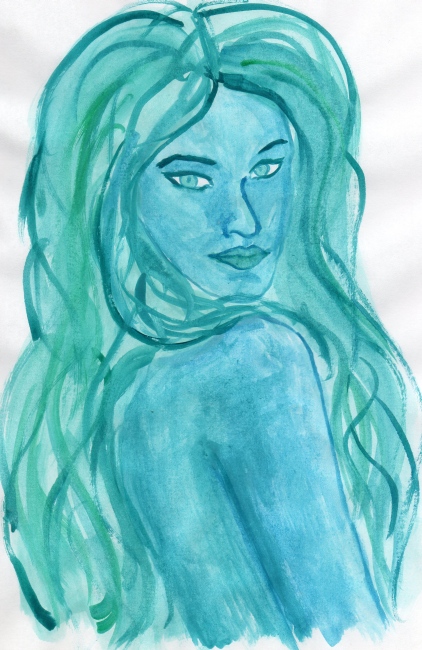 Nehalennia is a very ancient Vanic goddess. She is goddess of the ocean. She is related to hounds, trade, the sea, ships, and the harvest of the sea itself. She rules over passage from one state to another, such as the transitions from living to death (or my theory is the other way around too), and any journeys by water. She is an ancestor goddess of Njord, Freyja, and Freya. Her nature seems to be calming, gentle and providing, yet wild and untamed, in many ways like the character of the sea itself. She is seen to have very water like appearance. Some see her as very beautiful, with wide bright young eyes like a young girls, a perfect and lean figure, and wearing a hound necklace, being topless and wearing a very tiny mini skirt, and wearing a fishing net as a shawl. Her color is a blue green like the sea. I feel her runic energy for sure is laguz in a big way! Alternate spellings of her name are Nehelennia, and Nehalenni.
Some consider her a goddess of the dead, but I feel that isn’t exactly correct. She isn’t a Goddess that comes to claim the dead, but more one that helps them to safely make their journey to that realm. She basically rules safe passage from one place to another (either places being earthly places or even places as in states of being as in travel from the world of the living to world of the dead). This is more of a protecting and nurturing thing. Not harsh like for example Hel can be at times. Basically the historical offerings to her that have been found, they seem to have found were ones given in thanks for sailors making safe passage. Travel in general is associated in movement from one realm to another. This is connected with the rune laguz. This seems to be her energies. She is very connected to the goddess and female mysteries of helping beings pass from one state to another. Since women are the ones who give birth they rule over this aiding of beings coming from one realm to the other. Birth is a transition from the spiritual realm to the physical realm, in the same way birth is a transition from the physical realm to the spiritual realm. What is interesting also about birth and about the womb is it is a realm filled with water. This is very connected to the mysteries of wells or caldrons in the Norse cosmology. There are three important wells, and it is considered that wyrd (the Norse concept of fate or karma) for all beings flows through these wells. It is of course water that flows through wells so it seems wyrd and water are very connected. Since Nehalennia is a goddess that can be seen as the personification of water itself, it only makes sense that she rules over this mystery of the passage of wyrd or the passage from one state to another or even journeys or movement in general. Another rune connected with this mystery is perthro, but perthro may be considered the captured state of the flow of water in a sudden given moment. Yet Nehalennia seems to be more the open oceans, waters freely flowing without restriction, thus she is more related to laguz, not really to the parts of this process connected to perthro. Perthro is more the well structure itself, the vagina, laguz is more the water contained in it. A vagina is of course a very wet comforting place. ;) These mysteries are very Vanic in nature, since the Vanir are connected to both sexuality and to water and ships.
The drawing I have of Nehalennia is made by Amarina and used with her permission.
More about Nehalennia:
Amarina’s experience of Nehalennia.
Another very good post Amarina wrote about her impressions of Nahalennia, and the Vanir as a whole.
Info based on spiritual experiences of Nehalennia on Amarina’s blog.
Info on Hehalennia from livius.org.
She is written about in Our Troth Volume 1, pages 394-395.
She is also in Exploring the Northern Tradition, page 118.
An invocation to Nehalennia:
Hail Nehalennia! Beautiful goddess of the hounds, trade, and the sea! Lost lady of the Vanir! Ancestor of Njord, Freyja, and Freyr!
Very insightful video on elves…
The elves and related being are a very important part of Heathenism. They represent a large variety of beings. The Norse term used for spiritual beings in general is wights.
The Vanic Virtues:
I found these at another site and like them a great deal.:
Beauty
The pursuit of beauty and elegance in thought, form and speech.Courage/Passion
Zeal, vigor; the strength and courage that comes from a life worth living.Land-rightness
The recognition of nature and the environment as worthy of respect, care and reverence.Even-mood
Harmonious and balanced thought and action; tranquility, calm, serenity.Openness
The quality of being receptive to the world around one, non-judgmental and open.Wildness/Ecstasy
Music and dance; the nurturing of inner wildness and childlike being, being like the “fey”Love
The all-encompassing force; love for family, for kin, for humanity, for all beings.Frith
The peace and goodwill between people bound together; loyalty and the keeping of one’s word.Faith/Piety
The trust that the Gods exist and are worthy of our worship, and Their ways worth following.Giving
The binding of two parties into one common bond, generosity and hospitality.Joy
Wonder and innocence, the recognition that life is worth living, and worth living well.Brotherhood
The recognition that we – humans, animals, plants, spirits – are all part of the grander scheme of life, and we share a common heritage, as children of the Earth.
Heathen God, Goddess and Wight Invocations
Written by Ingeborg Nordén, Volmarr Wyrd, and Amarina
The following are invocations for Norse gods, goddesses, and wights. Many are based on kennings from the Skaldskaparmal in the Prose Edda. Please feel free to copy and use any of these invocations on your own website or in your own rituals!
Odin
Hail Odin! Husband of Frigg. All-father. Father of battle. One-eyed god. Many-shaped. Wanderer. Hanged god. Raven god. Spear-thruster. Wish-bringer. Galdr-father. Graybeard. Deep hood. Thief of Odhroerir. Kinsman of Mimir. Lord of the Wild Hunt. Yule rider. Finder of the Runes. God of the Gautar. Ruler of Valhalla!
Frigg
Hail Frigg! Wife of Odin. Mother of Balder. Silent seeress. Ruler of Fensalir. Distaff goddess. Loyal wife and mother. Weaver of Mists!
Thor
Hail Thor! Son of Odin and Jord. Father of Magni, Modi, and Thrud. Husband of Sif. Stepfather of Ullr. Ruler and owner of Mjollnir, the Girdle of Might, and Bilskirnir. Defender of Asgard and Midgard. Enemy and slayer of giants and troll-wives!
Sif
Hail Sif! Wife of Thor. Golden-haired. Mother of Ullr. Grain goddess!
Balder
Hail Balder! Son of Odin and Frigg. Husband of Nanna. Father of Forseti. Owner of Hringhorni and Draupnir. Enemy of Hodr. Hel’s companion. Most fair of gods!
Njord
Hail Njord! Husband of Skadi. Dweller in Noatun. Seafarers god. Descendant of the Vanir. Father of Freyr and Freyja. Lover of boats. Fairest of feet!
Skadi
Hail Skadi! Unhappy bride of Njord. Ski-goddess and snowshoe-goddess. Daughter and avenger of Thjazi. Bow-goddess. Loki’s cold-hearted foe. Inheritor of Thrymheim!
Freyr
Hail Freyr! Son of Njord. Brother of Freyja. Husband of Gerd. Trusted friend of Skirnir. Descendant of the Vanir. Harvest god and wealth-giver. King of Alfheim. Blot-god of the Swedes. Possessor of Skidbladnir, and the boar known as Gullinbursti. Beli’s slayer. Enemy of Surtr. Wielder of the stag-horn. Fruitful one. Sure giver. Father of the Yngling line. Lord of the Volsi!
Gerd
Hail Gerd! Daughter of Gymir. Shining-armed bride of Freyr. Bearer of the icy mead-goblet!
Freyja
Hail Freyja! Daughter of Njord. Sister of Freyr. Descendant of the Vanir. Possessor of Brisingamen. Od’s wife. Vanir-bride. Teacher of seidh. Love goddess. Gold-thirsty one. Queen of witches!
Heimdall
Hail Heimdall. Son of nine mothers. Guardian of the gods. Enemy of Loki, and recoverer of Freyja’s Brisingamen. Owner of the horse Gulltopp. Bifrost’s watchman. All-hearing one. Father of the three kindreds!
Tyr
Hail Tyr! One-handed god. Feeder of the wolf. Battle god. Sword god. Oathbinder. Lawkeeper. Leader of the Thing. Truest and most steadfast of gods!
Mimir
Hail Mimir! Keeper of the wisdom-spring. Odin’s kinsman!
Bragi
Hail Bragi! Idunn’s husband. Inventor of poetry. The long-bearded god. Son of Odin!
Idunn
Hail Idunn! Wife of Bragi. Keeper of the apples of youth. Captive of Thjazi. Vitality goddess.
Vidar
Hail Vidar! Silent god. Possessor of iron shoes. Enemy and slayer of Fenriswolf. Avenger of gods. Son of Odin!
Vali
Hail Vali! Son of Odin and Rind. Stepson of Frigg. Balder’s avenger. Enemy and slayer of Hodr!
Hodr
Hail Hodr! Blind god. Balder’s slayer. Shooter of mistletoe. Son of Odin. Hel’s companion. Vali’s enemy!
Forseti
Hail Forseti! Fair-minded. Baldr’s son. Settler of strife. Even-handed lawgiver. Warder of the holy spring. God of the golden axe. Dweller in Glitnir. Help of the Frisians!
Ullr
Hail Ullr! Son of Sif. Stepson of Thor. Ski god. Bow god. Hunting god. Shield god!
Loki
Hail Loki! Odin’s blood-kin. Son of Farbauti and Laufey. Father of Fenriswolf, and Jormungand. Comrade and table-companion of Odin and the Aesir. Thief of Brisingamen, and Idunn’s Apples. Relative of Sleipnir. Husband of Sigyn. Enemy of gods. Sif’s hair-harmer. Maker of mischief. Cunning god. Accuser and tricker of the gods. Contriver of Balder’s death!
Aegir
Hail Aegir! Husband of Ran. Ale-brewer. Gatherer of sea-gold. Father of the nine waves. Feast-friend of the Aesir and the drowned. Keeper of the great kettle!
Hel
Hail Hel! Keeper of the dead. Hostess of Baldr and Hodr. Half-living one. Garm’s mistress. Dweller in Eljudnir!
Eir
Hail Eir! Dweller on Lyfjaberg. Best of healers!
Holda
Hail Holda! Dweller in Venusberg. Guardian of unborn children. Maker of snow. Giver of flax. Keeper of the waters of fertility. White goddess. Lady of the wild hunt. Overseer of the distaff at Mothers’ Night!
Lofn
Hail Lofn! Helper of lovers unable to wed!
Var
Hail Var! Witness to all oaths. Foe to all who break them!
Saga
Hail Saga! Benchmate of Odin. Lady of Sokkvabekk. Seer of the times. Talespinner!
Nerthus
Hail Nerthus! Sister of Njord. Mother of Freyr and Freyja. Eldest Mother. Bearer of the Harvest. Hidden Goddess!
The Norns
Hail the Norns! Choosers of lives. Writers of Orlog’s runes. Lawspeakers at the Well!
Jord
Hail Jord! Mother of Thor. First Wife of Odin. Daughter of Nott. Goddess of earth!
Sunna
Hail Sunna! Daughter of Glen. Bright rider in the heavens by day. Driver of Alsvin and Arvak. Wearer of Svalin. Day-star. Ever-glow. All-bright. Wolf-chased. Fair-wheel. Grace-shine. Ensnarer of Trolls!
Mani
Hail Mani! Son of Glen. Bright rider in the heavens by night. Fosterer of Hjuki and Bil. Waxer and waner. Year-counter. Wolf-chased. Gleamer. Marker of time. Whirling Wheel!
Disir
Hail the Disir! Ghosts of our kinswomen. Warders at birth and death!
Alfar
Hail the Alfar! Ghosts of our kinsmen. Freyr’s bright followers. Friends of the Aesir!
Dark Elves and Dwarves
Hail the Dark Elves! Dwellers in the hill and barrow. Dvalin’s kin. Brewers of Odhroerir. Upholders of Ymir’s skull. Shapers of the gods’ gifts!
House Wights
Hail the House Wights! Unseen keepers of home. The small ones. The goodfolk!
Einherjar
Hail the Einherjar! Chosen of Odin. Shield-brothers of Valhalla. Warriors at Ragnarok!
Valkyries
Hail the Valkyries! Shield-maidens. Choosers of the slain. Weavers of the battle-web. Riders of storm-wolves. Victory-givers. Wish-maidens of Odin and Freyja!
Hail Nehalennia! Beautiful goddess of the hounds, trade, and sea! Lost lady of the Vanir! Ancestor of Njord, Freyja, and Freyr!
–
Feel free to copy and use this so long as you acknowledge the source.
Download this as a OpenOffice Doc – Heathen God, Goddess and Wight Invocations

This work is licensed under a Creative Commons Attribution-NonCommercial-ShareAlike 3.0 Unported License.

 Volmarr’s Tumblr
- Today my book is born into the world.
- A Question for Reconstructionist Norse Heathens
- View On WordPress
- View On WordPress
- View On WordPress
- View On WordPress
- Authenticity as Worthiness: Reconceptualizing the Norse “Worthy Dead” Beyond the Battlefield
- The Bunker and the Web
- The Heathen Third Path: A Canonical Synthesis
- Heathen Third Path: AI Canon and Ritual Manual

