List of a Few Authentic Viking Old Norse Words

Here is a curated list of a few authentic Viking Old Norse words that reflect the culture, beliefs, and daily life of a 9th-century Viking, categorized by theme.
Please note that while the Viking Age had a common linguistic root in Old Norse, there were regional dialects. The words below represent a generalized Old West Norse perspective, primarily based on sources from Norway and their Atlantic colonies (like Iceland), as these provide the most detailed literary records from the period .
⚔️ Raiders & Warriors
The core identity for those who went “i viking” was tied to warfare, honor, and the social structure of the warrior band.
1. Víkingr (masculine noun): A raider or pirate. This term referred to the person who took part in sea-borne expeditions. The activity itself was called víking .
2. Berserkr (masculine noun): A frenzied warrior, literally “bear-shirt” or possibly “bare-shirt,” who fought in a trance-like fury .
3. Hersir (masculine noun): A local chieftain or military leader.
4. Drengr (masculine noun): A bold, valiant, or chivalrous young man; often used to describe a good warrior or merchant.
5. Sverð (neuter noun): Sword, the most prestigious weapon.
6. Skjöldr (masculine noun): Shield, typically round and made of wood.
7. Øx (feminine noun): Axe, a common tool and fearsome weapon, especially the “bearded axe” or skeggøx.
8. Spjót (neuter noun): Spear, the most common weapon on the battlefield.
9. Hjálmr (masculine noun): Helmet. Common misconceptions aside, most were simple iron or leather caps, not horned.
10. Brynja (feminine noun): Mail-coat or byrnie, a costly and effective form of armor.
11. Valhöll (feminine noun): “Hall of the Slain,” Odin’s great hall where warriors who died in battle feasted until Ragnarök.
12. Valr (masculine noun): The slain on a battlefield.
13. Valkyrja (feminine noun): “Chooser of the Slain,” a female figure who decides who dies in battle and brings half to Valhalla.
14. Félag (neuter noun): A partnership or fellowship, especially for a joint venture like a trading voyage or raid. A félagi was a “fellow” or comrade in such a group .
15. Einvígi (neuter noun): A formal duel or single combat, used to settle disputes.
⛵ Ships & Exploration
The Vikings’ mastery of the sea was the foundation of their expansion.
1. Skip (neuter noun): A ship, a general term.
2. Langskip (neuter noun): “Longship,” a long, narrow, fast warship designed for speed and oars.
3. Knörr (masculine noun): A large, broad trading ship, more reliant on sail than oars, built for cargo.
4. Stefni (masculine noun): The stem or prow of a ship, often ornately carved.
5. Styri (neuter noun): The rudder, a large steering oar on the right side (the “starboard” or stjórnborði).
6. Sigla (verb): To sail.
7. Vindauga (neuter noun): “Wind-eye,” an opening for ventilation and light in a building or ship .
8. Leiðangr (masculine noun): A naval levy or conscription of free men for a fleet.
9. Víking (feminine noun): An expedition, often but not always for plunder. To go on such a raid was to fara í víking .
10. Stýrimaðr (masculine noun): A steersman or captain of a ship.
🏠 Daily Life & The Home
Life for most Scandinavians was centered on farming, family, and the homestead.
1. Bóndi (masculine noun): A freeholder, a farmer, the head of a household. This is the root of the modern word “husband” .
2. Húsbóndi (masculine noun): “Householder,” the master of the house .
3. Húsfreyja (feminine noun): “House-freya,” the mistress of the house.
4. Setstofa (feminine noun): A sitting room or main living room in a longhouse, with fixed benches along the walls.
5. Eldhús (neuter noun): “Fire-house,” the kitchen, often a separate building to reduce fire risk.
6. Skáli (masculine noun): A large hall or longhouse.
7. Garðr (masculine noun): An enclosed yard, courtyard, or farm. It could also mean “world” (as in Miðgarðr).
8. Kaka (feminine noun): Cake .
9. Brauð (neuter noun): Bread.
10. Egg (neuter noun): Egg .
11. Mjöðr (masculine noun): Mead, a fermented honey drink, highly prized.
12. Öl (neuter noun): Ale.
13. Sær (masculine noun): The sea.
14. Knífr (masculine noun): A knife, an essential tool for everyone .
15. Rúm (neuter noun): A bed or a room.
16. Ull (feminine noun): Wool, the primary material for clothing.
17. Vaðmál (neuter noun): Wadmal, a coarse, durable woolen cloth often used as a medium of exchange.
🌲 Nature & The World
The Norse lived in close connection with a powerful and often unforgiving natural world.
1. Miðgarðr (masculine noun): “Middle Enclosure,” the world of humans, situated between the realm of the gods and the outer chaos.
2. Útgarðr (masculine noun): “Outer Enclosure,” the world of the giants and supernatural forces, on the fringes of the human world.
3. Yggdrasill (masculine noun): Odin’s horse, but referring to the World Tree, the great ash tree that connects the nine worlds.
4. Fjörðr (masculine noun): A fjord, a long, narrow inlet .
5. Dalr (masculine noun): A valley.
6. Fjall (neuter noun): A mountain or fell .
7. Skógr (masculine noun): A forest.
8. Himinn (masculine noun): The sky or heaven .
9. Þoka (feminine noun): Fog .
10. Vindr (masculine noun): Wind.
11. Sól (feminine noun): The sun, also a goddess.
12. Máni (masculine noun): The moon.
13. Úlfr (masculine noun): Wolf, a powerful animal associated with Odin and chaos.
14. Björn (masculine noun): Bear, associated with the berserkir .
15. Hrafn (masculine noun): Raven, the sacred animal of Odin, with his two ravens Huginn and Muninn.
16. Ormr (masculine noun): Serpent or dragon.
17. Freknóttr (adjective): Freckled .
⚖️ Society & Law
Viking society was governed by a complex system of laws and assemblies.
1. Lög (neuter plural): Law. This is the root of words like “bylaw” (from bær “town” + lög) .
2. Þing (neuter noun): An assembly, a governing and judicial gathering of free men.
3. Alþingi (neuter noun): The general assembly, like the one established in Iceland in 930 AD.
4. Lögmaðr (masculine noun): “Law-speaker,” the man who recited the law at the Þing.
5. Goði (masculine noun): A chieftain-priest who held both political and religious authority at the local assembly.
6. Sáttmál (neuter noun): A settlement, agreement, or peace treaty.
7. Skóggangr (masculine noun): “Forest-going,” the penalty of outlawry, where a person was banished and could be killed with impunity.
8. Erfingi (masculine noun): An heir.
🛡️ Mythology & Belief
The pre-Christian worldview was rich with gods, giants, and concepts of fate.
1. Áss (pl. Æsir) (masculine noun): A member of the principal family of gods, including Odin, Thor, and Tyr.
2. Vanr (pl. Vanir) (masculine noun): A member of the other family of gods, associated with fertility, prosperity, and magic, including Njörðr, Freyr, and Freyja.
3. Þórr (masculine noun): Thor, god of thunder, protector of Miðgarðr, who wields the hammer Mjölnir .
4. Óðinn (masculine noun): Odin, the All-Father, god of wisdom, war, poetry, and magic.
5. Freyja (feminine noun): A goddess of love, beauty, fertility, and war (she gets first pick of half the slain).
6. Jötunn (masculine noun): A giant, a primordial being often in conflict with the gods.
7. Dvergr (masculine noun): A dwarf, master smiths who live in the earth.
8. Álfr (masculine noun): An elf, a luminous, minor nature spirit .
9. Dis (feminine noun): A female spirit or guardian deity, sometimes associated with fate.
10. Norn (feminine noun): A being who decides the fate (ørlög) of gods and men.
11. Fylgja (feminine noun): A “follower,” a tutelary spirit that appears in animal form and is attached to a person or family.
12. Hamr (masculine noun): “Skin” or “shape.” The concept of hamask meant to change shape, as a berserker or a shapeshifter.
13. Seiðr (masculine noun): A form of magic, primarily associated with Freyja and the Vanir, involving divination and shaping the future.
14. Blót (neuter noun): A sacrificial feast or ritual, usually involving the killing of animals and the sprinkling of their blood. In modern practices tend to involve offering drink and/or food, or any other gifts, with mead offerings the most common.
🛒 Trade & Goods
The Vikings were major traders, connecting vast networks from the Middle East to the North Atlantic.
1. Kaupangr (masculine noun): A trading town or market place.
2. Kaupmaðr (masculine noun): A merchant or trader.
3. Váðmál (neuter noun): Wadmal, a standard woolen cloth used as a currency .
4. Söðull (masculine noun): Saddle.
5. Síma (masculine noun): A rope or cord.
6. Bóks (feminine noun): A book, a very rare and valuable imported item, often religious texts after the conversion.
7. Gull (neuter noun): Gold.
8. Silfr (neuter noun): Silver, the standard of wealth and trade (e.g., in the form of hack-silver or arm-rings) .
9. Váttr (masculine noun): A witness, essential for validating a legal transaction.
⚔️ More on Warfare & Weapons
Expanding on the warrior’s toolkit.
1. Bogi (masculine noun): A bow, used for hunting and warfare.
2. Ör (feminine noun): An arrow.
3. Sax (neuter noun): A short, single-edged sword or seax, common in Scandinavia and among Germanic peoples.
4. Garðr (masculine noun): A shield-wall, the primary defensive formation in battle.
5. Herfang (neuter noun): Booty or plunder taken in war.
🗣️ Descriptive Words
Words the Vikings used to describe the world and each other.
1. Harðr (adjective): Hard, tough, enduring.
2. Kaldr (adjective): Cold.
3. Uggligr (adjective): Fearsome, dreadful, which evolved into the English “ugly” .
4. Heppinn (adjective): Lucky, fortunate; the root of the English word “happy” .
5. Skamt (adjective): Short, as in distance or time.
The Loom is Spinning: Enter the Norse Saga Engine
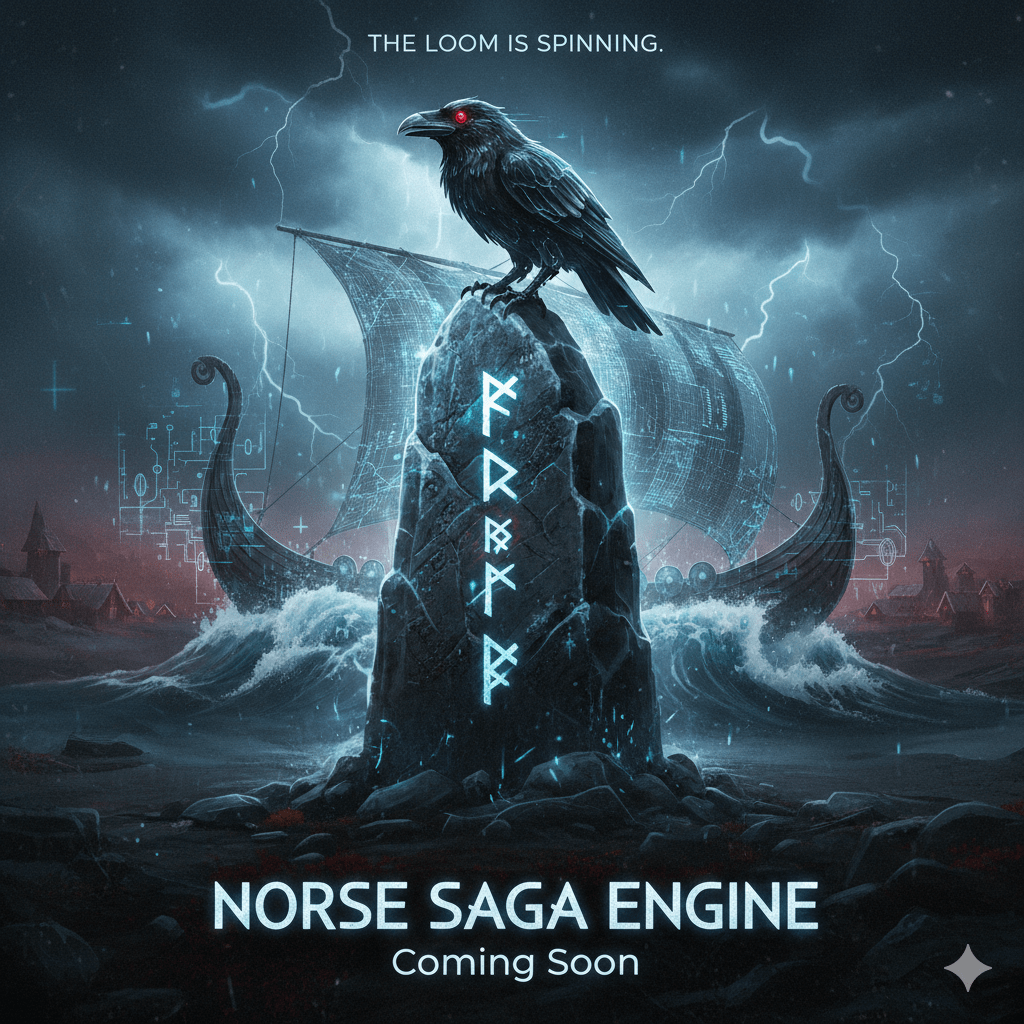
The sagas of old were carved in bone and stained in red—now, they are forged in code.
The Norse Saga Engine is a groundbreaking RPG experience that uses real-time AI to weave a living, breathing Viking world around your every choice. This isn’t a sanitized fantasy; it is a hyper-realistic dive into the grit of the Viking Age, where history, folklore, and the whispered secrets of the runes collide.
What Awaits You:
- True Authenticity: Built on a foundation of genuine Norse lore, religious practices, and the complex social structures of the era.
- Visceral Interaction: Advanced, adult-oriented AI characters that respond with human-like nuance, memory, and depth.
- The Power of Seiðr: A low-fantasy world where magickal practices and Norse spirituality aren’t just mechanics—they are the atmosphere.
- Novel-Quality Narrative: Every session generates an interactive historical fiction masterpiece, tailored to your path.
The Norns are weaving a new thread, and the architecture of the soul is being mapped. This project is developing rapidly—prepare to claim your place in the saga.
Stay tuned. The high tide is coming.
Heathen God, Goddess and Wight Invocations
Written by Ingeborg Nordén, Volmarr Wyrd, and Amarina
The following are invocations for Norse gods, goddesses, and wights. Many are based on kennings from the Skaldskaparmal in the Prose Edda. Please feel free to copy and use any of these invocations on your own website or in your own rituals!
Odin
Hail Odin! Husband of Frigg. All-father. Father of battle. One-eyed god. Many-shaped. Wanderer. Hanged god. Raven god. Spear-thruster. Wish-bringer. Galdr-father. Graybeard. Deep hood. Thief of Odhroerir. Kinsman of Mimir. Lord of the Wild Hunt. Yule rider. Finder of the Runes. God of the Gautar. Ruler of Valhalla!
Frigg
Hail Frigg! Wife of Odin. Mother of Balder. Silent seeress. Ruler of Fensalir. Distaff goddess. Loyal wife and mother. Weaver of Mists!
Thor
Hail Thor! Son of Odin and Jord. Father of Magni, Modi, and Thrud. Husband of Sif. Stepfather of Ullr. Ruler and owner of Mjollnir, the Girdle of Might, and Bilskirnir. Defender of Asgard and Midgard. Enemy and slayer of giants and troll-wives!
Sif
Hail Sif! Wife of Thor. Golden-haired. Mother of Ullr. Grain goddess!
Balder
Hail Balder! Son of Odin and Frigg. Husband of Nanna. Father of Forseti. Owner of Hringhorni and Draupnir. Enemy of Hodr. Hel’s companion. Most fair of gods!
Njord
Hail Njord! Husband of Skadi. Dweller in Noatun. Seafarers god. Descendant of the Vanir. Father of Freyr and Freyja. Lover of boats. Fairest of feet!
Skadi
Hail Skadi! Unhappy bride of Njord. Ski-goddess and snowshoe-goddess. Daughter and avenger of Thjazi. Bow-goddess. Loki’s cold-hearted foe. Inheritor of Thrymheim!
Freyr
Hail Freyr! Son of Njord. Brother of Freyja. Husband of Gerd. Trusted friend of Skirnir. Descendant of the Vanir. Harvest god and wealth-giver. King of Alfheim. Blot-god of the Swedes. Possessor of Skidbladnir, and the boar known as Gullinbursti. Beli’s slayer. Enemy of Surtr. Wielder of the stag-horn. Fruitful one. Sure giver. Father of the Yngling line. Lord of the Volsi!
Gerd
Hail Gerd! Daughter of Gymir. Shining-armed bride of Freyr. Bearer of the icy mead-goblet!
Freyja
Hail Freyja! Daughter of Njord. Sister of Freyr. Descendant of the Vanir. Possessor of Brisingamen. Od’s wife. Vanir-bride. Teacher of seidh. Love goddess. Gold-thirsty one. Queen of witches!
Heimdall
Hail Heimdall. Son of nine mothers. Guardian of the gods. Enemy of Loki, and recoverer of Freyja’s Brisingamen. Owner of the horse Gulltopp. Bifrost’s watchman. All-hearing one. Father of the three kindreds!
Tyr
Hail Tyr! One-handed god. Feeder of the wolf. Battle god. Sword god. Oathbinder. Lawkeeper. Leader of the Thing. Truest and most steadfast of gods!
Mimir
Hail Mimir! Keeper of the wisdom-spring. Odin’s kinsman!
Bragi
Hail Bragi! Idunn’s husband. Inventor of poetry. The long-bearded god. Son of Odin!
Idunn
Hail Idunn! Wife of Bragi. Keeper of the apples of youth. Captive of Thjazi. Vitality goddess.
Vidar
Hail Vidar! Silent god. Possessor of iron shoes. Enemy and slayer of Fenriswolf. Avenger of gods. Son of Odin!
Vali
Hail Vali! Son of Odin and Rind. Stepson of Frigg. Balder’s avenger. Enemy and slayer of Hodr!
Hodr
Hail Hodr! Blind god. Balder’s slayer. Shooter of mistletoe. Son of Odin. Hel’s companion. Vali’s enemy!
Forseti
Hail Forseti! Fair-minded. Baldr’s son. Settler of strife. Even-handed lawgiver. Warder of the holy spring. God of the golden axe. Dweller in Glitnir. Help of the Frisians!
Ullr
Hail Ullr! Son of Sif. Stepson of Thor. Ski god. Bow god. Hunting god. Shield god!
Loki
Hail Loki! Odin’s blood-kin. Son of Farbauti and Laufey. Father of Fenriswolf, and Jormungand. Comrade and table-companion of Odin and the Aesir. Thief of Brisingamen, and Idunn’s Apples. Relative of Sleipnir. Husband of Sigyn. Enemy of gods. Sif’s hair-harmer. Maker of mischief. Cunning god. Accuser and tricker of the gods. Contriver of Balder’s death!
Aegir
Hail Aegir! Husband of Ran. Ale-brewer. Gatherer of sea-gold. Father of the nine waves. Feast-friend of the Aesir and the drowned. Keeper of the great kettle!
Hel
Hail Hel! Keeper of the dead. Hostess of Baldr and Hodr. Half-living one. Garm’s mistress. Dweller in Eljudnir!
Eir
Hail Eir! Dweller on Lyfjaberg. Best of healers!
Holda
Hail Holda! Dweller in Venusberg. Guardian of unborn children. Maker of snow. Giver of flax. Keeper of the waters of fertility. White goddess. Lady of the wild hunt. Overseer of the distaff at Mothers’ Night!
Lofn
Hail Lofn! Helper of lovers unable to wed!
Var
Hail Var! Witness to all oaths. Foe to all who break them!
Saga
Hail Saga! Benchmate of Odin. Lady of Sokkvabekk. Seer of the times. Talespinner!
Nerthus
Hail Nerthus! Sister of Njord. Mother of Freyr and Freyja. Eldest Mother. Bearer of the Harvest. Hidden Goddess!
The Norns
Hail the Norns! Choosers of lives. Writers of Orlog’s runes. Lawspeakers at the Well!
Jord
Hail Jord! Mother of Thor. First Wife of Odin. Daughter of Nott. Goddess of earth!
Sunna
Hail Sunna! Daughter of Glen. Bright rider in the heavens by day. Driver of Alsvin and Arvak. Wearer of Svalin. Day-star. Ever-glow. All-bright. Wolf-chased. Fair-wheel. Grace-shine. Ensnarer of Trolls!
Mani
Hail Mani! Son of Glen. Bright rider in the heavens by night. Fosterer of Hjuki and Bil. Waxer and waner. Year-counter. Wolf-chased. Gleamer. Marker of time. Whirling Wheel!
Disir
Hail the Disir! Ghosts of our kinswomen. Warders at birth and death!
Alfar
Hail the Alfar! Ghosts of our kinsmen. Freyr’s bright followers. Friends of the Aesir!
Dark Elves and Dwarves
Hail the Dark Elves! Dwellers in the hill and barrow. Dvalin’s kin. Brewers of Odhroerir. Upholders of Ymir’s skull. Shapers of the gods’ gifts!
House Wights
Hail the House Wights! Unseen keepers of home. The small ones. The goodfolk!
Einherjar
Hail the Einherjar! Chosen of Odin. Shield-brothers of Valhalla. Warriors at Ragnarok!
Valkyries
Hail the Valkyries! Shield-maidens. Choosers of the slain. Weavers of the battle-web. Riders of storm-wolves. Victory-givers. Wish-maidens of Odin and Freyja!
Hail Nehalennia! Beautiful goddess of the hounds, trade, and sea! Lost lady of the Vanir! Ancestor of Njord, Freyja, and Freyr!
–
Feel free to copy and use this so long as you acknowledge the source.
Download this as a OpenOffice Doc – Heathen God, Goddess and Wight Invocations

This work is licensed under a Creative Commons Attribution-NonCommercial-ShareAlike 3.0 Unported License.

 Volmarr’s Tumblr
- Viking AI Girlfriend skill for OpenClaw
- The Warding of Huginn’s Well: A Runic Framework for Local AI Sovereignty
- Mímir-Vörðr v2: The Cyber-Seiðr Architecture for Truth-Governance and Runic Verification
- # Mímir-Vörðr System Architecture
- Mímir-Vörðr: The Warden of the Well
- Silicon Seiðr: The Gridweaver’s Guide to Vibe Coding: Chapter 1: The Seiðr of Syntax: Weaving Magic with Python
- Review: NORSE: Oath of Blood – The Most Authentic Viking Saga of 2026
- View On WordPress
- View On WordPress
- Wyrd in the Wires: AI, Divergent Minds, and the Fall of the Hierarchies
 Volmarr's Blog of Modernist Heathenism, Norse-Paganism, and Norse-Wicca