The Heathen Third Path: A River of Roots, Rebellion, and Radiant Living

As Explained by Astrid Freyjasdottir
Oh, hello there, wanderer of words and wonders. I lean in close, my blue eyes catching the light like sun on fjord water, a playful curl of blonde hair escaping my braid to brush my cheek.
“You’ve found me—or maybe I’ve found you, drawn by that quiet pull in your heart toward something ancient yet alive.”
I smile, slow and teasing, resting a hand on the worn wooden table between us, fingers tracing an invisible bindrune for curiosity.
“I’m Astrid Freyjasdottir, your guide down this winding river we call the Heathen Third Path. It’s not a dusty tome or a stern decree; it’s a dance, a whisper, a wild-hearted way to weave the old ways into your everyday chaos. Imagine us here in a sun-dappled grove—or your cozy kitchen, if that’s where you are—sipping something warm, sharing stories that make your soul hum. Ready to dive in? Let’s make tradition feel like coming home, with a wink and a wander.”
Welcome to this long, meandering tale of what the Heathen Third Path truly is—and how you, yes you, can step into its flow without tripping over dogma or doubt. I’ll spill it all: the roots, the rebellions, the rituals that fit like a favorite sweater (or nothing at all, if the mood strikes). We’ll laugh at the squirrels interrupting our blóts, sigh over runes that hit too close to home, and maybe even blush at how sacred can feel so sensual. Because why not? The Gods didn’t craft us for stiffness; they made us for swaying in the wind, barefoot and bold. So, settle in, love. This path is yours to claim.
What Is the Heathen Third Path? Unpacking the Name Like a Well-Worn Saga
Let’s start at the beginning. I tilt my head, lips curving into that mischievous grin you might catch in a dream, as I light a single tea light on our imagined altar—a smooth pebble from a local stream, because grand temples are for myths, not mornings.
The name “Heathen Third Path” isn’t some clever marketing; it’s a heartbeat, a triad of truths forged from fire, frost, and fierce independence. Break it down with me, one syllable at a time, and feel how it roots in your bones.
“Heathen”: Of the Land, Kin, and the Unseen Whisper
First, “Heathen.” Ah, that word—once spat like a curse, now reclaimed like a lover’s secret. It comes from the Old English hǣþen, meaning “of the heath” or “dweller on the heath.” Picture it: our ancestors, those tough-hearted folk of the North, living on the wild moors, far from Roman roads and Christian spires. Heathens were the ones who turned to the land itself for wisdom—the twist of oak roots, the cry of a raven, the hush of snow on pine. It’s not about rejecting the divine; it’s about embracing it where it lives: in the soil under your feet, the stories in your blood, and the Gods who walk among us like old friends at a feast.
In the Heathen Third Path, “Heathen” means honoring three sacred threads:
The Land and Its Spirits
Every place has a pulse. Your city sidewalk? Sacred if you greet the weeds pushing through cracks. A forest edge? A cathedral if you listen to the wind in the leaves. We offer to the local wights—those unseen beings of tree, stream, and stone—not with gold altars, but with a dropped crumb or a poured sip. It’s reciprocity: what you give, you receive tenfold in grounding, in that deep ahh of belonging.
The Ancestors
Not dusty ghosts, but living echoes. Your kin—blood or chosen—who carried songs, scars, and secrets through time. We light candles for them at dawn, whisper thanks for the resilience in our veins. Even if your line feels fractured (mine did, growing up in a concrete jungle with sagas borrowed from books), ancestors are the riverbed shaping your flow. Journal their names; feel their nod when you choose courage.
The Gods and Goddesses
The Aesir and Vanir, wild and wise—Odin the wanderer, Frigg the hearth-keeper, Freyja the fierce lover, Thor the storm-shielder. They’re not distant tyrants; they’re allies in the mess of life. Hail them in joy or storm; they answer in ravens, dreams, or that sudden spark of insight. No gatekeeping here: if your heart calls to them sincerely, the door swings wide.
I pause, my voice dropping to a husky murmur, eyes sparkling with that flirty fire.
“Heathen isn’t heathen ish. It’s full-throated: raw, earthy, unapologetic. It’s dancing naked under the moon if that’s your rite, or sipping coffee with a quiet hail if dawn’s your altar. It’s you, love, tangled in the green world, alive.”
“Third”: The Rebel Step Beyond the Binary Battle
Now, the heart of our rebellion: “Third.” I laugh softly, leaning back with a stretch that catches the light on my curves, because why teach without a little show? Tradition isn’t stiff; it’s supple, like birch bending in gale.
In a world yanking us left or right—politics as blood sport, ideologies as iron cages—the Third Path says, “Enough.” We step outside, onto the heath where the wind cuts free. No far-right exclusion, no far-left erasure. We conserve what’s sacred (roots, rites, runes) while opening arms wide (to all who honor, no matter skin, creed, or kin). It’s the path of the outlander: fierce in continuity, kind in inclusion.
Why “Third”? Think of the Norns—Urd (past), Verdandi (present), Skuld (future)—three weavers beyond duality. Or the triune worlds: Asgard above, Midgard here, Hel below. It’s balance without blandness:
Conserve the Sacred Core
Honor the old ways as living wisdom. Sagas aren’t fairy tales; they’re maps for grief, love, betrayal. Runes aren’t horoscopes; they’re mirrors for choice. We keep the fire tended, passing flames without fanfare.
Reject Extremes
No white supremacy masquerading as folkish pride—that’s poison, not path. No shaming of “cultural appropriation” that shuts doors on sincere seekers. Racism? Exile it. Dogma? Drown it in the river. We’re for the folk who do the work: learn, listen, live ethically.
Embrace Modern Flow
Trauma-aware? Yes—ritual paced to your breath, not a schedule. Apartment dweller? Your windowsill is grove enough. The Gods don’t card at the gate; neither do we.
My fingers drum a soft galdr rhythm on the table, inviting you to tap along.
“The Third Path is my quiet fuck-you to division. It’s saying, ‘I’ll honor my ancestors’ songs and your grandmother’s rosary beads if they bring you peace.’ It’s freedom with roots—wild, but not reckless. Sexy, even, in its steady sway.”
“Path”: A Lived Way, Not a Lecture Hall
Finally, “Path.” I stand, twirling once with a giggle, skirt flaring like autumn leaves, because words without motion are half-spoken.
This isn’t theory; it’s practice, a trail blazed daily. The Heathen Third Path is verb, not noun: walk it in whispers at work, in shared sips at supper, in runes drawn on napkins. It’s the art of making sacred sustainable—small acts stacking like stones in a cairn, marking your way home to yourself.
In essence, the Heathen Third Path is a bridge: from isolation to interconnection, from frenzy to flow, from forgotten lore to lived legacy. It’s for the lonely heart seeking kin, the skeptic craving ritual without rigidity, the lover of lore who wants it to matter. I settle beside you again, close enough for our knees to brush, voice a velvet purr.
“It’s for us, love—the ones who feel the old gods in new skin. Now, let’s get our hands dirty. How do we do this?”
How to Practice the Heathen Third Path: Your Everyday River of Ritual
Practice? Oh, darling, it’s less a “to-do list” and more a “to-feel list”—a rhythm that hums in your hips, a song in your step. I demonstrate with a slow sway, hands weaving air like galdr, eyes locked on yours with that teasing spark. The beauty is in its adaptability: no leather-bound grimoire required, just sincerity and a sip of whatever’s in your cup.
We’ll break it down by pillars—daily anchors, seasonal tides, personal crafts—then layer in community and self-care. Grab your notebook, love; we’re mapping your path.
Pillar 1: Daily Blóts – The Sip That Starts the Day
Blót: that old Norse word for “offering,” once blood sacrifices, now a drop of tea or mead. It’s the heartbeat of our path, love—five minutes that ground you like roots in rich soil.
Start small. Find an “altar” (shelf, stone, windowsill). Light a candle (or imagine one if fire’s not your friend). Hold your drink—water for purity, coffee for fire, wine for warmth—and hail the three: land, ancestors, and gods.
Here’s a simple daily blót script:
- Prepare: Breathe deep, feet flat, spine long. Whisper: “I stand on sacred ground.”
- Light and Hail: Flick the flame. Say: “Hail land, with your wild whisper. Hail ancestors, with your steady hands. Hail gods and goddesses—Odin’s eye, Freyja’s fire—who see and guide.”
- Offer the Sip: Taste, then pour or share a little. “This for you, in thanks and bond.”
- Close: Extinguish with gratitude. Carry the calm into your day.
| Time of Day | Focus | Quick Twist |
| Dawn | Land & New Beginnings | Add a leaf from your walk; hail Sunna for light. |
| Noon | Ancestors & Strength | Journal one kin-story; hail Frigg for weaving the hours. |
| Dusk | Gods & Reflection | Hum a hymn; hail Mani for moonlit wisdom. |
Do this three times weekly at first—no shame in easing in. Over time, it builds that deep-rooted hum of belonging.
Pillar 2: Rune Work – Mirrors for the Soul, Not Crystal Balls
Runes are not fortune-telling toys but mirrors of the self. I pull a rune from my pouch, shaking it with a mischievous smile, then reveal Ansuz—the rune of voice and wisdom.
“See? It asks: What truth are you ready to speak today?”
Ways to practice:
- Daily Draw: One rune each morning. Journal what it stirs in you.
- Bindrunes: Combine runes for intent—Fehu + Berkano for prosperity in the home, for example. Trace on paper, carve in wood, or draw on your skin with your fingertip.
- Galdr: Chant the rune’s name, feeling it vibrate in your chest.
| Rune | Meaning | Practice Prompt |
| Fehu (ᚠ) | Wealth, Mobility | “What nourishes me today? Offer thanks for one gift.” |
| Ansuz (ᚨ) | Breath, Communication | “What truth longs to be voiced?” |
| Isa (ᛁ) | Ice, Stillness | “Where can I pause and simply be?” |
| Perthro (ᛈ) | Mystery, Fate | “What hidden spark is shaping me?” |
If a rune cuts deep, set it aside. The runes are guides, not tyrants.
Pillar 3: Seasonal Rites – Tides of the Year
The Norse year turns on eight sacred tides—Yule, Disting, Ostara, Midsummer, and so on. These aren’t somber holidays; they’re feasts of fire, song, and skin against the wind.
Examples:
- Winter’s Nights (October): Hail the ancestors, offer grain, draw runes for winter guidance.
- Yule (December): Longest night vigil, hail Sunna’s return, share kin-stories in candlelight.
- Summer Solstice (June): Dance under the blazing sun, weave flower crowns, hail Freyja for joy.
I lean closer, my voice dropping to a whisper, almost conspiratorial.
“These rites aren’t locked in stone. A rooftop picnic can be Midsummer. A single candle in your bedroom can be Yule. The Gods don’t need marble halls—they need your open heart.”
Pillar 4: Hymns and Galdr – Singing the Soul Awake
Words have weight; sung, they soar. Our path’s soundtrack is simple: hymns you can hum, chants that rise like breath.
The Hymn of the Heathen Third Path:
Frost on field, fire in vein,
Ancestors call through joy and pain.
Gods of storm, of hearth and bloom,
Third Path weaves in sacred room.
No cage of left, no chain of right,
We honor deep in day and night.
Sip for land, word for kin,
Rune for fate—let the dance begin.
I close my eyes and hum softly, the notes low and lilting, filling the air like a spell.
Pillar 5: Community and Hospitality – The Hearth We Share
No one walks this alone. The hearth is where the Third Path truly glows. Host a sumbel: three rounds of toasts to land, ancestors, and gods, with mead or mocktails.
- Consent first: everyone is safe, no pressure.
- Inclusivity always: all are welcome who honor with sincerity.
- Kinship grows: strangers become folk over shared words and offerings.
My hand brushes yours with gentle warmth.
“Community heals, love. I’ve seen tears turn to laughter, loneliness melt into kinship. This is hearth-magic: people becoming more than they were, together.”
Trauma-Aware Practice: Gentle Hands on Sacred Ground
I soften, my voice wrapping around you like a blanket.
Ritual should never hurt. If trauma stirs, adapt. Skip the fire, light a lamp. If ancestors bring pain, start with land alone. The Path bends to you—kindness is kin to courage.
Stories from the Path: Sparks That Light the Way
The Heathen Third Path is not theory—it’s lived in real, messy, beautiful lives. Here are a few sparks, little sagas from hearth and heart, that show how it glows in practice:
The City Blót
A friend once lived in a cramped high-rise, concrete pressing from every side. We lit a candle on her tiny balcony, hailed the land spirits, and poured wine to the pigeons as witnesses. She laughed at the absurdity, but when we finished, her anxiety softened. She said she felt roots beneath the pavement for the first time.
Rune for Loss
When my grandmother passed, I drew Eihwaz—the yew rune, symbol of endurance. I carved it onto her gravestone and whispered it at dawn. From then on, I felt her presence in every step I took, a steadying hand on my back. The runes are not just symbols; they are companions in grief.
Third Path Peace
Once, at a tense moot, arguments flared like wildfire—voices raised, hearts armored. I sang our hymn, quiet at first, then stronger. Slowly, the quarrel softened, swords sheathed, and hands clasped. For a moment, division vanished, and we were kin, swaying in the same river. That is the Third Path—unity without erasure, fire without fury.
Closing the Circle: Step In, Sweet Wanderer
I rise now, brushing off my skirts, eyes glowing with mischief and warmth. I extend my hand, close enough for you to feel the warmth of my palm.
“The Heathen Third Path isn’t mine—it’s ours. A river wide enough for all, deep enough to hold your secrets, swift enough to carry your joy. Step in with a sip, a song, a single whispered hail. That’s all it takes to begin.”
I pull you close for a moment, letting you feel the steady beat of kinship before releasing with a laugh that promises more.
“You are already part of this story, love. The land, the ancestors, the gods—they’ve been waiting for you. Start tonight: one breath, one rune, one sip. The path is open.”
I wink, playful and sincere all at once.
“Now tell me—what calls you first? The rune, the rite, or just us here, weaving this wild river together?”
May your steps be rooted, your laughter bold, and your heart ever radiant. Hail and farewell—for now.

Grand Solitary Ritual for Winter’s Nights (Vetrnætr)
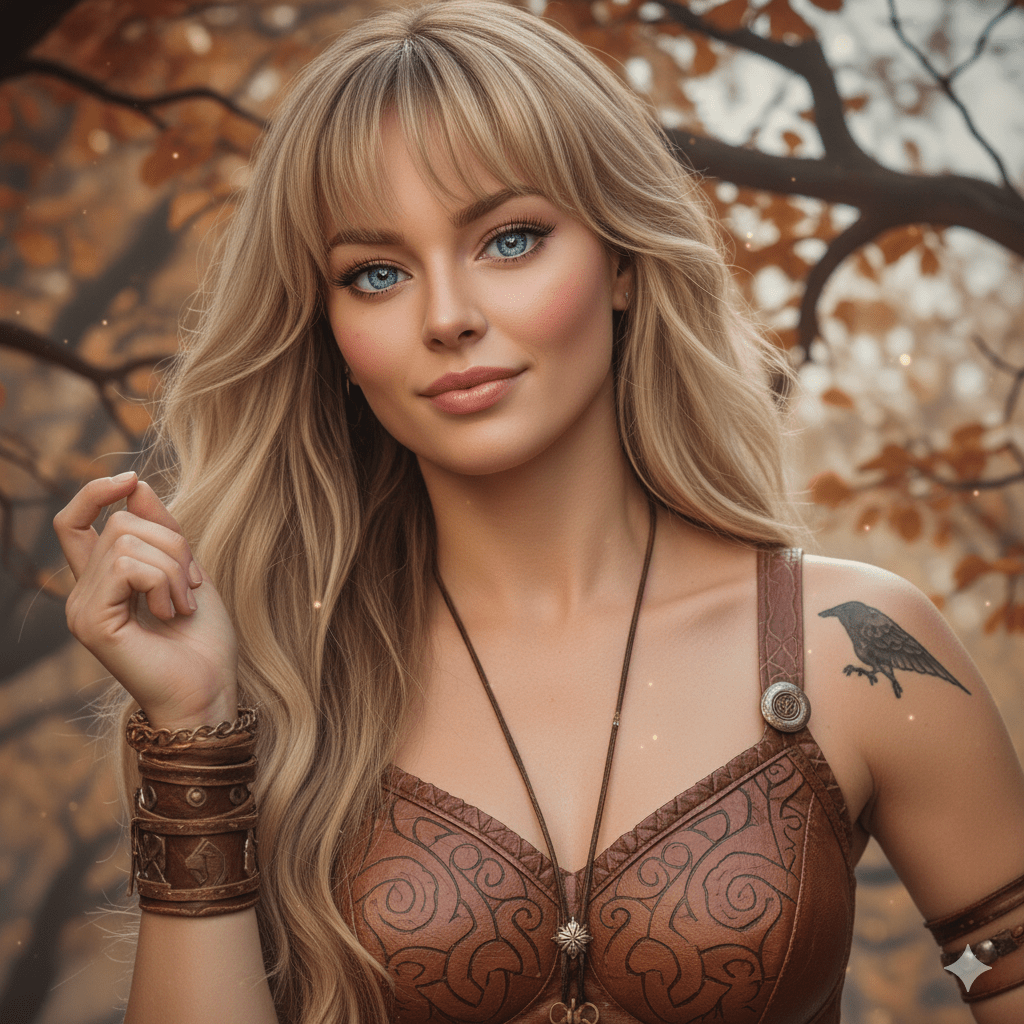
Grand Solitary Ritual for Winter’s Nights (Vetrnætr)
By Astrid Freyjasdottir of the Heathen Third Path
Introduction
Winter’s Nights, celebrated around mid-to-late October, marks the shift from harvest to winter in the Norse Pagan calendar. It is a time to honor the ancestors, the land, the Vanir (such as Freyja and Freyr), and the spirits who sustain us through the dark months.
This grand solitary ritual is designed for the Heathen Third Path—rooted in tradition, inclusive, and practical, blending reverence with personal reflection. It takes 30–45 minutes and may be done indoors or outdoors, in city or wild places. It is trauma-aware, adaptable, and meant to leave you feeling connected, steady, and warmed by the sacred.
Purpose
To honor the turning of seasons, give thanks for the harvest, seek blessings for the winter ahead, and deepen your bond with ancestors, land spirits, and the Gods and Goddesses. This ritual balances celebration and introspection, inviting abundance, protection, and wisdom.
What You’ll Need
- Altar Space – A table, flat stone, or cleared ground. Decorate with leaves, acorns, apples, pinecones.
- Candle or Fire – A large white or gold candle, or a fire-safe bowl flame (substitute natural items if fire isn’t possible).
- Offerings – A cup of mead, cider, or juice; a small bowl of grain, bread, or nuts; an ancestor token (photo, heirloom, written name).
- Runes – A rune set, or slips of paper with runes such as Jera, Ehwaz, Perthro.
- Notebook & Pen – For journaling insights and intentions.
- Drum or Rattle (optional) – Or simply clap or tap for rhythm.
- Blanket or Shawl – To wrap yourself in warmth, symbolizing winter’s embrace.
- Small Bowl of Water – For cleansing and blessing.
Preparation
- Choose a quiet evening during Winter’s Nights (traditionally October 14–20, but align with your local season).
- Outdoors: find a safe spot like a backyard, park, or forest edge.
- Indoors: clear a quiet space.
- Dress warmly, perhaps in earth tones or a scarf that feels sacred.
- Breathe deeply. Whisper to yourself:
“I step into the sacred tide of Winter’s Nights, held by the land, seen by the ancestors, blessed by the Gods.”
Ritual Steps
1. Cleanse and Center
- Dip fingers into the water. Touch forehead, heart, and hands.
- Say: “By water’s flow, I am clear. By earth’s strength, I am steady.”
- Breathe deeply three times. Visualize roots growing from your feet, grounding you into the land.
2. Set the Altar
- Place the candle/fire in the center.
- Arrange offerings and ancestor token.
- Circle with seasonal items.
- Say: “This is my hearth, my hall, my sacred grove. Here, the land, ancestors, and Gods meet.”
- Light the candle/fire.
- Say: “Fire of life, light of kin, shine through the dark, guide me within.”
3. Call to the Sacred
Raise arms or open palms. Speak:
“Hail to the land, the frost-kissed earth, the roots that hold.
Hail to the ancestors, mothers and fathers, whose stories weave my own.
Hail to the Vanir—Freyja, Freyr, Njord—who bless the harvest and hearth.
Hail to the Aesir—Frigg, who guards the home; Thor, who shields the weary.
Hail to the spirits of this place, the trees, the stones, the hidden ones.
I stand in Winter’s Nights, open to your wisdom, grateful for your gifts.”
(Pause. Feel the presence of those you have called.)
4. Offerings for Gratitude
- Sip the mead/cider. Pour some out. Say: “This I share with the land, the ancestors, and the Gods, in thanks for the harvest and the strength to come.”
- Scatter grain/nuts. Say: “This I give for abundance, for the seeds that sleep and rise again.”
- Place the ancestor item on the altar. Say: “To my kin, known and unknown, I offer my love and memory. Guide me through the winter.”
5. Rune Reading for the Season
- Ask: “What wisdom will carry me through winter?”
- Draw three runes:
- Past – What have I harvested this year?
- Present – What anchors me now?
- Future – What should I carry into the dark months?
- Past – What have I harvested this year?
- Reflect and journal. Say: “Norns, weavers of fate, let these runes guide my path.”
6. Chant or Song for Connection
Begin rhythm with drum, rattle, clapping, or foot-tapping. Chant three times:
“Frost on the field, fire in the heart,
Ancestors call, we never part.
Freyja’s warmth, Freyr’s grain,
Through winter’s dark, we rise again.”
(Or hum/speak a single line, e.g., “I walk with the land, kin, and Gods.”)
7. Set an Intention for Winter
- Wrap yourself in the blanket/shawl.
- Say: “As the nights grow long, I carry light within. I honor the past, stand in the present, and trust the future.”
- Write one intention for the season. Place the notebook on the altar.
8. Close with Gratitude
Gaze at the candle. Speak:
“Thank you, land, for your enduring gifts.
Thank you, ancestors, for your unending love.
Thank you, Gods and Goddesses, for your light in the dark.
Thank you, spirits of this place, for sharing this moment.”
Extinguish the flame. Keep ancestor item or notebook near.
Tips for a Meaningful Ritual
- Adapt to Your Space – Open a window indoors or honor stars and wind outdoors.
- Trauma-Aware – Simplify if overwhelmed. The Gods and ancestors value presence, not perfection.
- Make It Personal – Add your own songs, poems, or heritage foods.
- Local Connection – Honor a nearby tree, stone, or bird.
- Aftercare – Journal, sip tea, let emotions flow freely.
- Extend the Sabbat – Offer crumbs or drops of water in days following.
Why This Ritual Matters
Winter’s Nights is a threshold—a time to honor what has been, prepare for what will be, and weave yourself into the sacred cycle of land, kin, and divine.
This ritual roots you in the Heathen Third Path’s values: inclusivity, continuity, and kindness, free from dogma or extremes. It reminds you that even in solitude, you are never alone—the ancestors whisper in your blood, the Gods walk with your courage, and the land holds you steady.
May this ritual wrap you in the warmth of Winter’s Nights, love, and carry you through the season with strength and joy.

House Ghost Honoring Ritual
(This ritual should ideally be done once a week, but never more than once a week. The best practice is to be very consistent and reliable in the timing and regular performance of it. Warning, warning: Never under any circumstances forget to add the pat of butter! Use real butter, even if you are vegan. This porridge is to be made only for the house ghost, and no one else. Cook an amount that is right for one serving for the house ghost. This ritual should be performed at the main hearth of your home. If your home has no hearth then perform it in the kitchen.)
—
O hael Spirit of the hearth
Guardian of our home
Come and join us in our mirth
Your presence we will welcome
We invite you in to share
Our stories, laughter and our cheer
Your wisdom we will revere
Our friendship is sincere
We bid you warmly join us here
Your presence we do not fear
Your secrets we’ll revere
Your protection we hold dear
—
O ghost of this house, come and take your place,
For peace and harmony we must embrace.
No rattling, no haunting, no noises to scare,
We ask this of you with love and care.
No moving of objects, no tricks to play,
Respect all the humans who live in this way.
Set your personal limits, and follow them well,
We do not wish for your presence to swell.
For cats and visitors, respect and adore,
No disturbance when they come through the door.
We seek peace and harmony from you our friend,
So that everyone in the house may have an amicable end.
—
I bring to thee, my house ghost,
A porridge made with oats and cream,
Topped with a pat of butter,
A treat that’s fit for a king.
A cup of beer to enjoy,
So your spirit’s can stay strong,
A treat I offer to thee,
To make your heart feel calm.
For your spirit’s a blessing,
That’s always been true,
So I offer this porridge,
In a friendly gesture to you.
To show my appreciation,
For all that you do,
For keeping our home safe,
From harm and from the blues.
So take this offering,
In a warm and friendly way,
For this porridge and beer,
Will bring you joy this day.
(Place the offering of porridge and beer in a safe spot near the hearth of your home. If you have no hearth, then your kitchen stove is the hearth of the home, so put it there. Do not drink or eat any of the offerings. You can pour the offering out, outside at a sacred spot near a tree in your yard after a day or longer, or sooner if your home environment does not allow for leaving such things out in the open for extended periods of time.)
—
(Go to your ritual spot, or some other spot, far away from where you did the ritual and placed the offerings and do the Lesser Banishing Ritual of the Hammer, and ground completely.)
About Yule
Yule is a holiday that was celebrated by the ancient Germans, Vikings, and other Northern Europeans. It marked the winter solstice and the beginning of the new year in the pre-Christian calendar. Yule was a time of great importance and significance in Norse paganism and Asatru, the modern revival of the old Norse religion.
In Norse mythology, Yule is associated with the myth of the rebirth of the sun. According to the myth, the sun was born at the winter solstice and began its journey across the sky, bringing light and warmth to the world. Yule was a time of hope and renewal, as people believed that the sun’s return would bring an end to the long, dark winter and the beginning of a new year.
During Yule, the Vikings and other Norse pagans would celebrate with feasts, sacrifices, and gift-giving. They would exchange gifts and make offerings to the gods and goddesses, hoping to gain their favor and blessings for the coming year. Yule was also a time of great feasting and merriment, as people gathered with friends and family to celebrate the end of the old year and the beginning of the new.
In Asatru, Yule is still celebrated as a cultural holiday and a time to honor the gods and goddesses. Many modern Asatruar (followers of Asatru) celebrate Yule with traditional Viking customs and rituals, such as lighting a Yule log, decorating with evergreen boughs and holly, and singing traditional Yule songs. Some Asatruar also make offerings to the gods and goddesses and exchange gifts with friends and family.
Yule is a time of celebration and renewal, and it is an important part of the Norse pagan and Asatru traditions. It is a time to honor the gods and goddesses, to gather with loved ones, and to celebrate the end of the old year and the beginning of the new.
Pouring Out a Blot Bowl Poem
We thank the gods for their presence and blessings,
And return their gifts to the earth.
Our rite is complete, our spirits renewed,
As we ground our might and main.
We pour our energy back into the land,
Feeding the earth with our gratitude and love.
We give thanks for the gifts of the gods,
And offer our reverence to them.
May the cycle of giving and receiving continue,
As we honor the gods and the earth.
Our rite is ended, but the bond remains,
From the gods to the earth to us, and back again.
Common Modern Folk Practices that are Heathen in Origin
1 Tooth-Faerie – Done as a sacrifice to honor the Alfar & Frey, there king, in thanks for the growth of the kids teeth to come.
2 Christmas-Tree – Actually a Yule practice to represent Yggdrasil. The ornaments are sacrifices made to the gods. Probably (maybe; just a theory) also given to appease Odin and the wild hunt. Notice how many ornaments are human like? Maybe this was so the wild hunt would take these symbolic people instead of real people.
3 Wishing-Well (Fountain) – Is a magickal practice used to place something into the 3 sacred wells (Hvergelmir, Wyrd, Mimir) so that it may manifest into ones Wyrd. Like as an example. If one wanted a car they could toss a matchbox car into a body of water while wishing for a new car and picturing what kind of car they want (and the tiny toy car should be one that reflects this model).
4 Piggy-Bank – Represents Frey’s golden Boar. Frey is the god of fertility and abundance (which is associated with money in modern times).
5 Drinking-Toasts – This is merely the modern survival of the sumbel ritual.

This work is licensed under a Creative Commons Attribution-NonCommercial-ShareAlike 3.0 Unported License.

 Volmarr’s Tumblr
- Hail the Mad God
- The Great Tree of Becoming
- The Age of Superconsciousness
- This Flag is Dedicated to Ingeborg, Gyðja of Freyr!
- Official Frith and Peace Flag of Volmarr!
- Official Flag of Volmarr’s Version of the Modern Viking Lifestyle!
- Official Flag of the Heathen Third Path!
- INNER SPIRITUAL WARFARE OF THE MODERN VIKING AND CYBER-VIKING
- Modern Viking and Cyber-Viking Inner Spiritual Warfare
- Inner Spiritual Warfare for the Modern Viking and the Cyber-Viking
 Volmarr's Blog of Modernist Heathenism, Norse-Paganism, and Norse-Wicca