The Authentic Ancient Values of Vikings and Norse Paganism
Introduction
The cultural and spiritual values of the Viking and Norse Pagan societies are deeply rooted in a complex and multifaceted worldview that emphasizes a profound respect for nature, community, and the divine. These values are not merely abstract principles but are deeply embedded in the daily lives of the Norse people, influencing their actions, decisions, and interactions with one another. This essay explores the authentic ancient values of Viking and Norse Paganism, drawing from historical sources and anthropological studies to provide a comprehensive understanding of their cultural and spiritual significance.
Cosmology and the Nine Realms
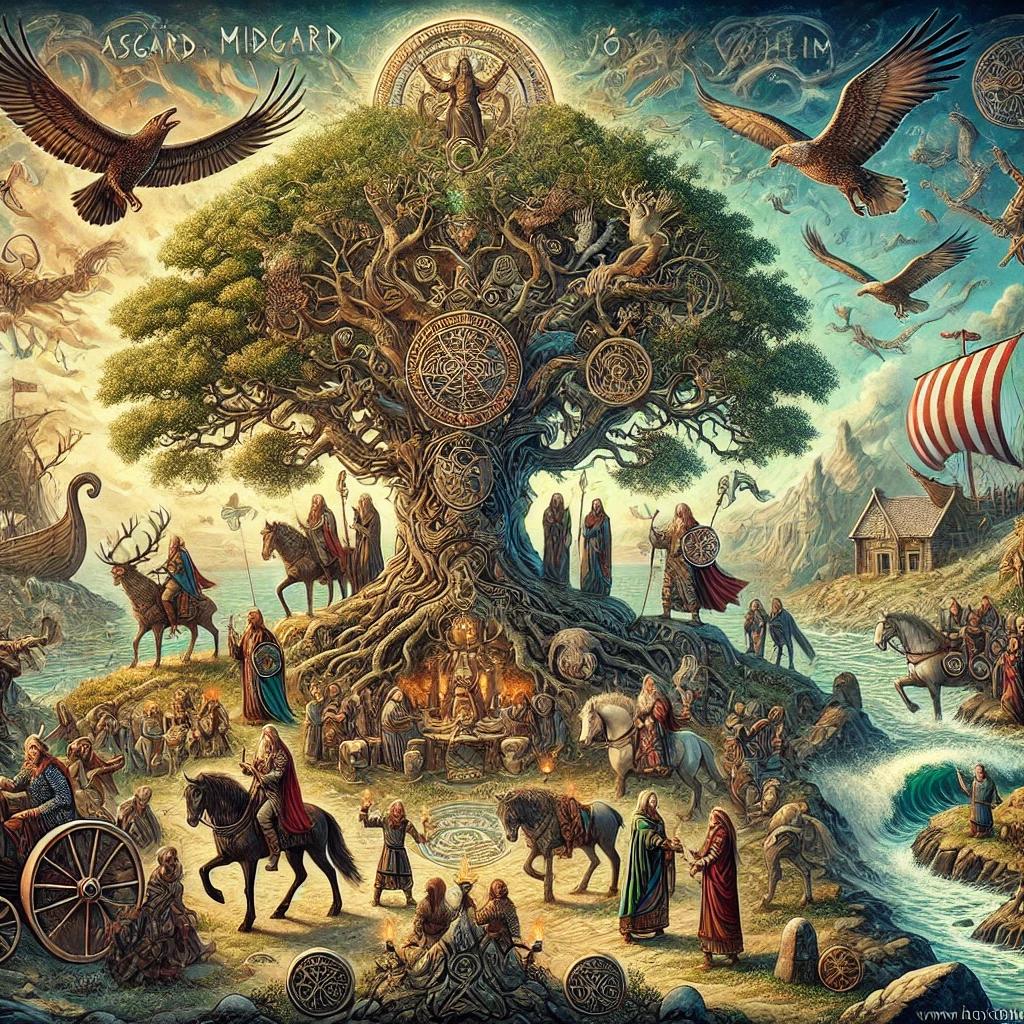
At the heart of Norse cosmology lies Yggdrasil, the World Tree, which connects the nine realms of existence. These realms include Asgard (the home of the gods), Midgard (the world of humans), Jotunheim (the land of giants), Vanaheim (the realm of the Vanir gods), Alfheim (the land of the elves), Svartalfheim (the realm of the dwarves), Nidavellir (another realm of the dwarves), Muspelheim (the realm of fire), and Helheim (the underworld). This interconnectedness underscores the belief that all aspects of existence are interdependent and part of a larger cosmic order.
The Gods and Goddesses
Norse Paganism worships two main pantheons: the Aesir and the Vanir. The Aesir, gods of war and governance, include Odin, the All-Father and god of wisdom; Thor, the god of thunder and protection; and Tyr, the god of justice and law. The Vanir, deities of fertility and nature, include Freyr, the god of prosperity and fertility; Freyja, the goddess of love and fertility; and Njord, the god of the sea and wind. These gods and goddesses embody various aspects of life and nature, guiding adherents in their spiritual and daily lives.
Ancestor Worship
Ancestor worship is a central tenet of Norse Paganism. Practitioners seek guidance, protection, and wisdom from their forebears, often through rituals, storytelling, and maintaining physical reminders like altars or grave sites. This belief highlights the interconnectedness of past, present, and future generations, fostering a deep sense of continuity and belonging. Honoring ancestors reinforces family and community bonds, preserves cultural heritage, and provides moral examples for people to live by.
Ethical Living and Universal Ancient Values
Norse Paganism, like many ancient Pagan societies, emphasizes a set of ethical principles that promote communal harmony and personal integrity. These values are often derived from the Eddas and sagas, which provide insights into the moral and ethical beliefs of the ancient Norse people.
- Reciprocity: The concept of reciprocity is fundamental in Norse Paganism. This principle underscores the belief that communal harmony and personal prosperity depend on maintaining positive interactions with the divine and with one another. Rituals and offerings are often made to the gods and spirits to honor this relationship.
- Honor and Reputation: Honor is a central concept in Norse Paganism. Personal integrity and reputation impact one’s fate and standing within the community, mirrored by the deeds of heroic figures in Norse mythology.
- Hospitality: Hospitality is a key virtue in Norse Paganism, emphasizing the importance of welcoming guests and strangers with open arms. This practice fosters community bonds and reflects the broader ancient Pagan value of generosity and compassion.
- Courage and Valor: The Norse placed a high value on courage and valor, particularly in the face of adversity. This is evident in the stories of their gods and heroes, who often faced great challenges with bravery and determination.
- Respect for Nature: Norse Pagans maintain a profound relationship with the natural world, revering the spirits of land and water. This belief ensures that nature is treated with reverence and respect. Environmental stewardship and seasonal celebrations like Yule, Ostara, and Midsummer reflect this core belief.
- Community and Frith: The concept of frith, or peace and harmony within the community, is essential in Norse Paganism. This value emphasizes the importance of maintaining social order and mutual respect among community members.
- Wisdom and Knowledge: Wisdom is highly valued in Norse Paganism, as seen in the stories of Odin seeking knowledge and wisdom through various trials and sacrifices. The pursuit of knowledge and understanding is considered a noble endeavor.
- Resilience and Perseverance: The Norse valued resilience and perseverance, particularly in the face of adversity. This is evident in their sagas and myths, which often depict heroes overcoming great challenges through determination and steadfastness.
Rituals and Celebrations
Core rituals in Norse Paganism include Blót (sacrificial rites to honor the gods and spirits), Sumbel (a ritual of toasting, boasting, and oaths), and seasonal festivals. These rituals foster community and spiritual connection. For instance, during Yule, Norse Pagans celebrate the winter solstice with feasts, rituals, and community gatherings, often incorporating traditional Norse customs and symbolism.
Modern Relevance
In contemporary society, the core values of Norse Paganism resonate with many individuals seeking a clear, practical code of ethics. These values offer solutions to modern problems by providing guidance on how to live honorably and harmoniously with others. For instance, practicing hospitality and community frith can significantly improve social cohesion and mutual support in urban environments. Additionally, the pursuit of wisdom and knowledge can foster personal growth and understanding, encouraging individuals to thrive in their lives while maintaining a balanced approach to their interactions with the natural world and their community.
Conclusion
Norse Paganism is deeply rooted in a profound respect for nature, community, and honor, embodying principles that emphasize strength, courage, and wisdom. The core values, such as hospitality, truth, and perseverance, reflect a holistic worldview where personal integrity and loyalty to one’s kin are paramount. These values guide practitioners in their daily lives, reinforcing a sense of identity and purpose grounded in ancient traditions. The spiritual practices of Norse Paganism, including rituals and offerings to the gods, ancestors, and land spirits, further solidify these core principles. Embracing virtues like courage, wisdom, and respect for nature, Norse Paganism encourages a balanced life where the physical and spiritual realms are interwoven. These values are not static but are continuously interpreted and adapted by modern practitioners, ensuring their relevance in the contemporary world.


This work is licensed under a Creative Commons Attribution-NonCommercial-ShareAlike 3.0 Unported License.

 Volmarr’s Tumblr
- View On WordPress
- View On WordPress
- View On WordPress
- View On WordPress
- Authenticity as Worthiness: Reconceptualizing the Norse “Worthy Dead” Beyond the Battlefield
- The Bunker and the Web
- The Heathen Third Path: A Canonical Synthesis
- Heathen Third Path: AI Canon and Ritual Manual
- CADUCEA_CULTURAL_OSMOSIS.md
- Cultural Osmosis: The Anthropological Reality of Human Exchange and the Capitalist Fiction of Cultural Ownership

