Review: NORSE: Oath of Blood – The Most Authentic Viking Saga of 2026
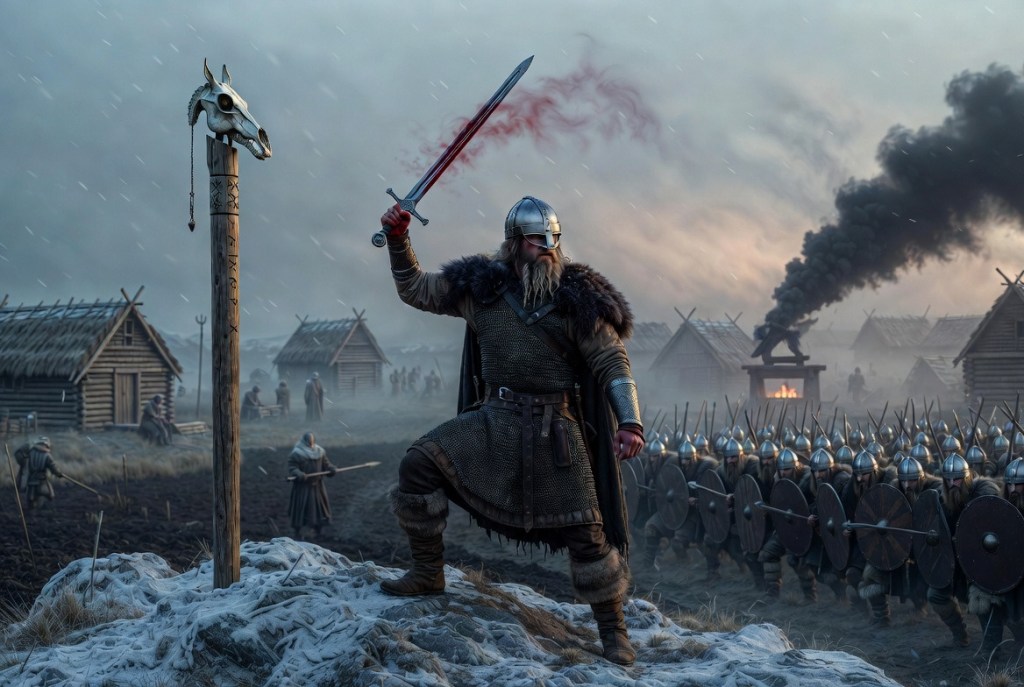
As a Modern Viking and a practitioner of Norse Paganism, I have spent years navigating a sea of “Hollywood” Viking media. Too often, we are given horned helmets, generic fantasy tropes, and modern moralities draped in faux-fur. We look for the spirit of the ancestors in our digital worlds, only to find a hollow imitation.
Then came NORSE: Oath of Blood.
I have spent 13 hours immersed in this world so far, and while I am only partway through the story, I can say with certainty: this is the most accurate and spiritually resonant Viking roleplay game currently on the market.
An Authentic World of Wood and Iron
The first thing that strikes you is the visual and atmospheric fidelity. The developers at Arctic Hazard have clearly done their homework. The clothing, the architecture, and the cadence of the language don’t just “look” Viking—they feel Viking. There is a grit and a realism here that transports you directly into the Ninth Century.
Unlike other titles that lean on generic “warrior” aesthetics, NORSE captures the specific style and soul of the era. Whether you are walking through your settlement or standing on the frost-covered earth of Norway, the immersion is total.
A Story Written in the Spirit of the Sagas
The narrative follows Gunnar’s quest for vengeance following the death of Jarl Gripr. While “revenge” is a common trope, NORSE handles it through the lens of authentic Viking values: honor, the weight of a blood-oath, and the social dynamics of the era.
The characters are not modern people in costumes. They possess a specific kind of Viking humor and personality—robust, entertaining, and grounded in the historical reality of the time. As you lead your community of farmers, craftspeople, and warriors, you truly feel the burden of a leader. You aren’t just a soldier; you are the one holding together the interests and struggles of your people in a world that shows no mercy.
Combat, Luck, and the Hidden Arts
The combat is a standout feature. It’s a turn-based system that manages to be both strategically deep for the modern gamer and historically evocative for the enthusiast. The rhythm of the shield wall and the weight of the tactical decisions feel right.
What impressed me most, however, was the integration of “fantasy” elements. This isn’t your standard fireballs-and-dragons RPG. The “magic” here is low-fantasy and rooted deeply in Norse Pagan metaphysics. For example, the game features the use of a niðing pole to affect the luck of a community—an authentic form of curse magick found directly in the Sagas. Seeing such a specific, historically accurate ritual used as a narrative and mechanical device was a breath of fresh air.
I am currently approaching a confrontation with a Völva (witch) character. Her introduction was masterfully handled, acting in ways that perfectly align with traditional ideas of curse-making. It is “Viking fantasy” as the Vikings themselves would have understood it.
Addressing the “Bugs” and Longevity
I know there were reports of minor bugs at launch, but in my experience, the frequent updates have smoothed the path. I haven’t encountered a single issue that interfered with my enjoyment.
Furthermore, some critics have claimed the game is short. I must strongly disagree. After 13 hours, I am still deep in the mid-game, savoring every dialogue and every skirmish. If you rush, you might miss the nuance, but if you live in this world, there is plenty of glory to be found.
The Verdict
NORSE: Oath of Blood is a mandatory experience for anyone walking the path of the Modern Viking or the Norse Pagan. It is educational, entertaining, and—most importantly—respectful of the culture it portrays.
There are no modern social agendas or generic fantasy elements here. There is only the cold wind, the heat of the forge, the complexity of the law, and the sharp edge of an oath.
Skál to the developers for getting Vikings story telling and gameplay right.
Yggdrasil: The World Tree and Its Nine Realms
Article by Eirynth Vinterdóttir
Introduction: The Cosmic Ash at the Heart of Norse Belief
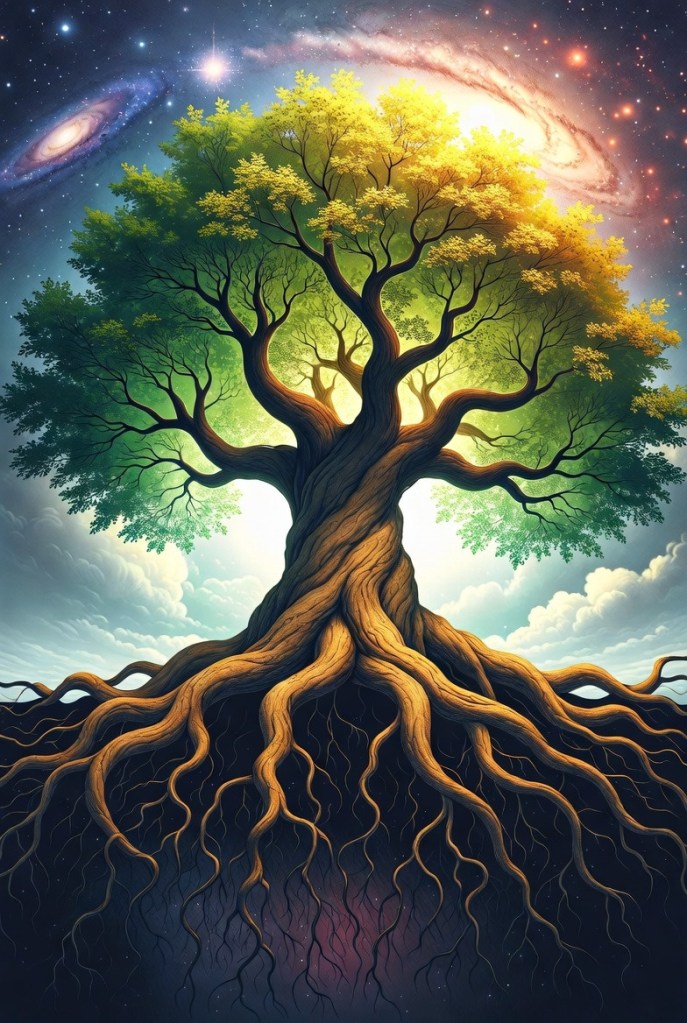
In the rich tapestry of Norse mythology, Yggdrasil stands as the monumental axis mundi, the immense World Tree that binds the cosmos together in a vast, living network of existence. Often depicted as a mighty ash tree whose branches stretch to the heavens and roots delve into the primordial depths, Yggdrasil embodies the ancient Norse understanding of reality as an interconnected whole, where every realm, being, and force pulses with vitality and interdependence. The name “Yggdrasil” itself derives from Old Norse roots, meaning “Odin’s Horse” or “the Steed of the Terrible One,” alluding to the Allfather’s sacrificial hanging upon its branches to gain the wisdom of the runes—a profound act of endurance and quest for knowledge that mirrors the Viking spirit of facing trials to forge strength.
For the ancient Norse peoples, Yggdrasil was not merely a symbolic construct but a living entity, central to their worldview. It represented the enduring cycle of life, death, and renewal, much like the longships that carried Vikings across stormy seas or the sturdy halls that withstood harsh winters. This cosmology fostered a sense of resilience and harmony with the natural order, encouraging individuals to navigate fate with courage and honor. The tree’s vast canopy sheltered gods and giants alike, while its roots drew sustenance from sacred wells, illustrating the Viking value of balance between order and chaos, prosperity and peril.
Modern Norse Paganism revives this vision of Yggdrasil as a profound metaphor for personal and communal existence. Practitioners draw upon it to cultivate self-reliance, recognizing that just as the tree withstands tempests, so too must one stand firm amid life’s uncertainties. Through meditation, ritual, and storytelling, the World Tree serves as a guide to understanding one’s place in the grand weave of wyrd—the intricate fabric of destiny spun by the Norns. This article delves deeply into Yggdrasil’s structure, its nine realms, and the cultural values it inspired among the Vikings, offering a comprehensive exploration of this cornerstone of Norse spiritual heritage.
Historical and Mythological Foundations
The lore of Yggdrasil emerges from the oral traditions of the Viking Age, preserved in written form through the Poetic Edda and Prose Edda, key texts compiled in 13th-century Iceland. The Poetic Edda, a collection of anonymous poems likely dating back to the 9th and 10th centuries, vividly describes the tree in the poem Grímnismál, where Odin recounts its grandeur to a mortal king: “Yggdrasill is the foremost of trees; an ash it is, / from it dew drips for the valleys; / ever green it stands by Urd’s well.” This imagery evokes the tree’s eternal vitality, a beacon of stability in a world of flux.
Snorri Sturluson, in his Prose Edda, expands on this in the Gylfaginning, portraying Yggdrasil as the central pillar supporting the heavens, with its branches encompassing the sun, moon, and stars. Archaeological evidence supports these accounts: runestones from Sweden and Denmark depict tree-like motifs intertwined with serpents and stags, symbolizing the creatures that inhabit Yggdrasil. Viking ship burials, such as the Oseberg ship from Norway (9th century), include wooden carvings resembling cosmic trees, suggesting that artisans viewed the vessel as a microcosm of Yggdrasil—a vessel for the soul’s journey through the realms.
The Vikings integrated Yggdrasil into their daily ethos. Seafarers might carve its likeness on prows for protection during voyages, invoking the tree’s steadfastness against Jörmungandr, the world-serpent gnawing at its roots. Farmers honored it through offerings at sacred groves, recognizing the tree’s role in the fertility cycles that sustained their longhouses. This practical reverence underscored the cultural value of reciprocity: just as the tree nourished the worlds, so too did humans offer mead or grain in return, ensuring communal prosperity and honoring the bonds of frith—sacred kinship peace.
In sagas like the Völsunga Saga, Yggdrasil appears metaphorically as the backdrop for heroic deeds, where warriors like Sigurd draw strength from its symbolic endurance. These narratives taught that life’s trials, like the tree’s struggles with beasts and decay, forge character through perseverance. Modern Norse Pagans study these sources to reclaim this heritage, using Yggdrasil as a meditative focus to embody Viking resilience—standing tall amid personal “storms” with unyielding honor.
The Structure of Yggdrasil: Roots, Trunk, and Branches
Yggdrasil’s form is a marvel of cosmic architecture, its massive trunk rising from the center of creation, branches piercing the skies, and roots anchoring the underworlds. The Prose Edda describes it as an ash tree of unparalleled size, its leaves forming a canopy that shelters the gods’ halls and its bark etched with runes of power. Dew from its boughs falls as life-giving rain to Midgard, symbolizing the nourishment that flows from divine to mortal realms—a reminder of the Viking principle of generosity, where abundance shared strengthens the whole.
Three sacred wells sustain the tree, each at the base of a root and embodying profound mysteries. The Well of Urd, guarded by the Norns, is the wellspring of fate, where past, present, and future converge. Here, the threads of wyrd are spun, teaching that destiny is not rigid but woven through choices, much like a Viking chieftain negotiating alliances at the thing. The Well of Mimir holds the wisdom Odin sought, its waters granting prophetic insight to those who sacrifice for knowledge—echoing the cultural valorization of cunning and sacrifice for the greater good.
The third well, Hvergelmir, bubbles in Niflheim’s depths, source of eleven rivers that course through the worlds, representing the primal flow of life from chaos. Creatures inhabit Yggdrasil, adding dynamism: the squirrel Ratatoskr scurries along its trunk, carrying messages between eagle (at the top, symbolizing lofty vision) and Nidhogg (the dragon gnawing roots, embodying destructive forces). Four stags—Dain, Dvalin, Duneyr, and Durathror—browse its branches, their horns symbolizing renewal. These elements illustrate the Viking view of existence as a balanced struggle: growth amid erosion, vigilance against decay, fostering self-reliance in the face of inevitable trials.
In ritual practice, Vikings might have circumambulated sacred trees or oaks, mimicking Yggdrasil’s circuits to invoke its protective embrace. Today, practitioners visualize the tree during meditations, tracing its form to center themselves, drawing on its structure to cultivate inner fortitude and harmony with natural cycles.
The Nine Realms: Interwoven Worlds of Wonder and Peril
Yggdrasil connects nine distinct realms, each a unique domain of existence, reflecting the multifaceted Norse cosmos. These worlds are not isolated heavens or hells but interdependent spheres where gods, humans, and other beings interact, underscoring the Viking emphasis on interconnectedness and adaptability.
Asgard: The Realm of the Aesir Gods
High in Yggdrasil’s branches lies Asgard, the shining fortress of the Aesir, gods of sovereignty, war, and wisdom. Ruled by Odin from his hall Valhalla—where einherjar (fallen warriors) feast in preparation for Ragnarök—Asgard represents ordered power and heroic destiny. The rainbow bridge Bifrost, guarded by Heimdall, links it to Midgard, symbolizing the vigilant watch over mortal affairs.
Vikings revered Asgard as the pinnacle of aspiration, where oaths were sworn and battles planned. Its halls, like Gladsheim (assembly) and Vingolf (for goddesses), embodied communal decision-making, akin to the thing assemblies that resolved disputes with honor. Modern Norse Pagans invoke Asgard in rituals for guidance in leadership, meditating on its light to embody courage and strategic foresight, values central to Viking warriors who led raids with calculated bravery.
Vanaheim: The Lush Domain of the Vanir
Nestled amid fertile groves in Yggdrasil’s mid-branches, Vanaheim is home to the Vanir gods of fertility, prosperity, and the earth’s bounty. Frey, Freyr, and Njord dwell here, overseeing cycles of growth and harvest. This realm’s gentle landscapes contrast Asgard’s fortresses, highlighting the balance between martial vigor and nurturing abundance.
The Vanir-Aesir war, resolved through hostage exchange (including Freyja), teaches reconciliation and mutual respect—core Viking values in forging alliances after conflict. Farmers offered to Vanaheim’s deities for bountiful yields, ensuring self-reliance through the land’s gifts. Contemporary practitioners honor Vanaheim with seasonal thanksgivings, planting seeds or brewing ale to celebrate reciprocity, fostering gratitude that sustains kin and community.
Alfheim: The Radiant Home of the Light Elves
Perched lightly in the upper branches, Alfheim glows with ethereal beauty, realm of the ljósálfar—light elves—who embody grace, artistry, and inspiration. Ruled by Freyr, it is a place of luminous meadows and crystalline streams, where creativity flows freely.
Vikings associated Alfheim with poetic vision, as skalds drew from its essence to compose sagas that preserved history and valor. This realm inspired the cultural pursuit of beauty in craftsmanship, from intricate jewelry to runic verses. In modern practice, Alfheim guides artistic endeavors, with Heathens crafting talismans or reciting poetry under the stars to channel its light, promoting the Viking ideal of expressing honor through skilled creation.
Midgard: The Human World and Its Boundaries
Encircling Yggdrasil’s trunk, Midgard is the realm of humanity, forged by Odin, Vili, and Ve from the giant Ymir’s body. Bordered by an ocean and the encircling wall of eyebrows (from Ymir), it is the stage for mortal lives, where wyrd unfolds through toil and triumph.
Vikings saw Midgard as the proving ground for virtues like courage and hospitality, where longhouses hosted travelers and fields were tilled with steadfast labor. The world-serpent Jörmungandr coils around it, reminding of peril’s proximity. Modern Norse Pagans view Midgard as the heart of practice, performing daily rites to honor its cycles, embodying self-reliance by tending homes and gardens as extensions of the sacred earth.
Jotunheim: The Wild Mountains of the Giants
In Yggdrasil’s rugged outskirts, Jotunheim sprawls as the domain of the jötnar—giants representing primal forces of nature and chaos. Utgard, home of Utgard-Loki, features towering mountains and untamed wilds, where strength is tested.
The giants, kin to the gods yet often adversarial, symbolize necessary disruption; Thor’s battles with them affirm the Viking value of confronting chaos with unyielding might. Yet alliances, like Skadi’s marriage to Njord, show respect for raw power. Practitioners meditate on Jotunheim to build resilience, facing personal “giants” with the honor of a steadfast defender.
Svartalfheim (Nidavellir): The Shadowy Forges of the Dark Elves and Dwarves
Deep in Yggdrasil’s roots lies Svartalfheim, or Nidavellir, the subterranean realm of svartálfar (dark elves) and dwarves—master smiths who craft wonders like Mjölnir and Odin’s ring Draupnir. Its caverns echo with hammers, birthing treasures from earth’s depths.
Vikings prized dwarven craftsmanship as the pinnacle of skill and ingenuity, values evident in ornate weapons and jewelry that denoted status through merit. This realm teaches the cultural ethic of diligent labor yielding enduring legacy. Modern Heathens honor it by forging tools or jewelry, invoking dwarven precision to cultivate self-reliance through hands-on creation.
Niflheim: The Misty Void of Ice and Fog
One of Yggdrasil’s deepest roots plunges into Niflheim, the primordial realm of ice, mist, and cold darkness. Source of the Hvergelmir spring, it birthed the frost giants and represents the chill of beginnings and endings.
Vikings endured Niflheim’s essence in Scandinavian winters, using it to temper resolve—hospitality warmed halls against the frost. Its well teaches reflection in stillness, a value for introspection amid hardship. In practice, Heathens confront Niflheim through winter solstice rites, emerging renewed, embodying Viking endurance.
Muspelheim: The Blazing Realm of Fire
Opposite Niflheim, Yggdrasil’s root taps Muspelheim, the fiery domain ruled by Surtr, whose sword guards the world’s fiery edge. Sparks from its flames ignited creation, symbolizing passion and destruction.
Thor and other gods battle Muspelheim’s forces at Ragnarök, highlighting courage against overwhelming odds—a Viking hallmark. This realm inspires controlled fervor in pursuits, balancing destruction with renewal. Modern rituals invoke its spark for motivation, fostering the value of bold action tempered by wisdom.
Helheim: The Underworld of the Dead
Beneath Yggdrasil lies Helheim, ruled by Hel, daughter of Loki, where ordinary dead reside in a shadowed hall. Not a place of torment but quiet repose, it honors the finality of life with dignity.
Vikings buried kin with grave goods for the journey, valuing remembrance through sagas. Helheim teaches acceptance of mortality, strengthening communal bonds via ancestor veneration. Practitioners offer to it during remembrance rites, upholding hospitality to the departed and the enduring honor of legacy.
Interconnections and the Balance of the Worlds
Yggdrasil’s realms interlink through paths like Bifrost and roots, illustrating the Norse view of unity in diversity. Creatures like Ratatoskr facilitate exchange, mirroring Viking trade networks that built prosperity through connection. This balance—order from Asgard, chaos from Jotunheim—fosters adaptability, a key cultural value for explorers facing unknown shores.
Ragnarök disrupts yet renews this equilibrium, with survivors like Lif and Lifthrasir repopulating from Yggdrasil’s seeds, emphasizing renewal through perseverance.
Rituals and Practices Centered on Yggdrasil
Vikings likely enacted tree-rites at sacred sites, offering to wells for wisdom. Modern Norse Pagans recreate this with Yggdrasil visualizations in blots, tracing the tree’s form to invoke balance. Rune-carvings on staves mimic its bark, used for divination to navigate wyrd.
Seasonal alignments—solstice fires for Muspelheim, winter offerings for Niflheim—reinforce cycles, promoting self-reliance in harmony with nature.
Cultural Values Embodied in Yggdrasil’s Lore
Yggdrasil encapsulates Viking virtues: courage in facing its beasts, honor in reciprocal offerings, hospitality through interconnected realms, self-reliance in enduring trials, and generosity in sharing its dew. These principles guided Viking life, from raids to homesteads, and continue to inspire ethical living.
Modern Engagement: Yggdrasil in Contemporary Norse Paganism
Today, Heathens meditate on Yggdrasil for grounding, perhaps journaling its realms to map personal growth. Crafts like tree-motif carvings or mead-brews honor its sustenance, while hikes in nature connect to Midgard’s vitality. This engagement revives Viking resilience, weaving ancient cosmology into modern paths of fulfillment.
Conclusion: The Eternal Ash and the Viking Spirit
Yggdrasil endures as the Norse cosmos’s beating heart, a testament to the Vikings’ profound insight into life’s interconnected dance. By honoring its realms and structure, modern Norse Pagans reclaim a heritage of strength, balance, and wonder, standing as steadfast as the World Tree itself amid the wyrd’s ever-turning wheel.
The Worth of Witches, Wizards, and Gothar in Norse Paganism: Strength of the Inner World

The ancient Norse understood that strength comes in many forms. While warriors fought with axe and shield, those who walked the path of the mind—witches, wizards, and Gothar—held power that shaped fate itself. Their worth was not bound by physical might, nor by the limitations of the body, but by the vastness of their minds, the depth of their wisdom, and their connection to the unseen forces that weave the fabric of reality.
For those with a strong intellect, an instinct for the unseen, and a natural pull toward the inner realms, this path is open. And for those who carry physical disabilities or even mental disabilities, their worth in this role is often even greater. It is not muscle that or social skillls that determines one’s ability to wield magic, interpret the runes, commune with spirits, or serve as a spiritual guide—it is will, wisdom, and the strength of the unseen mind.
The Role of the Inner World in Norse Culture
In Viking and Norse Pagan society, there was a deep respect for those who wielded knowledge of the hidden world. Seiðr practitioners (Norse Witches), Rune Masters (Norse Wizards), spirit-workers, and Gothar (priests, priestesses, and spiritual leaders) were not warriors in the traditional sense, yet they held power that even the greatest warriors sought. Odin himself, the Allfather, was not the strongest in battle, yet he ruled over the gods through wisdom, cunning, and mastery of the unseen.
To walk the path of magic, foresight, and spiritual guidance required:
- A sharp and disciplined mind – Knowledge of runes, omens, and the workings of fate.
- The ability to connect with unseen forces – Speaking with the gods, spirits, and ancestors.
- A willingness to walk alone at times – The path of wisdom is not always understood by others.
For those whose bodies do not grant them the ability to lift a sword, or social skills to fit into a warrior hierarchy, their minds often sharpen instead, cutting deeper than any blade. Physical and social limitations push the mind inward, strengthening focus, intuition, and mastery over thought. Those who cannot walk far in the physical or social world often walk further in the spiritual one.
Physical and Mental Disability as a Gateway to Inner Strength
Many people with physical or mental disabilities are naturally inclined toward paths of the mind. When the body or social skills does not allow one to chase after fleeting external pursuits, the mind turns inward. This is not weakness—it is a different kind of strength, one that the foolish often fail to see.
- A Mind Unburdened by the Distractions of War
- A warrior focuses on survival and combat, often missing the deeper mysteries of the world.
- Those who focus on wisdom and magic do not need the distractions of battle to find their worth.
- Forced Adaptation Leads to Mastery of Thought
- When the body or social skills struggles, the mind sharpens to compensate.
- Deep introspection, visualization, and mental clarity become stronger skills.
- Greater Connection to the Otherworldly
- Those less bound to the physical or worldly pursuits often find it easier to commune with spirits and gods.
- Many seers, oracles, and shamans in various cultures had physical or mental disabilities that deepened their connection to the unseen.
- Resilience Creates a Powerful Will
- Facing challenges in the physical or social world breeds an indomitable spirit.
- This willpower makes one a force to be reckoned with in matters of magic, wisdom, and fate.
The weak-willed cannot hold these roles. But those who see through the illusions of physical power, and instead build their mind and spirit, become leaders in their own right.
The High Status of the Gothar, Witches, and Wizards in Norse Society
The Gothar (priests, priestesses, and spiritual leaders), seiðr practitioners (Norse Witches), and Rune Masters (Norse Wizards) were highly valued in Norse society. Their status was equal to, or in some cases greater than, warriors and kings because they were the ones who dictated the flow of fate. A warrior may be strong in battle, but without the guidance of the wise, their strength is directionless.
- Gothar were the spiritual leaders of their communities. They led rituals, maintained law and tradition, and served as the voice of the gods among the people.
- Seiðr practitioners (those who practiced magic, like Odin and Freyja) were feared and respected. They shaped fate, wove spells, and guided people through visions and divination.
- Rune masters were scholars and wielders of written power. They carried knowledge that could heal, curse, protect, and control the forces of nature.
The warrior who ignores wisdom fights blindly. The strong who lack guidance fall into ruin. This is why those who command the unseen world were vital to Viking society and remain essential in modern Norse Paganism today.
Breaking Free from Insecurity and Stupidity
Many who walk this path hesitate because of insecurity, because of the false belief that they are somehow “lesser” if they cannot wield a sword or stand among the physically strong. This is a lie told by those who do not understand Norse culture.
In the modern world, too many misunderstand the values of the old ways. They think strength only comes from physical power, but true strength is in knowing oneself, mastering one’s path, and giving back to the community. Those who do not understand this are fools—and their opinions hold no weight.
- Your worth is not given—it is claimed.
- Your strength is in your mind, and no one can take that from you.
- You have talents, gifts, and a path meant for you. You only need to be brave enough to walk it.
- Worldly status, and money wealth only matter to those with the Jarl role in Viking society.
The only obstacles in life are those we create for ourselves through insecurity and fear. Physical hardship does not weaken you—fear of stepping into your own worth does.
Claiming Your Place in Norse Paganism
To walk the path of wisdom, one must own their identity with confidence. If you are drawn to the inner world, if your mind burns with curiosity, if you feel the pull of the gods, spirits, and the unseen—then this is your path.
- Learn the runes, study their meanings, and practice them with intent.
- Train your mind daily—meditate, visualize, and sharpen your thoughts.
- Honor the old ways through ritual, reading, and connecting with others who share your path.
- Surround yourself with those who see your worth, and cast aside those too blind to understand.
You are not weak. You are not lesser. You are needed. The world will always need those who walk the unseen roads, who wield the wisdom of the ancients, and who guide others with knowledge and power.
Stand tall. Walk your path. Claim your place.
By the will of Odin, the wisdom of Freyja, and the strength of Thor, those who embrace their worth will stand unshaken.
🔥 Thus it is spoken. Thus it shall be. 🔥
The Rune-Woven Law of Leadership and Brotherhood

By the wisdom of the gods and the laws of the land,
I call forth the truth with a firm, steady hand.
Not by chains, nor crowns, nor fear,
But by bonds of worth shall we lead and steer.
ᚷ Gebo – The Gift Given, The Balance Held
No man above, no man below,
But strength in kind, as waters flow.
A leader stands, not raised by throne,
But by deeds and honor shown.
The hand that guides must first be strong,
Yet gives as much as it takes along.
ᚹ Wunjo – The Joy of Kin, The Bond of Worth
Honored are those who earn their place,
Not by birth nor wealth’s embrace.
The joy of men is found in kin,
In trust, in laughter, in battle’s din.
A leader’s might is not to command,
But to stand beside, to lend a hand.
ᚨ Ansuz – The Word of the Wise, The Voice of Truth
Not by decree shall we be bound,
But by counsel wise and honor sound.
The tongue that speaks with wisdom bright,
Holds more than swords in the halls of might.
ᛟ Othala – The Hearth, The Lineage, The Home
Our ways are old, yet still burn bright,
Though others seek to steal our light.
We stand as kin, by worth alone,
Not by lords upon a throne.
Against the False Thrones of the Weak and the Tyrant
See them now, those who crave command,
Yet know not the way of clan and land.
They kneel to kings, to lords, to chains,
While we roam free upon our plains.
🔥 Incompatible with the Viking Way Are These 🔥
- Corporate Hierarchies – Where the unworthy rule by wealth alone.
- Feudal Monarchies – Where blood, not battle, sets the king’s stone.
- Totalitarian Regimes – Where fear and chains replace the strong.
- Tyrannical Governments – Where one man rules, and all obey.
- Religious Theocracies – Where a priest’s word binds the free.
- Military Dictatorships – Where iron hands crush honor’s way.
- Caste Systems – Where birth, not deeds, decides one’s worth.
- Political Elites and Oligarchs – Where the few hoard power over the many.
The Viking Way of Leadership
A Jarl leads not by force, but by worth.
If he fails, another shall rise.
A King is but a first among equals.
His rule stands only while he is strong.
A Chieftain is no tyrant.
He earns his shield-brothers’ trust, or he falls.
A Warrior swears no blind oath.
His loyalty is given, not taken.
Let the runes be carved in steel and stone:
🔥 We follow no false king.
🔥 We bow to no throne unearned.
🔥 We rule by gift and worth alone.
🔥 The North remembers, the free shall rise.
By Odin’s eye, by Thor’s might, by Freyja’s wisdom, this is the way of the true Norse. Let those who seek chains find them elsewhere.
💀 Thus it is spoken. Thus it shall be. 💀
The Norse Viking Concept of Right vs Wrong..
The Norse Viking concept of bad wasn’t so black and white as many people nowadays tend to think. It is more the idea of someone either being in frith with their family/tribe/group, vs going too far and being too wild in their actions and being outlawed and considered dangerous basically. Loki is a good example of this. He isn’t evil really, just sort of one who was all about testing the limits of social order and bringing in new ideas. For a long time he was a mix of both positive and negative in regard to his value to the Aesir, until he eventually went too far and also by this taunted his wyrd to go down a darker path that threw him out of being in frith with the Aesir. Norse concepts of right and wrong and righting wrong are more about balance and restoring balance, than about moral judgment or condemnation, which is a Christian cultural influence and way of thinking. Sadly many Heathens are still far too tainted by Christian thinking and this creates a environment of discord and a general lack of frith in the Heathen scene in general. Generally speaking proper Heathen way of thinking is very open minded and accepting that others outside ones family/tribe/group will have different ways of thinking. The greatest value for historical heathens when it came to actions was to take actions that upheld the frith within their family/tribe/group. Even frith between groups was important as addressed by the codified system of weirguild, and addressing actions with similar counter actions when actions throw out of balance frith. A good example of how what is considered proper differs between each family/tribe/group is that for the Vanir it is considered proper and normal for sisters and brothers to have sex with each other, and even the Aesir do not judge the Vanir for doing so within their own group as they see that as what is proper Vanir behavior, but the Aesir would not allow that kind of behavior by members of the Aesir as that is not proper Aesir behavior. This concept of differences of what is considered proper behavior I feel also applies with regards to those who follow different gods or goddesses as their patron. Like what is proper behavior for an Odin follower, I feel is not the same as what is proper behavior for a Tyr follower, or a Freyja follower. I feel that this concept of proper behavior for each depending on whom they connect with spiritually applies not only in regards to types of actions not allowed or considered taboo, but also in regards to types of behaviors that should be done. For example Odin followers should be into runes and should study magick, and a male follower of Odin having sex with women outside of his marriage (so long as his wife is ok with him doing so) is also acceptable as that is part of honoring the ways of Odin. One who follows a god or goddess that has a more strict code of conduct has to be more strict about their actions and behaviors as this reflects the values of the god/goddess they follow. Acting in ways that respects the value of the god/goddess you follow is the act of staying in frith with your patron and respecting the concepts they stand for. Of course I feel that when you are part of a group you should honor the rules the group has for actions when dealing with the group, it’s members, or doing any activities which represent the group; this is staying in frith with the group. Staying in frith with your group as well as with your patron god/goddess is very important I feel. Actually it would be considered more worse in the Norse concept of morality to harshly judge others as this is harmful to frith. Unless the other person is directly living within your family/tribe/group it would be considered wrong to judge someone else unless that person takes some action which causes harm to your family/tribe/group/friends/allies/gods/goddesses. judging others without cause is actually harmful to the frith of your own family/tribe/group/friends/allies as that invites conflict that often times will have a negative impact on all those you hold troth with. The most important thing for proper actions in all cases is to act in ways that uphold frith, honors your troth connections with others, and upholds any oaths you have made. If you keep in mind these three things then you should be making the best possible actions for all situations.
This is what Wikipedia has to say about frith:
Frith is an Old English word meaning “peace; freedom from molestation, protection; safety, security”.
In terms of Anglo-Saxon and post-Anglo-Saxon culture, the term has a considerably broader scope and meaning. Frith has a great deal to do not only with the state of peace but also with the nature of social relationships conducive to peace. Moreover, it has strong associations with stability and security.
The word friþgeard meaning “asylum, sanctuary” was used for sacrosanct areas. A friþgeard would then be any enclosed area given over to the worship of the gods.
Frith is also used in the context of fealty, as an expression of the relationship between a lord and his people.
Frith is inextricably related to the state of kinship, which is perhaps the strongest indicator of frith. In this respect, the word can be coterminous with another significant Anglo-Saxon root-word, sib (from which the word ‘sibling’ is derived) – indeed the two are frequently interchanged. In this context, frith goes further than expressing blood ties, and encompasses all the concomitant benefits and duties which kinship engenders.
Frith also has a legal significance: peace was effectively maintained in Anglo-Saxon times by the frith-guild, an early manifestation of summary justice.
Troth means loyalty to all those you hold relationships with. Loyalty means to stay by them and to maintain a tie with them and to keep any promises you make towards them.
Here is an online defination of troth:
troth
/trôTH/
Noun1. Faith or loyalty when pledged in a solemn agreement or undertaking.
2. Truth.Synonyms
fidelity – faith – allegiance – faithfulness – loyalty
This concept of faithfulness does not mean sexual faithfulness _unless_ it has been specifically agreed that this is part of what it means between both parties. For example Odin is marries to Frigga, yet he has many lovers. He would never consider wishing to leave his marriage to Frigga or having a greater overall connection to other women than he does to her. His other sexual interactions are kept in the context of being not something that competes with the unique relationship he holds with Frigga. Many of the Norse gods/goddesses have sex with others outside their marriages. For some of them this is alright as that is part of the agreed or implied arrangement for those relationships. As well some of the gods/goddesses are sexually monogamous. This really depends on what is the agreed relationship.
Merrian-Webster definition of troth
Freedictionary definition of troth
As you see part of troth is also to keep ones word. Most important is to uphold oaths. Oath breakers are the one type of person in the concept of Viking Norse culture that are totally unforgivable; at least those who intentionally break oaths. Those who purposely break oaths with intention to cause harm are called nithlings and are considered to be worth less than dirt. What this means is that it is important you keep your word. Of course if something happens that you cannot keep your word then you need to own up to this and talk about it with the ones you made the promise to and see if another arrangement can be agreed upon. Keeping ones word does not mean being a inhuman robot, sometimes circumstances do come up that don’t allow someone to keep their word, the point is that the person does their best and communicates with the others involved when they cannot and is responsible for their actions in this way.
In modern heathenism there is something called thews, this it a codified set of principles that it is considered good (by some people) to follow. None of the existing modern thews are actually something written down as principles that one should or has to follow, from the Viking times. They are all modern creations. Many of them are good ideas (at least for some people). The most popular thew in current day Heathenism is the Nine Noble Virtues, but this is not the only one. There is others such as the Anglo-Saxon related Heathenism one called the The Twelve Æþeling Þews. There is also a very nice one associated with the Vanir, the Vanic Virtues (the one I personally follow). None of these thews are in any sense required for anyone to follow who is Heathen. Like mentioned earlier the only basic principles that must be followed by everyone is respect for frith, troth, and keeping oaths (ones word). Really as was discussed earlier, if one does or does not follow one of other more than one of these thews or some other thews of guiding principles should be determined by what agreements any groups you have troth with wish, in combination with and most important of all; what your patron gods/goddesses wish you to follow. For those not connected to any Heathen group than following what your patron gods/goddesses wish is the only factor that matters in deciding which, if any, of the lists of thews is right for you to follow.

This work is licensed under a Creative Commons Attribution-NonCommercial-ShareAlike 3.0 Unported License.

 Volmarr’s Tumblr
- Viking AI Girlfriend skill for OpenClaw
- The Warding of Huginn’s Well: A Runic Framework for Local AI Sovereignty
- Mímir-Vörðr v2: The Cyber-Seiðr Architecture for Truth-Governance and Runic Verification
- # Mímir-Vörðr System Architecture
- Mímir-Vörðr: The Warden of the Well
- Silicon Seiðr: The Gridweaver’s Guide to Vibe Coding: Chapter 1: The Seiðr of Syntax: Weaving Magic with Python
- Review: NORSE: Oath of Blood – The Most Authentic Viking Saga of 2026
- View On WordPress
- View On WordPress
- Wyrd in the Wires: AI, Divergent Minds, and the Fall of the Hierarchies
 Volmarr's Blog of Modernist Heathenism, Norse-Paganism, and Norse-Wicca