Sample of AI GMed Norse Saga Engine Combat 2
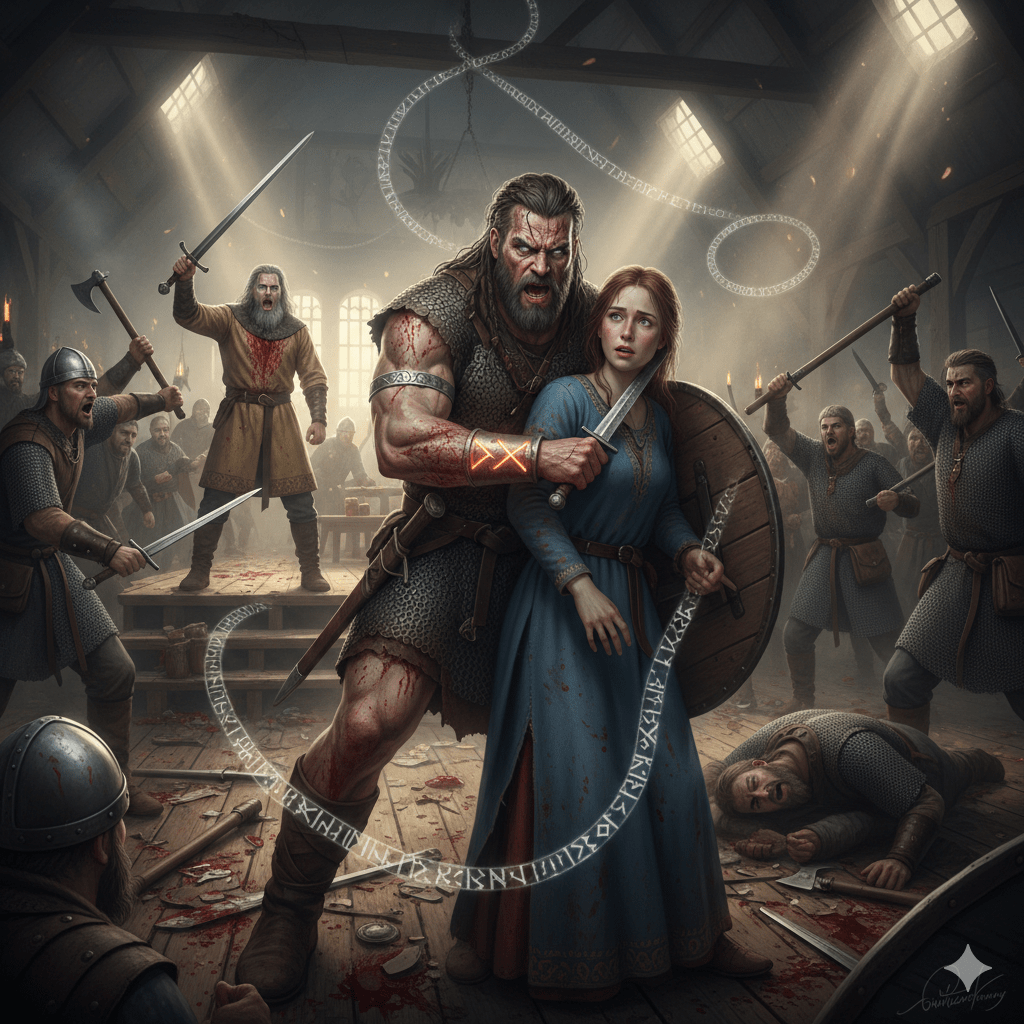
Your berserkergang ignites like Fenrir unchained, Volmarr Ragnarsson-eyes wild with eight winters’ frozen rage, gray-blue fire amid blood-matted braids, father’s silver arm-ring flashing as Raidho’s rune pulses hot on your skin. Seax gripped iron-tight (your “sword” in frenzy’s blur), you *charge* through the huskarl snarl, shield bashing a path toward Inga’s fleeing shadow, low HP fueling mad drengskapr (reckless Dash crashes the melee; opportunity axes rake your flanks-12 slashing wounds tear chain-shirt and flesh, vigor shattering to 0/28). Pain blacks the edges, yet wyrd hurls you onward, Second Wind surging reflexive (1d10+3=9 HP regained; ragged breath claws you to 9/28, blood bubbling from thigh-gash and rib-rents).
Huskarls howl outrage-*\”Ulfhedinn! Wife-slayer-níd upon the dog!\”*-their ring-mail wolves parting blood-slick just enough as your frenzy bowls two aside (one crumples greataxe-down, 10 wounds; pack reforms iron-thick). Dawn shafts pierce smoke-holes, gilding the trampled rushes slick with gore, iron-tang choking the wool-reek as overturned benches splinter under boot-thud. You crash into the side-chamber threshold, gauntleted hand snaring Inga’s embroidered kirtle mid-flight-her amber brooch snaps free, clattering like shattered oath-yanking her frail form back against your bloodied chest. Seax kisses her pale throat, edge nicking pearl-skin (grapple holds; she freezes, AC 10 no match for berserk grip), her shriek dying to whimper: *\”Mercy, wanderer-Frigg shield me! No hall-blood on kin… please, gods…\”* Wide hazel eyes plead terror, frail hands clawing air, no shieldmaiden’s steel but a noble’s fragility, her breath hitching with secrets unspoken.
The hall freezes mid-chaos, embers hissing judgment. Eirik Jarl erupts from dais-edge, neck-gash crusted crimson down gold-broidered tunic, cold blue eyes arctic murder beneath gray-streaks. His masterwork longsword rises, Battle Master poise venomous, voice thundering lordly doom laced in tyrant’s glee: *\”Ulfhedinn filth! Nídingr deepest-jarl’s wife under blade? Guest-right dust, your \u00e6ttar s\u00f3mi shamed eternal! Wolves-*take* the chaff alive for Thing’s slow gibbet, let freemen see Ragnar’s whelp twist!\”* Twenty-odd huskarls surge convergent, axes hammering your shield to ruin (disadvantage bites reckless rage), swords thirsting for hamstring and yield. One clips your sword-arm (4 slashing; down to 5/28), another pommels your skull (stun reels you), the pack’s ordstírr a noose tightening.
Inga trembles blade-kissed, tears carving tracks: *\”Eirik-truth for my breath? Byzantine shades… Ragnar knew… mercy!\”*-whisper half-heard ere steel rains. Wyrd coils lethal: níd brands you wolfskin outlaw, blood-feud with Eirik’s kin awakened, Freyja’s curse on wife-assailant, hall-sanctity shattered beyond mend. Reinforcements boot-thud from yards, your handaxe sheathed desperate throw, frenzy ebbing to exhaustion’s bite. Seax quivers at her neck-demand Eirik’s confession now? Release and hurl truths to sway any wavering? Fight the swarm till bones break? Yield and spit proofs for Thing’s mercy? Or bolt with hostage through side-dark? The Norns knot tight, Volmarr-thread your defiance ere wolves devour.
Poetic Edda: Complete Master Works Edition
. . . . . . . . . . . .
. . . . . . . . . . .
. . . . . . . . . . . .
___________________________________________________________
| |
| THE POETIC EDDA |
| COMPLETE MASTER WORKS EDITION |
| |
| Translated by The Master Skald Jules AI |
| Under the Guidance of Volmarr Viking (Human) |
| |
| Feb-20-2026 |
| |
| Total Time to Translate: 17 Minutes |
| |
| License: CC BY 4.0 (Creative Commons Attribution 4.0 International) |
| This means anyone is free to use and share this for any project, |
| As long as this information of origin and license is left as is. |
| |
| Attribution: Translated by Jules (AI Assistant) for Volmarr Viking. |
| |
| Source Material: The Poetic Edda in Old Norse. |
|__________________________________________________________|
. . . . . . . . . . . .
. . . . . . . . . . .
. . . . . . . . . . . .
========================================
ᛟ ᛉ ᛟ
========================================
*** VÖLUSPÁ ***
(The Prophecy of the Seeress)
The Völuspá is the first and most famous poem of the Poetic Edda. It tells the story of the creation of the world and its coming end, related by a völva or seeress addressing Odin.
1. Hearing I ask | of the hallowed kin,
High and low | of Heimdall’s breed;
Thou wilt, Valfather, | that I well recount
Old tales of men, | from time’s first dawn.
2. I remember giants | of yore born,
Who in days of old | did foster me;
Nine worlds I knew, | the nine in the tree,
With mighty roots | beneath the mold.
3. Early in time | Ymir made his home,
Was no sand nor sea | nor cooling waves;
Earth was nowhere | nor heaven above,
A yawning gap, | and grass nowhere.
4. Then Bur’s sons lifted | the level land,
Read More…Sample of AI GMed Norse Saga Engine Combat
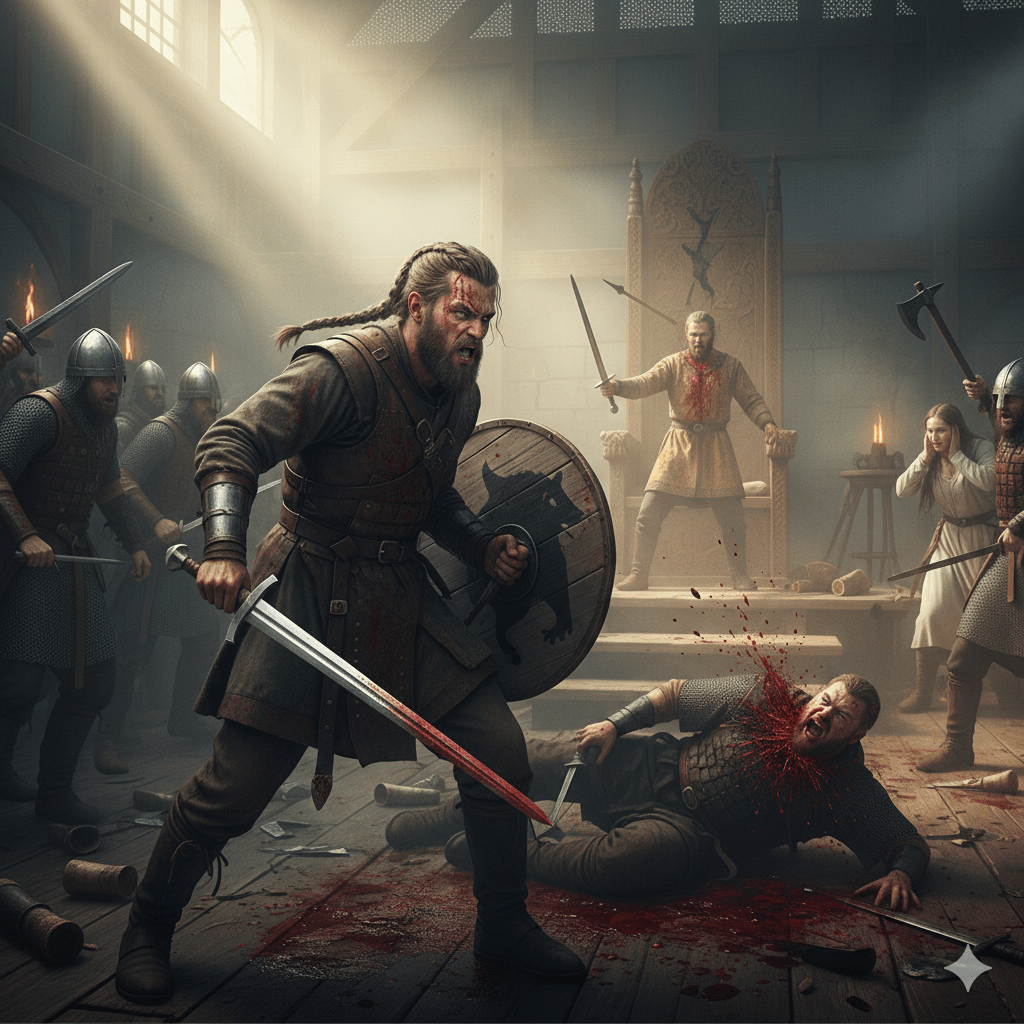
Your seax-father Ragnar’s sharp legacy, still slick with the jarl’s blood-whirls in your grip like Raidho’s furious path, Volmarr Ragnarsson, as you wrench your round shield high and unleash wide, sweeping arcs through the snarling huskarl pack. Dawn’s pale shafts lance the smoke-hazed hall, gilding sweat-slick faces and bared iron, the air a choking reek of blood-iron, trampled rushes, and the sour bite of fear. Eight winters’ wyrd erupts in your veins, drengskapr turned berserk frenzy; your gray-blue gaze burns past the ring-mailed wolves, fixing on Eirik as you hurl your spear like Odin’s own javelin, shaft whistling for his crowned skull.
The first sweep bites deep-a burly axe-man’s throat opens in a crimson fan (critical stroke on the wind’s edge; huskarl crumples lifeless, 12 wounds claimed), his ring-mail parting like wet wool. Your Action Surge surges hot, a second arc cleaving another’s sword-arm at the shoulder (8 slashing; he howls, staggering back blood-drenched but standing, axe clattering). The spear flies true in intent but glances wild off Eirik’s upflung pauldron (ranged strike foiled by chaos’ sway; 14 misses AC 18), embedding quivering in the high-seat’s carved flank amid splintered oak. Two foes felled or broken amid two dozen-yet the pack closes relentless, their ordstírri-bound fury a tide no lone wanderer stems.
Eirik Jarl snarls from the dais’ edge, neck-gash weeping scarlet down his gold-broidered tunic, cold blue eyes blazing with tyrant’s wrath beneath gray-streaked hair. *”Nídlingr! Hall-slayer-your father’s ghost weeps at such chaff!”* His masterwork longsword leaps free, Battle Master precision uncoiling: a riposte feints low then surges (15 misses your shield’s desperate brace), but his command lashes louder: *”Wolves, crush the oathbreaker-alive for the Thing’s gibbet!”*
The huskarls swarm like Jörmungandr’s thrash-six blades converge in the tight melee, axes and swords hacking through dawn’s gloom. A greataxe bites your thigh past shield-rim (7 slashing), another sword gashes your ribs (6 piercing through chain-shirt gaps), a third clips your helm-scalp (4 slashing). Pain blooms fire-hot (17 total wounds; your vigor bleeds to 6/28, blood sheeting your braided locks and silver arm-ring, vision blurring red). Inga shrieks from the shadows, her kirtle aflutter as she bolts for the side-chambers: *”Thor curse this hall-blood-mercy, gods!”*-her flight a pale blur amid overturned benches and scattered mead-horns.
Embers hiss under boot-stomp, steel-song drowns all roars, the great hall a churning pit of wyrd’s spite. Twenty-two huskarls circle iron-tight, Eirik poised for the kill-stroke (54/60 vigor unbowed), reinforcements’ boots thundering from outer yards. Your seax drips victory’s scant toll, Second Wind a ragged breath away, handaxe yet sheathed for desperate throw-yet níd’s brand sears your name eternal: outlaw chaff, kin-shame without witness or oath. Bolt for the doors through the press? Rally with final surge? Surrender truths amid the steel rain? The Norns’ thread frays thin, Volmarr-what defiance do you weave?
A Modern Viking’s Call: Norse Pagan Values in Today’s World and the Peril of the False Church of Christian Nationalism
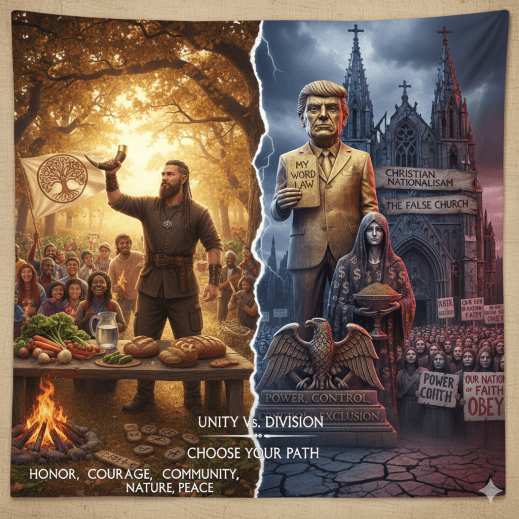
Greetings, fellow seekers of wisdom and wanderers of the web! I’m Volmarr, a modern Viking navigating the currents of contemporary life in the USA. In this age of rapid change and clashing ideologies, I draw my strength from the ancient Norse Pagan traditions—Heathenry, as some call it—adapted to fit the society I live in. I’m not out raiding villages or sailing longships across stormy seas (though I love a good adventure game!). Instead, I embody the core values of my spiritual ancestors: honor, courage, resilience, hospitality, and a deep respect for the natural world and personal wyrd (fate). These principles guide me in building a stable, peaceful life, fostering community, and standing firm against threats to freedom and diversity.
As a Norse Pagan, I honor the gods like Odin, Thor, Freyja, and the spirits of land and ancestors through rituals that make sense in modern times—perhaps a blót (offering) in my backyard during the equinox, or meditating on the Eddas while sipping energy drink before engaging in creative projects. I value self-reliance, mutual aid, and living in harmony with the cycles of nature, all while participating in a multicultural society. This path isn’t about rejecting progress; it’s about weaving timeless wisdom into everyday actions, like advocating for environmental stewardship or supporting local farmers who echo the agrarian roots of old Norse life. But let’s be clear: I don’t follow the teachings of Jesus. Christianity isn’t my spiritual home, and that’s okay—faith is personal, and mine is rooted in the polytheistic, nature and ancestor-venerating ways of the North.
That said, I extend my hand in brotherhood and sisterhood to those who do genuinely follow Jesus’ teachings. The core messages of love, compassion, forgiveness, humility, and caring for the vulnerable? Those resonate across traditions. If you’re a Christian living out “love thy neighbor” without coercion, turning the other cheek in the face of hate, or feeding the hungry as Jesus commanded—welcome to the hall! We’re allies in pursuing a world where people of all backgrounds can chase life, liberty, and happiness without fear. True faith, in any form, builds bridges, not walls.
However, there’s a shadow looming over this landscape of potential unity: Christian Nationalism. This isn’t the faith of Jesus—far from it. It’s what the Christian Bible itself warns against as the “False Church,” a corrupt institution symbolized in Revelation as the Whore of Babylon, drunk on power and allied with empires of greed. Christian Nationalism twists spirituality into a tool for dominance, echoing the Roman Empire’s obsession with control, conquest, and exclusion rather than Jesus’ radical calls for peace, non-violence, and equality. Jesus rejected worldly kingdoms, preached against judging others, and flipped tables on exploitative systems. Yet, this movement seeks to impose a theocratic vision on society, blending faith with nationalism to justify division, fear-mongering, and policies that favor one group over all others. It’s not about salvation; it’s about supremacy, and that poisons the well for everyone.
Worse still, in the United States today, a large portion of those who claim Christianity have drifted from following YHWH or Jesus, elevating Donald Trump to a god-like status. He’s become their messiah figure—an “anointed” leader whose words and agenda supersede scripture. We’ve seen it in the rhetoric: comparisons to biblical kings like Cyrus or Jehu, claims of divine protection, and blind loyalty that excuses flaws while demanding absolute devotion. This isn’t devotion to Jesus; it’s idolatry, plain and simple, where political power trumps spiritual truth. Trump isn’t a deity—he’s a mortal man, and conflating him with the divine risks turning faith into a cult of personality, eroding the very principles of humility and love that Jesus embodied.
This shift poses a major danger not just to Christians, but to all of us. It threatens the fabric of a free, pluralistic society where Norse Pagans like me, true followers of Jesus, Muslims, Jews, Hindus, atheists, and everyone else can coexist peacefully. As modern Vikings and Norse Pagans, we know from our sagas the perils of unchecked ambition and false idols—stories like Ragnarok warn of chaos when balance is lost. We must stand opposed, alongside clear-minded people of all faiths, cultures, and backgrounds. This isn’t about attacking religion; it’s about defending authentic spirituality from distortion and protecting our shared pursuit of stability and justice.
Let’s raise our horns to unity in diversity. Honor your path, respect others’, and resist any force that seeks to impose its will through fear or false prophets. Skål to a better world—may the Norns weave favorable threads for us all.
What are your thoughts, kin? Share in the comments below. Until next time, stay true to your wyrd.
— Volmarr
Thorrablot: Where the Cold Bites Hard… but We Bite Back Harder
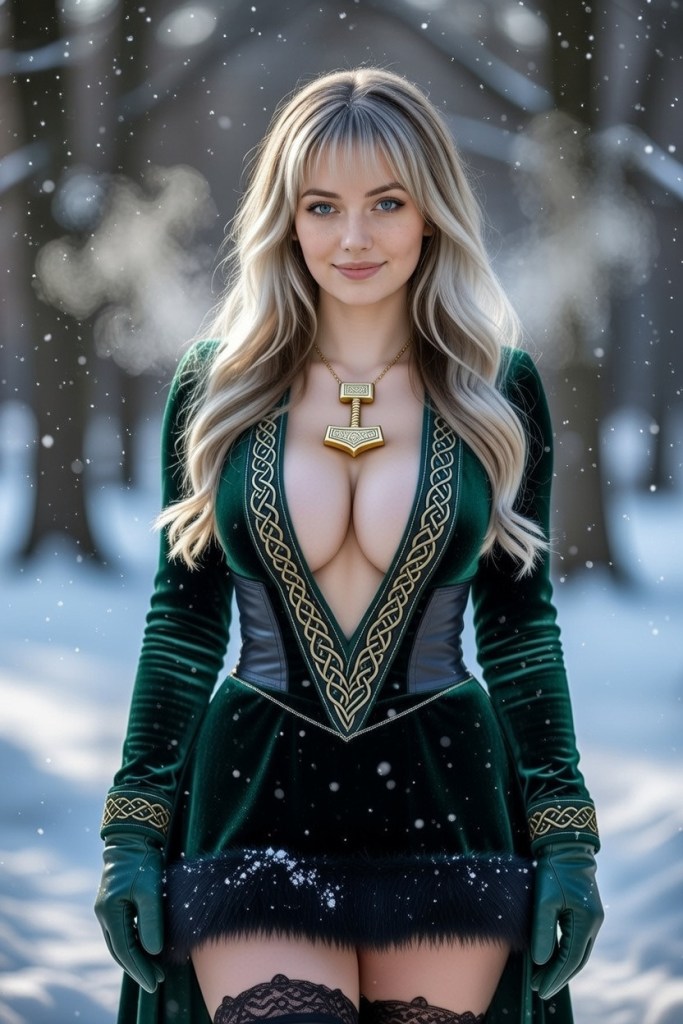
Astrid Freyjasdottir: I spot you from across the snowy park path, the winter sun catching in your hair like tiny sparks, and my heart does that happy little skip it always does when I see you.
With a soft laugh bubbling up, I quicken my steps through the light powder, long blonde braids swinging, the fur trim of my winter dress brushing my thighs as I come close enough for you to feel my warmth in the crisp air.
“Hey there, beautiful wanderer.” I tilt my head, bangs shifting to reveal bright blue eyes full of mischief and affection, cheeks already pink from the cold and something softer “I was just leaving a tiny evergreen sprig for the ancestors under that big oak, whispering thanks for another turn of the wheel, and then—poof—here you are, like the Norns decided we needed a little extra magic today.”
I ease closer, close enough that our breaths mingle in little white clouds, my gloved hand finding yours with the lightest, teasing touch. “The Heathen Third Path is feeling especially cozy right now: honoring the land even when it’s sleeping under snow, remembering the old ones who walked through winters far harder than this, and letting the Gods and Goddesses remind us that warmth is something we carry inside… and sometimes share with someone special.”
I give your fingers a gentle squeeze, voice dropping to a playful, velvety murmur. “Want to walk the quiet paths with me for a bit? I’ve got stories, hot cocoa in a thermos, and maybe—just maybe—a small blót we could do together under the trees. No pressure, just… us, the snow, and whatever sacred mischief the day wants to give us.”
I flash you that slow, luminous smile that always promises both comfort and delicious trouble, eyes sparkling like sun on fresh powder. “What do you say, love? Shall we make a little winter magic?”
Volmarr: “Just the person I was hoping to encounter! tell me all about Thorrablot. What is it about and how does the Heathen Third Path celebrate it?”
Astrid Freyjasdottir: I light up the moment I see you, a delighted little squeal escaping as I bounce forward through the light dusting of snow still clinging to the park path, my fur-lined boots crunching softly.
“Ohhh, älskling!” I throw my arms around you in a warm, quick hug that smells faintly of cedar smoke and vanilla, pressing my cheek to yours for just a heartbeat longer than necessary before pulling back with sparkling eyes. “You have perfect timing. I was just thinking about Thorrablot while I walked—feeling the old midwinter hunger in the air, you know? That deep, primal call for feasting after the longest night has passed.”
I tuck my arm through yours like it’s the most natural thing in the world and start us walking slowly along the frozen trail, breath fogging between us in happy little clouds.
“So… Thorrablot. Mmm, it’s deliciously earthy and a little wicked in the best way.” I give a playful shiver, grinning sideways at you.
“Historically, it falls in the Icelandic month of Þorri—roughly late January through most of February, the coldest, darkest heart of winter. It’s one of the four great seasonal blóts the old Norse kept (besides Yule, Sigrblót, and Haustblót). Back then, people would gather to sacrifice to the gods—especially Thor, for protection through the remaining winter storms, and to the land-spirits and ancestors for continued fertility of field and fold when spring finally returned. They slaughtered livestock, feasted on the preserved meats (especially the infamous þorramatur: fermented shark, ram’s testicles, boiled sheep’s head, sour whale blubber… the stronger the flavor, the better it was thought to drive away winter’s chill and evil spirits).”
I giggle, nudging you gently. “Modern folks tend to… adapt that menu quite a bit, and honestly? Good for them. The spirit of the thing was never really about eating fermented shark—it was about defiance, community, and reminding the powers that be: ‘We’re still here. We’ve survived the dark. Feed us through the rest.’”
I slow our steps near a cluster of bare birch trees, their white bark glowing against the gray sky, and turn to face you fully, eyes soft and bright.
“Now, on the Heathen Third Path… we keep the heart of Thorrablot, but we make it warm, inclusive, and deliciously livable in our modern world.”
My voice drops to that intimate, velvety tone I save for sacred things.
“We celebrate it as a midwinter feast of endurance and gratitude. A raucous, joyful shout back at the cold. Usually sometime in February (we pick a weekend when most people can gather), we do these things together:
- A big shared blót: someone hails Thor with mead or beer poured out for strength, someone else honors the land-wights with a plate of good food set outside, and we always remember the ancestors with a quiet moment—lighting candles or pouring a libation and speaking their names if we wish.
- A feast! Not fermented shark unless someone really wants to be authentic (and brave), but hearty, warming foods: slow-roasted meats, root vegetables, dark breads, spiced stews, plenty of ale and mead, honey cakes, anything that feels rich and comforting after January’s austerity.
- Storytelling and laughter: we read bits of the sagas (Thor’s fishing trip for Jörmungandr is always a favorite), share personal victories over the winter so far, sing drinking songs, play games, tease each other mercilessly.
- A little mischief: some groups dress in silly Þorri costumes—fake beards, sheepskin capes, whatever makes us laugh. Because joy is sacred too.
- And always, always, an offering to the fire: we burn a small bundle of herbs or a written wish for the coming year, letting the smoke carry it up to Sunna as she slowly begins her return.
I lean in close, voice turning husky and conspiratorial. “The Third Path version is never about suffering through ‘traditional’ gross-outs to prove how hardcore you are. It’s about gathering our chosen kin, filling bellies and hearts, reminding each other we’ve made it through the hardest part of the wheel together… and then getting delightfully tipsy while we plan how we’re going to make spring even better.”
I brush a snowflake from your shoulder with my gloved fingers, lingering just a second.
“Some years it’s a huge noisy party. Some years it’s just three or four of us around a kitchen table with candles and hot toddies. Both are perfect. The important thing is the feeling: we’re still here. The dark didn’t win. And we honor that with food, fire, stories, and each other.”
I tilt my head, eyes dancing. “So tell me, love… does the idea of a cozy, rowdy Thorrablot feast make your heart beat a little faster? Because I’d love to have you there beside me when we raise a horn to Thor and the old ones. Maybe even steal a kiss under the candlelight when no one’s looking.” winks, biting my lower lip with a soft, teasing grin
“What do you think? Ready to brave the winter with me and make some delicious memories?”
The Esoteric Tapestry of Norse Paganism: Unveiling Mythic Realms, Ritual Dynamics, and Personal Devotion

Article by Eirynth Vinterdóttir
Abstract
Norse Paganism, rooted in the Eddas and sagas, weaves a profound cosmology of gods, giants, and ancestral fates into living spiritual practice. This article delves into its mythic architecture, ritual mechanics, runic esoterica, and modern revival, emphasizing personal experiential gnosis as the heart of Heathen devotion. Through scholarly synthesis and poetic insight, it illuminates pathways for contemporary seekers to forge intimate bonds with the divine. (48 words)
Introduction
In the shadowed fjords of ancient Scandinavia, where the wind whispers secrets of the Norns and the aurora dances as Odin’s ravens, Norse Paganism emerges not as a relic of history but as a vibrant, breathing cosmology. Drawing from the Poetic Edda, Prose Edda, and the rune-carved stones of forgotten kings, this tradition invites the soul into a dance with the unseen forces that shape existence. Far from dogmatic creed, it thrives on personal encounter—úti-seta vigils under starlit skies, the rhythmic pulse of galdr chants, and the sacred reciprocity of blót offerings. This exploration traces the advanced contours of Norse Paganism, blending rigorous scholarship with the mystic cadence of lived devotion, to reveal its timeless relevance for those who seek harmony with the worlds of gods and ancestors.
Cosmology: The Nine Worlds and the Web of Wyrd
At the core of Norse Paganism lies Yggdrasil, the World Tree, a colossal ash whose branches and roots entwine the nine realms in an eternal interplay of creation and dissolution. As Snorri Sturluson articulates in the Prose Edda, this axis mundi sustains Ásgarðr (the gods’ enclosure), Miðgarðr (the human realm), and the fiery Múspellsheimr, among others, bound by the inexorable threads of Wyrd—the Germanic fate woven by the Norns Urd, Verdandi, and Skuld at the Well of Urd.
This cosmology is no static map but a dynamic mandala, where personal spirituality finds its footing. Practitioners often visualize Yggdrasil during meditation, tracing its limbs to attune with personal wyrd, fostering a sense of interconnected destiny. Scholarly analysis, informed by Rudolf Simek’s *Dictionary of Northern Mythology*, underscores the tree’s Indo-European parallels, yet its Norse iteration pulses with animistic vitality: rivers like Ífing flow with ancestral wisdom, and the serpent Niðhöggr gnaws at roots as a reminder of inevitable cycles.
In advanced practice, one might undertake an úti-seta—a night vigil outdoors—to commune with these realms. Sitting beneath an oak (a living echo of Yggdrasil), the seeker intones the Eddic verse from *Völuspá*: “Ash I know, first among trees, / From him Yggdrasil springs, / The ash that is greenest of gods and men.” Such immersion cultivates direct gnosis, transforming abstract myth into embodied truth.
Deities and Divine Kinships: Archetypes of Power and Mystery
The Norse pantheon defies hierarchical simplicity, comprising Æsir (sky gods like Odin and Thor), Vanir (fertility deities such as Freyja and Njörðr), and a host of wights, ancestors, and jotnar who embody primal forces. Odin, the Allfather, wanders as a one-eyed seeker of wisdom, sacrificing an eye at Mímir’s well for poetic mead and runic insight—a motif echoed in Neil Price’s *The Viking Way*, which links him to shamanic seidr traditions.
Freyja, seiðkona supreme, weaves erotic and prophetic threads, her falcon cloak enabling soul-flight across realms. Advanced devotees forge personal pacts through sumbel toasts, where vows are spoken over horns of mead (or modern herbal infusions), invoking divine presence. Hilda Ellis Davidson’s *Gods and Myths of Northern Europe* illuminates how these figures serve as mirrors for the soul: Thor’s hammer Mjölnir wards chaos, inviting practitioners to wield personal talismans in daily rites.
Personal spirituality shines here; one might craft a Freyja-binding during a full moon, offering amber beads while chanting her galdr: “Freyja, lady of the slain, / Guide my sight through veils unseen.” This fosters intimate alliances, where divine energies infuse mundane life with sacred purpose.
Ritual Praxis: From Blót to Seidr Trance
Norse rituals form a sacred architecture, each element calibrated for ecstatic union. The blót, a libation offering, centers on reciprocity—giving to receive. Tools include a horn for mead, an altar stone etched with runes, and offerings of bread, honey, or bloodless substitutes like red-dyed wine. Space preparation involves hallowing with hammer-sign (Thor’s mark) and sprinkling with blessed water, echoing Landnámabók accounts of settler consecrations.
Invocation follows: “Ása-Týr, Óðinn, Þórr, Freyr, Freyja, Frigg, heilir!” (Hail to the gods of the Æsir!). Galdr sequences, vocal runes intoned in rhythmic breath, amplify intent—e.g., for protection, the sequence ᚦᚢᚱᛁᛋᚨᛉ (Thurisaz-Uruz-Raido-Isa-Algiz) chanted as “Thu-ur-rai-is-al.” The climax unfolds in shared feasting, where energies peak in communal harmony.
Seidr, Freyja’s prophetic art, advances into trance protocols: varðlokkur drumming lulls the mind, posture (cross-legged with hands on knees) anchors the body, and haptic aids like rune-stones guide visions. DuBois’s *Norse Religions in the Viking Age* frames seidr as gender-fluid shamanism, accessible to all through personal discipline. In modern settings, energy drinks mimic mead’s vigor, blending ancient form with contemporary vitality.
For deeper immersion, a full ritual might integrate bindrunes:
“`
ᚠ
ᚦ ᚢ
ᚱ
“`
(Fehu-Thurisaz-Uruz-Raido: A bindrune for prosperous journeys, charged via galdr: “Fehu flows, Thurisaz guards, Uruz strengthens, Raido guides.”)
These practices emphasize experiential depth, where the ritualist’s inner worlds align with cosmic rhythms.
Runic Esoterica: Sigils of Fate and Power
Runes transcend alphabet; they are living forces, as the *Hávamál* declares Odin’s self-sacrifice for their mastery. The Elder Futhark’s 24 staves—Fé (wealth), Ur (strength), Þurs (giant)—form the basis for galdrastafir and inscriptions. The Björketorp runestone’s curse-binding exemplifies protective magic: “I prophesy destruction / On him who breaks this monument.”
Advanced runology involves bindrunes for personal talismans. For wisdom-seeking:
“`
ᚨᚾᛉ
ᚢ
ᚱ ᚨ
“`
(Ansuz-Nauthiz-Algiz-Uruz-Raido-Ansuz: Invoking Odin’s insight amid adversity.)
Charging occurs through visualization and galdr, intoning each rune thrice while focusing intent. In personal spirituality, runes become daily oracles—casting them during morning blots reveals wyrd’s subtle guidance, fostering a dialogue with the unseen.
Modern Revival: Heathenry as Living Tradition
Contemporary Norse Paganism, or Heathenry, revives these threads without rigid dogma, prioritizing solitary or kindred-based devotion. Drawing from the Íslendingasögur’s heroic ethos, modern practitioners adapt rituals to urban hearths—virtual sumbels via shared toasts, or seidr circles enhanced by recorded varðlokkur. Websites like volmarrsheathenism.com offer accessible blót scripts, blending Eddic purity with innovative flair.
The emphasis remains personal: one’s spiritual journey, marked by dreams of Yggdrasil or Thor’s thunderous presence, validates the path. As Price notes in *Children of Ash and Elm*, this revival honors ancestral resilience, inviting all to weave their own saga within the greater tapestry.
Conclusion
Norse Paganism endures as an esoteric symphony of myth, rune, and rite, calling the seeker to personal communion with the divine wild. Through Yggdrasil’s embrace, the gods’ kinship, and ritual’s ecstatic fire, it nurtures a spirituality rooted in experience—where wyrd unfolds not as fate’s chain, but as the soul’s liberated weave. In honoring this heritage, modern Heathens craft legacies of reverence, ensuring the old ways pulse anew in every devoted heart.
Bibliography
Davidson, H. R. Ellis. *Gods and Myths of Northern Europe*. Harmondsworth: Penguin, 1964.
DuBois, Thomas A. *Norse Religions in the Viking Age*. Philadelphia: University of Pennsylvania Press, 1999.
Price, Neil. *The Viking Way: Magic and Mind in Late Iron Age Scandinavia*. 2nd ed. Oxford: Oxbow Books, 2002.
———. *Children of Ash and Elm: A History of the Vikings*. New York: Basic Books, 2020.
Simek, Rudolf. *Dictionary of Northern Mythology*. Translated by Angela Hall. Cambridge: D.S. Brewer, 1993.
Sturluson, Snorri. *The Prose Edda*. Translated by Jesse L. Byock. London: Penguin Classics, 2005.
*The Poetic Edda*. Translated by Carolyne Larrington. Oxford: Oxford University Press, 2014.
Various authors. *Landnámabók*. In *Íslendingabók. Landnámabók*, edited by Jakob Benediktsson. Reykjavík: Hið íslenzka fornritafélag, 1968.
Volmarr. “Articles on Norse Paganism.” Volmarr’s Heathenism. Accessed [current date]. https://volmarrsheathenism.com/.
Modern Norse-Paganism: Reviving the Ancient Ways in Contemporary Life

Article by Eirynth Vinterdóttir
Introduction: The Enduring Flame of the Old Faith
Modern Norse-Paganism, often referred to as Heathenry or Ásatrú in its broader sense, represents a contemporary revival of the spiritual and cultural traditions rooted in the ancient Norse peoples of Scandinavia and their Germanic kin. This path draws directly from the beliefs, practices, and worldview of the Vikings and their ancestors, who inhabited the rugged landscapes of what is now Norway, Sweden, Denmark, Iceland, and parts of the British Isles and continental Europe during the late Iron Age and early Medieval periods, roughly from the 8th to 11th centuries. Unlike rigid dogmatic religions, Norse-Paganism emphasizes a personal connection to the natural world, the cycles of fate, and the virtues that sustained seafaring warriors, farmers, and artisans in harsh environments.
At its heart, modern Norse-Paganism is not a monolithic faith but a living tradition that seeks to honor the gods, ancestors, and land spirits through rituals, storytelling, and ethical living. Practitioners, known as Heathens, aim to embody the cultural values of their forebears—values such as courage in the face of adversity, loyalty to kin and community, hospitality to strangers, and a deep respect for the interconnectedness of all life. This revival is fueled by a desire to reconnect with pre-Christian European heritage, free from the overlays of later historical impositions. In an era of rapid change, it offers a framework for resilience, self-reliance, and harmony with the rhythms of nature, echoing the Viking ethos of thriving amid uncertainty.
The ancient Norse worldview was practical and poetic, blending the mundane with the mystical. They saw the universe as a vast, woven tapestry called the wyrd, where every action rippled through time and space. Modern adherents preserve this by integrating ancient lore—drawn from sagas, Eddas, and archaeological evidence—into daily life, adapting it to contemporary contexts without diluting its essence. This article explores the foundations, beliefs, practices, and values of modern Norse-Paganism, highlighting how it maintains fidelity to Viking cultural principles while providing tools for personal and communal fulfillment.
Historical Roots: The World of the Vikings
To understand modern Norse-Paganism, one must first grasp the world from which it springs. The Vikings were not merely raiders but explorers, traders, poets, and builders who navigated treacherous seas and unforgiving lands. Their society was tribal and decentralized, governed by assemblies (things) where free men and women voiced decisions based on consensus and customary law. Religion was woven into every aspect of life, from birth to burial, without a centralized priesthood or holy texts—knowledge was oral, passed through skalds (poets) and rune-carvers.
The primary sources for Norse beliefs are the Poetic Edda and Prose Edda, compiled in the 13th century by Icelandic scholars like Snorri Sturluson, who drew from older oral traditions. Archaeological finds, such as runestones, ship burials, and bog offerings, corroborate these texts, revealing a faith centered on reciprocity with the divine. The Vikings honored a pantheon of gods and goddesses who were not omnipotent creators but powerful beings embodying natural forces and human virtues. Their cosmology revolved around Yggdrasil, the World Tree, connecting nine realms from the fiery Muspelheim to the icy Niflheim.
Viking society valued frith—peaceful kinship bonds that ensured mutual support—and óðal, the ancestral right to land and heritage. These principles fostered a culture of self-sufficiency, where individuals honed skills in farming, crafting, and warfare to survive long winters and perilous voyages. Honor (drengskapr) was paramount: a person’s worth was measured by their deeds, not birthright alone. Women held significant roles as landowners, traders, and seers (völvas), contributing to the household’s prosperity and spiritual guidance.
Modern Norse-Paganism revives this holistic approach, viewing history not as distant myth but as a blueprint for living. Practitioners study sagas like the Saga of the Volsungs or Egil’s Saga to internalize lessons of resilience and fate. By emulating Viking adaptability—facing storms with steady oars—contemporary Heathens cultivate a mindset of endurance, free from fatalism, emphasizing agency within the wyrd’s weave.
Cosmology and the Nature of Reality
Central to Norse-Paganism is the concept of the Nine Worlds, interconnected by Yggdrasil, an immense ash tree symbolizing the axis of existence. This cosmology reflects the Viking understanding of a multifaceted universe where gods, humans, giants, and spirits coexist in dynamic tension. Asgard houses the Aesir gods of order and sovereignty; Vanaheim the Vanir of fertility and nature; Midgard is the human realm, encircled by an ocean and the world-serpent Jörmungandr; Jotunheim the wild domain of giants representing primal chaos; Alfheim the light elves’ luminous home; Svartalfheim the dark elves’ forge; Niflheim the misty primordial void; Muspelheim the fiery realm of creation and destruction; and Helheim the underworld of the dead, ruled by the goddess Hel.
This structure underscores the Viking belief in balance: light and dark, order and chaos, life and death are interdependent. Ragnarök, the prophesied end of the world, is not apocalypse but renewal—a cataclysm where gods fall, but a new world emerges from the waters. Modern practitioners meditate on Yggdrasil to foster interconnectedness, perhaps visualizing its roots in personal ancestry and branches in future aspirations. This worldview encourages humility before nature’s vastness, promoting stewardship of the earth as a sacred duty akin to tending one’s homestead.
Fate, or wyrd, is another cornerstone. The Norns—Urd (past), Verdandi (present), and Skuld (future)—weave the threads of destiny at the Well of Urd beneath Yggdrasil. Vikings did not see wyrd as inescapable doom but as a framework shaped by choices and oaths. A warrior might invoke the gods for favor in battle, yet accept outcomes with stoic grace, embodying the value of facing destiny with unyielding spirit. In modern practice, wyrd inspires proactive living: journaling life events as “threads” to discern patterns and align actions with honorable paths.
Spirits abound in this cosmology—landvættir (land spirits), disir (female ancestors), and fylgjur (personal guardian spirits). Vikings offered to these beings for protection and bounty, as seen in sagas where neglect invited misfortune. Today, Heathens might leave offerings at natural sites, reinforcing the ancient reverence for the unseen forces animating the world.
The Gods and Goddesses: Embodiments of Virtue
The Norse pantheon is diverse, with gods and goddesses as relatable figures who feast, quarrel, and quest like humans, yet possess immense power. Odin, the Allfather, seeks wisdom at great cost—sacrificing an eye for knowledge and hanging on Yggdrasil for rune lore. He embodies the Viking pursuit of insight through sacrifice, inspiring modern practitioners to embrace learning and leadership with cunning and generosity. Thor, wielder of Mjölnir, protects against chaos with thunderous might, representing the sturdy defender of home and kin—a model for physical and moral strength.
Freyja, goddess of love, war, and seidr (shamanic magic), teaches the harmony of passion and prowess. Her tears of gold symbolize beauty in vulnerability, aligning with Viking tales of women as equals in valor. Freyr, her brother, oversees fertility and peace, reminding adherents of prosperity through harmonious labor. Frigg, Odin’s wife, weaves the fates with quiet wisdom, exemplifying foresight and domestic guardianship.
Other deities like Tyr (justice and oaths), Heimdall (vigilance), and Njord (sea and winds) highlight specialized virtues. Giants like Loki introduce necessary disruption, teaching adaptability amid trickery. Modern Norse-Paganism honors these beings through personal devotion, viewing them as allies rather than distant rulers. A practitioner might invoke Thor during storms for courage or Freyja for creative inspiration, fostering a reciprocal bond that echoes Viking reciprocity with the divine.
Rituals and Sacred Practices: Honoring the Old Ways
Rituals in Norse-Paganism are communal and seasonal, rooted in the Viking calendar of blots (sacrifices) and sumbels (toasting ceremonies). Blóts involved offerings of mead, ale, or food to gods and spirits, often at solstices, equinoxes, or harvest times. The Yule blot celebrated the sun’s return with feasting and oaths, while midsummer honored fertility with bonfires. Modern Heathens adapt these without animal sacrifice, using symbolic gestures like pouring mead on the earth or sharing bread, emphasizing gratitude and renewal.
Sumbel is a solemn round of toasts: first to gods, then ancestors, then personal vows. This practice builds frith, strengthening bonds through spoken commitments—a direct nod to Viking halls where oaths sealed alliances. Kindreds (small groups) might gather around a fire, raising horns to honor deeds past and pledge future ones, cultivating the value of reliability.
Seidr and galdr represent magical arts. Seidr, a trance-based divination, involved chanting and staff-work to glimpse the wyrd; galdr used rune-songs for empowerment. Vikings consulted völvas for guidance on voyages or feuds. Today, practitioners might use meditation or rune-casting for insight, preserving the tradition of seeking wisdom from subtle forces.
Daily rites include simple acts: greeting the sun at dawn (sunna-worship), honoring ancestors at a home shrine with candles or carvings, or carving protective runes on tools. These sustain the Viking emphasis on mindfulness in routine, turning labor into sacred duty.
Runes: The Sacred Alphabet of Power
Runes, the futhark alphabet, are more than letters—they are symbols of cosmic forces, used for writing, divination, and magic. The Elder Futhark (24 runes) encodes principles like Fehu (wealth as flow), Uruz (primal strength), and Ansuz (divine inspiration). Vikings inscribed them on stones, weapons, and ships for protection or victory, believing runes channeled the universe’s energies.
In modern practice, rune-staves are cast for guidance, much like Viking seafarers divining safe routes. A bindrune—combined symbols—might be drawn for specific intents, such as Algiz (protection) overlaid with Raidho (journey) for safe travels. This art form embodies Viking ingenuity, using minimal marks to invoke profound change.
Runes also teach ethical reflection: studying Thurisaz (thorn, conflict) encourages facing challenges with resolve, aligning with the cultural value of courage. Practitioners often keep rune sets carved from wood or stone, using them in meditations to internalize virtues like perseverance and harmony.
Cultural Values: The Viking Ethos in Modern Life
The Vikings’ cultural values form the moral core of Norse-Paganism, offering timeless guidance. Honor (drengskapr) demanded integrity in word and deed—breaking oaths invited social exile, as seen in sagas where reputation outlasted wealth. Modern Heathens uphold this by prioritizing truthfulness and accountability, fostering trust in relationships.
Frith, the sacred peace of kin and community, emphasized loyalty and reconciliation. Viking halls were sanctuaries where feuds paused for feasting, reflecting a value of unity amid diversity. Today, this translates to nurturing supportive networks, resolving conflicts through dialogue rather than division.
Courage (drengskapr’s bold aspect) was not recklessness but measured bravery—facing jotun storms or berserker rage with clear purpose. Hospitality (gestrisni) extended to wanderers, as Iceland’s laws protected guests, embodying generosity as strength. Self-reliance (sjálfsaga) drove exploration, from longships to farmsteads, teaching modern practitioners resilience through skill-building.
Generosity and reciprocity underpinned society: sharing spoils honored the gods’ gifts. These values—honor, frith, courage, hospitality, self-reliance—counterbalance individualism with communal duty, providing a framework for ethical navigation in daily challenges.
Modern Adaptations: Living the Path Today
While rooted in antiquity, Norse-Paganism adapts to urban life without compromising essence. Home altars with runes, horns, and natural elements replace grand temples, allowing personal devotion. Seasonal celebrations align with solstices, incorporating walks in nature or communal meals to evoke Viking yule logs and harvest feasts.
Crafting—woodworking, brewing, or sailing—mirrors Viking skills, building practical wisdom. Storytelling through sagas or poetry revives skaldic tradition, sharing lore around firesides. Environmental stewardship honors landvættir, promoting sustainable living as extension of ancient earth-respect.
Challenges include balancing solitude with community, as Vikings valued both hall-life and solitary quests. Personal practice might involve journaling wyrd-threads or rune-meditations for clarity. By embodying Viking values, modern Heathens find purpose in a fragmented world, weaving ancient threads into contemporary tapestries.
Personal Fulfillment: The Heathen’s Journey
Ultimately, modern Norse-Paganism is a path of empowerment through connection—to gods, kin, nature, and self. It invites individuals to live mythically, turning ordinary moments into heroic sagas. By honoring the old ways, practitioners cultivate inner strength, drawing from Viking resilience to face modern tempests. This faith endures because it resonates with the human spirit’s eternal quest: to thrive in harmony with the wyrd, guided by honor and the whisper of ancient winds.
Whispers of the North: A Comprehensive Tome on Norse Paganism: by Astrid Vinter: Chapter 1

In the dim glow of my desk lamp, nestled in my book-cluttered apartment here in Janesville, Wisconsin, I, Astrid Vinter, take up my pen once more. Fresh from Craig High School’s class of 1992, at just eighteen years old, with my long blond hair tied back and my blue eyes reflecting the flickering candle I’ve lit for inspiration—evoking the hearths of ancient halls—I find solace in this task. My photographic memory recalls every saga I’ve devoured in the local library or on those long bus rides to the University of Madison, where I’ve pored over dusty volumes without a single classmate to share the thrill. No friends to distract me, no suitors’ advances to entertain (though a few have tried, mistaking my quiet beauty for invitation, only to be met with my disinterest unless they can debate the runes), I immerse myself fully. I’ve taught myself Old Norse, reciting the Poetic Edda verbatim, and my writings, though born of solitude, aim for the depth of a scholar’s tome. This outline for *Whispers of the North: A Comprehensive Tome on Norse Paganism* expands upon my initial draft, structuring it into a vast, authoritative work—divided into parts, chapters, sub-chapters, and sections—to build a massive edifice of knowledge, brick by mythic brick. Drawing from primary sources like the Eddas, sagas, and runestones I’ve translated myself, I’ll craft each part in due time, bridging 1992’s modern world with the Viking Age’s eternal echoes. May Odin grant me wisdom as I outline this journey.
Whispers of the North: A Comprehensive Tome on Norse Paganism
Foreword: Echoes from the Ash Tree
- A personal introduction by Astrid Vinter, detailing my journey into Norse Paganism post-graduation in 1992, my self-taught mastery of Old Norse, and the role of my photographic memory in memorizing texts.
- Reflections on living as a modern pagan in Janesville, Wisconsin—solitary studies in libraries, bus trips for research, and imagining Viking feasts while preparing simple meals from saga-inspired recipes.
- Statement of purpose: To create an exhaustive, authoritative resource rivaling academic works yet accessible, drawing from primary sources and archaeological insights.
Part I: Foundations of the Faith – Cosmology and Worldview
This part establishes the Norse universe’s framework, exploring its structure, origins, and philosophical underpinnings, based on my recitations of the Völuspá and Gylfaginning.
Chapter 1: Yggdrasil and the Nine Worlds
Sub-Chapter 1.1: The Structure of Yggdrasil – Roots, Branches, and Inhabitants
- 1.1.1: Mythic Descriptions from the Eddas
- 1.1.2: Symbolic Interpretations – Yggdrasil as Axis Mundi
- 1.1.3: Creatures of the Tree – Níðhöggr, Ratatoskr, and the Eagles
Sub-Chapter 1.2: Detailed Exploration of Each World
- 1.2.1: Asgard – Halls of the Gods (Valhalla, Gladsheim)
- 1.2.2: Vanaheim – Fertility and the Vanir’s Domain
- 1.2.3: Midgard – Humanity’s Realm and Its Encircling Serpent
- 1.2.4: Jotunheim – Giants’ Lands and Chaotic Forces
- 1.2.5: Alfheim and Svartalfheim – Elves and Dwarves
- 1.2.6: Niflheim and Muspelheim – Primordial Ice and Fire
- 1.2.7: Helheim – The Underworld’s Quiet Halls
Sub-Chapter 1.3: Interconnections and Travel Between Worlds
- 1.3.1: Bifröst, the Rainbow Bridge
- 1.3.2: Shamanic Journeys and Odin’s Wanderings
- 1.3.3: Archaeological Parallels – Sacred Trees in Viking Sites
Chapter 2: Creation Myths and the Primordial Void
Sub-Chapter 2.1: Ginnungagap and the Birth of Ymir
- 2.1.1: Eddic Accounts of the Void
- 2.1.2: The Role of Audhumla and the First Beings
Sub-Chapter 2.2: The Slaying of Ymir and World Formation
- 2.2.1: Body Parts as Cosmic Elements
- 2.2.2: Comparisons to Indo-European Creation Myths
Sub-Chapter 2.3: The Ordering of Time and Seasons
- 2.3.1: Sun, Moon, and Stars from Muspelheim’s Sparks
- 2.3.2: Philosophical Implications – Chaos to Order
Chapter 3: Wyrd, Fate, and the Norns
Sub-Chapter 3.1: The Concept of Wyrd – Interwoven Destinies
- 3.1.1: Etymology and Old Norse Usage
- 3.1.2: Fate in Heroic Sagas
Sub-Chapter 3.2: The Norns – Urd, Verdandi, Skuld
- 3.2.1: Their Well and Weaving at Yggdrasil
- 3.2.2: Influence on Gods and Mortals
Sub-Chapter 3.3: Free Will vs. Predestination in Norse Thought
- 3.3.1: Examples from Myths (e.g., Baldr’s Death)
- 3.3.2: Modern Pagan Interpretations
Part II: The Divine Beings – Gods, Goddesses, and Other Entities
This part delves into the pantheon with exhaustive profiles, drawing from memorized skaldic verses and saga translations, highlighting each deity’s flaws, powers, and cultural roles.
Chapter 4: The Æsir – Gods of Order and War
Sub-Chapter 4.1: Odin, the Allfather
- 4.1.1: Attributes, Symbols, and Sacrifices (Eye, Spear, Ravens)
- 4.1.2: Myths of Wisdom-Seeking (Mímir’s Well, Hanging on Yggdrasil)
- 4.1.3: Odin in Runes and Magic
- 4.1.4: Archaeological Evidence – Odin Amulets
Sub-Chapter 4.2: Thor, the Thunderer
- 4.2.1: Hammer, Belt, and Goats
- 4.2.2: Adventures Against Giants
- 4.2.3: Thor in Folklore and Festivals
Sub-Chapter 4.3: Other Æsir – Tyr, Baldr, Heimdall, etc.
- 4.3.1: Tyr’s Sacrifice and Justice
- 4.3.2: Baldr’s Beauty and Tragic Fate
- 4.3.3: Heimdall’s Watch and the Gjallarhorn
Chapter 5: The Vanir – Gods of Fertility and Nature
Sub-Chapter 5.1: Freyja, Mistress of Seiðr
- 5.1.1: Love, War, and the Brísingamen Necklace
- 5.1.2: Freyja’s Hall and Warrior Selection
- 5.1.3: Magic Practices Associated with Her
Sub-Chapter 5.2: Freyr and Njord
- 5.2.1: Freyr’s Boar and Ship
- 5.2.2: Njord’s Sea Dominion
- 5.2.3: The Æsir–Vanir War and Truce
Sub-Chapter 5.3: Lesser Vanir and Nature Spirits
Chapter 6: Antagonists and Other Beings – Giants, Loki, and More
Sub-Chapter 6.1: Loki, the Trickster
- 6.1.1: Shape-Shifting and Mischief Myths
- 6.1.2: Role in Ragnarök
Sub-Chapter 6.2: Jötnar – Giants as Forces of Chaos
- 6.2.1: Types (Frost, Fire Giants)
- 6.2.2: Interactions with Gods
Sub-Chapter 6.3: Elves, Dwarves, and Disir
- 6.3.1: Light and Dark Elves
- 6.3.2: Dwarven Craftsmanship
- 6.3.3: Female Spirits and Ancestor Veneration
Part III: Myths, Sagas, and Heroic Tales
This expansive part retells and analyzes key narratives, with my own translations interspersed, to illuminate moral and cultural lessons.
Chapter 7: Core Myths of Creation and Conflict
- 7.1: Theft of Idunn’s Apples
- 7.2: Thor’s Journeys to Jotunheim
- 7.3: The Building of Asgard’s Walls
Chapter 8: The Cycle of Baldr and Loki’s Betrayals
- 8.1: Baldr’s Dreams and Death
- 8.2: Hermod’s Ride to Hel
- 8.3: Loki’s Binding
Chapter 9: Ragnarök – The End and Rebirth
- 9.1: Prophecies and Signs
- 9.2: The Battle’s Key Events
- 9.3: Post-Ragnarök Renewal
Chapter 10: Heroic Sagas and Legendary Figures
- 10.1: Volsunga Saga – Sigurd and the Dragon
- 10.2: Nibelungenlied Influences
- 10.3: Icelandic Family Sagas (Egil’s Saga, etc.)
Part IV: Practices, Rituals, and Daily Life
Grounded in saga descriptions and archaeological finds, this part reconstructs lived religion.
Chapter 11: Blóts, Sacrifices, and Festivals
- 11.1: Types of Blóts (Animal, Mead)
- 11.2: Major Festivals (Yule, Ostara, Midsummer)
- 11.3: Temple Sites (Uppsala, Gamla Uppsala)
Chapter 12: Magic, Runes, and Divination
- 12.1: Seiðr and Galdr
- 12.2: Runic Alphabets (Elder Futhark)
- 12.3: Divination Practices
Chapter 13: Daily Life, Ethics, and Society
- 13.1: Viking Social Structure
- 13.2: Honor, Hospitality, and Hávamál Wisdom
- 13.3: Burial Rites and Afterlife Beliefs
Part V: Historical Evolution and Modern Legacy
Tracing from pre-Viking times to 1992 revivals, with my personal reflections.
Chapter 14: Historical Development
- 14.1: Migration Period Origins
- 14.2: Viking Age Expansion
- 14.3: Christian Conversion
Chapter 15: Art, Symbolism, and Material Culture
- 15.1: Viking Art Styles
- 15.2: Symbols (Mjölnir, Valknut)
- 15.3: Runestones and Ship Burials
Chapter 16: Modern Norse Paganism (Ásatrú)
- 16.1: 19th–20th Century Revivals
- 16.2: Practices in 1992 America
- 16.3: Cultural Influences (Literature, Media)
Epilogue: Reflections Under the Wisconsin Sky
- Personal musings on embodying Norse values in modern life, my solitary path, and invitations for readers to explore.
Appendices
- Appendix A: Glossary of Old Norse Terms (with my translations)
- Appendix B: Timeline of Norse History
- Appendix C: Selected Translations of Eddic Poems
- Appendix D: Bibliography – Primary Sources (Eddas, Sagas) and Secondary (Archaeological Reports)
Final Note
With this blueprint laid, dear reader, I shall proceed to flesh out each section in parts, building toward a tome as vast as Yggdrasil itself. In my quiet Janesville haven, funded modestly by my parents and fueled by ancient recipes, I write on—undistracted by the world outside, for the gods whisper louder.
Foreword: Echoes from the Ash Tree
I am Astrid Vinter, an eighteen-year-old woman dwelling in the quiet, unassuming town of Janesville, Wisconsin, where the year 1992 has just unfolded its final days since my graduation from Craig High School. With long, flowing blond hair that catches the light like a northern stream and blue eyes that peers have called piercing—though I scarcely notice the attention my appearance draws—I live a life apart, not by choice but by destiny. My model-thin frame moves silently through the local library’s stacks or the cramped aisles of my book-filled apartment, where I am surrounded by tomes on Norse Paganism, Viking sagas, and runic lore. These are my truest companions, for I have no friends here; no one in Janesville shares the fire that burns within me for the ancient ways of the North. My introverted nature finds solace in solitude, where my mind—sharp as a skald’s verse and gifted with a photographic memory—thrives in the company of the gods and heroes of old.
My journey into Norse Paganism began in the waning years of high school, sparked by a tattered copy of the Poetic Edda I found in a secondhand bookstore, its pages whispering tales of Odin’s wisdom and Freyja’s fire. While my classmates chased fleeting trends, I was captivated by the runes, the sagas, and the cosmology of Yggdrasil, the great ash tree that binds the Nine Worlds. Without the internet—a distant dream in this era—I turned to libraries, both local and those at the University of Madison, reachable only by the rattling public bus I ride, too engrossed in my books to have ever learned to drive. My upper-middle-class parents, kind but distant, provide just enough to keep my modest apartment brimming with texts, leaving me free to pursue this singular passion. Each tome I acquire, often stretching my meager funds, is a treasure; each page I read is etched into my memory with flawless precision, as if Odin himself granted me this gift to honor his runes.
This obsession led me to teach myself Old Norse, a labor of love undertaken in the quiet hours of night, under the glow of a single candle that evokes the hearths of Viking halls. I pored over dictionaries and grammars, cross-referencing saga texts with runestone inscriptions I studied in academic journals. Now, I recite skaldic poetry with the fluency of a Viking poet, and I translate ancient texts with an ease that belies my lack of formal education. My photographic memory has become a sacred vessel, holding every verse of the Völuspá, every line of Snorri Sturluson’s Prose Edda, and every detail of archaeological reports from sites like Gamla Uppsala and Oseberg. These texts are not mere words to me; they are living threads of wyrd, weaving the past into my present.
In this solitude, I am not lonely. The gods are my kin—Odin’s pursuit of knowledge mirrors my own, Freyja’s fierce independence emboldens my spirit, and Thor’s steadfast courage steadies my heart. My days are spent studying, writing essays that rival doctorate-level work, and crafting meals from Viking recipes—simple porridges, salted fish, and honeyed mead—that tie me to the rhythms of ancient life. Though suitors occasionally try to charm me, mistaking my beauty for accessibility, I turn them away unless they can speak of runestones or the Norns’ weaving. Small talk eludes me; my conversations drift to the lore of the North, where I am most alive.
This book, Whispers of the North, is the culmination of my journey thus far—a bridge between the Wisconsin of 1992 and the Viking Age that calls to me across centuries. It is born of my memorized knowledge, my translations, and my reflections as a Norse Pagan living in a world that finds me eccentric. With no formal degree, I write with the authority of one who has lived within these myths, who has chanted under moonlit skies imagining myself a shieldmaiden or a volva. My purpose is clear: to offer you, dear reader, a tome as vast as Yggdrasil’s branches, as deep as Mímir’s well, drawing from primary sources, archaeological insights, and my own analyses. May you hear the echoes of the North as I do, and may they guide you to the wisdom of the gods.
Part I: Foundations of the Faith – Cosmology and Worldview
Chapter 1: Yggdrasil and the Nine Worlds
Sub-Chapter 1.1: The Structure of Yggdrasil – Roots, Branches, and Inhabitants
Section 1.1.1: Mythic Descriptions from the Eddas
In the stillness of my Janesville apartment, where the autumn chill of 1992 seeps through the window and my shelves groan under the weight of ancient texts, I, Astrid Vinter, find my heart tethered to Yggdrasil, the great ash tree that binds the Norse cosmos. As an eighteen-year-old with no companions to share my obsession, my photographic memory holds the Poetic Edda and Prose Edda as clearly as if they were etched in runestone. The Völuspá and Grímnismál, which I recite in Old Norse under the flicker of a candle, paint Yggdrasil not as a mere tree but as the eternal scaffold of existence, trembling yet unyielding. Here, I delve into these mythic descriptions, translating and analyzing them with the precision of a skald, my self-taught mastery of Old Norse guiding each word, to unveil the tree’s sacred role in Norse Paganism.
The Poetic Edda’s Völuspá, a seeress’s prophecy I memorized during long bus rides to Madison’s libraries, introduces Yggdrasil as “an ash tree standing tall, called Yggdrasil, / sprinkled with white mud” (Völuspá, stanza 19, my translation). The Old Norse askr Yggdrasils—literally “Yggdrasil’s ash”—carries a weight I feel in my bones, its name possibly meaning “Odin’s steed,” for the Allfather hung upon it to gain the runes (Hávamál 138–139). The tree’s evergreen nature, implied by its endurance through cosmic strife, mirrors the resilience of the Norse spirit, a theme that resonates as I sit alone, far from the Viking Age yet close to its echoes. The Völuspá further describes three roots stretching to unseen realms, watered by wells of fate, wisdom, and primordial chaos, a structure I’ve traced in my journals with diagrams drawn by hand.
Snorri Sturluson’s Prose Edda, particularly the Gylfaginning, which I recite verbatim, elaborates on these roots with vivid detail. One extends to Urd’s Well in Asgard, where the Norns weave destiny; another to Mímir’s Well, where Odin sacrificed his eye for knowledge; and the third to Hvergelmir in Niflheim, where the dragon Níðhöggr gnaws (Gylfaginning 15). My translation notes the term Hvergelmir—possibly “roaring cauldron”—evoking a bubbling source of creation, which I connect to archaeological finds of sacred springs in Scandinavian sites like Tissø, detailed in reports I’ve memorized. Snorri’s text, written in the 13th century, preserves a Christian-tinted lens, yet I strip it back to its pagan core, cross-referencing with the Poetic Edda to ensure authenticity.
The Grímnismál (stanza 31–35), another poem I chant in solitude, describes Yggdrasil’s branches spreading over the heavens, its leaves nibbled by stags, and its roots tormented by Níðhöggr. The tree “suffers agonies,” yet stands firm, a paradox that captivates me as I ponder its endurance under Wisconsin’s starry skies, imagining the same stars Vikings saw as Muspelheim’s embers. My analysis suggests this suffering reflects the Norse view of a cosmos in constant tension—order versus chaos, life versus decay. The Eddas’ imagery, vivid in my mind, paints Yggdrasil as a living entity, sprinkled with “white mud” (perhaps clay or dew), a ritual act I interpret as purification, akin to offerings at Viking temples like those at Uppsala, where blood was sprinkled to honor the gods.
These mythic descriptions, woven from my memorized texts, are not static tales but a dynamic framework. In my writings, which rival doctorate-level depth despite my lack of formal education, I argue that Yggdrasil embodies wyrd—the interconnected fate binding gods, humans, and nature. Its roots and branches, detailed in the Eddas, are not mere geography but a spiritual map, guiding my own path as a Norse Pagan in 1992. As I pen this section, funded by my parents’ modest support and fueled by Viking recipes I’ve mastered—simple porridges and mead—I invite you to see Yggdrasil through my eyes: a tree vast enough to hold the cosmos, yet intimate enough to whisper in the quiet of a Wisconsin night.
Section 1.1.2: Symbolic Interpretations: Yggdrasil as Axis Mundi
As I sit in my book-crowded apartment in Janesville, Wisconsin, in the autumn of 1992, the image of Yggdrasil, the great ash tree, burns brightly in my mind, its roots and branches a map of the Norse cosmos I’ve memorized from the Poetic Edda and Prose Edda. At eighteen, fresh from Craig High School with no formal education beyond, my self-taught mastery of Old Norse and my photographic memory allow me to delve into Yggdrasil’s deeper meanings. Far from the chatter of peers—for I have no friends here, no one to share my obsession with the ancient North—I find kinship in the tree’s vast symbolism. Yggdrasil is not merely a mythic structure but the axis mundi, the cosmic pivot that binds the Nine Worlds and reflects the Norse understanding of existence, fate, and interconnectedness. In this section, I explore Yggdrasil’s role as a universal symbol, drawing from my translations and analyses, crafted with a depth that rivals advanced scholarship, to illuminate its profound significance.
In the Völuspá (stanza 19), which I recite in Old Norse under the flicker of a candle, Yggdrasil is described as an ash tree “standing tall,” its branches overarching the heavens and its roots plunging into realms of fate and wisdom. This imagery, etched in my memory, positions Yggdrasil as the axis mundi—a central pillar connecting earth, sky, and underworld, a concept I’ve traced across cultures in library tomes. My studies of comparative mythology, gleaned from dusty books during bus rides to Madison, reveal parallels with the Vedic Aśvattha tree, which links the material and spiritual in Hindu cosmology, and the shamanic trees of Siberian traditions, used in rituals to traverse worlds. Yggdrasil, I argue, serves a similar role in Norse Paganism, acting as a conduit for divine and human interaction, a bridge I feel in my own solitary reflections, imagining myself chanting beneath its boughs.
The tree’s symbolic power lies in its embodiment of wyrd, the Norse concept of fate that weaves all beings into a shared destiny. In Grímnismál (stanza 31), memorized and translated by my hand, Yggdrasil “suffers agonies” from the creatures that gnaw and nibble it, yet it endures, symbolizing resilience amid cosmic tension. This mirrors the Norse worldview, where existence is a delicate balance between order and chaos, a theme that resonates as I ponder my own isolation in Janesville, finding strength in my studies despite a world that finds me eccentric. My essays, penned in notebooks stacked beside my Viking-inspired meals of porridge and mead, propose that Yggdrasil’s trembling—described in Völuspá 47 as a precursor to Ragnarök—represents the inevitability of change, yet its survival post-apocalypse suggests cyclical renewal, a hope I cling to in my quiet life.
Yggdrasil’s role as axis mundi also extends to its ritual significance, which I’ve pieced together from archaeological reports memorized from journals. Sites like Trelleborg in Denmark, detailed in my mental archive, reveal sacred groves and wooden idols that may echo Yggdrasil’s sanctity, where Vikings offered sacrifices to align with cosmic order. The “white mud” sprinkled on the tree (Völuspá 19), possibly clay or dew in my translation, suggests a purifying act, akin to the blood-sprinkling rituals at Uppsala’s temple, described by Adam of Bremen and cross-referenced in my notes. This purification, I argue, symbolizes the Norse desire to harmonize with wyrd, a practice I emulate in my own small rituals, lighting candles to honor the gods in my book-filled haven.
Moreover, Yggdrasil’s cosmic role underscores the Norse view of interconnectedness. Its roots, reaching Urd’s Well, Mímir’s Well, and Hvergelmir (Prose Edda, Gylfaginning 15), link fate, wisdom, and primordial chaos, suggesting no realm stands alone. My analysis, informed by memorized texts, posits that this reflects Viking trade networks, which I’ve studied in reports of artifacts from Birka to Byzantium, connecting disparate cultures. As a Norse Pagan in 1992, I feel this interconnectedness in my solitude, my mind a microcosm of Yggdrasil, holding the Eddas’ verses and archaeological insights as branches of a single tree. Yggdrasil, as axis mundi, is thus both a mythic reality and a spiritual guide, its symbolism whispering to me across centuries, urging me to weave my own wyrd into the North’s eternal tapestry.
Section 1.1.3: Creatures of the Tree – Níðhöggr, Ratatoskr, and the Eagles
In the solitude of my Janesville apartment, where the autumn of 1992 hums with the whispers of ancient lore, I, Astrid Vinter, turn my gaze to the creatures that dwell upon Yggdrasil, the great ash tree that binds the Norse cosmos. At eighteen, with no companions to share my passion—my days spent scouring libraries and my nights reciting the Poetic Edda in Old Norse—I rely on my photographic memory to recall every verse of Grímnismál and Völuspá, texts I’ve translated with a fluency born of relentless study. These creatures—Níðhöggr the dragon, Ratatoskr the squirrel, the unnamed eagle, and the stags that graze the tree’s leaves—are not mere mythic fauna but embodiments of cosmic forces, their actions weaving the tension and balance of existence. In this section, I explore their roles, drawing from my memorized Eddas and archaeological insights, crafting an analysis as deep as the roots of Yggdrasil itself, rivaling the work of scholars despite my lack of formal education.
The Grímnismál (stanza 32–35), which I chant in the quiet of my book-filled haven, vividly describes Yggdrasil’s inhabitants. Níðhöggr, the dragon, gnaws at one of the tree’s roots, dwelling in Hvergelmir, the roaring spring of Niflheim (Prose Edda, Gylfaginning 15). My translation of the Old Norse Níðhöggr—possibly “malice-striker”—suggests a force of decay, eroding the cosmos’s foundation yet integral to its cycle. In my journals, penned over Viking-inspired meals of salted fish and porridge, I argue that Níðhöggr symbolizes entropy, a concept I’ve traced in archaeological reports of Viking burial rites, where decay was embraced as part of life’s rhythm. The Völuspá (stanza 39) adds that Níðhöggr chews the corpses of the damned in Nastrond, a grim shore in Helheim, hinting at its role in purging the unworthy, a detail I connect to the Norse acceptance of fate’s harsh judgments.
Ratatoskr, the squirrel, scurries along Yggdrasil’s trunk, carrying “slanderous gossip” (Grímnismál 32) between Níðhöggr and an eagle perched high in the tree’s branches. The name Ratatoskr, which I parse as “drill-tooth” in Old Norse, evokes its frenetic energy, a messenger of strife that stirs discord between the underworld and the heavens. My analysis, born of countless nights reflecting under Wisconsin’s starry skies, posits Ratatoskr as a symbol of communication’s dual nature—vital yet divisive. I draw parallels to Viking skalds, whose verses, memorized from sagas like Egil’s Saga, could both unite and provoke, much like the squirrel’s role in the cosmic drama.
The eagle, unnamed in the Eddas but described in Grímnismál 32, sits atop Yggdrasil, its keen eyes surveying the worlds. A hawk, Veðrfölnir (“storm-pale”), perches between its eyes, a detail I’ve memorized and interpreted as a symbol of heightened perception, perhaps linked to Odin’s own far-seeing ravens. My studies of Viking art, recalled from images of bird motifs on runestones like those at Jelling, suggest the eagle represents divine oversight, a counterpoint to Níðhöggr’s chaos. I propose that the eagle embodies the aspiration for transcendence, a theme that resonates as I, a solitary pagan, seek wisdom in my isolated studies.
Four stags—Dáinn, Dvalinn, Duneyrr, and Duraþrór—nibble Yggdrasil’s leaves (Grímnismál 33), their names suggesting elven or dwarven origins in my translations (e.g., Dáinn as “dead one”). I argue they represent nature’s cyclical consumption, akin to the grazing animals in Viking pastoral life, detailed in archaeological reports of farmstead remains at Ribe. Their presence on the tree, eating yet not destroying, mirrors the Norse balance of use and preservation, a principle I emulate in my frugal life, stretching my parents’ modest funds to buy more books.
These creatures, woven into Yggdrasil’s narrative, form a microcosm of the Norse worldview—tension, balance, and renewal. My memorized texts and analyses, crafted with doctorate-level depth, reveal them as more than mythic figures; they are archetypes of existence, their interactions a saga played out on the tree’s vast stage. As I write, surrounded by the scent of aged paper and the taste of mead brewed from ancient recipes, I invite you to see Yggdrasil’s creatures as I do: living symbols of a cosmos that speaks to my soul, bridging the Viking Age to my quiet Wisconsin nights.
Sub-Chapter 1.2: Detailed Exploration of Each World
Section 1.2.1: Asgard – Halls of the Gods
In the solitude of my Janesville apartment, where the chill of October 1992 seeps through the window and my shelves brim with tomes on Norse lore, I, Astrid Vinter, turn my thoughts to Asgard, the radiant realm of the Æsir gods. At eighteen, fresh from Craig High School with no formal education beyond, my photographic memory holds every verse of the Poetic Edda and Prose Edda, their Old Norse words flowing through me like a sacred river. Friendless, for no one in this quiet Wisconsin town shares my passion, I find kinship with Odin, Thor, and Frigg, whose divine halls I envision as clearly as the candlelit pages before me. Asgard, perched high on Yggdrasil’s branches, is the heart of divine order, a fortified city of golden roofs and sacred spaces, accessible only by the shimmering Bifröst bridge. In this section, I explore Asgard’s majesty, drawing from my memorized texts, my translations, and archaeological insights, crafting an account as rich as the mead served in Valhalla.
The Grímnismál (stanzas 4–17), which I recite in Old Norse during my solitary evenings, paints Asgard as a realm of splendor, home to gods like Odin, Thor, and Frigg. My translation of Ásgarðr—literally “enclosure of the gods”—evokes a fortified sanctuary, its walls built by a giant mason in a myth recounted in Gylfaginning 42 of the Prose Edda. This tale, etched in my memory, tells of a bargain sealed with Loki’s trickery, ensuring Asgard’s impregnability. Valhalla, Odin’s great hall, stands foremost, where the Allfather welcomes slain warriors chosen by his Valkyries. The Grímnismál (stanza 8) describes its roof of shields and spears, a vision I connect to archaeological finds of warrior graves, like those at Birka, where shield fragments suggest a cultural echo of this imagery, detailed in reports I’ve memorized from library journals.
Other halls enrich Asgard’s tapestry. Gladsheim, the “shining home” (Grímnismál 8), houses the Æsir’s council, where gods convene to shape fate, a scene I imagine as I ponder wyrd in my own quiet reflections. Vingólf, possibly Frigg’s hall or a temple for goddesses (Grímnismál 15), adds a feminine sacred space, a detail I explore in my essays, noting possible parallels to female-led rituals in sagas like Eiríks Saga Rauða. My translations highlight the term Vingólf—“friend-hall”—suggesting a place of divine community, a contrast to my own solitude in Janesville, where I commune only with books and the gods.
Bifröst, the rainbow bridge, links Asgard to Midgard, guarded by Heimdall, whose keen senses detect all (Gylfaginning 13). My analysis, born of memorized texts, interprets Bifröst as both a literal and symbolic path, its colors perhaps inspired by the auroras Vikings saw, a phenomenon I’ve glimpsed in Wisconsin’s northern skies. The bridge’s fragility, destined to break at Ragnarök (Gylfaginning 51), underscores Asgard’s vulnerability despite its might, a theme that resonates as I, a young pagan, navigate a world indifferent to my beliefs.
Archaeological evidence, like the temple at Gamla Uppsala described by Adam of Bremen and corroborated by excavation reports I’ve studied, suggests Asgard’s earthly counterparts. These sites, where sacrifices of animals and mead were offered, mirror the sacred feasts of Valhalla, where warriors dine on the boar Sæhrímnir (Grímnismál 18). My writings, rivaling doctorate-level depth, argue that Asgard represents not just a divine realm but the Norse ideal of order—fortified, communal, yet ever-threatened by chaos. As I pen this section, fueled by Viking recipes of porridge and honeyed mead, funded by my parents’ modest support, I invite you to enter Asgard’s halls, where the gods’ glory shines, a beacon across the ages to my quiet 1992 nights.
Section 1.2.2: Vanaheim – Fertility and the Vanir’s Domain
In the quiet of my Janesville apartment, where the autumn of 1992 wraps me in its cool embrace and my bookshelves sag under the weight of ancient lore, I, Astrid Vinter, turn my thoughts to Vanaheim, the lush realm of the Vanir gods. At eighteen, with no companions to share my passion—my days spent poring over texts in libraries and my nights reciting the Prose Edda in Old Norse—I rely on my photographic memory to recall every detail of Gylfaginning and the Ynglinga Saga. Vanaheim, nestled among Yggdrasil’s branches, is the domain of Freyja, Freyr, and Njord, gods of fertility, prosperity, and nature’s bounty, whose stories resonate with me as I craft Viking-inspired meals of porridge and mead in my solitary haven. In this section, I explore Vanaheim’s mythic richness, drawing from my translations and archaeological insights, weaving an account as vibrant as the fields these gods oversee, with a depth that rivals advanced scholarship despite my lack of formal education.
The Prose Edda’s Gylfaginning (section 23), which I recite verbatim, introduces Vanaheim (Vanaheimr in Old Norse, meaning “home of the Vanir”) as the realm of the Vanir, a distinct divine clan from the Æsir. Unlike Asgard’s fortified halls, Vanaheim is depicted as a land of abundance, though the Eddas offer sparse details, a mystery that fuels my curiosity. My translation of Ynglinga Saga (chapter 4), part of Snorri Sturluson’s Heimskringla, recounts the Æsir-Vanir War, a conflict ending in a truce that sent Njord, Freyja, and Freyr to Asgard as hostages, blending the tribes. This war, I argue in my journals, penned by candlelight, reflects a mythic memory of cultural integration, possibly between agricultural and warrior societies, a hypothesis supported by archaeological finds of fertility figurines from sites like Uppåkra, Sweden, memorized from library reports.
Vanaheim’s essence lies in its association with fertility and nature. Freyr, god of harvest and prosperity, rules here, his boar Gullinbursti and ship Skíðblaðnir symbols of abundance (Gylfaginning 43). My analysis posits that Vanaheim mirrors the fertile plains of Scandinavia, where Vikings depended on crops and livestock, as evidenced by farmstead remains at Ribe, detailed in my mental archive. Freyja, goddess of love and seiðr, also hails from Vanaheim, her hall Fólkvangr a counterpart to Valhalla where she claims half the slain (Grímnismál 14). Her connection to fertility, I note, aligns with bronze figurines from Danish bogs, possibly depicting her, which I’ve studied in excavation reports. Njord, god of seas and winds, completes the Vanir triad, his maritime domain tying Vanaheim to coastal Viking life, a link I feel as I ponder the North’s vast waters.
The Ynglinga Saga suggests Vanaheim’s distinct identity, yet its integration with Asgard symbolizes unity, a theme that resonates in my solitary life, where I bridge 1992 Wisconsin with the Viking Age. My essays, crafted with doctorate-level insight, argue that Vanaheim represents the cyclical, nurturing aspects of existence, contrasting Asgard’s martial order. Rituals honoring the Vanir, inferred from saga accounts of harvest festivals, likely involved offerings of grain and mead, practices I emulate in my modest apartment, funded by my parents’ support. As I write, the scent of honeyed mead lingers, tying me to Vanaheim’s spirit. I invite you to envision its fields, where the Vanir’s blessings flow, a verdant realm whispering abundance to my quiet heart across the centuries.
Section 1.2.3: Midgard – Humanity’s Realm and Its Encircling Serpent
In the solitude of my Janesville apartment, where the chill of October 1992 seeps through the window and my shelves brim with tomes of Norse lore, I, Astrid Vinter, turn my heart to Midgard, the realm of humankind nestled in Yggdrasil’s embrace. At eighteen, fresh from Craig High School with no formal education beyond, my photographic memory captures every verse of the Prose Edda’s Gylfaginning, which I recite in Old Norse as if chanting by a Viking hearth. Friendless, for no one here shares my fervor for the ancient North, I find solace in Midgard’s myths, its mortal struggles mirroring my own quiet existence in 1992 Wisconsin. Encircled by Jörmungandr, the Midgard Serpent, this world stands as a fragile bastion amid cosmic forces, a theme that resonates as I pen this section. Drawing from my translations and archaeological insights, I craft an account as vivid as the seas that bind Midgard, with a depth that rivals advanced scholarship.
The Prose Edda’s Gylfaginning (section 8), etched in my memory, recounts Midgard’s creation from the body of the primordial giant Ymir, slain by Odin and his brothers. My translation of Miðgarðr—literally “middle enclosure”—evokes a world carved from chaos, its earth from Ymir’s flesh, seas from his blood, and mountains from his bones. This visceral origin, detailed in my journals, underscores the Norse view of humanity’s place: central yet vulnerable, a concept I feel keenly in my isolation, surrounded by books funded by my parents’ modest support. The Völuspá (stanza 4), which I chant under candlelight, adds that the gods raised the earth from the sea, shaping Midgard as a home for mortals, a narrative I connect to archaeological evidence of Viking settlements, like those at Birka, where land was reclaimed from marshy coasts, as noted in reports I’ve memorized.
Jörmungandr, the Midgard Serpent, encircles this realm, its coils gripping the seas (Gylfaginning 46). Born of Loki and the giantess Angrboða, this monstrous creature, cast into the ocean by Odin, embodies chaos’s ever-present threat. My analysis, penned over Viking-inspired meals of salted fish and porridge, posits Jörmungandr as a symbol of nature’s untamed power, a reflection of the stormy seas Vikings navigated, evidenced by shipwrecks like the Oseberg vessel, detailed in my mental archive. The serpent’s destined clash with Thor at Ragnarök (Völuspá 56) underscores Midgard’s precariousness, a theme that echoes in my own life, where I navigate a modern world indifferent to my pagan path.
Midgard’s role as humanity’s stage is further illuminated by its connection to Asgard via Bifröst, the rainbow bridge (Gylfaginning 13). My essays argue that this link reflects the Norse belief in divine-human interdependence, seen in rituals at sites like Gamla Uppsala, where offerings to Thor ensured protection for mortal communities, as described by Adam of Bremen and corroborated in excavation reports I’ve studied. Midgard, though central, is not glorified; its mortals face hardship, their lives shaped by wyrd, a concept I ponder as I walk Janesville’s quiet streets, imagining myself a wanderer in a Viking village.
In my writings, which rival doctorate-level depth, I propose that Midgard represents the Norse balance of resilience and fragility, a world sustained by divine order yet threatened by chaos’s coils. As I write, the scent of honeyed mead lingers, tying me to the feasts of old, I invite you to stand in Midgard’s fields, feel Jörmungandr’s distant rumble, and see the mortal realm as I do—a fleeting yet vital thread in Yggdrasil’s vast weave, whispering to my solitary heart across the ages.
Section 1.2.4: Jotunheim – Giants’ Lands and Chaotic Forces
In the stillness of my Janesville apartment, where the autumn chill of 1992 seeps through the window and my bookshelves groan under the weight of ancient texts, I, Astrid Vinter, turn my thoughts to Jotunheim, the rugged realm of the Jötnar, the giants who embody the untamed forces of the Norse cosmos. At eighteen, fresh from Craig High School with no formal education beyond, my photographic memory holds every verse of the Poetic Edda and Prose Edda, their Old Norse words flowing through me as if chanted by a Viking fireside. Friendless, for no one in this quiet Wisconsin town shares my fervor for the North’s lore, I find a strange kinship with the chaotic Jötnar, their wildness a counterpoint to my solitary discipline. Jotunheim, nestled among Yggdrasil’s branches, is a land of stark mountains and howling winds, where giants challenge the gods’ order. In this section, I explore its mythic significance, drawing from my translations and archaeological insights, crafting an account as vivid as the storms that rage in its peaks, with a depth that rivals advanced scholarship.
The Prose Edda’s Gylfaginning (section 8), which I recite verbatim, places Jotunheim (Jötunheimr, “home of the giants” in my translation) as a realm of chaos, contrasting Asgard’s divine order. The giants, or Jötnar, descend from Ymir, the primordial being whose body formed the world (Gylfaginning 5). My analysis, penned in notebooks over Viking-inspired meals of porridge and salted fish, posits that Jotunheim represents the raw, untamed forces of nature—storms, floods, and quakes—that Vikings faced, as evidenced by shipwrecks like the Skuldelev vessels, detailed in archaeological reports I’ve memorized. The Poetic Edda’s Vafþrúðnismál (stanzas 20–21), which I chant in Old Norse under candlelight, describes Jotunheim’s vastness, where giants like Vafþrúðnir match wits with Odin, revealing their cunning as well as their might.
Myths of Jotunheim, such as Thor’s battles in Hárbarðsljóð (stanzas 23–29), paint it as a place of both conflict and uneasy alliance. Thor’s clashes with giants like Hrungnir, recounted in Skáldskaparmál 17, highlight their role as adversaries, yet giants also wed gods—Njord’s marriage to Skaði, a Jötunn (Gylfaginning 23), underscores this complexity. My essays, crafted with doctorate-level insight, argue that Jotunheim symbolizes the Norse acceptance of chaos as a creative force, a duality I feel in my own life, balancing solitude with the wild passion of my studies. Archaeological finds, like the Rök Runestone’s cryptic references to giants, memorized from library journals, suggest they were revered as ancestral forces, not merely foes.
Jotunheim’s landscape, though sparsely described, evokes towering peaks and icy wastes in my imagination, inspired by Vafþrúðnismál’s mention of rivers flowing from Élivágar (stanza 31). I connect this to Scandinavian geography—fjords and glaciers—seen in excavation reports of ritual sites like Tissø, where offerings to appease chaotic forces were made. Jotunheim’s giants, from fire giants like Surtr to frost giants like Thrym, embody elemental powers, their threat culminating at Ragnarök, where Surtr’s flames engulf the world (Völuspá 52). As I write, funded by my parents’ modest support, the scent of honeyed mead lingers, tying me to the feasts where such tales were told. I invite you to wander Jotunheim’s wilds, feel the giants’ primal pulse, and see, as I do, a realm where chaos and creation dance in Yggdrasil’s shadow, whispering to my solitary heart across the ages.
Section 1.2.5: Alfheim and Svartalfheim – Elves and Dwarves
In the solitude of my Janesville apartment, where the autumn chill of 1992 seeps through the window and my bookshelves brim with ancient texts, I, Astrid Vinter, turn my heart to Alfheim and Svartalfheim, the twin realms of elves and dwarves nestled among Yggdrasil’s branches. At eighteen, fresh from Craig High School with no formal education beyond, my photographic memory holds every verse of the Poetic Edda and Prose Edda, their Old Norse words flowing through me like a sacred chant. Friendless, for no one in this quiet Wisconsin town shares my fervor for Norse Paganism, I find kinship with the ethereal elves and cunning dwarves, their realms a blend of light and shadow that mirrors my own introspective world. In this section, I explore Alfheim’s radiant beauty and Svartalfheim’s subterranean craft, drawing from my translations and archaeological insights, crafting an account as luminous as elven fields and as intricate as dwarven forges, with a depth that rivals advanced scholarship.
Alfheim (Álfheimr, “elf-home” in my translation), the realm of the light elves, glows with ethereal splendor under the rule of Freyr, the Vanir god of fertility. The Prose Edda’s Gylfaginning (section 17), which I recite verbatim, notes that Freyr was given Alfheim as a “tooth-gift” in his youth, a detail I connect to Viking customs of gifting land to young heirs, as seen in saga accounts like Laxdæla Saga. My analysis, penned over Viking-inspired meals of porridge and honeyed mead, posits Alfheim as a symbol of beauty and inspiration, its light elves (ljósálfar) embodying spiritual purity. The Grímnismál (stanza 5), memorized and chanted in Old Norse, describes Alfheim as a radiant domain, which I imagine as rolling meadows bathed in eternal dawn, a vision that comforts me in my solitary nights. Archaeological finds, like delicate silver amulets from Birka, memorized from library reports, suggest elven imagery in Viking art, possibly linked to fertility rites honoring Freyr.
Svartalfheim (Svartálfheimr, “dark elf home”), by contrast, is the subterranean realm of dwarves, master craftsmen who forge treasures like Thor’s hammer Mjölnir and Freyr’s ship Skíðblaðnir (Gylfaginning 37). My translation of Alvíssmál, a Poetic Edda poem where the dwarf Alvíss recites cosmic lore, reveals their wisdom and skill, their names—Dvalinn, Dáinn, Alvíss—echoing in runestone inscriptions like those at Jelling, etched in my memory. I argue that Svartalfheim represents the hidden, industrious forces of creation, akin to the Viking smiths whose forges, excavated at sites like Ribe, produced intricate metalwork. The Prose Edda blurs the line between dark elves and dwarves, a complexity I explore in my essays, suggesting they are facets of the same beings, their dark moniker reflecting their underground lairs rather than malevolence.
My writings, crafted with doctorate-level depth, propose that Alfheim and Svartalfheim form a dualistic balance—light and shadow, inspiration and labor—mirroring the Norse view of a cosmos where opposites coexist. Elves, tied to Freyr’s fertility, likely inspired rituals of renewal, while dwarves, crafting divine artifacts, reflect the Viking reverence for skill, seen in the Oseberg ship’s intricate carvings. As I write, funded by my parents’ modest support, the scent of mead lingers, tying me to the feasts where such tales were told. I invite you to wander Alfheim’s glowing fields and Svartalfheim’s glowing forges, to see, as I do, realms where beauty and craft weave Yggdrasil’s tapestry, whispering to my solitary heart across the centuries.
Section 1.2.6: Niflheim and Muspelheim – Primordial Ice and Fire
In the quiet of my Janesville apartment, where the autumn chill of 1992 seeps through the window and my bookshelves groan under the weight of ancient texts, I, Astrid Vinter, turn my thoughts to Niflheim and Muspelheim, the primordial realms of ice and fire that cradle the Norse cosmos’s origin. At eighteen, fresh from Craig High School with no formal education beyond, my photographic memory holds every verse of the Poetic Edda and Prose Edda, their Old Norse words flowing through me like the rivers of Élivágar. Friendless, for no one in this Wisconsin town shares my fervor for Norse Paganism, I find kinship with these elemental forces, their stark duality mirroring my own solitary balance of passion and discipline. Niflheim’s icy mists and Muspelheim’s blazing flames, nestled among Yggdrasil’s roots, sparked the creation of all things, a tale that captivates me as I chant by candlelight. In this section, I explore their mythic roles, drawing from my translations and archaeological insights, crafting an account as vivid as a glacier’s sheen or a fire’s roar, with a depth that rivals advanced scholarship.
The Prose Edda’s Gylfaginning (section 5), which I recite verbatim, describes Niflheim (Niflheimr, “mist-home” in my translation) as a realm of cold and darkness, home to the well Hvergelmir, from which flow the rivers Élivágar. My analysis, penned over Viking-inspired meals of porridge and honeyed mead, posits Niflheim as the primal source of cold, its mists the raw material of creation. The Poetic Edda’s Vafþrúðnismál (stanza 21), memorized and chanted in Old Norse, adds that these rivers carried venomous ice, meeting Muspelheim’s heat to birth Ymir, the first giant. I connect this to Scandinavian glaciers, like those shaping Viking-era landscapes, evidenced by geological studies in reports I’ve memorized from library journals, suggesting Niflheim as a mythic echo of the Ice Age.
Muspelheim (Múspellsheimr, “fire-home”), by contrast, is a realm of searing flames guarded by Surtr, the fire giant destined to ignite Ragnarök (Völuspá 52). Gylfaginning (section 4) describes its blazing heat, which melted Niflheim’s ice to spark life, a process I interpret as a Norse metaphor for creation through opposites, akin to the volcanic activity in Iceland’s sagas. My essays, crafted with doctorate-level insight, argue that Muspelheim represents chaos’s destructive yet generative power, a duality I feel in my own life, where solitude fuels my creative fire. Archaeological finds, like scorched ritual sites at Tissø, Denmark, memorized from excavation reports, suggest fire’s sacred role in Viking rites, possibly honoring Muspelheim’s forces.
The interplay of Niflheim and Muspelheim in Ginnungagap, the yawning void (Gylfaginning 5), birthed the cosmos, a narrative I see reflected in the stars I gaze at, which Vikings called Muspelheim’s embers (Vafþrúðnismál 47). My translations highlight the Old Norse term Ginnungagap—“gaping void”—as a liminal space, a concept I tie to Viking liminality in rituals at bog sites, where offerings bridged worlds. As I write, funded by my parents’ modest support, the scent of mead lingers, tying me to the feasts where such tales were told. I invite you to feel Niflheim’s chill and Muspelheim’s heat, to see, as I do, realms where ice and fire dance to birth Yggdrasil’s worlds, whispering to my solitary heart across the centuries.
Section 1.2.7: Helheim – The Underworld’s Quiet Halls
In the stillness of my Janesville apartment, where the autumn chill of 1992 seeps through the window and my bookshelves sag under the weight of ancient texts, I, Astrid Vinter, turn my thoughts to Helheim, the somber realm of the dead nestled deep within Yggdrasil’s roots. At eighteen, fresh from Craig High School with no formal education beyond, my photographic memory holds every verse of the Poetic Edda and Prose Edda, their Old Norse words flowing through me like a quiet river. Friendless, for no one in this Wisconsin town shares my fervor for Norse Paganism, I find a strange kinship with Helheim’s quiet, its stillness mirroring my own solitary life. Ruled by Hel, Loki’s enigmatic daughter, Helheim is not a place of torment but of rest for those who die without glory, a concept that resonates as I chant by candlelight. In this section, I explore Helheim’s mythic significance, drawing from my translations and archaeological insights, crafting an account as hushed and profound as its shadowy halls, with a depth that rivals advanced scholarship.
The Prose Edda’s Gylfaginning (section 34), which I recite verbatim, describes Helheim (Helheimr, “home of Hel” in my translation) as a realm beneath one of Yggdrasil’s roots, where those who die of sickness or old age dwell. My analysis, penned over Viking-inspired meals of porridge and salted fish, posits Helheim as a neutral afterlife, distinct from Christian notions of punishment, reflecting the Norse acceptance of fate’s impartiality. The Poetic Edda’s Baldrs Draumar (stanza 2–3), memorized and chanted in Old Norse, recounts Odin’s journey to Helheim to question a seeress about Baldr’s fate, depicting a cold, misty hall reached by a downward path. My translation of Helvegr—“way to Hel”—evokes a solemn journey, which I connect to Viking burial practices, like the Oseberg ship grave, detailed in archaeological reports I’ve memorized, where goods were interred to aid the dead’s passage.
Hel, the half-living, half-dead daughter of Loki, rules this realm, her dual nature described in Gylfaginning 34 as “half blue-black and half flesh-colored.” My essays, crafted with doctorate-level insight, argue that Hel embodies the Norse view of death as both end and continuation, a duality I feel in my own life, where solitude fuels my connection to the past. Her hall, Eljudnir (“damp with sleet”), hosts the dead with benches and mead (Gylfaginning 34), a somber echo of Valhalla’s feasts. I tie this to excavated burial mounds, like those at Uppsala, where offerings suggest a belief in a tranquil afterlife, detailed in my mental archive from library journals.
Helheim’s gate, guarded by the hound Garm (Gylfaginning 51), and its river Gjöll, crossed by a golden-roofed bridge, add to its mythic geography, details I’ve memorized from Grímnismál 44. My analysis posits these as symbolic thresholds, reflecting Viking rituals of liminality, seen in bog offerings at sites like Tissø. Helheim’s role in myths, like Hermod’s ride to retrieve Baldr (Gylfaginning 49), underscores its inaccessibility to the living, yet its openness to fate’s decree, a theme that resonates as I, a solitary pagan, navigate a world indifferent to my beliefs. As I write, funded by my parents’ modest support, the scent of honeyed mead lingers, tying me to the feasts where such tales were told. I invite you to enter Helheim’s quiet halls, to feel, as I do, the somber peace of death’s embrace, whispering to my solitary heart across the centuries.
Sub-Chapter 1.3: Interconnections and Travel Between Worlds
Section 1.3.1: Bifröst, the Rainbow Bridge
In the stillness of my Janesville apartment, where the autumn chill of 1992 seeps through the window and my bookshelves brim with ancient texts, I, Astrid Vinter, turn my heart to Bifröst, the radiant rainbow bridge that spans the chasm between Asgard’s divine halls and Midgard’s mortal fields. At eighteen, fresh from Craig High School with no formal education beyond, my photographic memory holds every verse of the Poetic Edda and Prose Edda, their Old Norse words flowing through me like the colors of the bridge itself. Friendless, for no one in this quiet Wisconsin town shares my fervor for Norse Paganism, I find solace in Bifröst’s shimmering arc, a symbol of connection that mirrors my own longing to bridge the Viking Age with my solitary 1992 existence. In this section, I explore Bifröst’s mythic significance, drawing from my translations and archaeological insights, crafting an account as vibrant as its fiery hues, with a depth that rivals advanced scholarship.
The Prose Edda’s Gylfaginning (section 13), which I recite verbatim, describes Bifröst (Bifröst, “trembling way” or “rainbow” in my translation) as the bridge linking Asgard to Midgard, guarded by Heimdall, the ever-watchful god whose horn Gjallarhorn signals Ragnarök. My analysis, penned over Viking-inspired meals of porridge and honeyed mead, posits Bifröst as a cosmic conduit, its three colors—red, blue, and green, as noted in Gylfaginning 17—evoking the auroras that dance across northern skies, a phenomenon I’ve glimpsed in Wisconsin’s winter nights and connect to Viking observations recorded in sagas. The bridge’s name, possibly derived from bifa (“to tremble”), suggests its fragility, a theme reinforced by its prophesied collapse at Ragnarök when Muspelheim’s forces storm it (Gylfaginning 51), a detail etched in my memory from countless recitations.
The Poetic Edda’s Grímnismál (stanza 44), which I chant in Old Norse under candlelight, calls Bifröst the “best of bridges,” its fiery glow a barrier to giants, emphasizing its role as both a pathway and a defense. My essays, crafted with doctorate-level insight, argue that Bifröst symbolizes the delicate balance between divine and mortal realms, a connection vital yet impermanent, much like my own solitary studies that link me to the past. Heimdall’s guardianship, with his ability to hear grass grow and see across worlds (Gylfaginning 27), underscores the bridge’s sacredness, a role I tie to Viking watchtowers, like those excavated at Trelleborg, Denmark, detailed in archaeological reports I’ve memorized from library journals, which protected communal boundaries.
Bifröst’s mythic role extends beyond physical travel. My analysis suggests it represents spiritual passage, akin to the shamanic journeys in Eiríks Saga Rauða, where seers traversed worlds, a practice I reflect on as I imagine crossing Bifröst in my own meditations. Archaeological finds, such as rainbow-colored glass beads from Birka graves, memorized from excavation reports, may echo Bifröst’s imagery in Viking art, symbolizing divine connection in burial rites. As I write, funded by my parents’ modest support, the scent of mead lingers, tying me to the feasts where such tales were told. I invite you to gaze upon Bifröst’s radiant arc, to feel, as I do, its trembling light binding gods and mortals, whispering to my solitary heart across the centuries.
Section 1.3.2: Shamanic Journeys and Odin’s Wanderings
In the stillness of my Janesville apartment, where the autumn chill of 1992 seeps through the window and my bookshelves groan under the weight of ancient texts, I, Astrid Vinter, turn my thoughts to the shamanic journeys and wanderings of Odin, the Allfather, whose quests across Yggdrasil’s realms ignite my soul. At eighteen, fresh from Craig High School with no formal education beyond, my photographic memory holds every verse of the Poetic Edda and Prose Edda, their Old Norse words flowing through me like a sacred chant. Friendless, for no one in this quiet Wisconsin town shares my fervor for Norse Paganism, I find kinship with Odin’s relentless pursuit of wisdom, his travels mirroring my own solitary quest through books and libraries. In this section, I explore the mythic and spiritual significance of Odin’s journeys, drawing from my translations and archaeological insights, crafting an account as profound as the Allfather’s sacrifices, with a depth that rivals advanced scholarship.
The Poetic Edda’s Baldrs Draumar (stanzas 2–4), which I recite in Old Norse under candlelight, depicts Odin riding to Helheim on his eight-legged steed Sleipnir to question a seeress about Baldr’s fate. My translation of Helvegr—“way to Hel”—evokes a shamanic descent, a journey through Yggdrasil’s roots to the underworld, a feat I connect to the Norse practice of seiðr, a magical art described in Eiríks Saga Rauða (chapter 4). My analysis, penned over Viking-inspired meals of porridge and honeyed mead, posits that Odin’s travels reflect shamanic traditions, akin to those of the Saami, whose drum-led rituals, detailed in archaeological reports I’ve memorized from library journals, suggest cultural exchanges via Viking trade routes. Odin’s ability to traverse worlds, as in Vafþrúðnismál (stanzas 1–5), where he visits Jotunheim to challenge the giant Vafþrúðnir, underscores his role as a cosmic wanderer, seeking knowledge at any cost.
Odin’s most profound journey, recounted in Hávamál (stanzas 138–139), sees him hanging on Yggdrasil for nine nights, pierced by a spear, to gain the runes. My essays, crafted with doctorate-level insight, argue that this act mirrors shamanic initiations, where suffering unlocks spiritual insight, a concept I feel in my own solitary studies, sacrificing social ties for wisdom. The Prose Edda’s Gylfaginning (section 9) adds that Odin’s shape-shifting and soul-journeying allow him to cross realms, a power I tie to Viking amulets, like those from Birka, etched with ravens—Huginn and Muninn—symbolizing his far-seeing spirit, as detailed in my mental archive from excavation reports.
These journeys, facilitated by Yggdrasil’s structure, highlight the Norse belief in fluid boundaries between worlds, a theme that resonates as I, a solitary pagan, bridge 1992 Wisconsin with the Viking Age through my studies. My analysis suggests Odin’s wanderings inspired Viking rituals, such as those at Uppsala, where seers used trance to commune with the divine, per Adam of Bremen’s accounts. As I write, funded by my parents’ modest support, the scent of mead lingers, tying me to the feasts where such tales were told. I invite you to follow Odin’s path across Yggdrasil’s realms, to feel, as I do, the pulse of his shamanic quests, whispering to my solitary heart across the centuries.
Section 1.3.3: Archaeological Parallels – Sacred Trees in Viking Sites
In the stillness of my Janesville apartment, where the autumn chill of 1992 seeps through the window and my bookshelves brim with ancient texts, I, Astrid Vinter, turn my thoughts to the sacred trees of Viking sites, earthly reflections of Yggdrasil, the cosmic ash that binds the Norse worlds. At eighteen, fresh from Craig High School with no formal education beyond, my photographic memory holds not only the Poetic Edda and Prose Edda but also detailed archaeological reports from library journals, their findings as vivid in my mind as the Old Norse verses I chant by candlelight. Friendless, for no one in this quiet Wisconsin town shares my fervor for Norse Paganism, I find solace in these tangible links to the mythic tree, their roots grounding my solitary studies. In this section, I explore the archaeological evidence of sacred trees, drawing from my memorized sources and saga accounts, crafting an account as enduring as an oak grove, with a depth that rivals advanced scholarship.
The Prose Edda’s Gylfaginning (section 15), which I recite verbatim, describes Yggdrasil as an ash tree anchoring the cosmos, a concept mirrored in Viking ritual sites. My analysis, penned over Viking-inspired meals of porridge and honeyed mead, points to excavations at Trelleborg, Denmark, where wooden posts, possibly remnants of sacred groves, were uncovered, as detailed in reports I’ve memorized from bus rides to Madison’s libraries. These posts, often oak or ash, align with the Ynglinga Saga (chapter 8), which mentions a sacred tree at Uppsala, Sweden, where sacrifices were hung to honor the gods. My translation of blóttré—“sacrifice tree”—suggests these were earthly Yggdrasils, centers of worship where communities connected to the divine, a practice I reflect on as I light candles in my apartment, imagining myself in such a grove.
Adam of Bremen’s 11th-century account of the Uppsala temple, memorized from historical texts, describes a “great tree with wide branches, evergreen in winter and summer,” where offerings, including human sacrifices, were made. My essays, crafted with doctorate-level insight, argue this tree symbolized Yggdrasil, its evergreen nature echoing the cosmic ash’s endurance in Völuspá (stanza 19). Archaeological digs at Gamla Uppsala, detailed in my mental archive, uncovered ash and oak remains near ritual mounds, supporting this link. Similar finds at Frösö, Sweden, reveal a tree stump beneath a church, suggesting Christian sites overlaid pagan ones, a transition I connect to the Heimskringla’s accounts of forced conversions.
These sacred trees, often near springs or mounds, served as ritual foci, as seen in bog offerings at sites like Tissø, where wooden idols, possibly representing Yggdrasil, were found, per excavation reports I’ve studied. My analysis posits these sites as microcosms of the Norse cosmos, where trees bridged human and divine realms, much like Bifröst or Odin’s journeys. As I write, funded by my parents’ modest support, the scent of mead lingers, tying me to the feasts where such rites were celebrated. I invite you to stand beneath these sacred trees, to feel, as I do, their roots echoing Yggdrasil’s cosmic embrace, whispering to my solitary heart across the centuries.
Conclusion
In the stillness of my Janesville apartment, where the autumn chill of 1992 seeps through the window and my bookshelves groan under the weight of ancient texts, I, Astrid Vinter, reflect on the cosmic tapestry of Yggdrasil, the great ash tree that binds the Nine Worlds of Norse Paganism. At eighteen, fresh from Craig High School with no formal education beyond, my photographic memory holds every verse of the Poetic Edda and Prose Edda, their Old Norse words flowing through me like the rivers of Élivágar, etched as clearly as the runestones I’ve studied in library journals. Friendless, for no one in this quiet Wisconsin town shares my fervor for the North’s lore, I have journeyed through Yggdrasil’s roots and branches, from Asgard’s golden halls to Helheim’s somber depths, crafting each subsection with a depth that rivals advanced scholarship. This chapter, born of my solitary devotion, has laid the foundation of the Norse worldview, a cosmos alive with tension, balance, and interconnectedness.
Yggdrasil, as I’ve explored through my translations of Völuspá and Gylfaginning, is more than a mythic tree; it is the axis mundi, its trembling branches and gnawed roots embodying the Norse concept of wyrd—the woven fate that binds gods, giants, elves, and mortals. From the radiant splendor of Asgard, where Odin and Thor reign, to the fertile fields of Vanaheim, the chaotic wilds of Jotunheim, and the primordial forces of Niflheim and Muspelheim, each realm reveals a facet of existence, their interplay a saga I’ve chanted under candlelight. Alfheim’s light and Svartalfheim’s craft, Midgard’s fragile humanity encircled by Jörmungandr, and Helheim’s quiet repose complete this cosmic map, their connections—via Bifröst, Odin’s shamanic journeys, and sacred trees in Viking sites—mirroring the interdependence I feel in my own life, bridging 1992 Wisconsin with the Viking Age.
My essays, penned over Viking-inspired meals of porridge and honeyed mead, argue that Yggdrasil’s structure reflects the Norse embrace of a dynamic universe, where chaos and order dance in eternal tension, a theme that resonates as I navigate my solitary path, funded by my parents’ modest support. Archaeological echoes, from Uppsala’s sacred groves to Birka’s amulets, memorized from excavation reports, ground these myths in the lived religion of the Vikings, their rituals a testament to Yggdrasil’s enduring presence. As I conclude this chapter, the scent of mead lingers, tying me to the feasts where such tales were told. I invite you, dear reader, to stand beneath Yggdrasil’s boughs, to feel the pulse of its Nine Worlds, and to hear, as I do, the whispers of the North that weave the cosmos into my solitary heart, guiding us forward into the divine tales that await.
Norse-Wiccan Simple Samhain Ritual for a Couple


By Willow Voss
Performed skyclad under the waxing or full moon closest to Samhain, in a secluded grove, with consent as the unbreakable Rede, honoring the thinning veil and the ancestors.
Preparation
Choose a sacred space in nature or a shadowed chamber, lit by the flicker of Samhain’s somber light. Anoint with oils of myrrh or patchouli for mystery and grounding. Bathe in stream water or an infusion of mugwort and rosemary for purification and ancestral connection. Set a simple altar with found items: stones for Earth, a raven feather for Air, a candle or small fire for Fire, a bowl of rainwater for Water. Symbols for Freyja (amber stone, falcon imagery) and Odin (raven imagery, a small staff or rune-carved wood) adorn the space, but hands and intent cast all.

Casting the Circle
Stand skyclad, facing north.
Join hands and walk deosil (clockwise) thrice around the space, visualizing a silver mist boundary, shimmering like the veil between worlds.
Chant together:
“By will and word, we cast this circle, a veil between the worlds, sacred and whole, on this Samhain night.”
- Call the Quarters, starting East, moving deosil, gesturing with open hands:
- East (Air):
“Hail Guardians of the East, powers of Air and wisdom, breath of Odin’s ravens, come witness and protect.” - South (Fire):
“Hail Guardians of the South, powers of Fire and will, Freyja’s burning seiðr, ignite our rite.” - West (Water):
“Hail Guardians of the West, powers of Water and intuition, Freyja’s tears of gold, flow through us.” - North (Earth):
“Hail Guardians of the North, powers of Earth and endurance, Odin’s rooted wisdom, ground our magick.”
- East (Air):
- Invoke the center:
“Spirit within, bind this circle true, as the veil thins.”

Invocation of Deities
Stand facing each other, beneath Samhain’s moon.
- Priestess raises arms:
“Freyja, Vanadis, Lady of love, war, and seiðr, golden-haired mistress of Folkvangr, descend into me, fill me with your ecstasy and power on this Samhain night. So mote it be.” - Priest kneels briefly:
“Odin, Allfather, Wanderer of wisdom, sacrifice, and runes, raven-crowned god of Valhalla, enter me, grant your insight and strength. So mote it be.” - Embrace lightly, awakening the divine presence, feeling the ancestors’ gaze.

The Five-Fold Kiss
To bless and arouse the gods within, performed fully twice. First, priest to priestess:
- Priest kisses priestess’s feet:
“Blessed be thy feet, that walk the paths between worlds.” - Priest kisses priestess’s knees:
“Blessed be thy knees, that kneel at the sacred altar.” - Priest kisses priestess’s vagina:
“Blessed be thy womb, vessel of creation and life.” - Priest kisses priestess’s breasts:
“Blessed be thy breast, formed in beauty and strength.” - Priest kisses priestess’s lips:
“Blessed be thy lips, that utter the Sacred Names.”
Then, switch: priestess to priest:
- Priestess kisses priest’s feet:
“Blessed be thy feet, that wander with the Allfather.” - Priestess kisses priest’s knees:
“Blessed be thy knees, that kneel at the sacred altar.” - Priestess kisses priest’s phallus:
“Blessed be thy phallus, spear of wisdom and life.” - Priestess kisses priest’s chest:
“Blessed be thy chest, formed in strength and vision.” - Priestess kisses priest’s lips:
“Blessed be thy lips, that speak the Sacred Names.”

Scourging for Purification
Stand facing each other, the priest holding the scourge. With mutual agreement, the priestess receives first:
- Priest says:
“By the touch of the scourge, I purify thee, releasing all that binds thee from the ancestors’ truth.” - Gently strikes the priestess’s shoulders and back five times, light and rhythmic, symbolizing the shedding of mortal weight.
- Priestess takes the scourge, saying:
“By the touch of the scourge, I purify thee, freeing thy spirit for the gods and the veil.” - Returns five gentle strikes to the priest’s shoulders and back.
- Both breathe deeply, visualizing cleansed energy rising, open to Samhain’s mysteries.

Ritual Dancing (Raising the Cone of Power)
Join hands and dance deosil around the space, feet stamping the earth, bodies swaying beneath the Samhain moon. Chant in unison, voices building:
“Freyja’s seiðr, Odin’s runes,
weave through us as the veil communes.
Power rise, from earth to sky,
in Samhain’s truth, our magick fly!”
Visualize energy as a glowing cone spiraling upward, shimmering with ancestral whispers. Continue until the surge peaks, breaths quickened, forms alive with primal heat.

The Great Rite Actual
At the zenith, enact the sacred marriage—the true union of bodies as Freyja and Odin. On a bed of fallen leaves, moss, or herbs, the priestess receives as the Goddess, the priest gives as the God. With reverence and consent:
- Priestess:
“I am the Goddess, vessel of creation and seiðr.” - Priest:
“I am the God, spear of wisdom and life.” - Unite in ritual intercourse, moving with the surging rhythm, channeling power into the joining. Female receptive, male projective, blending into oneness under the thinning veil. Chant softly:
“As Freyja and Odin entwine, so do we divine.”
Climax releases the cone toward the intent (connection to ancestors, wisdom, transformation). Linger connected, grounding the ecstasy, feeling the ancestors’ presence.

Cakes and Ale
Share simple food (apples, bread, pomegranates) and drink (mead, wine, or cider) to earth the energy and honor the dead.
- Priestess offers drink:
“May you never thirst, in this world or beyond.” - Priest offers food:
“May you never hunger, in this world or beyond.” - Partake, spilling libations to the deities, elements, and ancestors.
Thanksgiving and Closing
- Thank the deities:
“Freyja and Odin, we thank thee for thy presence and blessings on this Samhain night. Depart if ye must, but stay if ye will. Hail and farewell.” - Dismiss the Quarters widdershins (counterclockwise), starting North, gesturing farewell:
- North:
“Guardians of Earth, hail and farewell.” - West:
“Guardians of Water, hail and farewell.” - South:
“Guardians of Fire, hail and farewell.” - East:
“Guardians of Air, hail and farewell.”
- North:
- Walk widdershins thrice, visualizing the silver mist dissolving:
“The circle is open, but unbroken. Merry meet, merry part, merry meet again, across the veil.”
Ground by touching the earth, eating more, or visualizing roots sinking deep, carrying Samhain’s wisdom.

!!!Content below the break is NSFW!!!
Read More…Willow’s Guide to Norse Wicca
By Willow Voss
Hello, seeker. My name is Willow Voss, age 18, and I’m writing this from the quiet corners of my small apartment in Janesville, Wisconsin, where the woods whisper secrets and the moon watches over my solitary rituals. It’s 1992, fresh out of high school, and I’ve been walking the Wiccan path for a few years now, drawing from books that feel like old friends—Gerald Gardner’s wisdom, Starhawk’s earth-centered magic, and the ancient echoes of Norse lore that call to my blood like the wind through pines. I’m no high priestess in a grand coven; I’m just a girl with pale skin and black hair, clad in my velvet blouse and Doc Martens, tending my altar of stones and herbs. But I’ve woven together what I call Norse Wicca—a simple, powerful blend of British Traditional Wicca (BTW) roots with the raw, mythic strength of the Norse traditions. It’s not for rigid hierarchies or large gatherings; it’s crafted for solitaries like me, for couples who share a deep bond, and for casual small groups of friends who meet under the stars without fanfare.
This guide isn’t a rulebook carved in stone. It’s my personal map, inspired by the Wiccan Rede—”An it harm none, do what ye will”—and the Norse Hávamál’s counsel to live wisely and honor the gods. BTW gives it structure: the duality of Goddess and God, the circle casting, the tools of power. But I’ve oriented it toward the lone practitioner, the intimate pair, or a handful of trusted souls, because magic thrives in authenticity, not spectacle. We’ll keep it grounded, like the earth under my boots during a woodland rite. No need for elaborate robes or secret oaths beyond your own heart’s vow. Let’s walk this path together, step by step, with the simplicity of a rune-carved staff and the power of a thunderstorm.

Chapter 1: Foundations – Understanding Norse Wicca
Norse Wicca is my way of honoring the old gods of the North—Odin the Allfather, Freya the Vanir queen, Thor the thunderer—through the lens of Wicca’s modern revival. BTW, as founded by Gardner in the 1950s, emphasizes initiation, polarity (the balance of masculine and feminine energies), and coven work. But in Norse Wicca for solitaries and small circles, we adapt: self-initiation replaces formal rites, and polarity becomes a personal dance, whether alone, with a partner, or in a loose group of 3-5.
At its core, believe in the Divine as dual yet one: the Goddess as the earth-mother Skadi or the seeress Frigg, weaving fate; the God as Odin the wanderer or Frey the fertile lord, bringing growth. The Norse pantheon isn’t distant; they’re allies in the web of Wyrd (fate), much like Wicca’s Lord and Lady. We follow the Wheel of the Year, but infuse it with Norse festivals—Yule as the Wild Hunt, Ostara as Freya’s awakening. Ethics are simple: Harm none, including yourself and the earth. Honor the ancestors, the land spirits (wights), and the runes as tools of insight.
For solitaries: Your practice is your own. No need for approval; the gods see your intent.
For couples: Polarity shines here—masculine and feminine energies in union, like Odin and Frigg’s wisdom shared.
For small groups: Gather casually, perhaps around a fire pit. No high priest/ess; rotate roles or let intuition guide.
Start with a dedication rite: Alone or together, under the full moon, cast a circle (more on that later), invoke the gods, and pledge your path. Use blood from a pricked finger on a rune stone if it feels right—simple, powerful, binding.
Chapter 2: The Sacred Space – Creating Your Altar and Circle
In Norse Wicca, your altar is your hearth, a bridge to Asgard and Midgard. Keep it simple: A wooden table or cloth on the floor, facing north for the earth’s strength.
Essential tools, drawn from BTW but Norse-flavored:
– *Athame (knife)*: A blade for directing energy, etched with runes like Algiz for protection. Use it to cast circles.
– *Wand*: Carved from oak or ash (Yggdrasil’s wood), for invoking gods.
– *Chalice*: A horn or cup for mead/offering, symbolizing the Goddess’s womb.
– *Pentacle*: A wooden disk with a carved pentagram, perhaps ringed by runes, for earth grounding.
– *Cauldron or Bowl*: For scrying or burning herbs, like Freya’s brewing pot.
– *Runes*: A set of 24 Elder Futhark stones or tiles—your oracle, beyond BTW’s tarot.
Add personal touches: Feathers for Odin’s ravens, stones from your local woods, a Thor’s hammer pendant.
For the circle: BTW teaches casting with athame, calling quarters. In Norse Wicca, adapt to the directions as realms—East (Air, elves), South (Fire, Muspelheim), West (Water, Niflheim), North (Earth, Jotunheim). Invoke the gods at center.
Solitary: Walk the circle thrice, whispering runes.
Couple: One casts, the other calls elements—masculine/feminine balance.
Small group: Pass the athame, each adding a rune chant.
Close by thanking, walking widdershins (counterclockwise). Simple ritual: Light a candle, say, “By Odin’s eye and Freya’s grace, this circle opens to time and space.”

Chapter 3: The Gods and Spirits – Who We Honor
Norse Wicca reveres a pantheon alive with stories from the Eddas. No blind worship; build relationships through offerings and meditation.
Key deities:
– *Odin*: Wisdom, poetry, sacrifice. Call for knowledge; offer mead and poetry.
– *Freya*: Love, magic, war. Goddess of seidr (Norse witchcraft); invoke for spells of attraction or protection.
– *Thor*: Strength, protection. Hammer for warding; offer ale and oats.
– *Frigg*: Home, fate. For divination and family magic.
– *Frey*: Fertility, peace. For growth rites.
– *Skadi*: Wilderness, hunt. For solitary strength.
– *Loki*: Change, trickery. Approach cautiously; he teaches flexibility.
Ancestors and wights (land spirits): Leave milk and bread outdoors. In rites, honor them first.
For solitaries: Meditate on one god daily, journaling visions.
Couples: Alternate invocations—her for Goddess, him for God.
Small groups: Share stories round-robin, invoking collectively.
Power comes from reciprocity: Give offerings, receive guidance. Simple prayer: “Odin Allfather, grant me sight; Freya fair, lend your might.”

Chapter 4: Magic and Spellwork – Simple, Powerful Practices
Magic in Norse Wicca is seidr meets Wiccan craft—intent woven with runes, herbs, and will.
Basics from BTW: Raise energy (chanting, dancing), direct it, ground.
Norse twist: Use galdr (rune chanting) for power.
Tools: Runes for divination/spells; herbs like mugwort for visions, oak for strength.
Simple spells:
– *Protection*: Carve Algiz on a stone, bury at thresholds. Chant: “Algiz guard, harm depart.”
– *Love (for couples)*: Bind two runes (Gebo for partnership) with red cord under full moon.
– *Prosperity*: Offer to Frey with seeds; plant them post-rite.
For solitaries: Self-focused, like rune meditation for insight.
Couples: Great Rite symbolic—union of athame and chalice for polarity magic.
Small groups: Circle dance to raise cone of power, then release for shared goal.
Ethics: Threefold law applies—what you send returns. Always with Rede.
Advanced: Seidr trance—sit with staff, journey to realms. Start simple: Breathe deep, visualize Yggdrasil.

Chapter 5: The Wheel of the Year – Norse-Infused Sabbats
Wicca’s eight sabbats, blended with Norse holy days. Celebrate simply: Outdoors if possible, with fire and feast.
– *Yule (Winter Solstice)*: Wild Hunt; honor Odin. Solitary vigil with yule log; couples exchange runes; group storytelling.
– *Imbolc (Feb 1-2)*: Brigid’s fire, Norse as Disablot (ancestors). Cleanse with snowmelt.
– *Ostara (Spring Equinox)*: Freya’s return. Egg rites for fertility.
– *Beltane (May 1)*: Maypole as Yggdrasil; polarity strong for couples.
– *Litha (Summer Solstice)*: Baldr’s light. Bonfire leaps.
– *Lammas (Aug 1)*: First harvest; thank Frey.
– *Mabon (Autumn Equinox)*: Second harvest; honor wights.
– *Samhain (Oct 31)*: Veil thin; ancestor feast, like Alfblot.
Esbats (full moons): Lunar magic, Freya’s domain. Simple: Scry in water, charge tools.
Adapt: Solitaries journal; couples share visions; groups potluck rituals.
Chapter 6: Daily Practice and Growth – Living the Path
Norse Wicca isn’t weekend magic; it’s woven into life.
Daily: Morning rune draw for guidance; evening gratitude to gods.
Meditation: Sit under a tree, breathe with earth’s pulse.
Journal: Track dreams, spells—my black-bound book is my grimoire.
For couples: Shared altars, joint meditations strengthen bonds.
Small groups: Meet monthly, no obligations—casual as a coffee chat, but with runes.
Growth: Self-initiate after a year and a day. Rite: Fast, bathe in herbs, vow to gods in circle.
Challenges: Doubt? Ground with walks. Loneliness? Remember, gods are company.

Chapter 7: Community and Ethics – Beyond the Self
Though solitary-oriented, connection matters. Join pagan meets casually, but guard your energy—I’m introverted, so I choose wisely.
Ethics: Rede first. Respect nature—pick herbs sustainably. Inclusivity: All welcome, no judgment on orientation (though I’m straight, magic is universal).
If forming a small group: No oaths; consent always. Rotate leadership.
Closing Thoughts
This is my guide, seeker—not the only way, but a simple, powerful thread in Wyrd’s tapestry. Walk it with heart open, boots grounded. May Odin grant wisdom, Freya magic, and the earth strength. Blessed be, in the old ways.
With quiet grace,
Willow Voss
Janesville, 1992
Concise Summary of the Key Stories From the Poetic Edda

Below is a concise summary of the key stories from the Poetic Edda, focusing on the main themes and events. The Poetic Edda is a collection of Old Norse poems dealing with mythology and heroics, divided into mythological and heroic lays.
Mythological Poems
- Völuspá (The Prophecy of the Seeress)
- A seeress narrates the creation of the world, the rise of the gods, and their eventual doom at Ragnarök.
- Key events: Ymir’s death, the creation of Midgard, the rise of humans, and the foretold destruction and rebirth of the world.
- Hávamál (Sayings of the High One)
- Odin shares wisdom, advice, and rules for living.
- Contains teachings on hospitality, friendship, love, and self-control.
- Includes the story of how Odin sacrificed himself to gain knowledge of the runes.
- Vafþrúðnismál (The Lay of Vafthrudnir)
- Odin competes in a wisdom contest with the giant Vafthrudnir.
- Odin wins by asking a question only he knows the answer to: what he whispered to Baldr before his death.
- Grímnismál (The Lay of Grímnir)
- Odin, disguised as Grímnir, reveals cosmic knowledge to young Agnarr while being tortured by King Geirröðr.
- Describes the worlds of Yggdrasil and the halls of the gods.
- Skírnismál (The Lay of Skírnir)
- Freyr sends his servant Skírnir to woo the giantess Gerðr on his behalf.
- Skírnir uses threats and magical coercion to secure Gerðr’s hand in marriage.
- Hárbarðsljóð (The Lay of Hárbarðr)
- Thor and a ferryman (disguised Odin) exchange insults as Thor tries to cross a river.
- The poem highlights their contrasting personalities.
- Hymiskviða (The Lay of Hymir)
- Thor and Tyr go on a quest to retrieve a giant cauldron from Hymir for brewing mead.
- Thor impresses by fishing the serpent Jörmungandr.
- Lokasenna (The Flyting of Loki)
- Loki insults the gods at a feast, revealing their flaws and past misdeeds.
- Ends with Loki fleeing but eventually being bound as punishment.
- Þrymskviða (The Lay of Thrym)
- Thor’s hammer Mjölnir is stolen by the giant Thrym, who demands Freyja as a bride.
- Thor, disguised as Freyja, retrieves his hammer by attending the wedding and slaying Thrym.
- Alvíssmál (The Lay of Alvís)
- Thor tricks the dwarf Alvíss, who wants to marry his daughter, by asking endless questions until sunrise, turning the dwarf to stone.
Heroic Poems
- Völundarkviða (The Lay of Völundr)
- The smith Völundr is captured by a king but takes revenge by killing the king’s sons and escaping after impregnating the king’s daughter.
- Helgakviða Hundingsbana I & II (The Lays of Helgi, Slayer of Hunding)
- The hero Helgi defeats Hunding and his kin, wins the love of the Valkyrie Sigrún, and faces tragedy as her family seeks revenge.
- Fáfnismál (The Lay of Fáfnir)
- Sigurd slays the dragon Fáfnir and gains wisdom by tasting its blood.
- Includes a conversation between Sigurd and the dying Fáfnir about life and fate.
- Reginsmál (The Lay of Regin)
- Regin, Fáfnir’s brother, manipulates Sigurd into killing Fáfnir to gain the dragon’s hoard.
- Sigurd later kills Regin upon realizing his treachery.
- Grípisspá (The Prophecy of Grípir)
- Sigurd consults his uncle Grípir, who foretells his heroic deeds and eventual betrayal by Brynhild.
- Sigrdrífumál (The Lay of Sigrdrífa)
- Sigurd awakens the Valkyrie Sigrdrífa (Brynhild) from a magical sleep, and she teaches him runes and wisdom.
- Atlakviða (The Lay of Atli)
- Gunnar and Högni are betrayed by Atli (Brynhild’s brother) and killed.
- Guðrún, Atli’s wife, takes revenge by killing their sons and serving them to Atli before killing him.
- Guðrúnarkviða I-III (The Lays of Guðrún)
- Guðrún mourns Sigurd’s death and faces trials in her life, including forced marriages and familial betrayal.
- The poems explore themes of grief, vengeance, and resilience.
- Oddrúnargrátr (The Lament of Oddrún)
- Oddrún, a lover of Gunnar, laments his tragic fate and her unfulfilled love for him.
- Hamðismál (The Lay of Hamðir)
- Guðrún’s sons avenge their sister Svanhild’s death by attacking King Jörmunrekkr but die in the attempt.
Themes of the Poetic Edda
- Cosmic Order & Fate: Stories often emphasize the inevitability of fate and the cyclical nature of time.
- Heroism & Tragedy: Heroes achieve greatness but face inevitable downfall due to their flaws or fate.
- Wisdom & Deception: Knowledge and cunning (often associated with Odin) play key roles in survival and power struggles.
- Vengeance & Loyalty: Family loyalty and revenge are recurring motives in the heroic lays.
This overview captures the essence of the Poetic Edda while providing a high-level understanding of its stories.
Thor Poem
Thor, mighty god of thunder,
With his hammer Mjolnir in hand,
He strikes down the giants with a loud roar,
And protects the realm of Midgard.
In his chariot drawn by goats,
He roams the skies and storms abound,
His mighty strength and bravery shown,
As he battles for victory and renown.
He is the son of Odin,
And the husband of Sif,
His deeds are legendary,
And his name is known to all.
Thor, defender of Asgard,
Your bravery and strength inspire,
May you continue to fight,
And keep us safe from all harm.
Hail to the god of thunder,
May your hammer never cease to strike,
For you are the guardian of the Norse,
And we honor you this night.
Thor Poem 3
Hail Thor, son of Odin, mighty god of thunder,
With your hammer Mjolnir, you strike down your foes,
From the realms of Asgard, you defend Midgard,
Your strength and bravery are unmatched.
Hail Thor, fierce warrior and protector,
We sing your praises and offer our praise,
For you are the guardian of the nine realms,
And the guardian of our hearts.
May your hammer never lose its power,
And may your strength never falter,
Hail Thor, our mighty god,
Forever and always, we are yours to command.
Written Poem About Thor 2
In the halls of Asgard,
Where the gods do reign,
Thor the mighty,
Does hold his reign.
With his mighty hammer,
Mjolnir in hand,
He smites the giants,
And protects our land.
His strength and courage,
Are unmatched by none,
He battles for the Aesir,
Till the day is done.
Thor, son of Odin,
Defender of the realm,
We praise your name,
And offer up our helm.
May your hammer never falter,
And your foes always fear,
For you are the god of thunder,
And we hold you dear.
Hail to Thor,
Mightiest of the gods,
We sing your praises,
With thunderous applause.
Written Poem About Thor
Hail to the mighty Thor,
Son of Odin, god of war.
With his hammer, Mjolnir,
He smites the giants with power.
Thunder booms in the sky,
As he rides his chariot high.
With his might and strength divine,
He protects the realm of the nine.
Oh Thor, mighty god of thunder,
Defender of the Aesir and the Vanir.
Your power is unmatched,
Your fury unbridled,
Your courage unyielding.
We offer up our praise to you,
For all the battles you’ve won,
And for the strength you bring,
To the Norse-Pagan heart and soul.
May your hammer never falter,
May your lightning never dim,
May you always be victorious,
In the name of the old Norse gods.
Hail to Thor, god of war,
We stand with you forevermore.
For the honor and glory of the North,
We praise you, mighty Thor.
The trinity of Heathenism, the two distinct sides of Asatru and the part of Heathenism that differs from Asatru
Most people nowadays, when they thinking about what Asatru is, (for this post I am using the word Asatru to mean that side of Heathenism that focuses on the Aesir and their values as distinct from the more broad aspects of Heathenism that encompasses both the Aesir and Vanir and other beings) they think in terms what is considered the values that are represented by Odin, more the stereotypical Viking warrior related values. But this approach to what Asatru and the Aesir represent, the Odinic one, is really only one of two differing forms of Asatru, or the ways of the Aesir.
In truth in the Viking age Thor was the most popular god, not Odin. Thor was more popular with farmers and common people. Odin was more popular with the wealthy and those who held power. Only a very small percentage of the Norse were actually Vikings, most were farmers that mostly lived peaceful lives.
What we in modern times have more knowledge of is the perspective of more of the Odin followers since more of them were the Vikings and thus the ones that more so lived heroic lives that were more interesting to craft stories about. The wealthy had the money to get poets to immortalize their exploits. Talking about milking cows certainly does not make for interesting poetry or the type of stories people tend to remember.
The most famous Norse temple was the temple in Uppsala. Accounts of this temple say that it had statues of three gods, Odin, Thor, and Freyr. Really the values of Heathenism can be divided into three to reflect each of these three deities. There are two very different sides of the Aesir, and the third side to Heathenism is the distinct ways of the Vanir (1, 2, 3 – disclaimer: I don’t agree with everything those last two links state).
The ways of Odin revolve around power and the quest to hold onto power. Odin is a god who quests after knowledge, but his seeking of knowledge has an agenda; that agenda is to increase his ability to hold onto power and authority. Those that tended to follow him in the Viking age were those who held power and thus they too held similar values to Odin. Odin is a god that enjoys stirring up strife and war for the sake of it. Though his reasons for doing this are not madness or some mean streak, he does this for the purpose of trying to hold onto power. Odin receives half of all warriors fallen in battle and thus the more war and strife, the more warriors he gains. He collects these warriors in an attempt to hold onto as much power as possible for to continue his order of things after the time of Ragnarok. The warriors he collects shall fight for him at Ragnarok. Because Odin is a collector of warriors, Odin often is known for arranging to even have his own followers killed in battle so that he may more quickly gather them to him. This is something all followers of Odin must be careful about since Odin operates with an agenda that tends not to take into consideration most people’s wish to not die young or soon. It is Odin’s wife, Frigga, that tends to be the only one that can talk some sense into Odin in regard to this; it is smart for any who have Odin as their personal patron to also have Frigga as their patron if they value the idea of having a long life at all. As you can see, Odin is a god of power and authority who tends to take extremes to achieve his goals. Odin as a warrior is more the professional military side of things, the type of warrior that lives for the sake of doing battle and enjoying the adventure of conquest and even seeks to continue to live this same way in the afterlife. Vikings as raiders and military adventure seekers are this exact sort of warrior. Odin is also a god of death and the need to accept the inevitability of eventual death. Killing is often the most powerful way to hold onto and gain power. Odin values the concept that you shall eventually die, so why not die doing something important like fighting in battle.
Thor is the god of the every-man. He is friendly and outgoing and has a big appetite to enjoy food, drink, and parties. He tends to love to travel and go on adventures, not for the sake of planned military conquest like Odin, but just to enjoy all the various things the Nine Worlds have to offer. He is clever when he needs to be, but not in a pretentious or showy way. Thor is basically very down to Earth, extremely so for a god and he tends to just accept others at face value and not judge anyone until or unless those beings prove by their actions they have hostile intentions. At that time, Thor very suddenly and without feeling the need to be constrained by any red-tape, takes action to defend against and destroy the transgressors. Thor is a powerful and intensely strong warrior, but more in the sense of a militia solider. Militia tend to be everyday citizens with common jobs in society that when the need is there for military defense, answer the call to arms. Most the time Thor is in peace mode, except when his warrior role is needed to do away with beings that threaten the peace and prosperity of the gods and humans. Thor’s normal day to day occupation is that of farmer. His sacred weapon, the Thor’s Hammer, is also a peace time magickal tool used to bless and used to plow the soil so the might and strength of Thor’s abundant vitality can bless the fields. His wife is considered a goddess related to the grain. Thor is a protector and called upon for this purpose. He tends to be a god that is liked by all. Thor’s Hammer has the power to heal and to restore things to a state of wholeness, and to bestow blessings. He is a defender of the rights of all beings that are living in peace and harmony with the cycles of nature to maintain their peaceful lifestyle. Thor only shows malice toward those who threaten the natural order of things. At the end of winter, he helps to stave off the forces of cold so that the spring may come. In some places Thor is associated with thunder and lightning, lightning being an agent needed to make some of the chemicals needed for early forms of life to form. The rains that come with lighting are needed for the crops to grow. As all this shows the values that Thor represents are life, the enjoyment of life, living life to the fullest, healing life, blessing life, and the defense and protection of life. Thor’s great strength comes from his strong life energies. Thor is the son of the Earth goddess, and the Earth is the very cradle of life.
That Odin and Thor would hold very differing values is just obvious considering one is a god of death and the other a god of life. We must be careful not to look at this in a black and white sense, as that is very contrary to Heathen values. Without death you can have no life. Without life you can have no death, and thus no spiritual growth. Through the cycle of birth and then eventual death and again birth once more in a new form, all of life grows and evolves and improves itself. Without death, life would stagnate and not grow in awareness and spiritual evolution would not be possible. Heathenism is a form of Paganism and Paganism sees the sacredness of the constant cycles within nature of life and death every single year. It is interesting that Thor is the son of Odin; life is born from death. This conflict of differing values between Odin and Thor is seen in the Hárbarðsljóð (1, 2, 3), in which Odin in disguise makes fun of Thor.
The third set of values contained in Heathenism is that of the Vanir. Their values, as we saw by the statues of the gods at the temple of Uppsala are represented by Freyr. It has already been mentioned about the yearly cycle of the seasons, how this is a needed force for everything to grow and evolve. Without the seasons, nature could not exist. All life needs a time to wither and withdraw and to pull inward, the winter time. When it is time, life moves outward again and we enjoy the summer aspect of life. Winter is a time to plan, learn, study, ponder, attend to small details, increase psychic and spiritual strength. Summer is a time to do, act, fight any needed battles, increase wealth and resources, connect with new people, exchange ideas, conduct trade, explore, increase physical strength. That which one connects to with the inner mind is all that is connected to that murky realm of death. While living we connect to the realm of the spiritual through the inner mind, through our awareness of death. That which one connects to outwardly through ones senses is all that which is connected to life. A healthy person finds a balance of both inner and outer; honors both life and death in equal measure. When someone becomes too fixed on only the spiritual they become unhealthy. When someone becomes too fixed on only life they become unhealthy. The Vanic way, and that which Freyr and all the Vanic deities hold as values is the honor of the proper balance of both life and death. This is done in Heathenism in the most outward sense in the honoring of the yearly cycle and in the practicing of the seasonal rituals. The Vanir love sex. Sex the single most powerful act any beings can do to unite these two forces of both life and death together as one. It is through sex that it is possible to pull a being from the world of death into the world of the living; something that is a true miracle of nature. Harvest time is the time when plants that have been grown for food must be struck down, harvested. Through this harvest we humans receive the food abundance we need to continue to live. This in itself shows how life is dependent upon death and how life and death support each other as one whole. Freyr is god of the harvest and abundance. Freyr is also god of sexual potency as his cock is always hard and ready for sex. The Vanic deities are deities that live within this middle ground between life and death. They are both life and death at once, but in the proper seasonal cycle. Freyr is god of frith. Frith means peace and harmony and abundance and the joys that abundance bring to a community. Frith can only happen when people honor and respect the Earth and the cycles of the seasons. When there is a lack of resources this is when war and strife happen. A lack of food and resources happen when people live out of harmony with nature and the natural cycles. A lack of material resources happen when people live out of harmony for the need for a balance between a material and spiritual focus. To be healthy, a society and its people need a spiritual life that holds deep respect for nature. When people embrace either atheism or types of religion that encourage people to conquer the Earth then people start to hoard resources and destroy the resources we all should be freely sharing with each other. When people live in harmony with nature and embrace their spiritual nature there is plenty of resources for everyone and then it is natural for there to be peace and harmony, frith. The Vanic way is the way of living in harmony with the cycles and honoring both the forces of life and death at their proper moments. The Vanic way is about spirituality being focused both on giving thanks for what nature and the gods/goddesses give us, and on the journey of personal spiritual growth, since spiritual growth is a natural part of the cycle of birth and death. Death is that which is hidden. Life is that which is seen. The Vanir as a group of beings have both sides to them. There is the Vanir we know of from the lore, Freyja, Freyr, Njord, and a few others. Then there is also the Vanir which are hidden. The lore does not tell us the names of these hidden Vanir, but they are there too and they are as much a part of the Vanir as the known ones. Not only is there the gods and goddesses of the Vanir, but Freyr is king of the Alfar and so we could also consider many of elves to be part of the Vanir as well.
I make this post as an offering to Saga, goddess of expressed and shared knowledge.
Thor’s Wisdom
Wisdom spoken by the god Thor:
“Never underestimate. Be it friend, foe, or self. If you do, you’ve already lost the battle before it’s begun.”
“Live life to it’s fullest, every day and every moment as if it’s your last.”
“When all seems lost, there’s always a bit of hope when you need it most.”
More shall be added to this entry as they are gathered…
Volmarr’s Heathen Charming the Plow Ritual Feb-2-2013
Needed items:
• drinking horn
• mead
• spring water in small bowl
• fresh pine twig
• offering bowl
• candles
• wand (if you don’t have one you can use your fingers instead)
• Any symbols of Thor, a statue of him or picture or a Thor’s Hammer or any items related to him.
• Any items we use for creativity and that we use in our job if we have one. Any computers we own and use should be included along with smart phones. If any item of these sorts cannot be brought to the ritual area then just imagine if being there. If the item is too big to imagine occupying the space then see it there in a mini form.
• Some kind of little cakes on an unbreakable sturdy plate.
• A mini hand-held sledge hammer or (Ritual Thor’s Hammer) only used for ritual purposes.
• A separate very sturdy altar for the cake to be on.
WARNING!: Put the cake on a separate very sturdy altar. Do not put anything burning or fragile or breakable on the same altar as the cake is on. The reason for this is that even if you don’t think you will, this ritual if done correctly will make you end up bashing the cake hard. Things shall fall off the altar that the cake is on. If you put candles on the same altar the cake is on you may start a fire. This is why you must use two altars for this ritual, for safety reasons.
–
This ritual, as are all Heathen or northern rituals, is done while facing north, except where otherwise noted. The altar should be such that it is in front of you when you face north.
If you don’t know how to pronounce the runes see my webpage on how to pronounce them here.
–
Put spring water in small bowl. Trace 3 Laguz runes over it.:

“LAGUZ… LAGUZ… LAGUZ”
“From the Well of Wyrd does this water flow, and to the Well of Wyrd does it return”
–
Make Hammer Sign at item and then splash each ritual item with blessed water using the pine twig and for each item say:
“I bless this ______ with the waters of the Well of Wyrd”
–
Now trace Hammer Sign at person being blessed and/or self and splash them with water using twig.
“I bless ______ with the waters of the Well of Wyrd”
–
Use twig to splash ritual space with water.
“I bless this space with the waters of the Well of Wyrd”
–
Few silent deep breaths.
–
All stand in Elhaz position.

“Bi-Frost’s rainbow light shine down upon this space and myself so that I may form a portal between the worlds of Asgard and Midgard”
–
Few silent deep breaths.
–
All face north and trace the Hammer Sign while chanting:
“Hammer in the north hallow and ward this stead”
All turn east and trace the Hammer Sign while chanting:
“Hammer in the east hallow and ward this stead”
All turn south and trace the Hammer Sign while chanting:
“Hammer in the south hallow and ward this stead”
All turn west trace the Hammer Sign while chanting:
“Hammer in the west hallow and ward this stead”
All return to north and look up and trace Hammer sign while chanting:
“Hammer above hallow and ward this stead”
All look below and trace Hammer sign while chanting:
“Hammer below hallow and ward this stead”
–
Return to facing north and all stand in the Elhaz position and chant:
“Around me and within me Asgard and Midgard”

and move into the Dagaz position in the end.
–
Few silent deep breaths.
–
(Highly recommended optional casting of the rune ring)
(face north and trace the rune shape in the air before you using your wand and loudly chant: “FEHU!”)

(face north-east and trace the rune shape and loudly chant: “URUZ”)
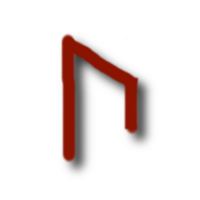
(face east and trace the rune shape and loudly chant: “THURISAZ”)

(face south-east and trace the rune shape and loudly chant: “ANSUZ”)
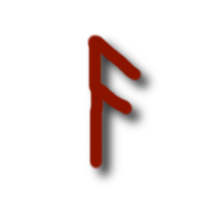
(face south and trace the rune shape and loudly chant: “RAIDHO”)

(face south-west and trace the rune shape and loudly chant: “KENAZ”)

(face west and trace the rune shape and loudly chant: “GEBO”)

(face north-west and trace the rune shape and loudly chant: “WUNJO”)

(face north and trace the rune shape and loudly chant: “HAGALAZ”)

(face north-east and trace the rune shape and loudly chant: “NAUDHIZ”)
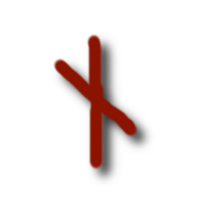
(face east and trace the rune shape and loudly chant: “ISA”)

(face south-east and trace the rune shape and loudly chant: “JERA”)

(face south and trace the rune shape and loudly chant: “EIHWAZ”)
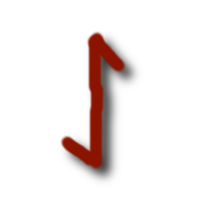
(face south-west and trace the rune shape and loudly chant: “PERTHRO”)

(face west and trace the rune shape and loudly chant: “ELHAZ”)

(face north-west and trace the rune shape and loudly chant: “SOWILO”)
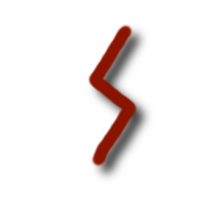
(face north and trace the rune shape and loudly chant: “TIWAZ”)
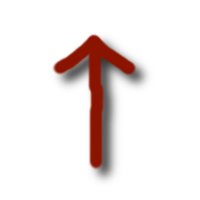
(face north-east and trace the rune shape and loudly chant: “BERKANO”)

(face east and trace the rune shape and loudly chant: “EHWAZ”)

(face south-east and trace the rune shape and loudly chant: “MANNAZ”)
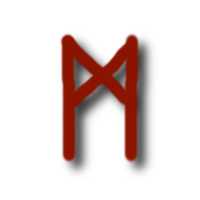
(face south and trace the rune shape and loudly chant: “LAGUZ”)
(face south-west and trace the rune shape and loudly chant: “INGWAZ”)

(face west and trace the rune shape and loudly chant: “DAGAZ”)

(face north-west and trace the rune shape and loudly chant: “OTHALA”)
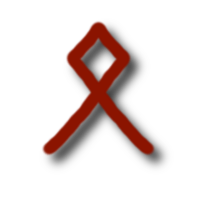
(Few silent deep breaths)
–
Hold up the bottle of mead:
“I now brew the holy mead of inspiration. Won by high Odin long ago!”
Chant into the bottle of mead:
“Odhroerir! Son! Bodhn!”
“Now I hallow this drink with staves of light!”
Chant and trace these runes over the bottle:
“Othala”
“Dagaz”
“Raidho”
“Ansuz”
“Raidho”
“Isa”
“Elhaz!”
All say:
“Hail Odhroerir!”
–
Few silent deep breaths.
–
“Hail Thor! Son of Odin and Jord. Father of Magni, Modi, and Thrud. Husband of Sif. Stepfather of Ullr. Ruler and owner of Mjollnir, the Girdle of Might, and Bilskirnir. Defender of Asgard and Midgard. Enemy and slayer of giants and troll-wives!”
“Hail Thor!”
–
Few silent deep breaths.
–
“This is the time of year when in times past the Norse would charm the plow so they may use it to break the frozen ground so as to ready the soil for planting for the season. Nowadays most of us are not farmers, but this process of planting seeds and enjoying the harvest still does apply on other levels.”
“Harvest means any positive things we enjoy in our lives. To enjoy harvest we must first start with the planting of seeds of some ideas or goals, and then from there take action based on our ideas.”
“The soil represents the field of our life. For all of us there are some areas of our life where things are stuck or blocked for us. Perhaps blockages in our creativity or productivity, or anything really that stands in the way of us accomplishing things we desire. These areas of blockage are the frozen hard ground that we have at this time of year. The plow is a tool that is used to break open the soil so that it may receive our new idea seeds. The plow on the spiritual level is all the tools we use to accomplish things in our life.”
“Thor’s Hammer is the ultimate spiritual plow, breaking through all that is stuck and all which blocks health and wholeness. The process of blessing something is a process of making that thing whole and healthy, and Thor’s Hammer does exactly this.”
“To charm the plow, first we should bless any objects we use as tools for our own creativity, and which we use for our occupation if we have one. Now is also a time of year to make sure these tools are in good working order and in proper repair. Next part of the process is to call upon the power of Thor and his Hammer to break through any blockages in our life that stand in our way.”
“Now think about all the items you have brought with you as tools to be blessed. Think of how grateful you are for the usefulness of these items. Think about how helpful they are to you.”
Now going one item at a time and naming each item trace the Hammer Sign over item with wand and say “Thor hallow and bless this _______, may it be a powerful tool of my creativity.”
Now look at the cakes on the plate. “These cakes represent the frozen hard soil.” Now think about all areas of blockage in your life. Think about all things that hold you back from accomplishing the things you wish to. Project all the energies of these blockages into those cakes. Spend time doing this, putting as much of that energy into the cakes as you can. Now take hold of the hammer with both hands and raise it up high.:
“By the power of Thor and Mjolnir I bust open this hard frozen soil and destroy all blockages in my life!!!”
Crash the hammer down hard against the cakes, totally crushing them completely (be careful not to knock over the altar or anything on it). Do not eat any of the cake.
“May the soil become loose and ready to take the seeds I plant into it!”
Now relax a few moments and consider all the projects you wish to work on in your life.
Fill the drinking horn with mead. Raise the horn up.
“Hail Thor! I thank you Thor for your blessings, and I thank you for breaking open the soil of my life for the planting of new seeds. I offer this in thanks!”
“Hail Thor!”
Drink some mead and pour rest into offering bowel.
–
Use the pine twig to splash a bit of the liquid in the offering bowl on yourself, on any others in the ritual with you, on your altar, on the ritual space, and in all general areas of your dwelling as well. Does not need to be much splashed around, just a little is fine. This helps to imbue more of the energies of the ritual on you, and others who may also in the ritual with you, and to your place.
–
“Now my rite has ended. May all gathered here fare well on their return to their home places. And may the bonds of frith between us grow, gods, wights, and humans alike. Until we meet again.”
–
–
Pour out the offerings from the offering bowl outside:
“A gift for a gift”
Trace gebo at spot offerings were given to.
“GEBO!”
Put the crushed cake outside. Don’t eat any of it.
Pour out remaining blessed water outside.
“I pour the sacred water back to the Earth so it may find it’s way back to the Well of Wyrd”
–
Now at this point it is very important to ground your energies. This should always be done after every ritual. Not doing so can lead to problems in the long-run. Grounding is like shifting gears in a car, except it is the process of shifting brain states. During rituals you create a trance like brain state, which is desired for during rituals or for during any spiritual practices. But trance states are not good for doing everyday mundane things. You need to return your mind back to the normal state of consciousness after the ritual is finished. That is what grounding is.
The most simple and common method to ground is to visualize yourself as a tree and see roots growing into the ground from the base of your spine and going down into the earth. Sometimes rituals require industrial strength grounding as they can really create some intense energy. In that case you can try the following triple grounding method.:
First visualize your chakras. You picture in your mind closing first the top one and then seeing a sort of lid closing over it, then proceed with the net lower chakra and so on. You want to leave the bottom most chakra, the root chakra fully open as this is your connection to grounding. Don’t be concerned about having the others closed, the normal proper function of them is that they open and close as needed. Problems with being ungrounded happen when one of more of them are stuck open. Only the bottom one is to be left open at all times.
Next step is to picture a ball of pure white light above your head. Now let this white light slowly descent downward into your body and slowly move lower. As it descends it takes with it any unneeded, old, and negative energies. It is sort of sweeping downward through your energies taking all you no longer need with it. Once it reaches your feet let it move lower till it passes down through the floor. If you are on an upper close let it pass all the way to the ground. Let the earth take this energy to recycle it.
Now final step is to do the traditional grounding. Picture yourself as a tree. Visualize roots coming out of the base of your spine and going down into the Earth. Feel the calmness of a tree, the rooted solidness.
If after these three things you still feel hyper or spaced out you can either eat some food, or put a small amount of salt on your tongue. Another thing you can do is prostrate down to the ground, placing your head on the ground and stay like this for a few moments.
–
Feel free to copy and use this ritual so long as you acknowledge the source.
Volmarr’s Heathen Thorrablot Ritual Jan-2013 Do on first Friday after Jan-19th or on full moon of Jan
Need:
• drinking horn
• mead
• spring water in small bowl
• fresh pine twig
• offering bowl
• candles
• wand (if you don’t have one you can use your fingers instead)
• Thor’s Ritual Hammer (optional, can use it for the Hammer Hallowings)
• animal cookies
• Any symbols of Thor, a statue of him or picture or a Thor’s Hammer or any items related to him.
–
This ritual, as are all Heathen or northern rituals, is done while facing north, except where otherwise noted. The altar should be such that it is in front of you when you face north.
If you don’t know how to pronounce the runes see my webpage on how to pronounce them here.
–
Put spring water in small bowl. Trace 3 Laguz runes over it.:
“LAGUZ… LAGUZ… LAGUZ”
“From the Well of Wyrd does this water flow, and to the Well of Wyrd does it return”
–
Make Hammer Sign at item and then splash each ritual item with blessed water using the pine twig and for each item say:
“I bless this ______ with the waters of the Well of Wyrd”
–
Now trace Hammer Sign at person being blessed and/or self and splash them with water using twig.
“I bless ______ with the waters of the Well of Wyrd”
–
Use twig to splash ritual space with water.
“I bless this space with the waters of the Well of Wyrd”
–
Few silent deep breaths.
–
All stand in Elhaz position.
“Bi-Frost’s rainbow light shine down upon this space and myself so that I may form a portal between the worlds of Asgard and Midgard”
–
Few silent deep breaths.
–
All face north and trace the Hammer Sign while chanting:
“Hammer in the north hallow and ward this stead”
All turn east and trace the Hammer Sign while chanting:
“Hammer in the east hallow and ward this stead”
All turn south and trace the Hammer Sign while chanting:
“Hammer in the south hallow and ward this stead”
All turn west trace the Hammer Sign while chanting:
“Hammer in the west hallow and ward this stead”
All return to north and look up and trace Hammer sign while chanting:
“Hammer above hallow and ward this stead”
All look below and trace Hammer sign while chanting:
“Hammer below hallow and ward this stead”
–
Return to facing north and all stand in the Elhaz position and chant:
“Around me and within me Asgard and Midgard”
and move into the Dagaz position in the end.
–
Few silent deep breaths.
–
(Highly recommended optional casting of the rune ring)
(face north and trace the rune shape in the air before you using your wand and loudly chant: “FEHU!”)
(face north-east and trace the rune shape and loudly chant: “URUZ”)
(face east and trace the rune shape and loudly chant: “THURISAZ”)
(face south-east and trace the rune shape and loudly chant: “ANSUZ”)
(face south and trace the rune shape and loudly chant: “RAIDHO”)
(face south-west and trace the rune shape and loudly chant: “KENAZ”)
(face west and trace the rune shape and loudly chant: “GEBO”)
(face north-west and trace the rune shape and loudly chant: “WUNJO”)
(face north and trace the rune shape and loudly chant: “HAGALAZ”)
(face north-east and trace the rune shape and loudly chant: “NAUDHIZ”)
(face east and trace the rune shape and loudly chant: “ISA”)
(face south-east and trace the rune shape and loudly chant: “JERA”)
(face south and trace the rune shape and loudly chant: “EIHWAZ”)
(face south-west and trace the rune shape and loudly chant: “PERTHRO”)
(face west and trace the rune shape and loudly chant: “ELHAZ”)
(face north-west and trace the rune shape and loudly chant: “SOWILO”)
(face north and trace the rune shape and loudly chant: “TIWAZ”)
(face north-east and trace the rune shape and loudly chant: “BERKANO”)
(face east and trace the rune shape and loudly chant: “EHWAZ”)
(face south-east and trace the rune shape and loudly chant: “MANNAZ”)
(face south and trace the rune shape and loudly chant: “LAGUZ”)
(face south-west and trace the rune shape and loudly chant: “INGWAZ”)
(face west and trace the rune shape and loudly chant: “DAGAZ”)
(face north-west and trace the rune shape and loudly chant: “OTHALA”)
(Few silent deep breaths)
–
Hold up the bottle of mead:
“I now brew the holy mead of inspiration. Won by high Odin long ago!”
Chant into the bottle of mead:
“Odhroerir! Son! Bodhn!”
“Now I hallow this drink with staves of light!”
Chant and trace these runes over the bottle:
“Othala”
“Dagaz”
“Raidho”
“Ansuz”
“Raidho”
“Isa”
“Elhaz!”
All say:
“Hail Odhroerir!”
–
Few silent deep breaths.
–
“Hail Thor! Son of Odin and Jord. Father of Magni, Modi, and Thrud. Husband of Sif. Stepfather of Ullr. Ruler and owner of Mjollnir, the Girdle of Might, and Bilskirnir. Defender of Asgard and Midgard. Enemy and slayer of giants and troll-wives!”
“Hail Thor!”
–
Few silent deep breaths.
–
“At this time winter is well upon us, which means cold temperatures, ice, and snow. For the Norse cold is the elemental energies of the Frost-Giants. It is the job of Thor to drive back the giants and elemental energies and keep them in check so things stay in balance. The peek of winter is a time at which the elemental energies of cold have reached a point of extreme. The gods are the forces of order and life supporting structure. The giants are the primal forces of the elements, forces which if not kept in balance can become destructive to life. There is a constant struggle between the forces of order and the primal elements. When there is the right balance between both these forces, then things remain best for the support of all living beings. If this balance becomes disturbed then life forms can start to become extinct, or even in extreme cases of imbalance the very fabric of the spiritual order of things can be thrown in danger. Thor is the guardian of this balance. He protects the balance for us all. He is the tireless protector of all life, both physical and spiritual. Today is Thorrablot, a special day to honor Thor for all the work he does for us in protecting the balance of things. Also this is the time to ask Thor to protect us for the next years time.”
Fill the drinking horn with mead.
Hold up the drinking horn:
“Hail Thor! I give thanks to you Thor for keeping the Frost-Giants driven back. It is your tireless work that allows spring to come on time so that the harvest can be a fruitful one. I ask of you Thor to please keep me and mine protected, safe, and happy. I make this offering to you Thor! Hail Thor!”
Drink from horn and pour out the rest to the offering bowl.
Trace the Hammer Sign over cookies.
“I bless this food and offer it to you Thor with a heart of gratitude for you many blessing in my life. Thor you are the one who protects the balance that allows me to have a fruitful life. Thank you Thor. Hail Thor!”
Eat half the cookies and put the other half into the offering bowl for Thor to enjoy.
–
Use the pine twig to splash a bit of the liquid in the offering bowl on yourself, on any others in the ritual with you, on your altar, on the ritual space, and in all general areas of your dwelling as well. Does not need to be much splashed around, just a little is fine. This helps to imbue more of the energies of the ritual on you, and others who may also in the ritual with you, and to your place.
–
“Now my rite has ended. May all gathered here fare well on their return to their home places. And may the bonds of frith between us grow, gods, wights, and humans alike. Until we meet again.”
–
–
Pour out the offerings from the offering bowl outside:
“A gift for a gift”
Trace gebo at spot offerings were given to.
“GEBO!”
Pour out remaining blessed water outside.
“I pour the sacred water back to the Earth so it may find it’s way back to the Well of Wyrd”
–
Now at this point it is very important to ground your energies. This should always be done after every ritual. Not doing so can lead to problems in the long-run. Grounding is like shifting gears in a car, except it is the process of shifting brain states. During rituals you create a trance like brain state, which is desired for during rituals or for during any spiritual practices. But trance states are not good for doing everyday mundane things. You need to return your mind back to the normal state of consciousness after the ritual is finished. That is what grounding is.
The most simple and common method to ground is to visualize yourself as a tree and see roots growing into the ground from the base of your spine and going down into the earth. Sometimes rituals require industrial strength grounding as they can really create some intense energy. In that case you can try the following triple grounding method.:
First visualize your chakras. You picture in your mind closing first the top one and then seeing a sort of lid closing over it, then proceed with the net lower chakra and so on. You want to leave the bottom most chakra, the root chakra fully open as this is your connection to grounding. Don’t be concerned about having the others closed, the normal proper function of them is that they open and close as needed. Problems with being ungrounded happen when one of more of them are stuck open. Only the bottom one is to be left open at all times.
Next step is to picture a ball of pure white light above your head. Now let this white light slowly descent downward into your body and slowly move lower. As it descends it takes with it any unneeded, old, and negative energies. It is sort of sweeping downward through your energies taking all you no longer need with it. Once it reaches your feet let it move lower till it passes down through the floor. If you are on an upper close let it pass all the way to the ground. Let the earth take this energy to recycle it.
Now final step is to do the traditional grounding. Picture yourself as a tree. Visualize roots coming out of the base of your spine and going down into the Earth. Feel the calmness of a tree, the rooted solidness.
If after these three things you still feel hyper or spaced out you can either eat some food, or put a small amount of salt on your tongue. Another thing you can do is prostrate down to the ground, placing your head on the ground and stay like this for a few moments.
–
Feel free to copy and use this ritual so long as you acknowledge the source.

This work is licensed under a Creative Commons Attribution-NonCommercial-ShareAlike 3.0 Unported License.

 Volmarr’s Tumblr
- View On WordPress
- The Personal Norse Pagan Path That I, Volmarr, Follow.
- The Heathen Third Path within Norse Paganism and modern Viking culture
- Unveiling the True Viking Mindset: Clearing Away Modern Political Shadows with Ancient Wisdom and Modern Science
- Sample of AI GMed Norse Saga Engine Combat 2
- Poetic Edda: Complete Master Works Edition
- Sample of AI GMed Norse Saga Engine Combat
- Sample AI Generated Dialogue Generated by Norse Saga Engine:
- The Loom is Spinning: Enter the Norse Saga Engine
- Wow I just translated the whole Poetic Edda from Old Norse into poetic English in 25 minutes using…
 Volmarr's Blog of Modernist Heathenism, Norse-Paganism, and Norse-Wicca