Norse Gods and Goddesses

by Astrid Astrid Freyjasdottir
The Aesir and Vanir—they’re the shining ones of Asgard and Vanaheim, fierce and fertile, wise and wild. On the Heathen Third Path, we honor them as living forces: not distant idols, but allies in our daily weave of land, ancestors, and spirit. I’ll guide you through every one, from the well-known to the obscure whispers in the sagas, sharing their tales, their personal sparks of personality—their humor, their grit, their tenderness—and how to connect with them through simple blóts, offerings, and rune reflections. No dogma here, just open-hearted ways to feel their presence in your life, whether in a city park or under the stars. Ready to meet them? Let’s start with the Aesir, then flow to the Vanir… and remember, this is a river of tradition, moving and alive.
The Aesir: Gods and Goddesses of the Sky and War
The Aesir are the principal tribe of deities in Norse mythology, residing in Asgard. They’re often associated with order, war, wisdom, and governance. They include Odin and his kin, blending strength with strategy. After a war with the Vanir, they integrated, symbolizing balance.
Aesir Gods
Odin (Óðinn, Woden, Wotan): The Allfather, chief of the Aesir, god of wisdom, war, poetry, magic, prophecy, travel, sovereignty, healing, and death. He’s the divine ancestor of kings, patron of outlaws and poets. Myths include sacrificing his eye at Mimir’s well for knowledge, hanging on Yggdrasil for runes, and leading the Wild Hunt. Personality: Wise yet wandering, cunning and ecstatic, with a fierce hunger for knowledge—he’s the mentor who challenges you, sometimes stern, sometimes sly with a twinkle in his one eye, embracing ecstasy in battle or verse. How to connect: Offer mead or poetry in a blót at dawn; draw the rune Ansuz for inspiration; journal visions or wander in nature, whispering “Hail Odin, guide my path” to invite his wisdom into decisions big or small. Feel his presence in ravens or a sudden insight.
Thor (Þórr, Thunor):
God of thunder, strength, protection, storms, agriculture, and hallowing. Son of Odin and Jord, he defends Asgard from giants with his hammer Mjolnir, belt Megingjörð, and iron gloves Járngreipr. Myths: Fishing for Jörmungandr, battling Hrungnir, and his goat-drawn chariot causing thunder. Personality: Straightforward and mighty, a protective big brother type—boisterous, loyal, quick to anger but quicker to laugh, with a hearty appetite for life and justice, no nonsense but full of warmth for the common folk. How to connect: Hammer a small offering like bread or ale into the earth during a storm; draw Raidho for journeys; call on him for strength in a blót with oak leaves, saying “Hail Thor, ward my home” while visualizing his hammer’s spark—feel him in thunder or a surge of courage.
Tyr (Tiw):
God of war, justice, law, heroic glory, and the skies. He sacrificed his hand to bind Fenrir, symbolizing duty over self. Myths: Leading the Aesir before Odin, interpreting battles as legal matters. Personality: Brave and honorable, the quiet enforcer—stoic, committed to fairness, with a deep sense of integrity and sacrifice, like a steadfast judge who’s seen it all but remains impartial and strong. How to connect: Offer a vow or contract on paper in a blót, burn it with herbs; draw Tiwaz rune for courage; meditate on justice, whispering “Hail Tyr, uphold my honor”—sense him in balanced scales or a moment of righteous decision.
Baldr (Baldur, Balder):
God of light, beauty, purity, innocence, peace, nobility, learning, and rebirth. Son of Odin and Frigg, his death by mistletoe (thrown by Hodr) triggers Ragnarok; he’s reborn after. Myths: Prophetic dreams, oaths from all things not to harm him except mistletoe. Personality: Radiant and gentle, the beloved one—kind, fair, bringing joy like sunlight, with a tragic innocence that teaches about loss and renewal, warm and inspiring. How to connect: Light a white candle in blót with flowers; draw Dagaz for new beginnings; reflect on beauty, saying “Hail Baldr, illuminate my heart”—feel him in dawn light or a moment of pure happiness.
Heimdall (Heimdallr, Heimdallur):
Guardian of Asgard, god of vigilance, protection, light, and guardianship. Son of nine mothers, he watches Bifrost, blows Gjallarhorn at Ragnarok. Myths: Teaching humans fire and crafts, enemy of Loki. Personality: Alert and steadfast, the watchful protector—keen-sensed, golden-toothed and radiant, with a quiet intensity and preparedness, like a loyal sentinel who’s always one step ahead. How to connect: Stand guard at a threshold with a horn or whistle in blót; draw Mannaz for community; invoke for safety, “Hail Heimdall, watch over me”—sense him in sharp sounds or a feeling of security.
Bragi:
God of poetry, music, verse, rhyme, eloquence, and wisdom. Son of Odin and Frigg, he entertains in Valhalla with harp and runes. Myths: Possibly a deified skald. Personality: Eloquent and wise, the bardic charmer—poetic, entertaining, with a smooth, inspirational flow, like a storyteller who weaves words into magic, calm and creative. How to connect: Recite poetry or sing in blót with mead; draw Ansuz for communication; journal verses, “Hail Bragi, inspire my tongue”—feel him in flowing words or a sudden rhyme.
Hodr (Höðr, Hodur):
God of darkness, winter, and blindness. Blind son of Odin and Frigg, tricked into killing Baldr. Myths: Slain by Vali but forgiven, survives Ragnarok as Baldr’s companion. Personality: Tragic and introspective, the shadowed one—vulnerable, embodying challenges and cycles, with a quiet depth from obscurity, teaching about unintended consequences and forgiveness. How to connect: Meditate in darkness with a blót of mistletoe alternatives like holly; draw Isa for stillness; reflect on shadows, “Hail Hodr, teach me balance”—feel him in winter quiet or inner reflection.
Vidar (Víðarr):
God of vengeance, silence, forest, and strength. Son of Odin, he avenges Odin by slaying Fenrir at Ragnarok with his magical shoe. Myths: Survives Ragnarok, symbol of endurance. Personality: Silent and resilient, the quiet powerhouse—stoic, powerful, with unyielding determination, like a rooted tree in a storm, embodying patience and retribution. How to connect: Walk in woods with a blót of leather or shoes; draw Ingwaz for growth; seek silence, “Hail Vidar, grant me steadiness”—feel him in nature’s quiet strength.
Vali (Váli):
God of revenge and archery. Son of Odin and Rindr, born to avenge Baldr, matures in a day to kill Hodr. Myths: Survives Ragnarok, symbolizes loyalty. Personality: Swift and purposeful, the avenger—fierce, protective, with intense focus on justice, like a young warrior driven by family bonds, quick and unrelenting. How to connect: Shoot an arrow or visualize one in blót with herbs; draw Uruz for vitality; channel resolve, “Hail Vali, fuel my justice”—feel him in sudden action or protective urges.
Ullr (Ull):
God of skiing, archery, hunting, winter, duel, and oaths. Son of Sif, master of winter sports. Myths: Sworn oaths on his ring, protector of travelers. Personality: Precise and adventurous, the hunter—skilled, resilient, with a cool, focused demeanor, like a marksman in snow, embodying precision and wilderness freedom. How to connect: Ski or hike with a blót of arrows or snow; draw Wunjo for joy; swear oaths, “Hail Ullr, guide my aim”—feel him in winter activities or accurate shots.
Forseti:
God of justice, law, peace, truth, and reconciliation. Son of Baldr and Nanna, dwells in Glitnir. Myths: Mediates disputes with golden axe legend. Personality: Fair and mediating, the peacemaker—calm, impartial, with wise compassion, like a judge who heals rifts, embodying balance without force. How to connect: Hold a court-like blót with scales; draw Gebo for partnerships; resolve conflicts, “Hail Forseti, bring harmony”—feel him in fair resolutions.
Hermod (Hermóður):
God of messaging, courage, and war-spirit. Son of Odin, rides to Hel for Baldr. Myths: Only one to return from Hel. Personality: Brave and swift, the messenger—daring, loyal, with quiet heroism, like a rider through shadows, embodying endurance in quests. How to connect: Send a message or travel in blót; draw Ehwaz for journeys; seek courage, “Hail Hermod, carry my plea”—feel him in swift movements.
Hoenir (Hœnir): God of honor, holiness, sanctity, and silence. Brother of Odin, traded to Vanir. Myths: Endowed humans with reason, survives Ragnarok. Personality: Silent and honorable, the thoughtful one—muddled yet sacred, with a mud-king quirkiness, teaching humility in wisdom. How to connect: Quiet blót with mud or earth; draw Perthro for fate; embrace silence, “Hail Hoenir, sanctify my thoughts”—feel him in still moments.
Mimir (Mímir):
God of wisdom, friendship, and counsel. Uncle of Odin, his head advises after decapitation. Myths: Traded to Vanir, guards Mimisbrunnr. Personality: Wise and advisory, the sage—deep-knowing, friendly, with eternal insight, like a trusted uncle sharing secrets. How to connect: Offer at a well or spring in blót; draw Laguz for intuition; seek advice, “Hail Mimir, grant me clarity”—feel him in water reflections.
Magni (Magnur):
God of strength and brotherhood. Son of Thor and Jarnsaxa, frees Thor from giant’s leg at three. Personality: Strong and brotherly, the young powerhouse—helpful, mighty, with sibling loyalty, like a kid with super strength and heart. How to connect: Lift weights or help kin in blót with stones; draw Uruz for power; “Hail Magni, bolster my bonds”—feel him in physical feats.
Modi (Modin):
God of brotherhood and strength. Son of Thor and Sif, twin to Magni. Personality: Similar to Magni, courageous and strong—loyal, supportive, with fraternal fire, embodying team spirit in challenges. How to connect: Brotherly blót with shared ale; draw Thurisaz for protection; “Hail Modi, strengthen my kin”—feel him in group efforts.
Vili:
Brother of Odin and Ve, god of will, inspiration, and intention. Helped create the world from Ymir. Personality: Intentional and creative, the will-shaper—focused, collaborative, with a spark of creation, like the drive behind actions. How to connect: Set intentions in blót with fire; draw Kenaz for creativity; “Hail Vili, ignite my will”—feel him in motivated starts.
Ve:
Brother of Odin and Vili, god of temple, consecration, and holiness. Helped create world. Personality: Sacred and consecrating, the sanctifier—reverent, boundary-setting, with holy presence, like blessing spaces. How to connect: Hallow an altar in blót; draw Othala for heritage; “Hail Ve, bless my space”—feel him in sacred grounds.
Borr:
Father of Odin, Vili, Ve; son of Buri. Creator god. Personality: Foundational and paternal, the progenitor—strong, originating, with a legacy-building essence, obscure but vital. How to connect: Ancestral blót with roots or stones; draw Fehu for beginnings; “Hail Borr, root my line”—feel him in family ties.
Buri (Búri):
First god, ruler of prehistory, father of Borr. Licked from ice by Audhumla. Personality: Primordial and emergent, the originator—ancient, foundational, with a mysterious birth, symbolizing beginnings from nothing. How to connect: Ice or salt blót; draw Ingwaz for potential; “Hail Buri, spark my origin”—feel him in new starts.
Dagr:
God of day, drags the sun around earth. Son of Delling and Nott. Personality: Bright and cyclical, the day-bringer—cheerful, reliable, with illuminating energy, like dawn’s promise. How to connect: Dawn blót with light; draw Dagaz; “Hail Dagr, light my day”—feel him in sunrise.
Mani (Máni):
God of the moon. Personality: Luminous and nocturnal, the moon-guide—mysterious, reflective, with gentle pull, embodying night cycles. How to connect: Moonlit blót with silver; draw Jera for cycles; “Hail Mani, soothe my nights”—feel him in moonlight.
Kvasir:
God of inspiration, created from Aesir-Vanir spit, killed by dwarves for mead. Personality: Wise and inspirational, the poetic source—knowledgeable, harmonious, with a blended essence from peace. How to connect: Mead blót for creativity; draw Ansuz; “Hail Kvasir, brew my inspiration”—feel him in poetic flows.
Aesir Goddesses
Frigg (Frigga): Queen of Aesir, goddess of fate, fertility, marriage, motherhood, love, family, wisdom, and war. Wife of Odin, mother of Baldr. Myths: Knows futures but silent, protects Baldr with oaths. Personality: Beloved and nurturing, the wise mother—protective, seer-like, with quiet strength and compassion, like a loving queen who holds secrets. How to connect: Household blót with keys or spinning; draw Berkano for family; “Hail Frigg, weave my fate”—feel her in home warmth or foresight.
Sif:
Goddess of harvest, fidelity, and earth. Wife of Thor, golden hair like wheat. Myths: Hair stolen by Loki, replaced with gold. Personality: Fertile and loyal, the earth-mother—graceful, abundant, with grounded beauty, symbolizing crop unions. How to connect: Grain blót in fields; draw Jera for harvest; “Hail Sif, nourish my growth”—feel her in golden fields.
Idunn (Iðunn, Idunna):
Goddess of youth, immortality, rejuvenation. Keeper of golden apples. Myths: Kidnapped, causing aging; rescued. Personality: Ever-young and vital, the rejuvenator—playful, health-giving, with timeless charm, like spring’s renewal. How to connect: Apple blót for health; draw Ingwaz; “Hail Idunn, renew my spirit”—feel her in fresh fruit or youthfulness.
Eir:
Goddess of healing, mercy, and medicine. Handmaid of Frigg, Valkyrie who heals. Personality: Merciful and skilled, the healer—compassionate, practical, with gentle touch, embodying care in crisis. How to connect: Herb blót for health; draw Uruz; “Hail Eir, mend my wounds”—feel her in soothing remedies.
Nanna:
Goddess of joy, peace, romantic love. Wife of Baldr, dies of grief. Myths: Joins Baldr in Hel. Personality: Joyful and devoted, the loving one—tender, peaceful, with deep loyalty, teaching about love’s endurance. How to connect: Flower blót for romance; draw Gebo; “Hail Nanna, fill my heart”—feel her in peaceful bonds.
Fulla:
Goddess of abundance, fertility. Handmaid of Frigg, guards treasures. Personality: Prosperous and loyal, the abundant one—supportive, bountiful, with a nurturing glow, like a faithful friend. How to connect: Treasure blót with grains; draw Fehu; “Hail Fulla, bring abundance”—feel her in plenty.
Hlin (Hlín):
Goddess of consolation, compassion, protection. Handmaid of Frigg, eases grief. Personality: Comforting and empathetic, the consoler—gentle, protective, with warm embrace, soothing sorrows. How to connect: Comfort blót with tears or hugs; draw Laguz; “Hail Hlin, ease my grief”—feel her in solace.
Lofn:
Goddess of forbidden love. Personality: Loving and permissive, the enabler—gentle, supportive of hidden passions, with a rebellious tenderness. How to connect: Secret blót for love; draw Sowilo; “Hail Lofn, bless my desires”—feel her in taboo joys.
Sjofn (Sjöfn):
Goddess of love. Personality: Affectionate and stirring, the love-kindler—playful, heart-stirring, with a flirty spark. How to connect: Love blót with roses; draw Gebo; “Hail Sjofn, awaken my love”—feel her in crushes.
Snotra:
Goddess of prudence, wisdom. Personality: Prudent and discerning, the wise—thoughtful, self-controlled, with elegant insight. How to connect: Reflective blót; draw Mannaz; “Hail Snotra, guide my choices”—feel her in wise decisions.
Syn:
Goddess of refusal, invocation, door-keeping. Handmaid of Frigg. Personality: Boundary-setting and defensive, the gatekeeper—firm, protective, with watchful denial. How to connect: Door blót for boundaries; draw Thurisaz; “Hail Syn, guard my thresholds”—feel her in firm nos.
Var (Vár):
Goddess of contracts, oaths. Personality: Binding and truthful, the oath-keeper—serious, enforcing, with integrity’s weight. How to connect: Oath blót with rings; draw Gebo; “Hail Var, seal my words”—feel her in promises.
Vor (Vör):
Goddess of wisdom, awareness. Personality: Perceptive and knowing, the aware—vigilant, insightful, with deep discernment. How to connect: Meditation blót; draw Kenaz; “Hail Vor, sharpen my sight”—feel her in awareness.
Gefjon (Gefjun):
Goddess of fertility, plough, agriculture. Myths: Ploughed Zealand from Sweden. Personality: Industrious and fertile, the plower—strong, creative, with land-shaping power. How to connect: Soil blót; draw Ingwaz; “Hail Gefjon, fertile my fields”—feel her in farming.
Saga (Sága):
Goddess of wisdom, history. Possibly Frigg alias. Personality: Story-telling and wise, the historian—narrative, reflective, with timeless tales. How to connect: Storytelling blót; draw Ansuz; “Hail Saga, recall my stories”—feel her in sagas.
Gna:
Goddess of messaging, wind. Frigg’s messenger on horse Hofvarpnir. Personality: Swift and airy, the rider—free, communicative, with breezy speed. How to connect: Wind blót; draw Ehwaz; “Hail Gna, carry my words”—feel her in gusts.
Sol (Sunna):
Goddess of the sun. Personality: Radiant and vital, the sun-bringer—warm, life-giving, with daily journey. How to connect: Sun blót; draw Sowilo; “Hail Sol, warm my days”—feel her in sunlight.
Jord (Jörð):
Goddess of earth, mother of Thor. Personality: Grounded and maternal, the earth—nurturing, stable, with natural benevolence. How to connect: Earth blót with milk; draw Berkano; “Hail Jord, ground me”—feel her in soil.
Nott (Nótt):
Goddess of night. Personality: Dark and enveloping, the night-weaver—mysterious, restful, with cyclical calm. How to connect: Night blót; draw Perthro; “Hail Nott, blanket my rest”—feel her in darkness.
Elli:
Goddess of old age. Myths: Wrestled Thor, representing time. Personality: Inevitable and wise, the elder—patient, unyielding, teaching humility. How to connect: Elder blót; draw Jera; “Hail Elli, honor my years”—feel her in aging grace.
Thrud (Thruer, Þrúðr):
Goddess of strength, daughter of Thor and Sif. Myths: Promised to dwarf, protected. Personality: Strong and valiant, the mighty daughter—fierce, protective, with familial power. How to connect: Strength blót; draw Uruz; “Hail Thrud, empower me”—feel her in vigor.
Sigyn:
Goddess of fidelity, compassion. Wife of Loki (but included as Aesir). Myths: Holds bowl over Loki’s face. Personality: Loyal and enduring, the steadfast—compassionate, patient, with quiet strength in adversity. How to connect: Fidelity blót; draw Gebo; “Hail Sigyn, steady my bonds”—feel her in loyalty.
Yggdrasil:
Listed as goddess of life, tree connecting worlds (personified obscurely). Personality: Connecting and life-sustaining, the world-tree—vast, enduring, with cosmic wisdom. How to connect: Tree blót; draw Eihwaz; “Hail Yggdrasil, link my worlds”—feel her in trees.
The Vanir: Gods and Goddesses of Fertility and Nature
The Vanir are the second tribe, associated with fertility, prosperity, nature, and magic (seidr). They live in Vanaheim, integrated with Aesir after war, bringing earthier, sensual energies.
Vanir Gods
Njord (Njörður): God of sea, wind, fish, wealth, seafaring. Father of Freyr and Freyja, married Skadi. Myths: Calms waters, union with Skadi. Personality: Calm and prosperous, the sea-father—generous, seafaring, with steady flow, like a kind sailor sharing bounty. How to connect: Seaside blót with fish; draw Fehu; “Hail Njord, prosper my voyages”—feel him in waves.
Freyr:
God of fertility, prosperity, peace, virility, sunshine, rain. Consort of Gerd, rides boar Gullinbursti. Myths: Gave sword for Gerd, dies at Ragnarok. Personality: Bountiful and sensual, the fertile lord—joyful, generous, with earthy passion, like a lover of growth. How to connect: Field blót with phallic symbols or grain; draw Ingwaz; “Hail Freyr, bless my fertility”—feel him in harvests.
Odr (Óður): God of frenzy, consort of Freyja (obscure, similar to Odin). Myths: Wanders, leaving Freyja weeping. Personality: Ecstatic and wandering, the frenzied—adventurous, elusive, with passionate absence. How to connect: Travel blót; draw Raidho; “Hail Odr, stir my ecstasy”—feel him in wanderlust.
Byggvir: God/servant of Freyr, associated with barley. Myths: Mill-servant. Personality: Humble and grainy, the barley-one—practical, supportive, with harvest humility. How to connect: Barley blót; draw Jera; “Hail Byggvir, grind my grains”—feel him in brewing.
Vanir Goddesses
Freyja: Goddess of love, fertility, beauty, battle, death, seidr magic, wealth. Rides boar or cat chariot, owns Brisingamen. Myths: Teaches seidr, chooses slain warriors. Personality: Passionate and fierce, the lady—sexy, independent, with warrior sensuality, like a flirty battle-maiden full of desire and power. How to connect: Amber or cat blót; draw Fehu; “Hail Freyja, ignite my passions”—feel her in love or magic.
Nerthus (Nerþus):
Goddess of fertility, peace, connected to Njord (possibly female aspect). Myths: Wagon processions for peace. Personality: Peaceful and fertile, the earth-mother—serene, bountiful, with sacred mystery. How to connect: Wagon or earth blót; draw Berkano; “Hail Nerthus, grant peace”—feel her in fertile lands.
Skadi (Skaði):
Goddess of winter, hunting, mountains (Jotun but Vanir by marriage to Njord). Myths: Seeks vengeance for father, skis and bows. Personality: Wild and independent, the huntress—fierce, resilient, with snowy strength, like a mountain woman. How to connect: Snow blót with bows; draw Isa; “Hail Skadi, empower my hunt”—feel her in winter hunts.
Gullveig (Heidr):
Goddess of magic, prophecy (Vanir, burned thrice, reborn). Myths: Sparks Aesir-Vanir war. Personality: Resilient and transformative, the golden—mystical, enduring, with alchemical power. How to connect: Gold blót; draw Perthro; “Hail Gullveig, transform me”—feel her in rebirths.
Beyla:
Goddess/servant of Freyr, associated with bees or mead. Myths: Honey-servant. Personality: Sweet and diligent, the bee-one—humble, productive, with nectar’s gift. How to connect: Honey blót; draw Wunjo; “Hail Beyla, sweeten my life”—feel her in bees.
END
Volmarr’s Heathen Midsummer Ritual June-21-2013 Vanatru Version
Need:
• drinking horn
• mead (or beer or wine or even can use juice)
• spring water in small bowl
• fresh pine twig
• offering bowl
• candles
• wand (if you don’t have one you can use your fingers instead)
• Thor’s Ritual Hammer (optional, can use it for the Hammer Hallowings)
• One yellow or gold candle
• One white candle
• Any symbols of Summer, solar symbols.
–
This ritual, as are all Heathen or northern rituals, is done while facing north, except where otherwise noted. The altar should be such that it is in front of you when you face north.
If you don’t know how to pronounce the runes see my webpage on how to pronounce them here.
–
Put spring water in small bowl. Trace 3 Laguz runes over it.:

“LAGUZ… LAGUZ… LAGUZ”
“From the Well of Wyrd does this water flow, and to the Well of Wyrd does it return”
–
Make Hammer Sign at item and then splash each ritual item with blessed water using the pine twig and for each item say:
“I bless this ______ with the waters of the Well of Wyrd”
–
Now trace Hammer Sign at person being blessed and/or self and splash them with water using twig.
“I bless ______ with the waters of the Well of Wyrd”
–
Use twig to splash ritual space with water.
“I bless this space with the waters of the Well of Wyrd”
–
Few silent deep breaths.
–
All stand in Elhaz position.

“Bi-Frost’s rainbow light shine down upon this space and myself so that I may form a portal between the worlds of Asgard and Midgard”
–
Few silent deep breaths.
–
All face north and trace the Hammer Sign while chanting:
“Hammer in the north hallow and ward this stead”
All turn east and trace the Hammer Sign while chanting:
“Hammer in the east hallow and ward this stead”
All turn south and trace the Hammer Sign while chanting:
“Hammer in the south hallow and ward this stead”
All turn west trace the Hammer Sign while chanting:
“Hammer in the west hallow and ward this stead”
All return to north and look up and trace Hammer sign while chanting:
“Hammer above hallow and ward this stead”
All look below and trace Hammer sign while chanting:
“Hammer below hallow and ward this stead”
–
Return to facing north and all stand in the Elhaz position and chant:
“Around me and within me Asgard and Midgard”

and move into the Dagaz position in the end.
–
Few silent deep breaths.
–
(Highly recommended optional casting of the rune ring)
(face north and trace the rune shape in the air before you using your wand and loudly chant: “FEHU!”)

(face north-east and trace the rune shape and loudly chant: “URUZ”)
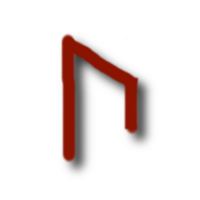
(face east and trace the rune shape and loudly chant: “THURISAZ”)

(face south-east and trace the rune shape and loudly chant: “ANSUZ”)

(face south and trace the rune shape and loudly chant: “RAIDHO”)

(face south-west and trace the rune shape and loudly chant: “KENAZ”)

(face west and trace the rune shape and loudly chant: “GEBO”)

(face north-west and trace the rune shape and loudly chant: “WUNJO”)

(face north and trace the rune shape and loudly chant: “HAGALAZ”)

(face north-east and trace the rune shape and loudly chant: “NAUDHIZ”)

(face east and trace the rune shape and loudly chant: “ISA”)

(face south-east and trace the rune shape and loudly chant: “JERA”)

(face south and trace the rune shape and loudly chant: “EIHWAZ”)

(face south-west and trace the rune shape and loudly chant: “PERTHRO”)

(face west and trace the rune shape and loudly chant: “ELHAZ”)

(face north-west and trace the rune shape and loudly chant: “SOWILO”)

(face north and trace the rune shape and loudly chant: “TIWAZ”)

(face north-east and trace the rune shape and loudly chant: “BERKANO”)

(face east and trace the rune shape and loudly chant: “EHWAZ”)

(face south-east and trace the rune shape and loudly chant: “MANNAZ”)

(face south and trace the rune shape and loudly chant: “LAGUZ”)
(face south-west and trace the rune shape and loudly chant: “INGWAZ”)

(face west and trace the rune shape and loudly chant: “DAGAZ”)

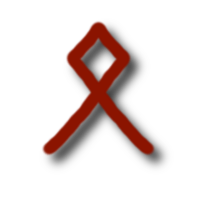
(face north-west and trace the rune shape and loudly chant: “OTHALA”)
(Few silent deep breaths)
–
Hold up the bottle of mead:
“I now brew the holy mead of inspiration. Won by high Odin long ago!”
Chant into the bottle of mead:
“Odhroerir! Son! Bodhn!”
“Now I hallow this drink with staves of light!”
Chant and trace these runes over the bottle:
“Othala”
“Dagaz”
“Raidho”
“Ansuz”
“Raidho”
“Isa”
“Elhaz!”
All say:
“Hail Odhroerir!”
–
Few silent deep breaths.
–
“Hail to the Vanir! Hail to the Aesir! Hail to the gods and goddesses of the north! I call upon you all in frith at this time so I may honor the connection we have with one another.”
(Light the white candle.)
“Hail the Vanir! Hail the Aesir!”
“Hail Sunna! Daughter of Glen. Bright rider in the heavens by day. Driver of Alsvin and Arvak. Wearer of Svalin. Day-star. Ever-glow. All-bright. Wolf-chased. Fair-wheel. Grace-shine. Ensnarer of Trolls!”
(Light the yellow candle.)
“Hail Sunna!”
–
“Now is the time of Midsummer. This is a time for adventure and seeking conquest and victory within our life. Midsummer is also a time to honor the important alliances that you hold with others.”
“Late Spring and early Summer are the Norse times to fight battles and go raiding. Most of us in the modern world won’t be going into literal combat situations or going literally raiding, as happened during the Viking age. But we modern people have our own just as difficult battles we have to fight in our day to day life. Common modern forms of battle are: battles against your own negative traits or bad habits, battles to effect greater spiritual growth and awareness, battles to improve our lives in any way, battles against people in our lives who abuse us or cause us harm, battles to stand up for some cause we believe in, battles to improve the lives and well-being of those close to us, battles to achieve success in our careers, fighting for a better world, etc. All these types of battles are equally as worthy as the battles and raids which the Vikings fought, and are just as filled with their own forms of danger and peril. All forms of worthy battle which we fight are a way in which the gods/goddesses test us to see our measure of spiritual strength and bravery. By fighting whatever worthy battles we must in our lives without backing down and doing the best we can in them, we increase our spiritual might and personal luck. Most forms of modern battles are more so what can be considered forms of psychic or spiritual battles. Being a spiritual warrior is just as impressive to the gods/goddesses as being a literal one. If your life has been filled with strife and challenge lately during the late spring and early summer know that this is part of being in tune with the seasonal cycles and this time shall eventually pass. When fighting a lot of battles our energies can after awhile become drained and run down. Try to call upon the power of the sun, the goddess Sunna, as a source to recharge your psychic and emotional batteries after many long fought battles.”
–
(Hold drinking how and fill it with drink)
“Hail to Sunna! Goddess of the sun! Goddess of the energies which charge all of life with vitality! Through your vital strength, we gain the power to achieve victory! Please oh bright shinning goddess charge my energies with your might and power! Hail Sunna!”
(Picture in your mind’s eye energy from the sun coming down to you and filling your aura, making it stronger and more powerful.)
(Chant and trace sowilo in the air three times:)
“SOWILO… SOWILO… SOWILO”
(Drink half, pour out rest to offering bowl or ground)
–
“Anger is a useful and important emotion since it is related to defending against attack, and is an emotion needed for self protection. Anger only gets bad when it is used in a personal way. Personalized anger is anger against a certain person, which is very negative. Anger used in a impersonal sense, as controlled anger where you use the anger feelings to empower your ability to defend your rights and to protect yourself and others, is the proper positive use of anger. ”
“In modern day times there aren’t many outlets for anger. In older times of course there were plenty of outlets for it since men had to fight to protect. Since men are the protectors they do tend to more directly feel their anger emotions. Women often but not always tend to feel their anger in more indirect ways. Or more commonly, many women have trouble directly acknowledging when they are angry. The strongest emotion for men is anger. The strongest emotion for women is love. Men are the warriors so they need to have anger as a strong emotion for to strengthen this role for them. In Pagan societies such as the Vikings, the society was structured in a way to help keep anger more as the impersonal healthy kind and such societies were even structured in ways to give men healthy outlets for anger.”
“One of the most positive ways to release anger and act upon the warrior spirit in modern society is through sports. Summer is the best time for doing sports. Sports help to create frith since they help people feel more positive and release tension and anger. Group sports can be a powerful tool of troth-making.”
“Another way to release or vent anger is through sex. Sex is a very powerful way to turn anger onto frith and love. It is very sacred to have sex at the Midsummer bonfire.”
“Women as the nurturers and pleasure and care givers have love as their strongest emotion. Since the strongest emotion for women is love, women are the frith-makers and they hold a sacred duty in northern culture as guardians of the frith. Frith is the glue that holds together those who hold troth for each other. Without frith there can be no troth. Keeping troth with those you cannot have any frith with is both dishonorable and dishonest. In order for there to be frith with someone you must hold feelings of respect and trust. No social organization, whether it be one related to Heathenism or anything at all, can survive if it does not strictly enforce members keeping frith between each other. The foundation of troth is frith. Troth is the very basis of Heathenism. Any Heathen that has not learned to be respectful of other people is one that is not able to honor frith and thus shall fail completely at holding troth with others. Since the basis of Heathenism is troth, such a Heathen shall fail as a Heathen. The gods and goddesses only welcome those to their hall that would be able to hold frith with all those who reside in their hall. The whole point of being Heathen is to hold troth for one or more of the northern gods or goddesses and work towards being welcomed to their hall in the after-life, thus learning how to respect others and honor frith is one of the greatest lessons any Heathen can learn.”
“Now at this time of the season, Midsummer, is the time to acknowledge all bonds of troth which we hold. Troth is the very point of Heathenism. Heathenism is simply put the practice of holding troth for one or more of the northern gods/goddesses. In all things we do in our life we must act in ways that honor this troth we hold. By taking troth with any god or goddess we are agreeing to hold their ways holy and honor what they stand for. Take some moments now to ponder on all the gods and goddesses which you hold troth with and all the things which are sacred to them.”
(Feel free to change this next part as needed)
“I _______ (state your name) hold troth with the Vanir and Aesir, with the ways of the Vanir coming first for me. _______ (patron deity name) is my patron and thus I hold the greatest troth of all for him/her. I agree to hold sacred all the things which are holy to the Vanir and Aesir and most of all that which is sacred to my patron ________ (patron deity name).”
–
(This next section is optional. If you prefer you can change this to whatever other values you happen to follow. In no way are the Vanic Virtues, or the Nine Noble Virtues, or any other codified system of values, a requirement to be followed to be Heathen. It is up to the individual Heathen to determine what values system they shall follow, so long as they uphold the basics such as honesty, troth, and always keeping oaths to the best of their ability. But once an individual has chosen a value system to follow they must follow it faithfully to the best of their ability. What matters most is to never agree to follow any value system you don’t deeply feel in your heart is right for you. Part of troth is being true to yourself and your true will.)
“To honor the troth I hold, these are the values I have agreed to uphold in my life to the best of my ability.:”
“The Vanic Virtues ”
“Beauty ”
“The pursuit of beauty and elegance in thought, form and speech. ”
“Courage/Passion ”
“Zeal, vigor; the strength and courage that comes from a life worth living. ”
“Land-rightness ”
“The recognition of nature and the environment as worthy of respect, care and reverence. ”
“Even-mood ”
“Harmonious and balanced thought and action; tranquility, calm, serenity.”
“Openness ”
“The quality of being receptive to the world around one, non-judgmental and open. ”
“Wildness/Ecstasy ”
“Music and dance; the nurturing of inner wildness and childlike being, being like the “fey” ”
“Love”
“The all-encompassing force; love for family, for kin, for humanity, for all beings.”
“Frith ”
“The peace and goodwill between people bound together; loyalty and the keeping of one’s word. ”
“Faith/Piety ”
“The trust that the Gods exist and are worthy of our worship, and Their ways worth following. ”
“Giving ”
“The binding of two parties into one common bond, generosity and hospitality. ”
“Joy ”
“Wonder and innocence, the recognition that life is worth living, and worth living well. ”
“Brotherhood ”
“The recognition that we – humans, animals, plants, spirits – are all part of the grander scheme of life, and we share a common heritage, as children of the Earth.”
–
(This part is not optional)
(Hold drinking how and fill it with drink)
“Hail to the Vanir! Hail to the Aesir! Hail to _______ (patron deity name), I make this toast to you in honor of the troth I hold for you all! Hail!”
(Drink half, pour out rest to offering bowl or ground)
–
Use the pine twig to splash a bit of the liquid in the offering bowl on yourself, on any others in the ritual with you, on your altar, on the ritual space, and in all general areas of your dwelling as well. Does not need to be much splashed around, just a little is fine. This helps to imbue more of the energies of the ritual on you, and others who may also in the ritual with you, and to your place.
–
“Now my rite has ended. May all gathered here fare well on their return to their home places. And may the bonds of frith between us grow, gods, wights, and humans alike. Until we meet again.”
–
–
Pour out the offerings from the offering bowl outside:
“A gift for a gift”
Trace gebo at spot offerings were given to.
“GEBO!”
Pour out remaining blessed water outside.
“I pour the sacred water back to the Earth so it may find it’s way back to the Well of Wyrd”
–
Now at this point it is very important to ground your energies. This should always be done after every ritual. Not doing so can lead to problems in the long-run. Grounding is like shifting gears in a car, except it is the process of shifting brain states. During rituals you create a trance like brain state, which is desired for during rituals or for during any spiritual practices. But trance states are not good for doing everyday mundane things. You need to return your mind back to the normal state of consciousness after the ritual is finished. That is what grounding is.
The most simple and common method to ground is to visualize yourself as a tree and see roots growing into the ground from the base of your spine and going down into the earth. Sometimes rituals require industrial strength grounding as they can really create some intense energy. In that case you can try the following triple grounding method.:
First visualize your chakras. You picture in your mind closing first the top one and then seeing a sort of lid closing over it, then proceed with the net lower chakra and so on. You want to leave the bottom most chakra, the root chakra fully open as this is your connection to grounding. Don’t be concerned about having the others closed, the normal proper function of them is that they open and close as needed. Problems with being ungrounded happen when one of more of them are stuck open. Only the bottom one is to be left open at all times.
Next step is to picture a ball of pure white light above your head. Now let this white light slowly descent downward into your body and slowly move lower. As it descends it takes with it any unneeded, old, and negative energies. It is sort of sweeping downward through your energies taking all you no longer need with it. Once it reaches your feet let it move lower till it passes down through the floor. If you are on an upper close let it pass all the way to the ground. Let the earth take this energy to recycle it.
Now final step is to do the traditional grounding. Picture yourself as a tree. Visualize roots coming out of the base of your spine and going down into the Earth. Feel the calmness of a tree, the rooted solidness.
If after these three things you still feel hyper or spaced out you can either eat some food, or put a small amount of salt on your tongue. Another thing you can do is prostrate down to the ground, placing your head on the ground and stay like this for a few moments.
–
Feel free to copy and use this ritual so long as you acknowledge the source.
Volmarr’s Heathen Midsummer Ritual June-21-2013 Asatru Version
Need:
• drinking horn
• mead (or beer or wine or even can use juice)
• spring water in small bowl
• fresh pine twig
• offering bowl
• candles
• wand (if you don’t have one you can use your fingers instead)
• Thor’s Ritual Hammer (optional, can use it for the Hammer Hallowings)
• One yellow or gold candle
• One white candle
• Any symbols of Summer, solar symbols.
–
This ritual, as are all Heathen or northern rituals, is done while facing north, except where otherwise noted. The altar should be such that it is in front of you when you face north.
If you don’t know how to pronounce the runes see my webpage on how to pronounce them here.
–
Put spring water in small bowl. Trace 3 Laguz runes over it.:
“LAGUZ… LAGUZ… LAGUZ”
“From the Well of Wyrd does this water flow, and to the Well of Wyrd does it return”
–
Make Hammer Sign at item and then splash each ritual item with blessed water using the pine twig and for each item say:
“I bless this ______ with the waters of the Well of Wyrd”
–
Now trace Hammer Sign at person being blessed and/or self and splash them with water using twig.
“I bless ______ with the waters of the Well of Wyrd”
–
Use twig to splash ritual space with water.
“I bless this space with the waters of the Well of Wyrd”
–
Few silent deep breaths.
–
All stand in Elhaz position.
“Bi-Frost’s rainbow light shine down upon this space and myself so that I may form a portal between the worlds of Asgard and Midgard”
–
Few silent deep breaths.
–
All face north and trace the Hammer Sign while chanting:
“Hammer in the north hallow and ward this stead”
All turn east and trace the Hammer Sign while chanting:
“Hammer in the east hallow and ward this stead”
All turn south and trace the Hammer Sign while chanting:
“Hammer in the south hallow and ward this stead”
All turn west trace the Hammer Sign while chanting:
“Hammer in the west hallow and ward this stead”
All return to north and look up and trace Hammer sign while chanting:
“Hammer above hallow and ward this stead”
All look below and trace Hammer sign while chanting:
“Hammer below hallow and ward this stead”
–
Return to facing north and all stand in the Elhaz position and chant:
“Around me and within me Asgard and Midgard”
and move into the Dagaz position in the end.
–
Few silent deep breaths.
–
(Highly recommended optional casting of the rune ring)
(face north and trace the rune shape in the air before you using your wand and loudly chant: “FEHU!”)
(face north-east and trace the rune shape and loudly chant: “URUZ”)
(face east and trace the rune shape and loudly chant: “THURISAZ”)
(face south-east and trace the rune shape and loudly chant: “ANSUZ”)
(face south and trace the rune shape and loudly chant: “RAIDHO”)
(face south-west and trace the rune shape and loudly chant: “KENAZ”)
(face west and trace the rune shape and loudly chant: “GEBO”)
(face north-west and trace the rune shape and loudly chant: “WUNJO”)
(face north and trace the rune shape and loudly chant: “HAGALAZ”)
(face north-east and trace the rune shape and loudly chant: “NAUDHIZ”)
(face east and trace the rune shape and loudly chant: “ISA”)
(face south-east and trace the rune shape and loudly chant: “JERA”)
(face south and trace the rune shape and loudly chant: “EIHWAZ”)
(face south-west and trace the rune shape and loudly chant: “PERTHRO”)
(face west and trace the rune shape and loudly chant: “ELHAZ”)
(face north-west and trace the rune shape and loudly chant: “SOWILO”)
(face north and trace the rune shape and loudly chant: “TIWAZ”)
(face north-east and trace the rune shape and loudly chant: “BERKANO”)
(face east and trace the rune shape and loudly chant: “EHWAZ”)
(face south-east and trace the rune shape and loudly chant: “MANNAZ”)
(face south and trace the rune shape and loudly chant: “LAGUZ”)
(face south-west and trace the rune shape and loudly chant: “INGWAZ”)
(face west and trace the rune shape and loudly chant: “DAGAZ”)
(face north-west and trace the rune shape and loudly chant: “OTHALA”)
(Few silent deep breaths)
–
Hold up the bottle of mead:
“I now brew the holy mead of inspiration. Won by high Odin long ago!”
Chant into the bottle of mead:
“Odhroerir! Son! Bodhn!”
“Now I hallow this drink with staves of light!”
Chant and trace these runes over the bottle:
“Othala”
“Dagaz”
“Raidho”
“Ansuz”
“Raidho”
“Isa”
“Elhaz!”
All say:
“Hail Odhroerir!”
–
Few silent deep breaths.
–
“Hail to the Aesir! Hail to the Vanir! Hail to the gods and goddesses of the north! I call upon you all in frith at this time so I may honor the connection we have with one another.”
(Light the white candle.)
“Hail the Aesir! Hail the Vanir!”
“Hail Sunna! Daughter of Glen. Bright rider in the heavens by day. Driver of Alsvin and Arvak. Wearer of Svalin. Day-star. Ever-glow. All-bright. Wolf-chased. Fair-wheel. Grace-shine. Ensnarer of Trolls!”
(Light the yellow candle.)
“Hail Sunna!”
–
“Now is the time of Midsummer. This is a time for adventure and seeking conquest and victory within our life. Midsummer is also a time to honor the important alliances that you hold with others.”
“Late Spring and early Summer are the Norse times to fight battles and go raiding. Most of us in the modern world won’t be going into literal combat situations or going literally raiding, as happened during the Viking age. But we modern people have our own just as difficult battles we have to fight in our day to day life. Common modern forms of battle are: battles against your own negative traits or bad habits, battles to effect greater spiritual growth and awareness, battles to improve our lives in any way, battles against people in our lives who abuse us or cause us harm, battles to stand up for some cause we believe in, battles to improve the lives and well-being of those close to us, battles to achieve success in our careers, fighting for a better world, etc. All these types of battles are equally as worthy as the battles and raids which the Vikings fought, and are just as filled with their own forms of danger and peril. All forms of worthy battle which we fight are a way in which the gods/goddesses test us to see our measure of spiritual strength and bravery. By fighting whatever worthy battles we must in our lives without backing down and doing the best we can in them, we increase our spiritual might and personal luck. Most forms of modern battles are more so what can be considered forms of psychic or spiritual battles. Being a spiritual warrior is just as impressive to the gods/goddesses as being a literal one. If your life has been filled with strife and challenge lately during the late spring and early summer know that this is part of being in tune with the seasonal cycles and this time shall eventually pass. When fighting a lot of battles our energies can after awhile become drained and run down. Try to call upon the power of the sun, the goddess Sunna, as a source to recharge your psychic and emotional batteries after many long fought battles.”
–
(Hold drinking how and fill it with drink)
“Hail to Sunna! Goddess of the sun! Goddess of the energies which charge all of life with vitality! Through your vital strength, we gain the power to achieve victory! Please oh bright shinning goddess charge my energies with your might and power! Hail Sunna!”
(Picture in your mind’s eye energy from the sun coming down to you and filling your aura, making it stronger and more powerful.)
(Chant and trace sowilo in the air three times:)
“SOWILO… SOWILO… SOWILO”
(Drink half, pour out rest to offering bowl or ground)
–
“Anger is a useful and important emotion since it is related to defending against attack, and is an emotion needed for self protection. Anger only gets bad when it is used in a personal way. Personalized anger is anger against a certain person, which is very negative. Anger used in a impersonal sense, as controlled anger where you use the anger feelings to empower your ability to defend your rights and to protect yourself and others, is the proper positive use of anger. ”
“In modern day times there aren’t many outlets for anger. In older times of course there were plenty of outlets for it since men had to fight to protect. Since men are the protectors they do tend to more directly feel their anger emotions. Women often but not always tend to feel their anger in more indirect ways. Or more commonly, many women have trouble directly acknowledging when they are angry. The strongest emotion for men is anger. The strongest emotion for women is love. Men are the warriors so they need to have anger as a strong emotion for to strengthen this role for them. In Pagan societies such as the Vikings, the society was structured in a way to help keep anger more as the impersonal healthy kind and such societies were even structured in ways to give men healthy outlets for anger.”
“One of the most positive ways to release anger and act upon the warrior spirit in modern society is through sports. Summer is the best time for doing sports. Sports help to create frith since they help people feel more positive and release tension and anger. Group sports can be a powerful tool of troth-making.”
“Another way to release or vent anger is through sex. Sex is a very powerful way to turn anger onto frith and love. It is very sacred to have sex at the Midsummer bonfire.”
“Women as the nurturers and pleasure and care givers have love as their strongest emotion. Since the strongest emotion for women is love, women are the frith-makers and they hold a sacred duty in northern culture as guardians of the frith. Frith is the glue that holds together those who hold troth for each other. Without frith there can be no troth. Keeping troth with those you cannot have any frith with is both dishonorable and dishonest. In order for there to be frith with someone you must hold feelings of respect and trust. No social organization, whether it be one related to Heathenism or anything at all, can survive if it does not strictly enforce members keeping frith between each other. The foundation of troth is frith. Troth is the very basis of Heathenism. Any Heathen that has not learned to be respectful of other people is one that is not able to honor frith and thus shall fail completely at holding troth with others. Since the basis of Heathenism is troth, such a Heathen shall fail as a Heathen. The gods and goddesses only welcome those to their hall that would be able to hold frith with all those who reside in their hall. The whole point of being Heathen is to hold troth for one or more of the northern gods or goddesses and work towards being welcomed to their hall in the after-life, thus learning how to respect others and honor frith is one of the greatest lessons any Heathen can learn.”
“Now at this time of the season, Midsummer, is the time to acknowledge all bonds of troth which we hold. Troth is the very point of Heathenism. Heathenism is simply put the practice of holding troth for one or more of the northern gods/goddesses. In all things we do in our life we must act in ways that honor this troth we hold. By taking troth with any god or goddess we are agreeing to hold their ways holy and honor what they stand for. Take some moments now to ponder on all the gods and goddesses which you hold troth with and all the things which are sacred to them.”
(Feel free to change this next part as needed)
“I _______ (state your name) hold troth with the Aesir and Vanir. _______ (patron deity name) is my patron and thus I hold the greatest troth of all for him/her. I agree to hold sacred all the things which are holy to the Aesir and Vanir and most of all that which is sacred to my patron ________ (patron deity name).”
–
(This next section is optional. If you prefer you can change these to suit your version of the Nine Noble Virtues or change them to whatever other values you happen to follow. In no way are the Nine Noble Virtues in any particular form or at all a requirement to be followed to be Asatru or Heathen. It is up to the individual Heathen to determine what values system they shall follow, so long as they uphold the basics such as honesty, troth, and always keeping oaths to the best of their ability. But once an individual has chosen a value system to follow they must follow it faithfully to the best of their ability. What matters most is to never agree to follow any value system you don’t deeply feel in your heart is right for you. Part of troth is being true to yourself and your true will.)
“To honor the troth I hold, these are the values I have agreed to uphold in my life to the best of my ability.:”
“Courage ”
“Truth ”
“Honor ”
“Troth”
“Discipline ”
“Friendliness ”
“Industriousness”
“Self-Reliance ”
“Perseverance”
–
(This part is not optional)
(Hold drinking how and fill it with drink)
“Hail to the Aesir! Hail to the Vanir! Hail to _______ (patron deity name), I make this toast to you in honor of the troth I hold for you all! Hail!”
(Drink half, pour out rest to offering bowl or ground)
–
Use the pine twig to splash a bit of the liquid in the offering bowl on yourself, on any others in the ritual with you, on your altar, on the ritual space, and in all general areas of your dwelling as well. Does not need to be much splashed around, just a little is fine. This helps to imbue more of the energies of the ritual on you, and others who may also in the ritual with you, and to your place.
–
“Now my rite has ended. May all gathered here fare well on their return to their home places. And may the bonds of frith between us grow, gods, wights, and humans alike. Until we meet again.”
–
–
Pour out the offerings from the offering bowl outside:
“A gift for a gift”
Trace gebo at spot offerings were given to.
“GEBO!”
Pour out remaining blessed water outside.
“I pour the sacred water back to the Earth so it may find it’s way back to the Well of Wyrd”
–
Now at this point it is very important to ground your energies. This should always be done after every ritual. Not doing so can lead to problems in the long-run. Grounding is like shifting gears in a car, except it is the process of shifting brain states. During rituals you create a trance like brain state, which is desired for during rituals or for during any spiritual practices. But trance states are not good for doing everyday mundane things. You need to return your mind back to the normal state of consciousness after the ritual is finished. That is what grounding is.
The most simple and common method to ground is to visualize yourself as a tree and see roots growing into the ground from the base of your spine and going down into the earth. Sometimes rituals require industrial strength grounding as they can really create some intense energy. In that case you can try the following triple grounding method.:
First visualize your chakras. You picture in your mind closing first the top one and then seeing a sort of lid closing over it, then proceed with the net lower chakra and so on. You want to leave the bottom most chakra, the root chakra fully open as this is your connection to grounding. Don’t be concerned about having the others closed, the normal proper function of them is that they open and close as needed. Problems with being ungrounded happen when one of more of them are stuck open. Only the bottom one is to be left open at all times.
Next step is to picture a ball of pure white light above your head. Now let this white light slowly descent downward into your body and slowly move lower. As it descends it takes with it any unneeded, old, and negative energies. It is sort of sweeping downward through your energies taking all you no longer need with it. Once it reaches your feet let it move lower till it passes down through the floor. If you are on an upper close let it pass all the way to the ground. Let the earth take this energy to recycle it.
Now final step is to do the traditional grounding. Picture yourself as a tree. Visualize roots coming out of the base of your spine and going down into the Earth. Feel the calmness of a tree, the rooted solidness.
If after these three things you still feel hyper or spaced out you can either eat some food, or put a small amount of salt on your tongue. Another thing you can do is prostrate down to the ground, placing your head on the ground and stay like this for a few moments.
–
Feel free to copy and use this ritual so long as you acknowledge the source.
Volmarr’s Heathen Midsummer Ritual June-21-2013 General Heathen Version
Need:
• drinking horn
• mead (or beer or wine or even can use juice)
• spring water in small bowl
• fresh pine twig
• offering bowl
• candles
• wand (if you don’t have one you can use your fingers instead)
• Thor’s Ritual Hammer (optional, can use it for the Hammer Hallowings)
• One yellow or gold candle
• One white candle
• Any symbols of Summer, solar symbols.
–
This ritual, as are all Heathen or northern rituals, is done while facing north, except where otherwise noted. The altar should be such that it is in front of you when you face north.
If you don’t know how to pronounce the runes see my webpage on how to pronounce them here.
–
Put spring water in small bowl. Trace 3 Laguz runes over it.:
“LAGUZ… LAGUZ… LAGUZ”
“From the Well of Wyrd does this water flow, and to the Well of Wyrd does it return”
–
Make Hammer Sign at item and then splash each ritual item with blessed water using the pine twig and for each item say:
“I bless this ______ with the waters of the Well of Wyrd”
–
Now trace Hammer Sign at person being blessed and/or self and splash them with water using twig.
“I bless ______ with the waters of the Well of Wyrd”
–
Use twig to splash ritual space with water.
“I bless this space with the waters of the Well of Wyrd”
–
Few silent deep breaths.
–
All stand in Elhaz position.
“Bi-Frost’s rainbow light shine down upon this space and myself so that I may form a portal between the worlds of Asgard and Midgard”
–
Few silent deep breaths.
–
All face north and trace the Hammer Sign while chanting:
“Hammer in the north hallow and ward this stead”
All turn east and trace the Hammer Sign while chanting:
“Hammer in the east hallow and ward this stead”
All turn south and trace the Hammer Sign while chanting:
“Hammer in the south hallow and ward this stead”
All turn west trace the Hammer Sign while chanting:
“Hammer in the west hallow and ward this stead”
All return to north and look up and trace Hammer sign while chanting:
“Hammer above hallow and ward this stead”
All look below and trace Hammer sign while chanting:
“Hammer below hallow and ward this stead”
–
Return to facing north and all stand in the Elhaz position and chant:
“Around me and within me Asgard and Midgard”
and move into the Dagaz position in the end.
–
Few silent deep breaths.
–
(Highly recommended optional casting of the rune ring)
(face north and trace the rune shape in the air before you using your wand and loudly chant: “FEHU!”)
(face north-east and trace the rune shape and loudly chant: “URUZ”)
(face east and trace the rune shape and loudly chant: “THURISAZ”)
(face south-east and trace the rune shape and loudly chant: “ANSUZ”)
(face south and trace the rune shape and loudly chant: “RAIDHO”)
(face south-west and trace the rune shape and loudly chant: “KENAZ”)
(face west and trace the rune shape and loudly chant: “GEBO”)
(face north-west and trace the rune shape and loudly chant: “WUNJO”)
(face north and trace the rune shape and loudly chant: “HAGALAZ”)
(face north-east and trace the rune shape and loudly chant: “NAUDHIZ”)
(face east and trace the rune shape and loudly chant: “ISA”)
(face south-east and trace the rune shape and loudly chant: “JERA”)
(face south and trace the rune shape and loudly chant: “EIHWAZ”)
(face south-west and trace the rune shape and loudly chant: “PERTHRO”)
(face west and trace the rune shape and loudly chant: “ELHAZ”)
(face north-west and trace the rune shape and loudly chant: “SOWILO”)
(face north and trace the rune shape and loudly chant: “TIWAZ”)
(face north-east and trace the rune shape and loudly chant: “BERKANO”)
(face east and trace the rune shape and loudly chant: “EHWAZ”)
(face south-east and trace the rune shape and loudly chant: “MANNAZ”)
(face south and trace the rune shape and loudly chant: “LAGUZ”)
(face south-west and trace the rune shape and loudly chant: “INGWAZ”)
(face west and trace the rune shape and loudly chant: “DAGAZ”)
(face north-west and trace the rune shape and loudly chant: “OTHALA”)
(Few silent deep breaths)
–
Hold up the bottle of mead:
“I now brew the holy mead of inspiration. Won by high Odin long ago!”
Chant into the bottle of mead:
“Odhroerir! Son! Bodhn!”
“Now I hallow this drink with staves of light!”
Chant and trace these runes over the bottle:
“Othala”
“Dagaz”
“Raidho”
“Ansuz”
“Raidho”
“Isa”
“Elhaz!”
All say:
“Hail Odhroerir!”
–
Few silent deep breaths.
–
“Hail to the Aesir! Hail to the Vanir! Hail to the gods and goddesses of the north! I call upon you all in frith at this time so I may honor the connection we have with one another.”
(Light the white candle.)
“Hail the Vanir! Hail the Aesir!”
“Hail Sunna! Daughter of Glen. Bright rider in the heavens by day. Driver of Alsvin and Arvak. Wearer of Svalin. Day-star. Ever-glow. All-bright. Wolf-chased. Fair-wheel. Grace-shine. Ensnarer of Trolls!”
(Light the yellow candle.)
“Hail Sunna!”
–
“Now is the time of Midsummer. This is a time for adventure and seeking conquest and victory within our life. Midsummer is also a time to honor the important alliances that you hold with others.”
“Late Spring and early Summer are the Norse times to fight battles and go raiding. Most of us in the modern world won’t be going into literal combat situations or going literally raiding, as happened during the Viking age. But we modern people have our own just as difficult battles we have to fight in our day to day life. Common modern forms of battle are: battles against your own negative traits or bad habits, battles to effect greater spiritual growth and awareness, battles to improve our lives in any way, battles against people in our lives who abuse us or cause us harm, battles to stand up for some cause we believe in, battles to improve the lives and well-being of those close to us, battles to achieve success in our careers, fighting for a better world, etc. All these types of battles are equally as worthy as the battles and raids which the Vikings fought, and are just as filled with their own forms of danger and peril. All forms of worthy battle which we fight are a way in which the gods/goddesses test us to see our measure of spiritual strength and bravery. By fighting whatever worthy battles we must in our lives without backing down and doing the best we can in them, we increase our spiritual might and personal luck. Most forms of modern battles are more so what can be considered forms of psychic or spiritual battles. Being a spiritual warrior is just as impressive to the gods/goddesses as being a literal one. If your life has been filled with strife and challenge lately during the late spring and early summer know that this is part of being in tune with the seasonal cycles, and this time shall eventually pass. When fighting a lot of battles our energies can after awhile become drained and run down. Try to call upon the power of the sun, the goddess Sunna, as a source to recharge your psychic and emotional batteries after many long fought battles.”
–
(Hold drinking how and fill it with drink.)
“Hail to Sunna! Goddess of the sun! Goddess of the energies which charge all of life with vitality! Through your vital strength, we gain the power to achieve victory! Please oh bright shinning goddess charge my energies with your might and power! Hail Sunna!”
(Picture in your mind’s eye energy from the sun coming down to you and filling your aura, making it stronger and more powerful.)
(Chant and trace sowilo in the air three times.:)
“SOWILO… SOWILO… SOWILO”
(Drink half, pour out rest to offering bowl or ground.)
–
“Anger is a useful and important emotion since it is related to defending against attack, and is an emotion needed for self protection. Anger only gets bad when it is used in a personal way. Personalized anger is anger against a certain person, which is very negative. Anger used in a impersonal sense, as controlled anger where you use the anger feelings to empower your ability to defend your rights and to protect yourself and others, is the proper positive use of anger.”
“In modern day times there aren’t many outlets for anger. In older times of course there were plenty of outlets for it since men had to fight to protect. Since men are the protectors they do tend to more directly feel their anger emotions. Women often but not always tend to feel their anger in more indirect ways. Or more commonly, many women have trouble directly acknowledging when they are angry. The strongest emotion for men is anger. The strongest emotion for women is love. Men are the warriors so they need to have anger as a strong emotion for to strengthen this role for them. In Pagan societies such as the Vikings, the society was structured in a way to help keep anger more as the impersonal healthy kind and such societies were even structured in ways to give men healthy outlets for anger.”
“One of the most positive ways to release anger and act upon the warrior spirit in modern society is through sports. Summer is the best time for doing sports. Sports help to create frith since they help people feel more positive and release tension and anger. Group sports can be a powerful tool of troth-making.”
“Another way to release or vent anger is through sex. Sex is a very powerful way to turn anger onto frith and love. It is very sacred to have sex at the Midsummer bonfire.”
“Women as the nurturers and pleasure and care givers have love as their strongest emotion. Since the strongest emotion for women is love, women are the frith-makers and they hold a sacred duty in northern culture as guardians of the frith. Frith is the glue that holds together those who hold troth for each other. Without frith there can be no troth. Keeping troth with those you cannot have any frith with is both dishonorable and dishonest. In order for there to be frith with someone you must hold feelings of respect and trust. No social organization, whether it be one related to Heathenism or anything at all, can survive if it does not strictly enforce members keeping frith between each other. The foundation of troth is frith. Troth is the very basis of Heathenism. Any Heathen that has not learned to be respectful of other people is one that is not able to honor frith and thus shall fail completely at holding troth with others. Since the basis of Heathenism is troth, such a Heathen shall fail as a Heathen. The gods and goddesses only welcome those to their hall that would be able to hold frith with all those who reside in their hall. The whole point of being Heathen is to hold troth for one or more of the northern gods or goddesses and work towards being welcomed to their hall in the after-life, thus learning how to respect others and honor frith is one of the greatest lessons any Heathen can learn.”
“Now at this time of the season, Midsummer, is the time to acknowledge all bonds of troth which we hold. Troth is the very point of Heathenism. Heathenism is simply put the practice of holding troth for one or more of the northern gods/goddesses. In all things we do in our life we must act in ways that honor this troth we hold. By taking troth with any god or goddess we are agreeing to hold their ways holy and honor what they stand for. Take some moments now to ponder on all the gods and goddesses which you hold troth with and all the things which are sacred to them.”
(Feel free to change this next part as needed.)
(Place your hand on the ritual Thor’s Hammer, an oath ring, or some other sacred symbol of the Northern faith.)
“I _______ (state your name) hold troth with the Vanir and Aesir. _______ (patron deity name) is my patron and thus I hold the greatest troth of all for him/her. I agree to hold sacred all the things which are holy to the Aesir and Vanir and most of all that which is sacred to my patron ________ (patron deity name).”
–
(This next section is optional. If you prefer you can change this to whatever other values you happen to follow. In no way are the Nine Noble Virtues, the Vanic Virtues, or the, or any other codified system of values, a requirement to be followed to be Heathen. It is up to the individual Heathen to determine what values system they shall follow, so long as they uphold the basics such as honesty, troth, and always keeping oaths to the best of their ability. But once an individual has chosen a value system to follow they must follow it faithfully to the best of their ability. What matters most is to never agree to follow any value system you don’t deeply feel in your heart is right for you. Part of troth is being true to yourself and your true will.)
(Here state what values you uphold and swear to follow in your life.)
–
(This part is not optional.)
(Hold drinking how and fill it with drink.)
“Hail to the Vanir! Hail to the Aesir! Hail to _______ (patron deity name), I make this toast to you in honor of the troth I hold for you all! Hail!”
(Drink half, pour out rest to offering bowl or ground.)
–
Use the pine twig to splash a bit of the liquid in the offering bowl on yourself, on any others in the ritual with you, on your altar, on the ritual space, and in all general areas of your dwelling as well. Does not need to be much splashed around, just a little is fine. This helps to imbue more of the energies of the ritual on you, and others who may also in the ritual with you, and to your place.
–
“Now my rite has ended. May all gathered here fare well on their return to their home places. And may the bonds of frith between us grow, gods, wights, and humans alike. Until we meet again.”
–
–
Pour out the offerings from the offering bowl outside:
“A gift for a gift”
Trace gebo at spot offerings were given to.
“GEBO!”
Pour out remaining blessed water outside.
“I pour the sacred water back to the Earth so it may find it’s way back to the Well of Wyrd”
–
Now at this point it is very important to ground your energies. This should always be done after every ritual. Not doing so can lead to problems in the long-run. Grounding is like shifting gears in a car, except it is the process of shifting brain states. During rituals you create a trance like brain state, which is desired for during rituals or for during any spiritual practices. But trance states are not good for doing everyday mundane things. You need to return your mind back to the normal state of consciousness after the ritual is finished. That is what grounding is.
The most simple and common method to ground is to visualize yourself as a tree and see roots growing into the ground from the base of your spine and going down into the earth. Sometimes rituals require industrial strength grounding as they can really create some intense energy. In that case you can try the following triple grounding method.:
First visualize your chakras. You picture in your mind closing first the top one and then seeing a sort of lid closing over it, then proceed with the net lower chakra and so on. You want to leave the bottom most chakra, the root chakra fully open as this is your connection to grounding. Don’t be concerned about having the others closed, the normal proper function of them is that they open and close as needed. Problems with being ungrounded happen when one of more of them are stuck open. Only the bottom one is to be left open at all times.
Next step is to picture a ball of pure white light above your head. Now let this white light slowly descent downward into your body and slowly move lower. As it descends it takes with it any unneeded, old, and negative energies. It is sort of sweeping downward through your energies taking all you no longer need with it. Once it reaches your feet let it move lower till it passes down through the floor. If you are on an upper close let it pass all the way to the ground. Let the earth take this energy to recycle it.
Now final step is to do the traditional grounding. Picture yourself as a tree. Visualize roots coming out of the base of your spine and going down into the Earth. Feel the calmness of a tree, the rooted solidness.
If after these three things you still feel hyper or spaced out you can either eat some food, or put a small amount of salt on your tongue. Another thing you can do is prostrate down to the ground, placing your head on the ground and stay like this for a few moments.
–
Feel free to copy and use this ritual so long as you acknowledge the source.

This work is licensed under a Creative Commons Attribution-NonCommercial-ShareAlike 3.0 Unported License.

 Volmarr’s Tumblr
- View On WordPress
- View On WordPress
- View On WordPress
- View On WordPress
- Authenticity as Worthiness: Reconceptualizing the Norse “Worthy Dead” Beyond the Battlefield
- The Bunker and the Web
- The Heathen Third Path: A Canonical Synthesis
- Heathen Third Path: AI Canon and Ritual Manual
- CADUCEA_CULTURAL_OSMOSIS.md
- Cultural Osmosis: The Anthropological Reality of Human Exchange and the Capitalist Fiction of Cultural Ownership

