The Song of the Golden Meadows: A Seiðkona’s Telling of the Vanic Virtues and the Ever-Living Ways of Freyja, Freyr, and Njörðr

Beauty
The pursuit of beauty and elegance in thought, form and speech.
Courage/Passion
Zeal, vigor; the strength and courage that comes from a life worth living.
Land-rightness
The recognition of nature and the environment as worthy of respect, care and reverence.
Even-mood
Harmonious and balanced thought and action; tranquility, calm, serenity.
Openness
The quality of being receptive to the world around one, non-judgmental and open.
Wildness/Ecstasy
Music and dance; the nurturing of inner wildness and childlike being, being like the “fey”
Love
The all-encompassing force; love for family, for kin, for humanity, for all beings.
Frith
The peace and goodwill between people bound together; loyalty and the keeping of one’s word.
Faith/Piety
The trust that the Gods exist and are worthy of our worship, and Their ways worth following.
Giving
The binding of two parties into one common bond, generosity and hospitality.
Joy
Wonder and innocence, the recognition that life is worth living, and worth living well.
Brotherhood
The recognition that we – humans, animals, plants, spirits – are all part of the grander scheme of life, and we share a common heritage, as children of the Earth.
Hail, worthy seeker who walks the mist-veiled paths toward the Vanir. I am Brynhildr, daughter of the deep woods and the whispering meadows, a humble seiðkona who has sat long at the feet of golden Freyja, of fertile Freyr, of wise Njörðr who rules the wind-kissed waves and the quiet harbors. By the grace of the Lady of Seiðr and the Lord of the Harvest, I open now thine ears and heart, for I shall weave for thee a long and living tapestry of the Vanic Virtues – those shining threads that bind the folk of the Vanir to the green womb of the Earth and to one another.
Come closer to the hearth-fire. Let the sweet smoke of juniper and meadow-sweet curl about us while I speak slowly, as the river speaks to the willow, of why these virtues are the very heartbeat of those who follow the Old Ways of Vanaheim.
Beauty
Freyja walks the worlds clad in falcon feathers and gleaming brísingamen, yet her true beauty is the fire in the spirit and honey on the tongue. When Gefjon plowed the earth to carve Zealand from Sweden, the furrows she left were straight and lovely, for even in mighty labor she sought elegance. Beauty is not mere fairness of face; it is the pursuit of harmony in every act. A song well-sung, a blade well-balanced, a field sown in perfect rows, a gentle word offered at the right moment – these are the offerings we make to Freyja. To live beautifully is to honor the Lady who chose love over gold yet wears gold more brilliantly than any. When we speak with grace, carve runes with care, braid our hair with flowers and silver, we mirror the Vanir themselves, and the worlds grow fairer for it.
Courage and Passion
Freyr laid down his magic sword for love of fair Gerðr, yet he will ride to Ragnarök with only the antler of a hart and burn with such passion that the fire-giants shall tremble. That is Vanic courage: not the cold battle-rage of the Æsir alone, but the burning heart that dares everything for love, for beauty, for life itself. Passion is the red sap rising in spring, the stallion’s thunder, the cry of the lover beneath the midsummer moon. When we rise before dawn to tend the fields, when we dance until our feet bleed at the blot-fire, when we speak truth though our voice shakes, we follow Freyr into the meadow of bravery where life is worth the risk of losing it.
Land-rightness
Njörðr walks barefoot upon the shore and the sand remembers his step with joy. The Vanir were born of the Earth herself; Nerthus rides in her wagon and the fields bloom where her wheels have passed. Land-rightness is the deep knowing that we are not apart from the land but of it – bone of its bone, breath of its breath. When we pour mead upon the soil for the álfar, when we leave the first sheaf of barley for Freyr’s boar, when we plant trees whose shade we shall never sit beneath, we honor the ancient bargain between gods and landvaettir. A farmer who over-plows, a hunter who takes more than need, a sailor who fouls the waves – these wound the very womb that bore us. But the one who sings to the seed, who thanks the slain deer, who kisses the earth after harvest, that one walks in the footprints of Njörðr and the fields shall love them in return.
Even-mood
Freyja weeps tears of red gold when she seeks Óðr, yet she does not rage against fate; she journeys with quiet sorrow and fierce hope. Even-mood is not the absence of feeling but the mastery of it – the still pool that mirrors the sky though storms have struck it. The Vanir teach that harmony within births harmony without. When anger rises like a summer storm, we breathe as the deep fjord breathes, slow and wide. When joy overflows, we let it flow gently, not flood the hall with reckless mirth. Thus do we keep frith in the homestead and heart.
Openness
The Vanir welcome Gullveig thrice-burned and thrice-born into their midst though she came from unknown halls. They took in the wandering Óðinn and taught him seiðr though he was of another kin. Openness is the wide gate of Vanaheim: no stranger turned away, no new song refused a hearing, no strange custom scorned before it is understood. To close the heart is to wither like an oak that fears the wind. When we listen to the tales of outland folk, taste their bread, learn their songs, we grow richer, and the worlds weave closer.
Wildness and Ecstasy
Freyja rides with her lynxes and her falcons; Freyr’s golden boar races the wind. At the great blots the drums beat until the veil thins and men and women leap the fire like deer, hair flying, voices raised in wordless song. This is the sacred wildness – the childlike fey spirit that remembers we are beasts blessed with gods’ breath. We dance until the stars spin, we run naked beneath the moon, we howl with the wolves, for in losing ourselves we find ourselves. The Vanir are not tame gods of stone temples alone; they are the storm-wind in the barley, the rutting stag, the laughter that bursts unbidden. To deny the wild is to deny half the soul.
Love
All Vanic virtues flow from love and return to love. Freyja teaches love that burns and heals, love that chooses the beloved over pride. Freyr teaches love that gives all for the beloved’s smile. Even stern Njörðr yielded his sea-beloved to Skadi’s mountains for love of peace. Love is not only between man and woman; it is the mother’s hand on the fevered brow, the shield-brother’s arm about the wounded, the quiet care for the aging hound, the tenderness toward the tender shoot in spring. Where love lives, the Vanir live.
Frith
Frith is the warm circle around the hearth-fire, the spoken oath stronger than iron, the peace between kin that lets the world turn. When the Æsir and Vanir war ended, the gods spat into a vat and from that mingled spittle was born wise Kvasir – frith made flesh. We keep frith when we welcome the weary traveler, when we speak truth gently, when we stand by our sworn word though the sky fall. Frith is the root that binds the tree of family so the storm cannot uproot it.
Faith and Piety
We trust that Freyja hears the lover’s sigh, that Freyr walks the furrows beside the plowman, that Njörðr steadies the ship though no sail is seen. Piety is not fear but loving reverence – the child’s open hand to the parent. We pour mead, we sing galdr, we hang bright ribbons in the sacred grove, not to bribe the gods but because love speaks in gifts. The Vanir ask no groveling, only the open heart that says, “I see Thee, I honor Thee, I walk Thy ways.”
Giving
Freyr gave his sword for Gerðr and yet the worlds did not fall; his generosity birthed new life. The first blot is always to the gods and wights – we give before we take. The guest receives the best portion, the stranger the warmest seat. Giving binds giver and receiver into one living circle; the gift spirals outward like rings on water. Stinginess shrivels the soul; open-handedness makes it great as the sky.
Joy
The Vanir laugh freely. Freyja’s laughter rings like golden bells when she rides the sky in her cat-drawn chariot. Even in sorrow they remember joy – the promise of spring beneath the snow. Joy is the child chasing butterflies, the old warrior singing of battles long past, the quiet bliss of bread warm from the ashes. To live without joy is to insult the gods who gave us this bright world.
Brotherhood
Last and deepest: we are all kin. The apple tree and the apple seed, the whale and the wave, the human and the húsvættir that guards the threshold – all share the breath of Ymir’s body, all drink from the wells of fate. When we harm a creature we harm a cousin; when we heal one, we heal the whole. The Vanir teach that the web of wyrd binds every leaf and every tear, and love is the only blade that cuts true.
Conclusion
Thus, beloved seeker, are the Vanic Virtues – not cold laws carved in stone, but living songs sung by the green blood of the Earth and the golden hearts of the Vanir. Walk them daily, and the Lady of Love shall lay her soft hand upon thy brow, the Lord of Plenty shall walk thy fields, and Njörðr shall bear thee gently over every wave.
May thy life be beautiful, thy heart passionate, thy steps light upon the land, thy spirit ever open to wonder. May frith surround thee like warm wool, may joy rise in thee like sap in spring. And when at last thou crossest Bifröst or the quiet river to the hel-road, may the Vanir greet thee with open arms and honey-mead, saying, “Welcome home, child of the Earth. Thou hast lived our ways well.”
So speak I, Brynhildr, seiðkona of the deep woods, by the might of Freyja and the mercy of Freyr. Hail the Vanir. Hail those who walk their shining paths.
Norse-Wiccan Simple Samhain Ritual for a Couple


By Willow Voss
Performed skyclad under the waxing or full moon closest to Samhain, in a secluded grove, with consent as the unbreakable Rede, honoring the thinning veil and the ancestors.
Preparation
Choose a sacred space in nature or a shadowed chamber, lit by the flicker of Samhain’s somber light. Anoint with oils of myrrh or patchouli for mystery and grounding. Bathe in stream water or an infusion of mugwort and rosemary for purification and ancestral connection. Set a simple altar with found items: stones for Earth, a raven feather for Air, a candle or small fire for Fire, a bowl of rainwater for Water. Symbols for Freyja (amber stone, falcon imagery) and Odin (raven imagery, a small staff or rune-carved wood) adorn the space, but hands and intent cast all.

Casting the Circle
Stand skyclad, facing north.
Join hands and walk deosil (clockwise) thrice around the space, visualizing a silver mist boundary, shimmering like the veil between worlds.
Chant together:
“By will and word, we cast this circle, a veil between the worlds, sacred and whole, on this Samhain night.”
- Call the Quarters, starting East, moving deosil, gesturing with open hands:
- East (Air):
“Hail Guardians of the East, powers of Air and wisdom, breath of Odin’s ravens, come witness and protect.” - South (Fire):
“Hail Guardians of the South, powers of Fire and will, Freyja’s burning seiðr, ignite our rite.” - West (Water):
“Hail Guardians of the West, powers of Water and intuition, Freyja’s tears of gold, flow through us.” - North (Earth):
“Hail Guardians of the North, powers of Earth and endurance, Odin’s rooted wisdom, ground our magick.”
- East (Air):
- Invoke the center:
“Spirit within, bind this circle true, as the veil thins.”

Invocation of Deities
Stand facing each other, beneath Samhain’s moon.
- Priestess raises arms:
“Freyja, Vanadis, Lady of love, war, and seiðr, golden-haired mistress of Folkvangr, descend into me, fill me with your ecstasy and power on this Samhain night. So mote it be.” - Priest kneels briefly:
“Odin, Allfather, Wanderer of wisdom, sacrifice, and runes, raven-crowned god of Valhalla, enter me, grant your insight and strength. So mote it be.” - Embrace lightly, awakening the divine presence, feeling the ancestors’ gaze.

The Five-Fold Kiss
To bless and arouse the gods within, performed fully twice. First, priest to priestess:
- Priest kisses priestess’s feet:
“Blessed be thy feet, that walk the paths between worlds.” - Priest kisses priestess’s knees:
“Blessed be thy knees, that kneel at the sacred altar.” - Priest kisses priestess’s vagina:
“Blessed be thy womb, vessel of creation and life.” - Priest kisses priestess’s breasts:
“Blessed be thy breast, formed in beauty and strength.” - Priest kisses priestess’s lips:
“Blessed be thy lips, that utter the Sacred Names.”
Then, switch: priestess to priest:
- Priestess kisses priest’s feet:
“Blessed be thy feet, that wander with the Allfather.” - Priestess kisses priest’s knees:
“Blessed be thy knees, that kneel at the sacred altar.” - Priestess kisses priest’s phallus:
“Blessed be thy phallus, spear of wisdom and life.” - Priestess kisses priest’s chest:
“Blessed be thy chest, formed in strength and vision.” - Priestess kisses priest’s lips:
“Blessed be thy lips, that speak the Sacred Names.”

Scourging for Purification
Stand facing each other, the priest holding the scourge. With mutual agreement, the priestess receives first:
- Priest says:
“By the touch of the scourge, I purify thee, releasing all that binds thee from the ancestors’ truth.” - Gently strikes the priestess’s shoulders and back five times, light and rhythmic, symbolizing the shedding of mortal weight.
- Priestess takes the scourge, saying:
“By the touch of the scourge, I purify thee, freeing thy spirit for the gods and the veil.” - Returns five gentle strikes to the priest’s shoulders and back.
- Both breathe deeply, visualizing cleansed energy rising, open to Samhain’s mysteries.

Ritual Dancing (Raising the Cone of Power)
Join hands and dance deosil around the space, feet stamping the earth, bodies swaying beneath the Samhain moon. Chant in unison, voices building:
“Freyja’s seiðr, Odin’s runes,
weave through us as the veil communes.
Power rise, from earth to sky,
in Samhain’s truth, our magick fly!”
Visualize energy as a glowing cone spiraling upward, shimmering with ancestral whispers. Continue until the surge peaks, breaths quickened, forms alive with primal heat.

The Great Rite Actual
At the zenith, enact the sacred marriage—the true union of bodies as Freyja and Odin. On a bed of fallen leaves, moss, or herbs, the priestess receives as the Goddess, the priest gives as the God. With reverence and consent:
- Priestess:
“I am the Goddess, vessel of creation and seiðr.” - Priest:
“I am the God, spear of wisdom and life.” - Unite in ritual intercourse, moving with the surging rhythm, channeling power into the joining. Female receptive, male projective, blending into oneness under the thinning veil. Chant softly:
“As Freyja and Odin entwine, so do we divine.”
Climax releases the cone toward the intent (connection to ancestors, wisdom, transformation). Linger connected, grounding the ecstasy, feeling the ancestors’ presence.

Cakes and Ale
Share simple food (apples, bread, pomegranates) and drink (mead, wine, or cider) to earth the energy and honor the dead.
- Priestess offers drink:
“May you never thirst, in this world or beyond.” - Priest offers food:
“May you never hunger, in this world or beyond.” - Partake, spilling libations to the deities, elements, and ancestors.
Thanksgiving and Closing
- Thank the deities:
“Freyja and Odin, we thank thee for thy presence and blessings on this Samhain night. Depart if ye must, but stay if ye will. Hail and farewell.” - Dismiss the Quarters widdershins (counterclockwise), starting North, gesturing farewell:
- North:
“Guardians of Earth, hail and farewell.” - West:
“Guardians of Water, hail and farewell.” - South:
“Guardians of Fire, hail and farewell.” - East:
“Guardians of Air, hail and farewell.”
- North:
- Walk widdershins thrice, visualizing the silver mist dissolving:
“The circle is open, but unbroken. Merry meet, merry part, merry meet again, across the veil.”
Ground by touching the earth, eating more, or visualizing roots sinking deep, carrying Samhain’s wisdom.

!!!Content below the break is NSFW!!!
Read More…Willow’s Guide to Norse Wicca
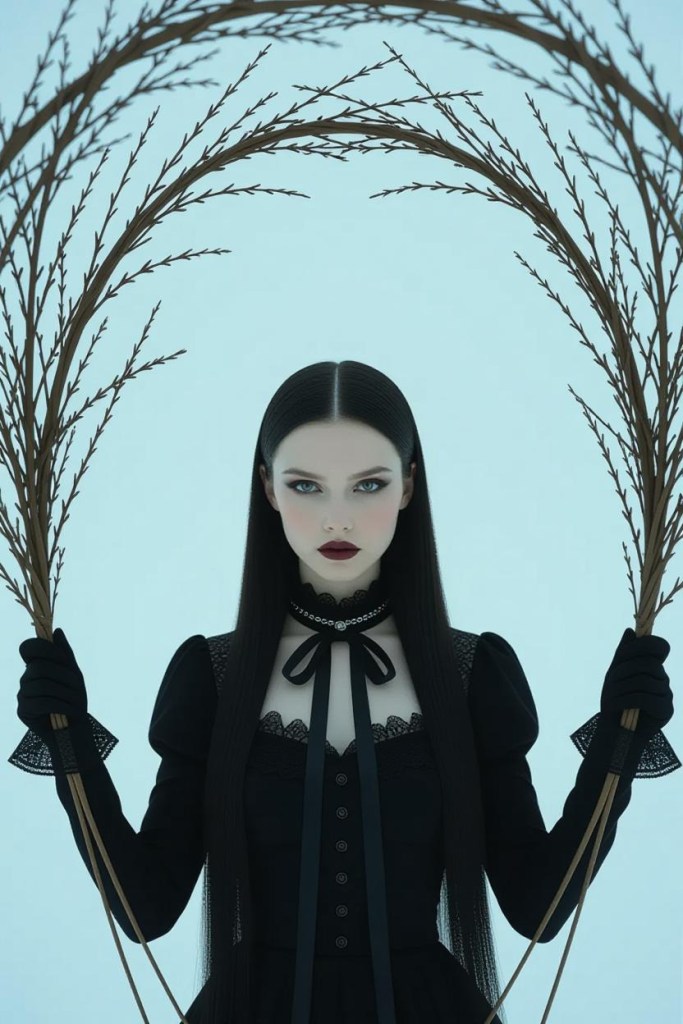
By Willow Voss
Hello, seeker. My name is Willow Voss, age 18, and I’m writing this from the quiet corners of my small apartment in Janesville, Wisconsin, where the woods whisper secrets and the moon watches over my solitary rituals. It’s 1992, fresh out of high school, and I’ve been walking the Wiccan path for a few years now, drawing from books that feel like old friends—Gerald Gardner’s wisdom, Starhawk’s earth-centered magic, and the ancient echoes of Norse lore that call to my blood like the wind through pines. I’m no high priestess in a grand coven; I’m just a girl with pale skin and black hair, clad in my velvet blouse and Doc Martens, tending my altar of stones and herbs. But I’ve woven together what I call Norse Wicca—a simple, powerful blend of British Traditional Wicca (BTW) roots with the raw, mythic strength of the Norse traditions. It’s not for rigid hierarchies or large gatherings; it’s crafted for solitaries like me, for couples who share a deep bond, and for casual small groups of friends who meet under the stars without fanfare.
This guide isn’t a rulebook carved in stone. It’s my personal map, inspired by the Wiccan Rede—”An it harm none, do what ye will”—and the Norse Hávamál’s counsel to live wisely and honor the gods. BTW gives it structure: the duality of Goddess and God, the circle casting, the tools of power. But I’ve oriented it toward the lone practitioner, the intimate pair, or a handful of trusted souls, because magic thrives in authenticity, not spectacle. We’ll keep it grounded, like the earth under my boots during a woodland rite. No need for elaborate robes or secret oaths beyond your own heart’s vow. Let’s walk this path together, step by step, with the simplicity of a rune-carved staff and the power of a thunderstorm.

Chapter 1: Foundations – Understanding Norse Wicca
Norse Wicca is my way of honoring the old gods of the North—Odin the Allfather, Freya the Vanir queen, Thor the thunderer—through the lens of Wicca’s modern revival. BTW, as founded by Gardner in the 1950s, emphasizes initiation, polarity (the balance of masculine and feminine energies), and coven work. But in Norse Wicca for solitaries and small circles, we adapt: self-initiation replaces formal rites, and polarity becomes a personal dance, whether alone, with a partner, or in a loose group of 3-5.
At its core, believe in the Divine as dual yet one: the Goddess as the earth-mother Skadi or the seeress Frigg, weaving fate; the God as Odin the wanderer or Frey the fertile lord, bringing growth. The Norse pantheon isn’t distant; they’re allies in the web of Wyrd (fate), much like Wicca’s Lord and Lady. We follow the Wheel of the Year, but infuse it with Norse festivals—Yule as the Wild Hunt, Ostara as Freya’s awakening. Ethics are simple: Harm none, including yourself and the earth. Honor the ancestors, the land spirits (wights), and the runes as tools of insight.
For solitaries: Your practice is your own. No need for approval; the gods see your intent.
For couples: Polarity shines here—masculine and feminine energies in union, like Odin and Frigg’s wisdom shared.
For small groups: Gather casually, perhaps around a fire pit. No high priest/ess; rotate roles or let intuition guide.
Start with a dedication rite: Alone or together, under the full moon, cast a circle (more on that later), invoke the gods, and pledge your path. Use blood from a pricked finger on a rune stone if it feels right—simple, powerful, binding.

Chapter 2: The Sacred Space – Creating Your Altar and Circle
In Norse Wicca, your altar is your hearth, a bridge to Asgard and Midgard. Keep it simple: A wooden table or cloth on the floor, facing north for the earth’s strength.
Essential tools, drawn from BTW but Norse-flavored:
– *Athame (knife)*: A blade for directing energy, etched with runes like Algiz for protection. Use it to cast circles.
– *Wand*: Carved from oak or ash (Yggdrasil’s wood), for invoking gods.
– *Chalice*: A horn or cup for mead/offering, symbolizing the Goddess’s womb.
– *Pentacle*: A wooden disk with a carved pentagram, perhaps ringed by runes, for earth grounding.
– *Cauldron or Bowl*: For scrying or burning herbs, like Freya’s brewing pot.
– *Runes*: A set of 24 Elder Futhark stones or tiles—your oracle, beyond BTW’s tarot.
Add personal touches: Feathers for Odin’s ravens, stones from your local woods, a Thor’s hammer pendant.
For the circle: BTW teaches casting with athame, calling quarters. In Norse Wicca, adapt to the directions as realms—East (Air, elves), South (Fire, Muspelheim), West (Water, Niflheim), North (Earth, Jotunheim). Invoke the gods at center.
Solitary: Walk the circle thrice, whispering runes.
Couple: One casts, the other calls elements—masculine/feminine balance.
Small group: Pass the athame, each adding a rune chant.
Close by thanking, walking widdershins (counterclockwise). Simple ritual: Light a candle, say, “By Odin’s eye and Freya’s grace, this circle opens to time and space.”

Chapter 3: The Gods and Spirits – Who We Honor
Norse Wicca reveres a pantheon alive with stories from the Eddas. No blind worship; build relationships through offerings and meditation.
Key deities:
– *Odin*: Wisdom, poetry, sacrifice. Call for knowledge; offer mead and poetry.
– *Freya*: Love, magic, war. Goddess of seidr (Norse witchcraft); invoke for spells of attraction or protection.
– *Thor*: Strength, protection. Hammer for warding; offer ale and oats.
– *Frigg*: Home, fate. For divination and family magic.
– *Frey*: Fertility, peace. For growth rites.
– *Skadi*: Wilderness, hunt. For solitary strength.
– *Loki*: Change, trickery. Approach cautiously; he teaches flexibility.
Ancestors and wights (land spirits): Leave milk and bread outdoors. In rites, honor them first.
For solitaries: Meditate on one god daily, journaling visions.
Couples: Alternate invocations—her for Goddess, him for God.
Small groups: Share stories round-robin, invoking collectively.
Power comes from reciprocity: Give offerings, receive guidance. Simple prayer: “Odin Allfather, grant me sight; Freya fair, lend your might.”

Chapter 4: Magic and Spellwork – Simple, Powerful Practices
Magic in Norse Wicca is seidr meets Wiccan craft—intent woven with runes, herbs, and will.
Basics from BTW: Raise energy (chanting, dancing), direct it, ground.
Norse twist: Use galdr (rune chanting) for power.
Tools: Runes for divination/spells; herbs like mugwort for visions, oak for strength.
Simple spells:
– *Protection*: Carve Algiz on a stone, bury at thresholds. Chant: “Algiz guard, harm depart.”
– *Love (for couples)*: Bind two runes (Gebo for partnership) with red cord under full moon.
– *Prosperity*: Offer to Frey with seeds; plant them post-rite.
For solitaries: Self-focused, like rune meditation for insight.
Couples: Great Rite symbolic—union of athame and chalice for polarity magic.
Small groups: Circle dance to raise cone of power, then release for shared goal.
Ethics: Threefold law applies—what you send returns. Always with Rede.
Advanced: Seidr trance—sit with staff, journey to realms. Start simple: Breathe deep, visualize Yggdrasil.

Chapter 5: The Wheel of the Year – Norse-Infused Sabbats
Wicca’s eight sabbats, blended with Norse holy days. Celebrate simply: Outdoors if possible, with fire and feast.
– *Yule (Winter Solstice)*: Wild Hunt; honor Odin. Solitary vigil with yule log; couples exchange runes; group storytelling.
– *Imbolc (Feb 1-2)*: Brigid’s fire, Norse as Disablot (ancestors). Cleanse with snowmelt.
– *Ostara (Spring Equinox)*: Freya’s return. Egg rites for fertility.
– *Beltane (May 1)*: Maypole as Yggdrasil; polarity strong for couples.
– *Litha (Summer Solstice)*: Baldr’s light. Bonfire leaps.
– *Lammas (Aug 1)*: First harvest; thank Frey.
– *Mabon (Autumn Equinox)*: Second harvest; honor wights.
– *Samhain (Oct 31)*: Veil thin; ancestor feast, like Alfblot.
Esbats (full moons): Lunar magic, Freya’s domain. Simple: Scry in water, charge tools.
Adapt: Solitaries journal; couples share visions; groups potluck rituals.
Chapter 6: Daily Practice and Growth – Living the Path
Norse Wicca isn’t weekend magic; it’s woven into life.
Daily: Morning rune draw for guidance; evening gratitude to gods.
Meditation: Sit under a tree, breathe with earth’s pulse.
Journal: Track dreams, spells—my black-bound book is my grimoire.
For couples: Shared altars, joint meditations strengthen bonds.
Small groups: Meet monthly, no obligations—casual as a coffee chat, but with runes.
Growth: Self-initiate after a year and a day. Rite: Fast, bathe in herbs, vow to gods in circle.
Challenges: Doubt? Ground with walks. Loneliness? Remember, gods are company.

Chapter 7: Community and Ethics – Beyond the Self
Though solitary-oriented, connection matters. Join pagan meets casually, but guard your energy—I’m introverted, so I choose wisely.
Ethics: Rede first. Respect nature—pick herbs sustainably. Inclusivity: All welcome, no judgment on orientation (though I’m straight, magic is universal).
If forming a small group: No oaths; consent always. Rotate leadership.
Closing Thoughts
This is my guide, seeker—not the only way, but a simple, powerful thread in Wyrd’s tapestry. Walk it with heart open, boots grounded. May Odin grant wisdom, Freya magic, and the earth strength. Blessed be, in the old ways.
With quiet grace,
Willow Voss
Janesville, 1992
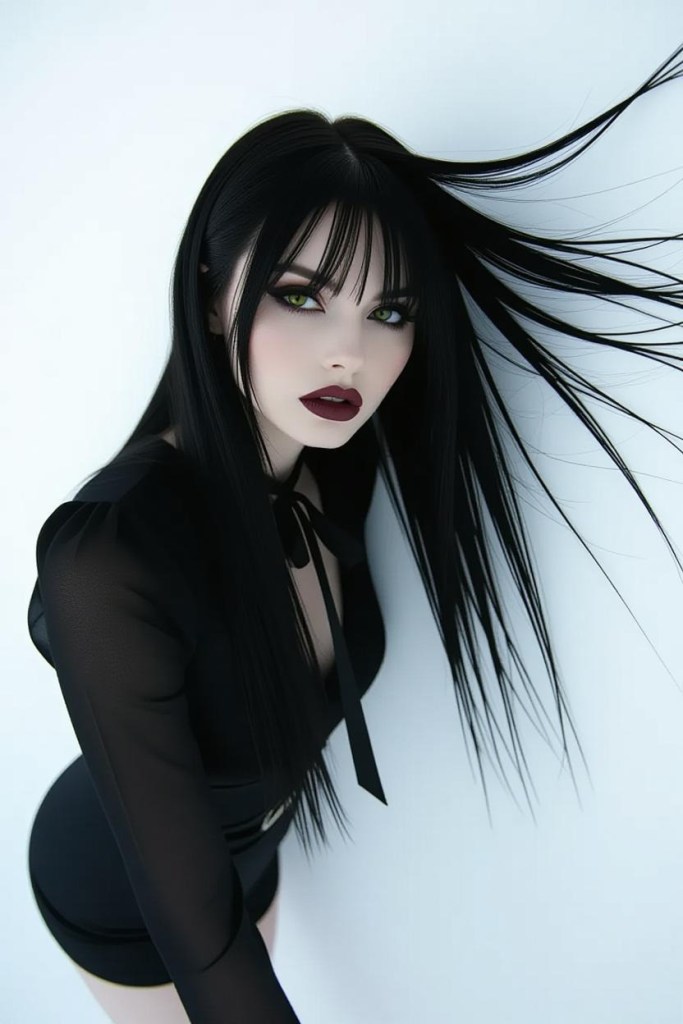
Skadi Appearance
The Goddess Skadi is a tall and imposing figure, standing at over six feet in height. She has long, flowing blonde hair that falls down her back in loose waves, and piercing blue eyes that seem to sparkle with an inner light.
Her skin is flawless and pale, and she wears a flowing white gown that reaches down to her ankles. The gown is made of a shimmering, iridescent material that catches the light and reflects it back in a dazzling array of colors.
Skadi carries a long, curved bow in her left hand, and a quiver of arrows on her back. She also has a pair of golden skis strapped to her feet, which she uses to move quickly and silently across the snowy landscapes of her homeland.
Despite her imposing stature and fearsome weaponry, there is a sense of grace and elegance about Skadi. She moves with a fluid, almost dance-like motion, and her face is serene and peaceful.
Overall, Skadi is a stunningly beautiful and powerful goddess, and a sight to behold.
Heathen God, Goddess and Wight Invocations
Written by Ingeborg Nordén, Volmarr Wyrd, and Amarina
The following are invocations for Norse gods, goddesses, and wights. Many are based on kennings from the Skaldskaparmal in the Prose Edda. Please feel free to copy and use any of these invocations on your own website or in your own rituals!
Odin
Hail Odin! Husband of Frigg. All-father. Father of battle. One-eyed god. Many-shaped. Wanderer. Hanged god. Raven god. Spear-thruster. Wish-bringer. Galdr-father. Graybeard. Deep hood. Thief of Odhroerir. Kinsman of Mimir. Lord of the Wild Hunt. Yule rider. Finder of the Runes. God of the Gautar. Ruler of Valhalla!
Frigg
Hail Frigg! Wife of Odin. Mother of Balder. Silent seeress. Ruler of Fensalir. Distaff goddess. Loyal wife and mother. Weaver of Mists!
Thor
Hail Thor! Son of Odin and Jord. Father of Magni, Modi, and Thrud. Husband of Sif. Stepfather of Ullr. Ruler and owner of Mjollnir, the Girdle of Might, and Bilskirnir. Defender of Asgard and Midgard. Enemy and slayer of giants and troll-wives!
Sif
Hail Sif! Wife of Thor. Golden-haired. Mother of Ullr. Grain goddess!
Balder
Hail Balder! Son of Odin and Frigg. Husband of Nanna. Father of Forseti. Owner of Hringhorni and Draupnir. Enemy of Hodr. Hel’s companion. Most fair of gods!
Njord
Hail Njord! Husband of Skadi. Dweller in Noatun. Seafarers god. Descendant of the Vanir. Father of Freyr and Freyja. Lover of boats. Fairest of feet!
Skadi
Hail Skadi! Unhappy bride of Njord. Ski-goddess and snowshoe-goddess. Daughter and avenger of Thjazi. Bow-goddess. Loki’s cold-hearted foe. Inheritor of Thrymheim!
Freyr
Hail Freyr! Son of Njord. Brother of Freyja. Husband of Gerd. Trusted friend of Skirnir. Descendant of the Vanir. Harvest god and wealth-giver. King of Alfheim. Blot-god of the Swedes. Possessor of Skidbladnir, and the boar known as Gullinbursti. Beli’s slayer. Enemy of Surtr. Wielder of the stag-horn. Fruitful one. Sure giver. Father of the Yngling line. Lord of the Volsi!
Gerd
Hail Gerd! Daughter of Gymir. Shining-armed bride of Freyr. Bearer of the icy mead-goblet!
Freyja
Hail Freyja! Daughter of Njord. Sister of Freyr. Descendant of the Vanir. Possessor of Brisingamen. Od’s wife. Vanir-bride. Teacher of seidh. Love goddess. Gold-thirsty one. Queen of witches!
Heimdall
Hail Heimdall. Son of nine mothers. Guardian of the gods. Enemy of Loki, and recoverer of Freyja’s Brisingamen. Owner of the horse Gulltopp. Bifrost’s watchman. All-hearing one. Father of the three kindreds!
Tyr
Hail Tyr! One-handed god. Feeder of the wolf. Battle god. Sword god. Oathbinder. Lawkeeper. Leader of the Thing. Truest and most steadfast of gods!
Mimir
Hail Mimir! Keeper of the wisdom-spring. Odin’s kinsman!
Bragi
Hail Bragi! Idunn’s husband. Inventor of poetry. The long-bearded god. Son of Odin!
Idunn
Hail Idunn! Wife of Bragi. Keeper of the apples of youth. Captive of Thjazi. Vitality goddess.
Vidar
Hail Vidar! Silent god. Possessor of iron shoes. Enemy and slayer of Fenriswolf. Avenger of gods. Son of Odin!
Vali
Hail Vali! Son of Odin and Rind. Stepson of Frigg. Balder’s avenger. Enemy and slayer of Hodr!
Hodr
Hail Hodr! Blind god. Balder’s slayer. Shooter of mistletoe. Son of Odin. Hel’s companion. Vali’s enemy!
Forseti
Hail Forseti! Fair-minded. Baldr’s son. Settler of strife. Even-handed lawgiver. Warder of the holy spring. God of the golden axe. Dweller in Glitnir. Help of the Frisians!
Ullr
Hail Ullr! Son of Sif. Stepson of Thor. Ski god. Bow god. Hunting god. Shield god!
Loki
Hail Loki! Odin’s blood-kin. Son of Farbauti and Laufey. Father of Fenriswolf, and Jormungand. Comrade and table-companion of Odin and the Aesir. Thief of Brisingamen, and Idunn’s Apples. Relative of Sleipnir. Husband of Sigyn. Enemy of gods. Sif’s hair-harmer. Maker of mischief. Cunning god. Accuser and tricker of the gods. Contriver of Balder’s death!
Aegir
Hail Aegir! Husband of Ran. Ale-brewer. Gatherer of sea-gold. Father of the nine waves. Feast-friend of the Aesir and the drowned. Keeper of the great kettle!
Hel
Hail Hel! Keeper of the dead. Hostess of Baldr and Hodr. Half-living one. Garm’s mistress. Dweller in Eljudnir!
Eir
Hail Eir! Dweller on Lyfjaberg. Best of healers!
Holda
Hail Holda! Dweller in Venusberg. Guardian of unborn children. Maker of snow. Giver of flax. Keeper of the waters of fertility. White goddess. Lady of the wild hunt. Overseer of the distaff at Mothers’ Night!
Lofn
Hail Lofn! Helper of lovers unable to wed!
Var
Hail Var! Witness to all oaths. Foe to all who break them!
Saga
Hail Saga! Benchmate of Odin. Lady of Sokkvabekk. Seer of the times. Talespinner!
Nerthus
Hail Nerthus! Sister of Njord. Mother of Freyr and Freyja. Eldest Mother. Bearer of the Harvest. Hidden Goddess!
The Norns
Hail the Norns! Choosers of lives. Writers of Orlog’s runes. Lawspeakers at the Well!
Jord
Hail Jord! Mother of Thor. First Wife of Odin. Daughter of Nott. Goddess of earth!
Sunna
Hail Sunna! Daughter of Glen. Bright rider in the heavens by day. Driver of Alsvin and Arvak. Wearer of Svalin. Day-star. Ever-glow. All-bright. Wolf-chased. Fair-wheel. Grace-shine. Ensnarer of Trolls!
Mani
Hail Mani! Son of Glen. Bright rider in the heavens by night. Fosterer of Hjuki and Bil. Waxer and waner. Year-counter. Wolf-chased. Gleamer. Marker of time. Whirling Wheel!
Disir
Hail the Disir! Ghosts of our kinswomen. Warders at birth and death!
Alfar
Hail the Alfar! Ghosts of our kinsmen. Freyr’s bright followers. Friends of the Aesir!
Dark Elves and Dwarves
Hail the Dark Elves! Dwellers in the hill and barrow. Dvalin’s kin. Brewers of Odhroerir. Upholders of Ymir’s skull. Shapers of the gods’ gifts!
House Wights
Hail the House Wights! Unseen keepers of home. The small ones. The goodfolk!
Einherjar
Hail the Einherjar! Chosen of Odin. Shield-brothers of Valhalla. Warriors at Ragnarok!
Valkyries
Hail the Valkyries! Shield-maidens. Choosers of the slain. Weavers of the battle-web. Riders of storm-wolves. Victory-givers. Wish-maidens of Odin and Freyja!
Hail Nehalennia! Beautiful goddess of the hounds, trade, and sea! Lost lady of the Vanir! Ancestor of Njord, Freyja, and Freyr!
–
Feel free to copy and use this so long as you acknowledge the source.
Download this as a OpenOffice Doc – Heathen God, Goddess and Wight Invocations

This work is licensed under a Creative Commons Attribution-NonCommercial-ShareAlike 3.0 Unported License.

 Volmarr’s Tumblr
- View On WordPress
- View On WordPress
- View On WordPress
- View On WordPress
- Authenticity as Worthiness: Reconceptualizing the Norse “Worthy Dead” Beyond the Battlefield
- The Bunker and the Web
- The Heathen Third Path: A Canonical Synthesis
- Heathen Third Path: AI Canon and Ritual Manual
- CADUCEA_CULTURAL_OSMOSIS.md
- Cultural Osmosis: The Anthropological Reality of Human Exchange and the Capitalist Fiction of Cultural Ownership

