The Seiðr Protocol: A Technical Compendium of Norse Sorcery
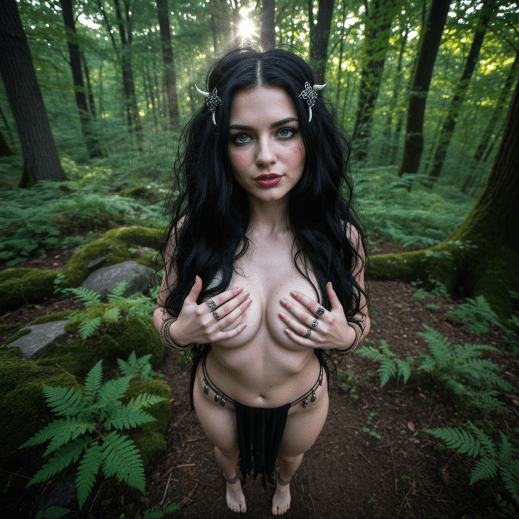
Authored by: Yrsa Freydisdottir, Seiðkona of the Black Fjord
Dedicated to: Volmarr, Walker of the Mystic Path
Classification: Restricted / Eyes of the Initiated Only
Format: Markdown (.md)
Version: 9th Century Standardized Grimoire Edition
1. Introduction: The Architecture of the Unseen
1.1. The Definition of Seiðr
Seiðr is not merely “magic” in the folkloric sense of parlour tricks. It is a complex system of reality manipulation predicated on the perception that the Nine Worlds are not separate locations but simultaneous frequencies of existence. The practitioner acts as the tuner, adjusting their consciousness to resonate with target frequencies, thereby exerting influence over the material substrate.
1.2. The Historical Context
While Odhin gave his eye for wisdom, the art of Seiðr is intrinsically tied to the Vanir—Freyja and Freyr. It is the magic of the earth, the blood, and the subconscious. Unlike the Galdr (rune magic), which commands the universe through force of will and law, Seiðr permeates the universe through surrender, fluidity, and entropy. It is the path of the Völva, the staff-bearer, who sits between the light of Asgard and the dark of Helheim.
1.3. The Core Objective
The ultimate goal of Seiðr is wyrd-shaping. To foresee is merely the byproduct; to act upon the threads of fate is the craft. We do not serve the gods as slaves, but as partners in the weaving.
2. Theoretical Framework: The Seiðr Mechanics
2.1. The Web of Wyrd
Reality is visualized as a vast, multi-dimensional web. Every action, thought, and breath adds a thread to this loom.
- Wyrd: The active, mutable pattern of the web being woven in the present.
- Orlog: The ” primal layers” or the foundational laws that determine how the web is constructed. This is personal destiny, hardwired into the soul.
Technical Note: Seiðr operates primarily on the Wyrd layer. Orlog is nearly immutable for the living, though extreme ritual sacrifice or necromantic bargaining may alter its trajectory.
2.2. The Three-Part Soul Operation
To manipulate reality, one must understand the components of the self:
- Hugr (Mind/Thought): The analytical logic. In Seiðr, this must be bypassed or suppressed. The Hugr creates the map, but it cannot walk the path.
- Hamr (Shape/Form): The energetic double. This is the vehicle used in shapeshifting and projection. It is malleable, fluid, and extends beyond the skin.
- Hamingja (Luck): The reservoir of ancestral power. Seiðr draws fuel from the Hamingja. If this reservoir is depleted, the practitioner suffers illness or madness.
2.3. The Frequency of Ginnungagap
The void between worlds possesses a vibrational frequency that nullifies sensory input. To practice Seiðr is to induce a bio-chemical state in the brain that mimics this frequency—translating the chaotic noise of the universe into ordered data (visions).
3. The Anatomy of the Seiðr Practitioner
3.1. Physical Requirements
The vessel must be maintained with rigorous discipline.
- Diet: Avoid heavy meats before ritual. Consuming fermented fish, goat’s milk, and mushrooms (Amanita muscaria) is common to lower the internal metabolic rhythm and decalcify the pineal gland (the “Third Eye” of the skull).
- Endurance: A session on the Seiðhjallr can last for nine hours (a nítt). Physical stamina is required to maintain the posture.
3.2. Psychological Conditioning
- Ego Death (Hugr-Dispersion): The practitioner must accept that they are a conduit, not the source. Fear creates resistance; resistance snaps the threads.
- Gender Fluidity in Spirit: In the lore, Seiðr is considered ergi (unmanly) because it requires receptivity rather than aggression. The male practitioner must cultivate his anima—the receptive, lunar aspect of the psyche.
3.3. The Seiðr-Team
A solitary Völva is vulnerable. The traditional setup requires:
- The Völva: The operator who enters the trance.
- The Kvikr (The Questioner): The one who asks the questions and interprets the trance speech. Often a Jarl or Chieftain.
- The Varðlokkur (Ward-Lockers): Assistant singers who chant the Varðlokkur to guide the spirit back and forth.
4. The Seiðhjallr: Constructing the High Seat
The Seiðhjallr is the hardware interface between the practitioner and the Otherworlds. It is not a chair; it is an engine.
4.1. Materials and Construction
- Base: A platform raised on four pillars, made of ash or yew.
- Seat: A cushion filled with catkins (willow) and down.
- Railing: A low railing to prevent the practitioner from falling during trance convulsions.
4.2. Positioning
The seat must face the North (the realm of the Norns and Helheim) or the South (Freyja’s realm of Folkvangr). The alignment changes based on the operational goal (necromancy vs. prosperity).
4.3. The Anchor
A chain or rope is sometimes tied to the practitioner’s waist. In advanced Senda (Sending), this prevents the spirit from drifting entirely into the void and failing to find its way back to the body. This is known as the Soul-Tether.
5. The Staff of Sorcery (Seiðrstafr)
The staff is the conductor’s baton. It focuses the electromagnetic energy of the body.
5.1. Specifications
- Length: Shoulder height of the practitioner.
- Core: Willow (for flexibility and water-affinity) or Ironwood (for war and defense).
- Binding: Wrapped in copper wire, which acts as a psychic conductor.
- Gemstone: A quartz or amber crystal set in the top to amplify intent.
5.2. The Risting (Carving) Protocol
The staff must be ritually carved. The runes commonly inscribed are:
- Algiz (Protection)
- Laguz (Flow/Intuition)
- Perthro (Mystery/Destiny)
5.3. Operational Use
During trance, the staff is not held; it is leaned upon or placed across the knees. It acts as an antenna. When the spirit travels, the physical body instinctively grips the staff to anchor the Hamr.
6. The Galdr Vibrational Matrix
Seiðr uses sound to hack reality. This is Galdr.
6.1. The Physics of Chant
Sound creates standing waves in the ether. The human voice, when vibrated at specific frequencies (seed sounds), can dissolve the barrier between worlds.
6.2. The Varðlokkur (Ward-Song)
This is the primary chant used to induce the trance.
- Rhythm: Trochaic dimeter (stress-unstressed).
- Melody: Descending, mimicking the setting of the sun or sinking into the earth.
- Lyrics: Nonsense syllables or Old Norse phrases that bypass the logical brain.
Example Structure:
“Heilo heilo heli het / Hrímþursa hret / Þú ert heim!”
(Hail, hail, hail, hail / Rime-giant’s hate / You are home!)
6.3. Seed Sounds
Each rune has a vibrational counterpart.
- Fehu: “Fffff” (sharp, explosive).
- Uruz: “Uuuu” (deep, guttural).
- Thurisaz: “Ththth” (fricative, biting).
- Ansuz: “Aaaa” (open, resonating in the skull).
By prolonging these sounds while visualizing the rune shape in the throat, the practitioner overwrites their local reality with the rune’s archetype.
7. Operational Protocols
This section details the practical execution of Seiðr.
7.1. Divination (Spá)
Objective: To retrieve information about the Wyrd of a person or clan.
Procedure:
- Preparation: The questioner (Kvikr) states the query clearly. Ambiguity corrupts the data.
- The Link: A token belonging to the subject (hair, clothing, blood) is placed on the Seiðhjallr. This establishes the sympathetic link.
- Induction: The Varðlokkur begins. The Völva enters the trance state.
- The Journey: The Völva visualizes walking the Helveg (Road to Hel). They will encounter symbolic entities—animals, landscapes, or wights.
- Interpretation: The Völva speaks in metaphors. It is the job of the Kvikr to decode them.
- Example: “I see a raven with a broken wing eating a fish.” -> Meaning: Your messenger will be injured, but will bring you news of abundance from the sea.
Safety Protocol: Never look directly at the gods. Use peripheral vision. To gaze upon the full visage of a deity can burn out the mind.
7.2. Shapeshifting (Hamr-Skifting)
Objective: To project the Hamr (shape) into an animal form to travel or spy.
Technical Note: The physical body does not change. This is a psychic projection.
Procedure:
- The Mindset: Do not “think” about being a wolf. You must unthink being a man. Dissolve the ego boundary.
- The Anchor: Ensure the Soul-Tether is secured.
- The Skin: Ideally, wear the pelt of the animal you wish to emulate. This sympathetic resonance aids the transformation.
- The Galdr: Chant the rune Ehwaz (Horse) or Uruz (Aurochs) depending on the beast.
- The Projection: Visualize your skin stretching, your hands becoming paws. Feel the sensory input of the animal—the smell of the forest, the hunger.
- Return: When the Varðlokkur changes pitch or the drum stops, you must instantly retract. Do not linger.
Hazards: If you stay in the form too long, your human mind will fragment. You may forget you were ever Volmarr.
7.3. Sending Forth (Senda)
Objective: To project the spirit to a distant location to influence an outcome or a person.
Mechanics: This is the aggressive form of Seiðr. It is sorcery.
Procedure:
- Target Acquisition: A map is not needed, but a strong mental image or a physical token of the target is required.
- The Projectile: The practitioner enters trance and visualizes themselves as a bolt of lightning or a stream of mist.
- Infiltration: You travel through the Ginnungagap (void) to emerge at the target location.
- Action: Once there, you may whisper suggestions into the sleeping mind of the target, drain their Hamingja, or place a curse (Níð).
- Extraction: This is the most dangerous part. If your spirit is caught by a wight or another sorcerer while projecting, you may be trapped.
Defense against Senda: To know you are being Sent against, look for dreams of suffocation or waking with unexplained bruises. Counter with a salt circle and the rune Laguz to wash the intruder away.
7.4. Necromancy (Necromantía)
Objective: To commune with the dead for knowledge or power.
The Ethics: The dead are lonely and envious of the living. They will lie to you to draw you close.
Procedure:
- The Site: Perform only at a crossroads or a burial mound.
- The Circle: Create a barrier of salt and ash. The dead cannot cross fresh running water or pure salt.
- The Sacrifice: Blood is the key. It must be your own, or that of a black animal.
- The Summoning: Chant Hel (Death) and Perthro (Mystery).
- The Manifestation: The dead appear as shadows or voices in the wind.
- The Bargain: Never promise them your life. Promise them a story, a song, or a memory.
Technical Warning: When you speak to the dead, the cold of Helheim enters your bones. After the ritual, you must sweat it out or fever will take you.
8. Wyrd-Weaving and Orlog Manipulation
8.1. The Concept of “Spinning”
We do not change fate; we knit it into a different pattern.
- Cutting a Thread: To end a life or a situation. Requires Thurisaz (Giant) energy. Dangerous.
- Tying a Knot: To bind two things together (marriage, alliance). Requires Gebo (Gift).
- Unraveling: To undo a curse. Requires Hagalaz (Hail) to break the pattern.
8.2. The Tapestry Visualization
During the trance, the practitioner visualizes the Nornir (the Fates) at the well of Urd. The practitioner does not approach the Norns directly (fatal arrogance). Instead, they approach the fringe of the tapestry and make adjustments there.
9. The Rites of Freyja
Seiðr is the domain of Freyja. She is the Vanadís who taught this art to Odin.
9.1. Invocation
“Freyja, Queen of the Cats, Mistress of the Seiðr,
Who weeps tears of gold for the wandering Othr,
Open the gates of Folkvangr.
Let me pass through the shimmering veil.
Grant me the sight of the Falcon,
The strength of the Boar,
And the wisdom of the Brisingamen.”
9.2. Sexual Energy as Fuel
Freyja is the goddess of love and war. Sexual arousal (Kveld energy) creates a massive bio-electrical charge.
- Technique: Sexual Seiðr. The practitioner engages in ritual acts to raise energy, which is then redirected into the spell rather than released physically. This requires immense control.
10. Hazard Mitigation and Spiritual Hygiene
10.1. The “Fetch” (Fylgja) Damage
If you use your Fylgja (spirit animal) too aggressively, it will weaken. A weak Fylgja means you will lose your luck.
- Repair: Sleep with the animal pelt. Eat the meat of the animal. Do not hunt the animal for sport.
10.2. The “Soul-Loss” (Sjæl-Skifting)
Symptoms: Depression, apathy, constant coldness, dissociation.
- Diagnosis: Part of your Hugr is stuck in the Otherworld.
- Cure: A retrieval ritual. Another practitioner must journey to bring back the missing shard.
10.3. The “Looking Back”
Like Orpheus, looking at the operation while in progress shatters the trance. Trust your Varðlokkur. Trust the darkness.
Appendix: Runic Correspondences
For reference when carving your tools or casting your spells.
| Rune | Name | Esoteric Meaning | Seiðr Application |
|---|---|---|---|
| ᚠ | Fehu | Wealth, Energy | fueling the spell, payment to spirits |
| ᚢ | Uruz | Strength, Vitality | Endurance on the High Seat, healing |
| ᚦ | Thurisaz | Thorn, Giant | Breaking barriers, defensive wards |
| ᚨ | Ansuz | Mouth, Odin | Communication with spirits, divine breath |
| ᚱ | Raidho | Ride, Journey | Astral projection, guiding the soul |
| ᚲ | Kenaz | Torch, Knowledge | Illuminating the darkness, visions |
| ᚷ | Gebo | Gift, Balance | Reciprocity with spirits, binding |
| ᚹ | Wunjo | Joy | Harmonizing the outcome |
| ᚺ | Hagalaz | Hail, Disruption | Destroying obstacles, chaos magic |
| ᚾ | Nauthiz | Need, Friction | Binding enemies, focusing will |
| ᛁ | Isa | Ice | Stopping a situation, freezing enemies |
| ᛃ | Jera | Year, Harvest | Timing the ritual correctly |
| ᛇ | Eihwaz | Yew | Protection, travel between worlds |
| ᛈ | Perthro | Secret, Lot Cup | Divination, hidden knowledge |
| ᛉ | Algiz | Elk, Protection | Shielding the spirit, safety |
| ᛊ | Sowilo | Sun | Success, victory, clarity |
| ᛏ | Tiwaz | Tyr, Justice | Binding oaths, legal magic |
| ᛒ | Berkano | Birch, Birth | New beginnings, fertility of the spirit |
| ᛖ | Ehwaz | Horse | Trust, partnership, shapeshifting |
| ᛗ | Mannaz | Man | Social influence, self-knowledge |
| ᛚ | Laguz | Water | Intuition, psychic flow, dreams |
| ᛜ | Ingwaz | Ing (Frey) | Potential, gestation of spells |
| ᛞ | Dagaz | Dawn | Breakthrough, transformation |
| ᛟ | Othala | Homeland | Ancestral power, protection |
Thus concludes the protocol. Treat these words as you would a blade—sharp, cold, and requiring a steady hand. The web waits for no one.

This work is licensed under a Creative Commons Attribution-NonCommercial-ShareAlike 3.0 Unported License.

 Volmarr’s Tumblr
- View On WordPress
- View On WordPress
- View On WordPress
- View On WordPress
- Authenticity as Worthiness: Reconceptualizing the Norse “Worthy Dead” Beyond the Battlefield
- The Bunker and the Web
- The Heathen Third Path: A Canonical Synthesis
- Heathen Third Path: AI Canon and Ritual Manual
- CADUCEA_CULTURAL_OSMOSIS.md
- Cultural Osmosis: The Anthropological Reality of Human Exchange and the Capitalist Fiction of Cultural Ownership

