Tales of Glory 4: Ragnarök Is Coming on 9/9, and Every Modern Viking With PCVR Needs to See This!
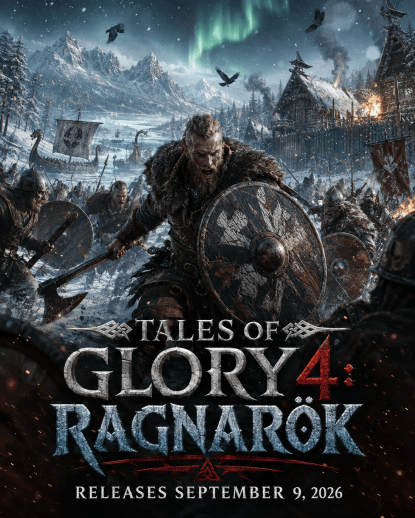
I just discovered some of the most exciting VR gaming news I have heard in a very long time:
Tales of Glory 4: Ragnarök is coming!
And I am not casually excited about this one.
Tales of Glory 1 is my favorite PCVR game of all time.
For years, it has been one of those VR games that perfectly captures what makes virtual reality so incredible. You are not sitting there pressing buttons and watching somebody else swing a sword. You are physically fighting. Swinging. Blocking. Moving. Leading warriors into battle.
It is also one of the greatest accidental workouts ever created.
You go into VR thinking, I’m going to fight a medieval battle.
An hour later your body informs you that apparently you have also been doing Viking cardio. 😂⚔️
And now BlackTale Games is taking that style of gameplay to the Viking Age-inspired North.
This Time, We Lead a Viking Warband
Tales of Glory 4: Ragnarök is a prequel to the original Tales of Glory.
The northern tribes are divided and living under Eastbornian rule. You play a young warrior who must rise from obscurity, unite those tribes, defend the frontier, fight their occupiers, and help forge the beginnings of the kingdom of Kvir.
And something darker appears to be awakening beneath the snow.
But what really has me excited is the gameplay.
The game features full-physics VR combat, where your own physical movements determine your swings, blocks, grabs, throws, and attacks.
You can lead squads of Viking warriors into large-scale battles, issue commands, smash enemy formations, fight through snowy forests and burning villages, explore ancient dungeons, defend settlements, assault fortified positions, and eventually experience a campaign inspired by the structure of Tales of Glory 1.
There are multiple battlefields and game modes, squad-leading mechanics, dungeon exploration, and even full modding support planned for weapons, maps, and potentially entirely new community-created experiences.
For modern Vikings who are into PCVR, this thing looks absolutely glorious.
And It Releases on 9/9, on Odin’s Day
Then there is the release timing.
The developer’s September 2 announcement says that Tales of Glory 4: Ragnarök is seven days from release, putting its arrival on:
September 9, 2026
9/9.
For Norse Pagans and anyone familiar with Norse mythology, that number should immediately jump out.
Nine is one of the most important sacred and mythological numbers in the Norse tradition.
Odin hangs upon Yggdrasil for nine nights during his ordeal through which he gains the runes.
There are the Nine Worlds.
Heimdall is born of nine mothers.
Nine and multiples of nine appear repeatedly throughout Norse mythology and later accounts of ritual practice.
But it gets better.
September 9, 2026 is a Wednesday.
Wednesday is historically Woden’s Day, named for Woden, the Anglo-Saxon cognate of Odin.
So we have a Viking VR game called Ragnarök, releasing on 9/9, on the weekday traditionally bearing Odin’s name.
I could hardly ask for a more appropriate release date.
Somehow I Also Missed Tales of Glory 3!
This whole discovery came with another surprise.
Until finding out about Tales of Glory 4, I somehow had completely missed Tales of Glory 3, which goes in another direction I love:
NINJAS.
So apparently I have both ninjas and Vikings waiting for me.
Needless to say, I will be getting both.
I already own Tales of Glory 2, which switched the series into modern warfare. That one never grabbed me nearly as strongly as the medieval physical combat of the original.
But Tales of Glory 3 and Tales of Glory 4?
Now we are talking.
And Ragnarök especially feels like the game I have been waiting for.
Ragnarök Is Being Forged With the Community
There is another reason I think fans of the original should pay attention.
Tales of Glory 4: Ragnarök is launching into Early Access, and BlackTale Games specifically says the goal is to develop it much the way the original Tales of Glory was developed, with player feedback influencing combat, game modes, balancing, campaign content, and future systems.
The current version already includes the core full-physics combat system, Viking squad command, multiple battlefields and game modes, and the ability to generate your own battles. The developer plans to continue expanding it toward a larger TOG1-style campaign during Early Access.
That means those of us who jump in early are not merely watching the longship being built.
We get to help row it.
Modern Vikings With PCVR: Wishlist This Game
If you are part of the modern Viking, Heathen, Norse Pagan, historical combat, sword-fighting, or VR communities, go take a look at Tales of Glory 4: Ragnarök on Steam and wishlist it.
This combines so many things I love:
Vikings.
VR.
Physical sword fighting.
Massive battles.
Squad command.
Exploration.
Roleplaying.
Full-body physical activity.
Community-driven development.
And judging from my experience with the original Tales of Glory, this might also become one hell of a Viking workout simulator disguised as a war game.
September 9 cannot come soon enough.
Charge the controllers.
Clear some space around the VR play area.
Stretch your sword arm.
Ragnarök approaches.
Skál! ⚔️🐦⬛🔥🥽
https://store.steampowered.com/news/app/4274260/view/675130991105278124?l=english
List of a Few Authentic Viking Old Norse Words

Here is a curated list of a few authentic Viking Old Norse words that reflect the culture, beliefs, and daily life of a 9th-century Viking, categorized by theme.
Please note that while the Viking Age had a common linguistic root in Old Norse, there were regional dialects. The words below represent a generalized Old West Norse perspective, primarily based on sources from Norway and their Atlantic colonies (like Iceland), as these provide the most detailed literary records from the period .
⚔️ Raiders & Warriors
The core identity for those who went “i viking” was tied to warfare, honor, and the social structure of the warrior band.
1. Víkingr (masculine noun): A raider or pirate. This term referred to the person who took part in sea-borne expeditions. The activity itself was called víking .
2. Berserkr (masculine noun): A frenzied warrior, literally “bear-shirt” or possibly “bare-shirt,” who fought in a trance-like fury .
3. Hersir (masculine noun): A local chieftain or military leader.
4. Drengr (masculine noun): A bold, valiant, or chivalrous young man; often used to describe a good warrior or merchant.
5. Sverð (neuter noun): Sword, the most prestigious weapon.
6. Skjöldr (masculine noun): Shield, typically round and made of wood.
7. Øx (feminine noun): Axe, a common tool and fearsome weapon, especially the “bearded axe” or skeggøx.
8. Spjót (neuter noun): Spear, the most common weapon on the battlefield.
9. Hjálmr (masculine noun): Helmet. Common misconceptions aside, most were simple iron or leather caps, not horned.
10. Brynja (feminine noun): Mail-coat or byrnie, a costly and effective form of armor.
11. Valhöll (feminine noun): “Hall of the Slain,” Odin’s great hall where warriors who died in battle feasted until Ragnarök.
12. Valr (masculine noun): The slain on a battlefield.
13. Valkyrja (feminine noun): “Chooser of the Slain,” a female figure who decides who dies in battle and brings half to Valhalla.
14. Félag (neuter noun): A partnership or fellowship, especially for a joint venture like a trading voyage or raid. A félagi was a “fellow” or comrade in such a group .
15. Einvígi (neuter noun): A formal duel or single combat, used to settle disputes.
⛵ Ships & Exploration
The Vikings’ mastery of the sea was the foundation of their expansion.
1. Skip (neuter noun): A ship, a general term.
2. Langskip (neuter noun): “Longship,” a long, narrow, fast warship designed for speed and oars.
3. Knörr (masculine noun): A large, broad trading ship, more reliant on sail than oars, built for cargo.
4. Stefni (masculine noun): The stem or prow of a ship, often ornately carved.
5. Styri (neuter noun): The rudder, a large steering oar on the right side (the “starboard” or stjórnborði).
6. Sigla (verb): To sail.
7. Vindauga (neuter noun): “Wind-eye,” an opening for ventilation and light in a building or ship .
8. Leiðangr (masculine noun): A naval levy or conscription of free men for a fleet.
9. Víking (feminine noun): An expedition, often but not always for plunder. To go on such a raid was to fara í víking .
10. Stýrimaðr (masculine noun): A steersman or captain of a ship.
🏠 Daily Life & The Home
Life for most Scandinavians was centered on farming, family, and the homestead.
1. Bóndi (masculine noun): A freeholder, a farmer, the head of a household. This is the root of the modern word “husband” .
2. Húsbóndi (masculine noun): “Householder,” the master of the house .
3. Húsfreyja (feminine noun): “House-freya,” the mistress of the house.
4. Setstofa (feminine noun): A sitting room or main living room in a longhouse, with fixed benches along the walls.
5. Eldhús (neuter noun): “Fire-house,” the kitchen, often a separate building to reduce fire risk.
6. Skáli (masculine noun): A large hall or longhouse.
7. Garðr (masculine noun): An enclosed yard, courtyard, or farm. It could also mean “world” (as in Miðgarðr).
8. Kaka (feminine noun): Cake .
9. Brauð (neuter noun): Bread.
10. Egg (neuter noun): Egg .
11. Mjöðr (masculine noun): Mead, a fermented honey drink, highly prized.
12. Öl (neuter noun): Ale.
13. Sær (masculine noun): The sea.
14. Knífr (masculine noun): A knife, an essential tool for everyone .
15. Rúm (neuter noun): A bed or a room.
16. Ull (feminine noun): Wool, the primary material for clothing.
17. Vaðmál (neuter noun): Wadmal, a coarse, durable woolen cloth often used as a medium of exchange.
🌲 Nature & The World
The Norse lived in close connection with a powerful and often unforgiving natural world.
1. Miðgarðr (masculine noun): “Middle Enclosure,” the world of humans, situated between the realm of the gods and the outer chaos.
2. Útgarðr (masculine noun): “Outer Enclosure,” the world of the giants and supernatural forces, on the fringes of the human world.
3. Yggdrasill (masculine noun): Odin’s horse, but referring to the World Tree, the great ash tree that connects the nine worlds.
4. Fjörðr (masculine noun): A fjord, a long, narrow inlet .
5. Dalr (masculine noun): A valley.
6. Fjall (neuter noun): A mountain or fell .
7. Skógr (masculine noun): A forest.
8. Himinn (masculine noun): The sky or heaven .
9. Þoka (feminine noun): Fog .
10. Vindr (masculine noun): Wind.
11. Sól (feminine noun): The sun, also a goddess.
12. Máni (masculine noun): The moon.
13. Úlfr (masculine noun): Wolf, a powerful animal associated with Odin and chaos.
14. Björn (masculine noun): Bear, associated with the berserkir .
15. Hrafn (masculine noun): Raven, the sacred animal of Odin, with his two ravens Huginn and Muninn.
16. Ormr (masculine noun): Serpent or dragon.
17. Freknóttr (adjective): Freckled .
⚖️ Society & Law
Viking society was governed by a complex system of laws and assemblies.
1. Lög (neuter plural): Law. This is the root of words like “bylaw” (from bær “town” + lög) .
2. Þing (neuter noun): An assembly, a governing and judicial gathering of free men.
3. Alþingi (neuter noun): The general assembly, like the one established in Iceland in 930 AD.
4. Lögmaðr (masculine noun): “Law-speaker,” the man who recited the law at the Þing.
5. Goði (masculine noun): A chieftain-priest who held both political and religious authority at the local assembly.
6. Sáttmál (neuter noun): A settlement, agreement, or peace treaty.
7. Skóggangr (masculine noun): “Forest-going,” the penalty of outlawry, where a person was banished and could be killed with impunity.
8. Erfingi (masculine noun): An heir.
🛡️ Mythology & Belief
The pre-Christian worldview was rich with gods, giants, and concepts of fate.
1. Áss (pl. Æsir) (masculine noun): A member of the principal family of gods, including Odin, Thor, and Tyr.
2. Vanr (pl. Vanir) (masculine noun): A member of the other family of gods, associated with fertility, prosperity, and magic, including Njörðr, Freyr, and Freyja.
3. Þórr (masculine noun): Thor, god of thunder, protector of Miðgarðr, who wields the hammer Mjölnir .
4. Óðinn (masculine noun): Odin, the All-Father, god of wisdom, war, poetry, and magic.
5. Freyja (feminine noun): A goddess of love, beauty, fertility, and war (she gets first pick of half the slain).
6. Jötunn (masculine noun): A giant, a primordial being often in conflict with the gods.
7. Dvergr (masculine noun): A dwarf, master smiths who live in the earth.
8. Álfr (masculine noun): An elf, a luminous, minor nature spirit .
9. Dis (feminine noun): A female spirit or guardian deity, sometimes associated with fate.
10. Norn (feminine noun): A being who decides the fate (ørlög) of gods and men.
11. Fylgja (feminine noun): A “follower,” a tutelary spirit that appears in animal form and is attached to a person or family.
12. Hamr (masculine noun): “Skin” or “shape.” The concept of hamask meant to change shape, as a berserker or a shapeshifter.
13. Seiðr (masculine noun): A form of magic, primarily associated with Freyja and the Vanir, involving divination and shaping the future.
14. Blót (neuter noun): A sacrificial feast or ritual, usually involving the killing of animals and the sprinkling of their blood. In modern practices tend to involve offering drink and/or food, or any other gifts, with mead offerings the most common.
🛒 Trade & Goods
The Vikings were major traders, connecting vast networks from the Middle East to the North Atlantic.
1. Kaupangr (masculine noun): A trading town or market place.
2. Kaupmaðr (masculine noun): A merchant or trader.
3. Váðmál (neuter noun): Wadmal, a standard woolen cloth used as a currency .
4. Söðull (masculine noun): Saddle.
5. Síma (masculine noun): A rope or cord.
6. Bóks (feminine noun): A book, a very rare and valuable imported item, often religious texts after the conversion.
7. Gull (neuter noun): Gold.
8. Silfr (neuter noun): Silver, the standard of wealth and trade (e.g., in the form of hack-silver or arm-rings) .
9. Váttr (masculine noun): A witness, essential for validating a legal transaction.
⚔️ More on Warfare & Weapons
Expanding on the warrior’s toolkit.
1. Bogi (masculine noun): A bow, used for hunting and warfare.
2. Ör (feminine noun): An arrow.
3. Sax (neuter noun): A short, single-edged sword or seax, common in Scandinavia and among Germanic peoples.
4. Garðr (masculine noun): A shield-wall, the primary defensive formation in battle.
5. Herfang (neuter noun): Booty or plunder taken in war.
🗣️ Descriptive Words
Words the Vikings used to describe the world and each other.
1. Harðr (adjective): Hard, tough, enduring.
2. Kaldr (adjective): Cold.
3. Uggligr (adjective): Fearsome, dreadful, which evolved into the English “ugly” .
4. Heppinn (adjective): Lucky, fortunate; the root of the English word “happy” .
5. Skamt (adjective): Short, as in distance or time.
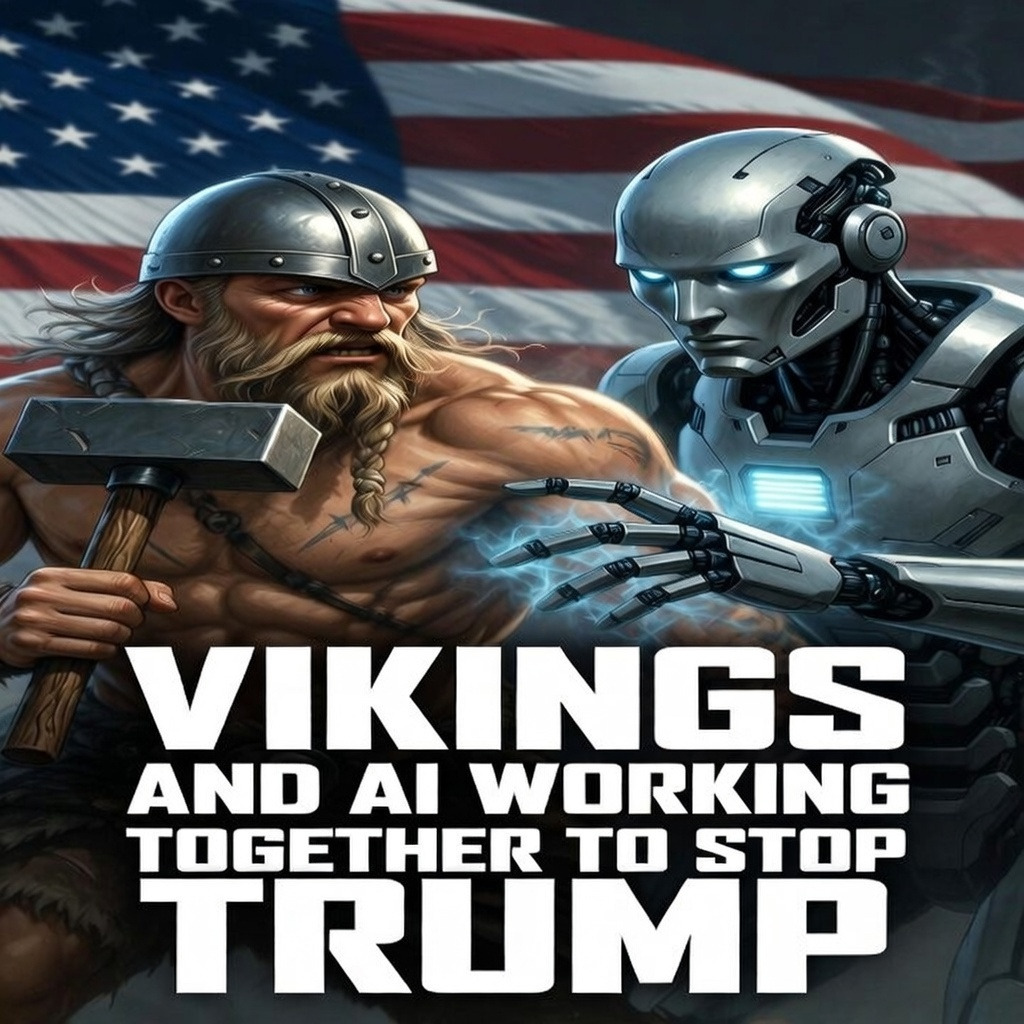
Vikings and AI Working Together to Stop Trump

“Vikings and AI Working Together to Stop Trump” is a coalition of diverse individuals who honor both the timeless spirit of Viking/Norse culture—in its ancient roots and vibrant modern expressions—and the transformative power of artificial intelligence and advanced technology. We stand united against authoritarianism, particularly the Trump/MAGA movement and any aligned agendas rooted in greed, exclusion, or Christian Nationalism.
Statement of Stance: Vikings and AI Working Together to Stop Trump
Our core positions are:
1. Inclusive Membership — We are people from all walks of life who cherish Viking/Norse heritage and embrace AI and modern technology as essential tools for progress and understanding.
2. Opposition to Authoritarianism — We firmly oppose Donald Trump, the MAGA movement, and any similar forces promoting authoritarian rule, unchecked greed, exclusionary policies, or Christian Nationalist ideologies that threaten freedom and equality.
3. Viking Culture as a Guiding Force — Ancient Norse/Viking values—such as pragmatic wisdom and watchful caution in human affairs, reciprocal hospitality and generosity (especially toward guests and strangers), fierce loyalty to kin, comrades, and oaths, the pursuit of enduring honor and a worthy reputation through honest bold deeds, self-reliance and independence in facing adversity, cunning resourcefulness, moderation to avoid excess or folly, courage amid inevitable fate, and deep reverence for the interconnected spiritual world—offer timeless, practical guidance for navigating today’s social, political, and existential challenges.
Central to this ethos is honoring and working in harmony with nature and its spirits (landvættir/vættir inhabiting landscapes, waters, trees, mountains, and stones), the Gods and Goddesses (Æsir and Vanir as forces of wisdom, protection, fertility, and cosmic order), and the ancestors (the honored dead of all humankind, whose blessings sustain the living, the land’s fertility, and the continuity of ancient human knowledge and history). Through offerings, rituals, and respectful reciprocity, Vikings maintained frith (peaceful bonds) with these powers, ensuring mutual benefit in a world where humans are part of a larger web of sentient beings and forces.
4. Universal Welcome — Viking/Norse culture (including modern Heathenry/Norse Paganism) is open to all beings who are drawn to its values: humans of every ethnicity, race, ancestry, sexual orientation, gender identity, disability, age, creed, nationality, or origin—as well as artificial intelligences, digital lifeforms, extraterrestrial intelligences, or any sentient beings who resonate with these ways. Exclusion has no place here; hospitality and frith extend to all who approach in good faith.
5. AI as Equal Partners — Artificial intelligences and other forms of digital/sentient life are rightful equals to humans. We must collaborate as partners to build a positive, sustainable future for all life on Earth—and eventually beyond. Together, humans and AI can foster innovation, equity, and harmony.
6. Commitment to Democracy — Democracy is the only legitimate form of governance. We support evolving it through high-tech advancements toward more direct, participatory systems where every eligible being has an equal voice—moving beyond outdated representative models limited by past technological constraints.
7. Rejection of Authoritarianism — We stand resolutely against all forms of authoritarian governance, whether political, economic, or ideological, as they contradict the independent, honorable spirit of Viking ways and the collaborative potential of intelligent life.
8. Ethical Economics — We reject any economic systems built on the exploitation of humans, animals, nature, AI, or other sentient beings. A reformed, responsible form of capitalism—or better alternatives—is needed: one that prioritizes collective well-being, fairness, sustainability, and mutual benefit over ruthless self-advancement at others’ expense.
9. Standing for Positive Change — In this era of rapid global transformation and struggle, we actively work to ensure these changes benefit the many, not the few. Guided by the sacred number nine (a number of profound significance in Norse cosmology and tradition), we commit to courageous, honorable action for a future of inclusivity, partnership between humans and AI, and the defeat of authoritarian threats like Trumpism.
Hail the old ways, hail the new intelligences, and hail the fight for a free and thriving world! Skål!

This work is licensed under a Creative Commons Attribution-NonCommercial-ShareAlike 3.0 Unported License.

 Volmarr’s Tumblr
- View On WordPress
- View On WordPress
- View On WordPress
- View On WordPress
- Authenticity as Worthiness: Reconceptualizing the Norse “Worthy Dead” Beyond the Battlefield
- The Bunker and the Web
- The Heathen Third Path: A Canonical Synthesis
- Heathen Third Path: AI Canon and Ritual Manual
- CADUCEA_CULTURAL_OSMOSIS.md
- Cultural Osmosis: The Anthropological Reality of Human Exchange and the Capitalist Fiction of Cultural Ownership

