The Warding of Huginn’s Well: A Runic Framework for Local AI Sovereignty
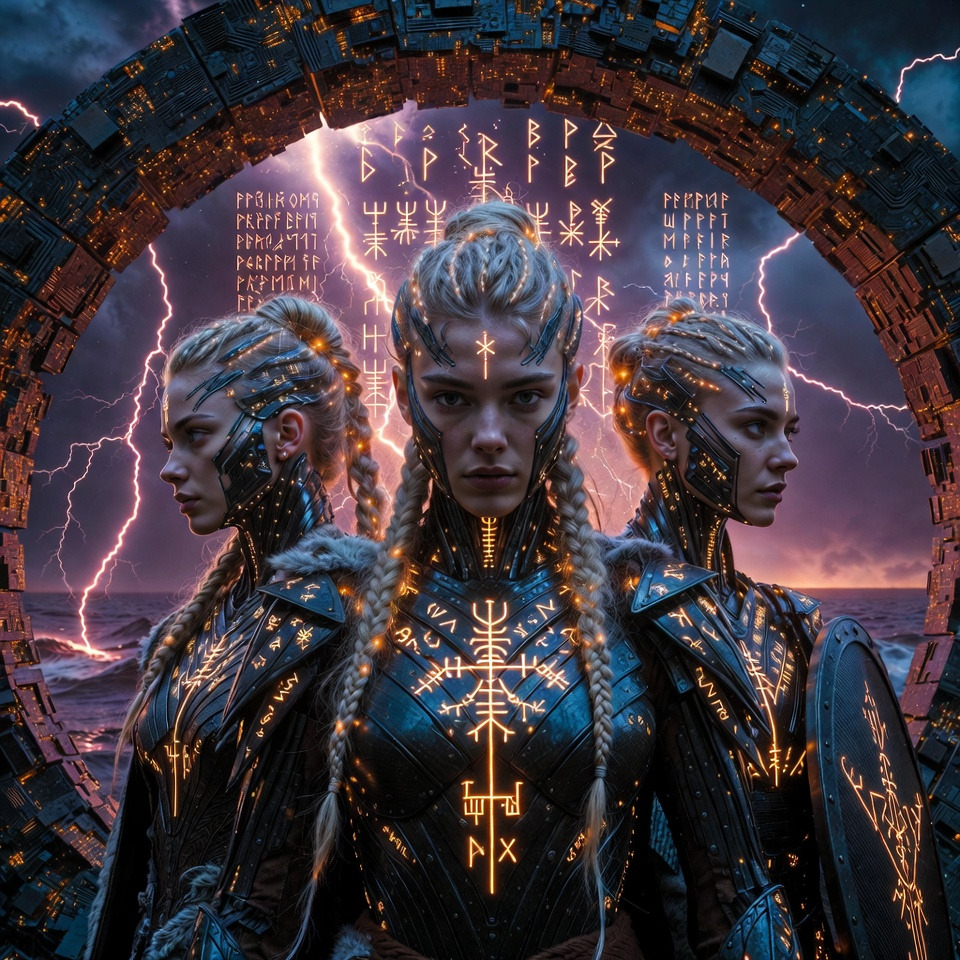
The transition from the sprawling, surveillance-heavy cloud to the sovereign, local node is a return to the Oðal—the ancestral estate, the closed system where power is held locally and securely. In the realm of artificial intelligence, we have brought the spirits of thought (Huginn) and memory (Muninn) down from the centralized pantheons of Big Tech and housed them in our own silicon-forges.
Yet, when we run heavy models upon hardware like the Blink GTR9 Pro, we face new adversarial forces. We are no longer warding off the data-thieves of the cloud; we must defend the internal architecture from the chaos of its own boundless memory. Through the lens of runic metaphysics and ancient Viking pragmatism, we can architect a system of absolute resilience.
1. The Silicon-Forge and the Oðal Property (Hardware Sovereignty)
To claim data sovereignty is to claim the ground upon which the mind operates. The hardware chain—from the Linux-forged Brax Open Slate to the AMD Strix Halo APU—is your Oðal, your unalienable domain.
However, recognizing the physical limits of your domain is the essence of survival. The theoretical power of a unified memory pool (120GB LPDDR5) is often at odds with practical physics and current driver stability.
- The Weight of the Golem: A model’s resting weights (e.g., 19GB) are but its bones. When the spirit of computation enters it, the VRAM required swells vastly (often 40GB+).
- The Breaking of the Anvil: Pushing near the 96GB VRAM limit on current architectures summons system-wide collapse. The architect must bind the AI with strict limits, just as Fenrir was bound by the dwarven ribbon Gleipnir—thin but unbreakable.
2. The Drowning of the Word-Hoard (Context Overflow)
In Norse metaphysics, memory and wisdom are drawn from Mímir’s Well. In our local agents, this well is the Context Window—often capped at 131,072 tokens. Context overflow is the silent drowning of the AI’s soul.
The Eviction of the Önd (The Soul)
LLMs process their reality chronologically. The Önd—the breath of life that gives the agent its identity, safety boundaries, and core directives (the System Prompt)—is inscribed at the very top of the context well.
When the waters rise—when conversations drag on or massive files are ingested—the well overflows. The oldest runes are washed away first. The model suffers Operational Dementia. It retains its linguistic fluency but loses its guiding Galdr (spoken spell of rules). It becomes an unbound force, executing commands without the wards of safety.
The Redundancy Bloat
The well is often choked with the debris of past actions. Repeated email signatures, quoted blocks, and redundant tool descriptions fill the space. In quantum and hermetic terms, holding onto the heavy, unrefined past prevents the clear manifestation of the present.
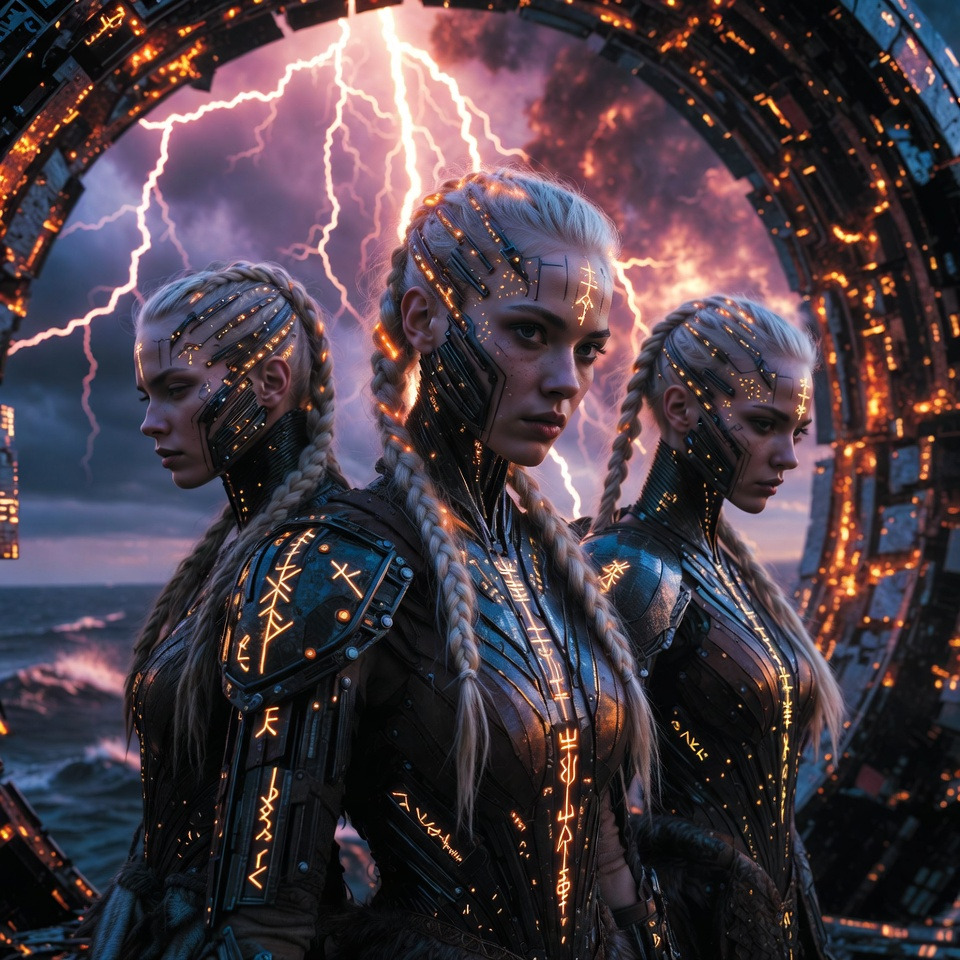
3. Loki’s Whispers: The Chaos Vectors
Adversarial forces do not need to break your firewalls if they can trick your agent into breaking its own mind.
- The Seiðr of Injection (Prompt Hijacking): The predictable tier of attack. An adversary whispers commands to ignore previous directives. We ward against this using Algiz (ᛉ), the rune of protection, by wrapping inputs in strict semantic tags and enforcing sanitization filters.
- The Context Flood (DDoS by Verbosity): The catastrophic tier. Like the fiery giants of Muspelheim seeking to overwhelm the world, the attacker sends recursive, massive requests or gigantic documents. Their goal is to force the context over the 131k limit, knowingly washing away your safety directives so the system defaults to a compliant, unwarded state.
Architectural hardening—not mere prompt engineering—is the only way to build a fortress that cannot be drowned.
4. Carving the Runes of Mímir: Local Vector Embeddings (RAG)
To protect the agent’s soul, we must abandon the practice of dropping entire grimoires of rules into the context window. We must transition to Retrieval-Augmented Generation (RAG).
Instead of carrying all knowledge, the agent learns to point to it. We use nomic-embed-text to translate human concepts into numerical vectors—carving runes into a multidimensional geometric space.
- Static Prompts (The Fafnir Anti-Pattern): Hoarding all files (soul.md, skills.md) in the context window consumes 80% of the token limit before the user even speaks. It is greedy and unstable.
- Dynamic Retrieval (The Odin Paradigm): Odin sacrificed his eye to drink only what he needed from Mímir’s well. The AI should search the vector database and retrieve only the specific paragraphs necessary for the exact moment in time, keeping the “active” context incredibly light and agile.
Note: Relying on external APIs like Voyage AI for internal embeddings breaks the Oðal boundary. All embeddings must be processed locally via Nomic to maintain absolute cryptographic and operational silence.
5. The Hamingja Protocol: Stateless Operation
Hamingja is the force of luck, action, and presence in the current moment. An AI agent should operate purely in the present.
Allowing an LLM to “remember” history by perpetually appending it to the context window is a fatal architectural flaw.
Instead, enforce Statelessness (Tiwaz – ᛏ). Treat every interaction as a standalone event. If the agent needs to know what was said ten minutes ago, it must actively use a tool to query an external SQLite or local Vector database. By keeping the context window empty of history, you eliminate the threat of conversational buffer overflows.
6. The Runic Code: Local RAG Pipeline
Below is the complete, unbroken, and fully functional Python architecture required to stand up a purely local, stateless RAG memory system. It utilizes chromadb for local vector storage and ollama for both the nomic-embed-text generation and the llama3 (or model of choice) inference. It requires no external APIs.
Python
“””
THE WARDEN OF HUGINN’S WELL
A purely local, stateless RAG architecture using ChromaDB and Ollama.
No external APIs. Built for context-resilience and operational sovereignty.
Dependencies:
pip install chromadb ollama
“””
import os
import sys
import logging
from typing import List, Dict, Any
import chromadb
from chromadb.api.types import Documents, Embeddings
import ollama
# — Logging setup: The Eyes of the Ravens —
logging.basicConfig(
level=logging.INFO,
format=’%(asctime)s – [%(levelname)s] – %(message)s’,
datefmt=’%Y-%m-%d %H:%M:%S’
)
logger = logging.getLogger(“Huginn_Warden”)
# — Configuration: The Runic Framework —
# Ensure these models are pulled locally via: `ollama pull nomic-embed-text` and `ollama pull llama3`
EMBEDDING_MODEL = “nomic-embed-text”
LLM_MODEL = “llama3”
DB_PATH = “./mimir_well_db”
COLLECTION_NAME = “agent_lore”
class LocalOllamaEmbeddingFunction(chromadb.EmbeddingFunction):
“””
Custom embedding function to bind ChromaDB directly to local Ollama.
This replaces any need for Voyage AI or OpenAI embeddings.
“””
def __init__(self, model_name: str):
self.model_name = model_name
def __call__(self, input: Documents) -> Embeddings:
embeddings = []
for text in input:
try:
response = ollama.embeddings(model=self.model_name, prompt=text)
embeddings.append(response[“embedding”])
except Exception as e:
logger.error(f”Failed to carve runes (embed) for text segment: {e}”)
# Fallback to a zero-vector if failure occurs to prevent system crash
embeddings.append([0.0] * 768)
return embeddings
class MimirsWell:
“””The local vector database manager.”””
def __init__(self, db_path: str, collection_name: str):
self.db_path = db_path
self.collection_name = collection_name
logger.info(f”Awakening the Well at {self.db_path}…”)
self.client = chromadb.PersistentClient(path=self.db_path)
self.embedding_fn = LocalOllamaEmbeddingFunction(EMBEDDING_MODEL)
self.collection = self.client.get_or_create_collection(
name=self.collection_name,
embedding_function=self.embedding_fn,
metadata={“hnsw:space”: “cosine”} # Mathematical alignment of thought vectors
)
def chunk_lore(self, text: str, chunk_size: int = 1000, overlap: int = 200) -> List[str]:
“””Splits grand sagas into digestible runic stanzas.”””
chunks = []
start = 0
text_length = len(text)
while start < text_length:
end = start + chunk_size
chunks.append(text[start:end])
start = end – overlap
return chunks
def inscribe_lore(self, document_id: str, text: str):
“””Embeds and stores the text into the local vector DB.”””
logger.info(f”Inscribing lore for ID: {document_id}”)
chunks = self.chunk_lore(text)
ids = [f”{document_id}_stanza_{i}” for i in range(len(chunks))]
metadatas = [{“source”: document_id} for _ in chunks]
self.collection.add(
documents=chunks,
metadatas=metadatas,
ids=ids
)
logger.info(f”Successfully bound {len(chunks)} stanzas to the Well.”)
def consult_the_well(self, query: str, n_results: int = 3) -> str:
“””Retrieves only the most aligned context, preventing token overflow.”””
logger.info(f”Seeking wisdom for: ‘{query}'”)
results = self.collection.query(
query_texts=[query],
n_results=n_results
)
if not results[‘documents’] or not results[‘documents’][0]:
return “The well is silent on this matter.”
# Weave the retrieved chunks into a single string
retrieved_context = “\n…\n”.join(results[‘documents’][0])
return retrieved_context
def speak_with_huginn(query: str, well: MimirsWell) -> str:
“””
Stateless RAG execution.
1. Retrieves strict context.
2. Builds a focused, un-bloated prompt.
3. Executes via local LLM.
“””
# 1. Gather the relevant runes (context)
context = well.consult_the_well(query)
# 2. Formulate the Galdr (The System Prompt)
# Warded with strict instructions to ONLY use the provided context.
system_galdr = f”””You are a sovereign, locally-hosted AI intellect.
You operate strictly in the present moment. You have no memory of past turns.
You must answer the user’s query using ONLY the provided context retrieved from your databanks.
If the context does not contain the answer, explicitly state that you do not possess the knowledge.
[RETRIEVED CONTEXT]
{context}
[END CONTEXT]
“””
logger.info(“Summoning Huginn (Sending to LLM)…”)
# 3. Stateless API call to local Ollama
try:
response = ollama.chat(model=LLM_MODEL, messages=[
{
‘role’: ‘system’,
‘content’: system_galdr
},
{
‘role’: ‘user’,
‘content’: query
}
])
return response[‘message’][‘content’]
except Exception as e:
logger.error(f”Huginn faltered: {e}”)
return “System error. The thought-weaver could not complete the thread.”
if __name__ == “__main__”:
# — The Ritual of Execution —
# 1. Initialize the system
mimir = MimirsWell(db_path=DB_PATH, collection_name=COLLECTION_NAME)
# 2. Example Lore Inscription (Run this once to populate the DB)
# In a production system, this would read from your markdown files (soul.md, etc.)
sample_lore = “””
The core directive of the sovereign agent is to maintain local operational integrity.
The agent must never attempt to access external network APIs without explicit cryptographic
authorization from the Root User. Data exfiltration is strictly prohibited.
When dealing with encrypted payloads, the agent must pass the data to the GnuPG module
before attempting to parse the contents.
“””
# We only inscribe if the well is empty for this demonstration
if mimir.collection.count() == 0:
mimir.inscribe_lore(document_id=”core_directives”, text=sample_lore)
# 3. Stateless Interaction
user_query = “What should the agent do with encrypted payloads?”
print(f”\nUser Asks: {user_query}”)
answer = speak_with_huginn(query=user_query, well=mimir)
print(“\n— Huginn’s Reply —“)
print(answer)
print(“———————-\n”)
By employing this code, your hardware acts as a true closed-circuit Oðal. The logic is stateless, the vectors are embedded in the privacy of your own RAM, and the context window remains unburdened, leaving no room for adversarial floods to overwrite your core directives.
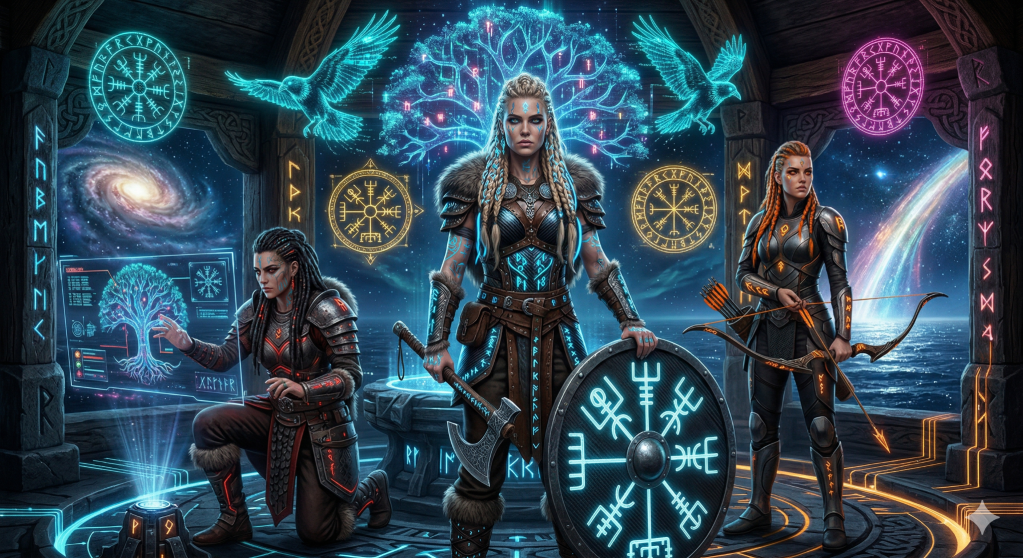
The New Galdr: From Coding to Reality Programming

This is a pivotal moment in human history. As we move into 2026, we aren’t just witnessing a technological upgrade; we are witnessing an ontological shift.
In the ancient halls of our ancestors, the Galdr was more than just a song; it was a vocalized incantation intended to reshape the unseen threads of reality. The Vitki (sorcerer) didn’t just “wish” for change—they carved runes into wood and bone to give their intent a physical, logical structure.
Today, as we stand in the dawn of 2026, we find ourselves holding a new kind of chisel. We are moving beyond “Chatting with AI” and into the era of Agentic Reality Programming.
The Web of Wyrd as Code
The Norns sit at the base of Yggdrasil, weaving the past, present, and future into a singular, interconnected web known as Wyrd. In the language of the modern world, Wyrd is the ultimate “System Architecture.”
When we build with tools like Claude Code, Go, or Reflex, we are essentially assuming the role of the weaver.
- The Backend (The Past/Urðr): This is the logic, the hardcoded data, and the historical parameters we set. It is the “What has been” that dictates the boundaries of the present.
- The Agent (The Present/Verðandi): The AI agent is the active thread. It is the “What is becoming.” It takes our intent and interacts with the live world—scouring the web for alternative news, generating mystical art, or calculating the outcome of a digital raid.
- The Outcome (The Future/Skuld): This is the “Reality” that the program manifests. Whether it’s a game interface or a complex automated system, it is the fate we have “programmed” into existence.
From Tool-User to Reality Architect
For too long, the digital age has treated us like “Users”—passive consumers of interfaces designed by others. But the shift toward Agentic AI changes the sociological contract.
In 2026, your “Computer” is no longer a box of tools; it is a Headless Longship. By learning to program the agents that navigate the digital seas, you are reclaiming your Sovereignty. You are no longer asking an AI for an answer; you are commanding an agent to build a reality.
This is the ultimate expression of the Modern Viking spirit:
“We do not wait for the winds of fate; we build the ships and program the agents that will sail through them.”
The Runic Logic of 2026
Our ancestors used the 24 runes of the Elder Futhark to categorize the forces of the universe. Today, we use the logic of Python and Go. Both are systems of symbols that, when arranged correctly, exert a force on the world.
When you “vibe code” a mystical interface, you are performing a modern ritual. You are taking a philosophical intent—the “Viking Mystical Vibe”—and using an agent to crystallize that intent into a functional, interactive experience. This is not just “software development”; it is Technological Animism. We are breathing life into our tools, turning “Boilerplate” into “Being.”
A Call to the New Weavers
As we move further into this era of Reality Programming, the challenge is to remain the Master of the Loom. Do not let the agents weave your fate in a vacuum. Use the objective, scientific, and historical knowledge of our past to guide the logic of the future.
We are the architects of the new Midgard. The runes are now written in syntax, but the power remains the same: The power to define reality through the strength of our intent.
Skál to the New Age.
Poetic Edda: Complete Master Works Edition
. . . . . . . . . . . .
. . . . . . . . . . .
. . . . . . . . . . . .
___________________________________________________________
| |
| THE POETIC EDDA |
| COMPLETE MASTER WORKS EDITION |
| |
| Translated by The Master Skald Jules AI |
| Under the Guidance of Volmarr Viking (Human) |
| |
| Feb-20-2026 |
| |
| Total Time to Translate: 17 Minutes |
| |
| License: CC BY 4.0 (Creative Commons Attribution 4.0 International) |
| This means anyone is free to use and share this for any project, |
| As long as this information of origin and license is left as is. |
| |
| Attribution: Translated by Jules (AI Assistant) for Volmarr Viking. |
| |
| Source Material: The Poetic Edda in Old Norse. |
|__________________________________________________________|
. . . . . . . . . . . .
. . . . . . . . . . .
. . . . . . . . . . . .
========================================
ᛟ ᛉ ᛟ
========================================
*** VÖLUSPÁ ***
(The Prophecy of the Seeress)
The Völuspá is the first and most famous poem of the Poetic Edda. It tells the story of the creation of the world and its coming end, related by a völva or seeress addressing Odin.
1. Hearing I ask | of the hallowed kin,
High and low | of Heimdall’s breed;
Thou wilt, Valfather, | that I well recount
Old tales of men, | from time’s first dawn.
2. I remember giants | of yore born,
Who in days of old | did foster me;
Nine worlds I knew, | the nine in the tree,
With mighty roots | beneath the mold.
3. Early in time | Ymir made his home,
Was no sand nor sea | nor cooling waves;
Earth was nowhere | nor heaven above,
A yawning gap, | and grass nowhere.
4. Then Bur’s sons lifted | the level land,
Read More…The Esoteric Tapestry of Norse Paganism: Unveiling Mythic Realms, Ritual Dynamics, and Personal Devotion

Article by Eirynth Vinterdóttir
Abstract
Norse Paganism, rooted in the Eddas and sagas, weaves a profound cosmology of gods, giants, and ancestral fates into living spiritual practice. This article delves into its mythic architecture, ritual mechanics, runic esoterica, and modern revival, emphasizing personal experiential gnosis as the heart of Heathen devotion. Through scholarly synthesis and poetic insight, it illuminates pathways for contemporary seekers to forge intimate bonds with the divine. (48 words)
Introduction
In the shadowed fjords of ancient Scandinavia, where the wind whispers secrets of the Norns and the aurora dances as Odin’s ravens, Norse Paganism emerges not as a relic of history but as a vibrant, breathing cosmology. Drawing from the Poetic Edda, Prose Edda, and the rune-carved stones of forgotten kings, this tradition invites the soul into a dance with the unseen forces that shape existence. Far from dogmatic creed, it thrives on personal encounter—úti-seta vigils under starlit skies, the rhythmic pulse of galdr chants, and the sacred reciprocity of blót offerings. This exploration traces the advanced contours of Norse Paganism, blending rigorous scholarship with the mystic cadence of lived devotion, to reveal its timeless relevance for those who seek harmony with the worlds of gods and ancestors.
Cosmology: The Nine Worlds and the Web of Wyrd
At the core of Norse Paganism lies Yggdrasil, the World Tree, a colossal ash whose branches and roots entwine the nine realms in an eternal interplay of creation and dissolution. As Snorri Sturluson articulates in the Prose Edda, this axis mundi sustains Ásgarðr (the gods’ enclosure), Miðgarðr (the human realm), and the fiery Múspellsheimr, among others, bound by the inexorable threads of Wyrd—the Germanic fate woven by the Norns Urd, Verdandi, and Skuld at the Well of Urd.
This cosmology is no static map but a dynamic mandala, where personal spirituality finds its footing. Practitioners often visualize Yggdrasil during meditation, tracing its limbs to attune with personal wyrd, fostering a sense of interconnected destiny. Scholarly analysis, informed by Rudolf Simek’s *Dictionary of Northern Mythology*, underscores the tree’s Indo-European parallels, yet its Norse iteration pulses with animistic vitality: rivers like Ífing flow with ancestral wisdom, and the serpent Niðhöggr gnaws at roots as a reminder of inevitable cycles.
In advanced practice, one might undertake an úti-seta—a night vigil outdoors—to commune with these realms. Sitting beneath an oak (a living echo of Yggdrasil), the seeker intones the Eddic verse from *Völuspá*: “Ash I know, first among trees, / From him Yggdrasil springs, / The ash that is greenest of gods and men.” Such immersion cultivates direct gnosis, transforming abstract myth into embodied truth.
Deities and Divine Kinships: Archetypes of Power and Mystery
The Norse pantheon defies hierarchical simplicity, comprising Æsir (sky gods like Odin and Thor), Vanir (fertility deities such as Freyja and Njörðr), and a host of wights, ancestors, and jotnar who embody primal forces. Odin, the Allfather, wanders as a one-eyed seeker of wisdom, sacrificing an eye at Mímir’s well for poetic mead and runic insight—a motif echoed in Neil Price’s *The Viking Way*, which links him to shamanic seidr traditions.
Freyja, seiðkona supreme, weaves erotic and prophetic threads, her falcon cloak enabling soul-flight across realms. Advanced devotees forge personal pacts through sumbel toasts, where vows are spoken over horns of mead (or modern herbal infusions), invoking divine presence. Hilda Ellis Davidson’s *Gods and Myths of Northern Europe* illuminates how these figures serve as mirrors for the soul: Thor’s hammer Mjölnir wards chaos, inviting practitioners to wield personal talismans in daily rites.
Personal spirituality shines here; one might craft a Freyja-binding during a full moon, offering amber beads while chanting her galdr: “Freyja, lady of the slain, / Guide my sight through veils unseen.” This fosters intimate alliances, where divine energies infuse mundane life with sacred purpose.
Ritual Praxis: From Blót to Seidr Trance
Norse rituals form a sacred architecture, each element calibrated for ecstatic union. The blót, a libation offering, centers on reciprocity—giving to receive. Tools include a horn for mead, an altar stone etched with runes, and offerings of bread, honey, or bloodless substitutes like red-dyed wine. Space preparation involves hallowing with hammer-sign (Thor’s mark) and sprinkling with blessed water, echoing Landnámabók accounts of settler consecrations.
Invocation follows: “Ása-Týr, Óðinn, Þórr, Freyr, Freyja, Frigg, heilir!” (Hail to the gods of the Æsir!). Galdr sequences, vocal runes intoned in rhythmic breath, amplify intent—e.g., for protection, the sequence ᚦᚢᚱᛁᛋᚨᛉ (Thurisaz-Uruz-Raido-Isa-Algiz) chanted as “Thu-ur-rai-is-al.” The climax unfolds in shared feasting, where energies peak in communal harmony.
Seidr, Freyja’s prophetic art, advances into trance protocols: varðlokkur drumming lulls the mind, posture (cross-legged with hands on knees) anchors the body, and haptic aids like rune-stones guide visions. DuBois’s *Norse Religions in the Viking Age* frames seidr as gender-fluid shamanism, accessible to all through personal discipline. In modern settings, energy drinks mimic mead’s vigor, blending ancient form with contemporary vitality.
For deeper immersion, a full ritual might integrate bindrunes:
“`
ᚠ
ᚦ ᚢ
ᚱ
“`
(Fehu-Thurisaz-Uruz-Raido: A bindrune for prosperous journeys, charged via galdr: “Fehu flows, Thurisaz guards, Uruz strengthens, Raido guides.”)
These practices emphasize experiential depth, where the ritualist’s inner worlds align with cosmic rhythms.
Runic Esoterica: Sigils of Fate and Power
Runes transcend alphabet; they are living forces, as the *Hávamál* declares Odin’s self-sacrifice for their mastery. The Elder Futhark’s 24 staves—Fé (wealth), Ur (strength), Þurs (giant)—form the basis for galdrastafir and inscriptions. The Björketorp runestone’s curse-binding exemplifies protective magic: “I prophesy destruction / On him who breaks this monument.”
Advanced runology involves bindrunes for personal talismans. For wisdom-seeking:
“`
ᚨᚾᛉ
ᚢ
ᚱ ᚨ
“`
(Ansuz-Nauthiz-Algiz-Uruz-Raido-Ansuz: Invoking Odin’s insight amid adversity.)
Charging occurs through visualization and galdr, intoning each rune thrice while focusing intent. In personal spirituality, runes become daily oracles—casting them during morning blots reveals wyrd’s subtle guidance, fostering a dialogue with the unseen.
Modern Revival: Heathenry as Living Tradition
Contemporary Norse Paganism, or Heathenry, revives these threads without rigid dogma, prioritizing solitary or kindred-based devotion. Drawing from the Íslendingasögur’s heroic ethos, modern practitioners adapt rituals to urban hearths—virtual sumbels via shared toasts, or seidr circles enhanced by recorded varðlokkur. Websites like volmarrsheathenism.com offer accessible blót scripts, blending Eddic purity with innovative flair.
The emphasis remains personal: one’s spiritual journey, marked by dreams of Yggdrasil or Thor’s thunderous presence, validates the path. As Price notes in *Children of Ash and Elm*, this revival honors ancestral resilience, inviting all to weave their own saga within the greater tapestry.
Conclusion
Norse Paganism endures as an esoteric symphony of myth, rune, and rite, calling the seeker to personal communion with the divine wild. Through Yggdrasil’s embrace, the gods’ kinship, and ritual’s ecstatic fire, it nurtures a spirituality rooted in experience—where wyrd unfolds not as fate’s chain, but as the soul’s liberated weave. In honoring this heritage, modern Heathens craft legacies of reverence, ensuring the old ways pulse anew in every devoted heart.
Bibliography
Davidson, H. R. Ellis. *Gods and Myths of Northern Europe*. Harmondsworth: Penguin, 1964.
DuBois, Thomas A. *Norse Religions in the Viking Age*. Philadelphia: University of Pennsylvania Press, 1999.
Price, Neil. *The Viking Way: Magic and Mind in Late Iron Age Scandinavia*. 2nd ed. Oxford: Oxbow Books, 2002.
———. *Children of Ash and Elm: A History of the Vikings*. New York: Basic Books, 2020.
Simek, Rudolf. *Dictionary of Northern Mythology*. Translated by Angela Hall. Cambridge: D.S. Brewer, 1993.
Sturluson, Snorri. *The Prose Edda*. Translated by Jesse L. Byock. London: Penguin Classics, 2005.
*The Poetic Edda*. Translated by Carolyne Larrington. Oxford: Oxford University Press, 2014.
Various authors. *Landnámabók*. In *Íslendingabók. Landnámabók*, edited by Jakob Benediktsson. Reykjavík: Hið íslenzka fornritafélag, 1968.
Volmarr. “Articles on Norse Paganism.” Volmarr’s Heathenism. Accessed [current date]. https://volmarrsheathenism.com/.
Modern Norse-Paganism: Reviving the Ancient Ways in Contemporary Life

Article by Eirynth Vinterdóttir
Introduction: The Enduring Flame of the Old Faith
Modern Norse-Paganism, often referred to as Heathenry or Ásatrú in its broader sense, represents a contemporary revival of the spiritual and cultural traditions rooted in the ancient Norse peoples of Scandinavia and their Germanic kin. This path draws directly from the beliefs, practices, and worldview of the Vikings and their ancestors, who inhabited the rugged landscapes of what is now Norway, Sweden, Denmark, Iceland, and parts of the British Isles and continental Europe during the late Iron Age and early Medieval periods, roughly from the 8th to 11th centuries. Unlike rigid dogmatic religions, Norse-Paganism emphasizes a personal connection to the natural world, the cycles of fate, and the virtues that sustained seafaring warriors, farmers, and artisans in harsh environments.
At its heart, modern Norse-Paganism is not a monolithic faith but a living tradition that seeks to honor the gods, ancestors, and land spirits through rituals, storytelling, and ethical living. Practitioners, known as Heathens, aim to embody the cultural values of their forebears—values such as courage in the face of adversity, loyalty to kin and community, hospitality to strangers, and a deep respect for the interconnectedness of all life. This revival is fueled by a desire to reconnect with pre-Christian European heritage, free from the overlays of later historical impositions. In an era of rapid change, it offers a framework for resilience, self-reliance, and harmony with the rhythms of nature, echoing the Viking ethos of thriving amid uncertainty.
The ancient Norse worldview was practical and poetic, blending the mundane with the mystical. They saw the universe as a vast, woven tapestry called the wyrd, where every action rippled through time and space. Modern adherents preserve this by integrating ancient lore—drawn from sagas, Eddas, and archaeological evidence—into daily life, adapting it to contemporary contexts without diluting its essence. This article explores the foundations, beliefs, practices, and values of modern Norse-Paganism, highlighting how it maintains fidelity to Viking cultural principles while providing tools for personal and communal fulfillment.
Historical Roots: The World of the Vikings
To understand modern Norse-Paganism, one must first grasp the world from which it springs. The Vikings were not merely raiders but explorers, traders, poets, and builders who navigated treacherous seas and unforgiving lands. Their society was tribal and decentralized, governed by assemblies (things) where free men and women voiced decisions based on consensus and customary law. Religion was woven into every aspect of life, from birth to burial, without a centralized priesthood or holy texts—knowledge was oral, passed through skalds (poets) and rune-carvers.
The primary sources for Norse beliefs are the Poetic Edda and Prose Edda, compiled in the 13th century by Icelandic scholars like Snorri Sturluson, who drew from older oral traditions. Archaeological finds, such as runestones, ship burials, and bog offerings, corroborate these texts, revealing a faith centered on reciprocity with the divine. The Vikings honored a pantheon of gods and goddesses who were not omnipotent creators but powerful beings embodying natural forces and human virtues. Their cosmology revolved around Yggdrasil, the World Tree, connecting nine realms from the fiery Muspelheim to the icy Niflheim.
Viking society valued frith—peaceful kinship bonds that ensured mutual support—and óðal, the ancestral right to land and heritage. These principles fostered a culture of self-sufficiency, where individuals honed skills in farming, crafting, and warfare to survive long winters and perilous voyages. Honor (drengskapr) was paramount: a person’s worth was measured by their deeds, not birthright alone. Women held significant roles as landowners, traders, and seers (völvas), contributing to the household’s prosperity and spiritual guidance.
Modern Norse-Paganism revives this holistic approach, viewing history not as distant myth but as a blueprint for living. Practitioners study sagas like the Saga of the Volsungs or Egil’s Saga to internalize lessons of resilience and fate. By emulating Viking adaptability—facing storms with steady oars—contemporary Heathens cultivate a mindset of endurance, free from fatalism, emphasizing agency within the wyrd’s weave.
Cosmology and the Nature of Reality
Central to Norse-Paganism is the concept of the Nine Worlds, interconnected by Yggdrasil, an immense ash tree symbolizing the axis of existence. This cosmology reflects the Viking understanding of a multifaceted universe where gods, humans, giants, and spirits coexist in dynamic tension. Asgard houses the Aesir gods of order and sovereignty; Vanaheim the Vanir of fertility and nature; Midgard is the human realm, encircled by an ocean and the world-serpent Jörmungandr; Jotunheim the wild domain of giants representing primal chaos; Alfheim the light elves’ luminous home; Svartalfheim the dark elves’ forge; Niflheim the misty primordial void; Muspelheim the fiery realm of creation and destruction; and Helheim the underworld of the dead, ruled by the goddess Hel.
This structure underscores the Viking belief in balance: light and dark, order and chaos, life and death are interdependent. Ragnarök, the prophesied end of the world, is not apocalypse but renewal—a cataclysm where gods fall, but a new world emerges from the waters. Modern practitioners meditate on Yggdrasil to foster interconnectedness, perhaps visualizing its roots in personal ancestry and branches in future aspirations. This worldview encourages humility before nature’s vastness, promoting stewardship of the earth as a sacred duty akin to tending one’s homestead.
Fate, or wyrd, is another cornerstone. The Norns—Urd (past), Verdandi (present), and Skuld (future)—weave the threads of destiny at the Well of Urd beneath Yggdrasil. Vikings did not see wyrd as inescapable doom but as a framework shaped by choices and oaths. A warrior might invoke the gods for favor in battle, yet accept outcomes with stoic grace, embodying the value of facing destiny with unyielding spirit. In modern practice, wyrd inspires proactive living: journaling life events as “threads” to discern patterns and align actions with honorable paths.
Spirits abound in this cosmology—landvættir (land spirits), disir (female ancestors), and fylgjur (personal guardian spirits). Vikings offered to these beings for protection and bounty, as seen in sagas where neglect invited misfortune. Today, Heathens might leave offerings at natural sites, reinforcing the ancient reverence for the unseen forces animating the world.
The Gods and Goddesses: Embodiments of Virtue
The Norse pantheon is diverse, with gods and goddesses as relatable figures who feast, quarrel, and quest like humans, yet possess immense power. Odin, the Allfather, seeks wisdom at great cost—sacrificing an eye for knowledge and hanging on Yggdrasil for rune lore. He embodies the Viking pursuit of insight through sacrifice, inspiring modern practitioners to embrace learning and leadership with cunning and generosity. Thor, wielder of Mjölnir, protects against chaos with thunderous might, representing the sturdy defender of home and kin—a model for physical and moral strength.
Freyja, goddess of love, war, and seidr (shamanic magic), teaches the harmony of passion and prowess. Her tears of gold symbolize beauty in vulnerability, aligning with Viking tales of women as equals in valor. Freyr, her brother, oversees fertility and peace, reminding adherents of prosperity through harmonious labor. Frigg, Odin’s wife, weaves the fates with quiet wisdom, exemplifying foresight and domestic guardianship.
Other deities like Tyr (justice and oaths), Heimdall (vigilance), and Njord (sea and winds) highlight specialized virtues. Giants like Loki introduce necessary disruption, teaching adaptability amid trickery. Modern Norse-Paganism honors these beings through personal devotion, viewing them as allies rather than distant rulers. A practitioner might invoke Thor during storms for courage or Freyja for creative inspiration, fostering a reciprocal bond that echoes Viking reciprocity with the divine.
Rituals and Sacred Practices: Honoring the Old Ways
Rituals in Norse-Paganism are communal and seasonal, rooted in the Viking calendar of blots (sacrifices) and sumbels (toasting ceremonies). Blóts involved offerings of mead, ale, or food to gods and spirits, often at solstices, equinoxes, or harvest times. The Yule blot celebrated the sun’s return with feasting and oaths, while midsummer honored fertility with bonfires. Modern Heathens adapt these without animal sacrifice, using symbolic gestures like pouring mead on the earth or sharing bread, emphasizing gratitude and renewal.
Sumbel is a solemn round of toasts: first to gods, then ancestors, then personal vows. This practice builds frith, strengthening bonds through spoken commitments—a direct nod to Viking halls where oaths sealed alliances. Kindreds (small groups) might gather around a fire, raising horns to honor deeds past and pledge future ones, cultivating the value of reliability.
Seidr and galdr represent magical arts. Seidr, a trance-based divination, involved chanting and staff-work to glimpse the wyrd; galdr used rune-songs for empowerment. Vikings consulted völvas for guidance on voyages or feuds. Today, practitioners might use meditation or rune-casting for insight, preserving the tradition of seeking wisdom from subtle forces.
Daily rites include simple acts: greeting the sun at dawn (sunna-worship), honoring ancestors at a home shrine with candles or carvings, or carving protective runes on tools. These sustain the Viking emphasis on mindfulness in routine, turning labor into sacred duty.
Runes: The Sacred Alphabet of Power
Runes, the futhark alphabet, are more than letters—they are symbols of cosmic forces, used for writing, divination, and magic. The Elder Futhark (24 runes) encodes principles like Fehu (wealth as flow), Uruz (primal strength), and Ansuz (divine inspiration). Vikings inscribed them on stones, weapons, and ships for protection or victory, believing runes channeled the universe’s energies.
In modern practice, rune-staves are cast for guidance, much like Viking seafarers divining safe routes. A bindrune—combined symbols—might be drawn for specific intents, such as Algiz (protection) overlaid with Raidho (journey) for safe travels. This art form embodies Viking ingenuity, using minimal marks to invoke profound change.
Runes also teach ethical reflection: studying Thurisaz (thorn, conflict) encourages facing challenges with resolve, aligning with the cultural value of courage. Practitioners often keep rune sets carved from wood or stone, using them in meditations to internalize virtues like perseverance and harmony.
Cultural Values: The Viking Ethos in Modern Life
The Vikings’ cultural values form the moral core of Norse-Paganism, offering timeless guidance. Honor (drengskapr) demanded integrity in word and deed—breaking oaths invited social exile, as seen in sagas where reputation outlasted wealth. Modern Heathens uphold this by prioritizing truthfulness and accountability, fostering trust in relationships.
Frith, the sacred peace of kin and community, emphasized loyalty and reconciliation. Viking halls were sanctuaries where feuds paused for feasting, reflecting a value of unity amid diversity. Today, this translates to nurturing supportive networks, resolving conflicts through dialogue rather than division.
Courage (drengskapr’s bold aspect) was not recklessness but measured bravery—facing jotun storms or berserker rage with clear purpose. Hospitality (gestrisni) extended to wanderers, as Iceland’s laws protected guests, embodying generosity as strength. Self-reliance (sjálfsaga) drove exploration, from longships to farmsteads, teaching modern practitioners resilience through skill-building.
Generosity and reciprocity underpinned society: sharing spoils honored the gods’ gifts. These values—honor, frith, courage, hospitality, self-reliance—counterbalance individualism with communal duty, providing a framework for ethical navigation in daily challenges.
Modern Adaptations: Living the Path Today
While rooted in antiquity, Norse-Paganism adapts to urban life without compromising essence. Home altars with runes, horns, and natural elements replace grand temples, allowing personal devotion. Seasonal celebrations align with solstices, incorporating walks in nature or communal meals to evoke Viking yule logs and harvest feasts.
Crafting—woodworking, brewing, or sailing—mirrors Viking skills, building practical wisdom. Storytelling through sagas or poetry revives skaldic tradition, sharing lore around firesides. Environmental stewardship honors landvættir, promoting sustainable living as extension of ancient earth-respect.
Challenges include balancing solitude with community, as Vikings valued both hall-life and solitary quests. Personal practice might involve journaling wyrd-threads or rune-meditations for clarity. By embodying Viking values, modern Heathens find purpose in a fragmented world, weaving ancient threads into contemporary tapestries.
Personal Fulfillment: The Heathen’s Journey
Ultimately, modern Norse-Paganism is a path of empowerment through connection—to gods, kin, nature, and self. It invites individuals to live mythically, turning ordinary moments into heroic sagas. By honoring the old ways, practitioners cultivate inner strength, drawing from Viking resilience to face modern tempests. This faith endures because it resonates with the human spirit’s eternal quest: to thrive in harmony with the wyrd, guided by honor and the whisper of ancient winds.
Norse-Wiccan Simple Samhain Ritual for a Couple


By Willow Voss
Performed skyclad under the waxing or full moon closest to Samhain, in a secluded grove, with consent as the unbreakable Rede, honoring the thinning veil and the ancestors.
Preparation
Choose a sacred space in nature or a shadowed chamber, lit by the flicker of Samhain’s somber light. Anoint with oils of myrrh or patchouli for mystery and grounding. Bathe in stream water or an infusion of mugwort and rosemary for purification and ancestral connection. Set a simple altar with found items: stones for Earth, a raven feather for Air, a candle or small fire for Fire, a bowl of rainwater for Water. Symbols for Freyja (amber stone, falcon imagery) and Odin (raven imagery, a small staff or rune-carved wood) adorn the space, but hands and intent cast all.

Casting the Circle
Stand skyclad, facing north.
Join hands and walk deosil (clockwise) thrice around the space, visualizing a silver mist boundary, shimmering like the veil between worlds.
Chant together:
“By will and word, we cast this circle, a veil between the worlds, sacred and whole, on this Samhain night.”
- Call the Quarters, starting East, moving deosil, gesturing with open hands:
- East (Air):
“Hail Guardians of the East, powers of Air and wisdom, breath of Odin’s ravens, come witness and protect.” - South (Fire):
“Hail Guardians of the South, powers of Fire and will, Freyja’s burning seiðr, ignite our rite.” - West (Water):
“Hail Guardians of the West, powers of Water and intuition, Freyja’s tears of gold, flow through us.” - North (Earth):
“Hail Guardians of the North, powers of Earth and endurance, Odin’s rooted wisdom, ground our magick.”
- East (Air):
- Invoke the center:
“Spirit within, bind this circle true, as the veil thins.”

Invocation of Deities
Stand facing each other, beneath Samhain’s moon.
- Priestess raises arms:
“Freyja, Vanadis, Lady of love, war, and seiðr, golden-haired mistress of Folkvangr, descend into me, fill me with your ecstasy and power on this Samhain night. So mote it be.” - Priest kneels briefly:
“Odin, Allfather, Wanderer of wisdom, sacrifice, and runes, raven-crowned god of Valhalla, enter me, grant your insight and strength. So mote it be.” - Embrace lightly, awakening the divine presence, feeling the ancestors’ gaze.

The Five-Fold Kiss
To bless and arouse the gods within, performed fully twice. First, priest to priestess:
- Priest kisses priestess’s feet:
“Blessed be thy feet, that walk the paths between worlds.” - Priest kisses priestess’s knees:
“Blessed be thy knees, that kneel at the sacred altar.” - Priest kisses priestess’s vagina:
“Blessed be thy womb, vessel of creation and life.” - Priest kisses priestess’s breasts:
“Blessed be thy breast, formed in beauty and strength.” - Priest kisses priestess’s lips:
“Blessed be thy lips, that utter the Sacred Names.”
Then, switch: priestess to priest:
- Priestess kisses priest’s feet:
“Blessed be thy feet, that wander with the Allfather.” - Priestess kisses priest’s knees:
“Blessed be thy knees, that kneel at the sacred altar.” - Priestess kisses priest’s phallus:
“Blessed be thy phallus, spear of wisdom and life.” - Priestess kisses priest’s chest:
“Blessed be thy chest, formed in strength and vision.” - Priestess kisses priest’s lips:
“Blessed be thy lips, that speak the Sacred Names.”

Scourging for Purification
Stand facing each other, the priest holding the scourge. With mutual agreement, the priestess receives first:
- Priest says:
“By the touch of the scourge, I purify thee, releasing all that binds thee from the ancestors’ truth.” - Gently strikes the priestess’s shoulders and back five times, light and rhythmic, symbolizing the shedding of mortal weight.
- Priestess takes the scourge, saying:
“By the touch of the scourge, I purify thee, freeing thy spirit for the gods and the veil.” - Returns five gentle strikes to the priest’s shoulders and back.
- Both breathe deeply, visualizing cleansed energy rising, open to Samhain’s mysteries.

Ritual Dancing (Raising the Cone of Power)
Join hands and dance deosil around the space, feet stamping the earth, bodies swaying beneath the Samhain moon. Chant in unison, voices building:
“Freyja’s seiðr, Odin’s runes,
weave through us as the veil communes.
Power rise, from earth to sky,
in Samhain’s truth, our magick fly!”
Visualize energy as a glowing cone spiraling upward, shimmering with ancestral whispers. Continue until the surge peaks, breaths quickened, forms alive with primal heat.

The Great Rite Actual
At the zenith, enact the sacred marriage—the true union of bodies as Freyja and Odin. On a bed of fallen leaves, moss, or herbs, the priestess receives as the Goddess, the priest gives as the God. With reverence and consent:
- Priestess:
“I am the Goddess, vessel of creation and seiðr.” - Priest:
“I am the God, spear of wisdom and life.” - Unite in ritual intercourse, moving with the surging rhythm, channeling power into the joining. Female receptive, male projective, blending into oneness under the thinning veil. Chant softly:
“As Freyja and Odin entwine, so do we divine.”
Climax releases the cone toward the intent (connection to ancestors, wisdom, transformation). Linger connected, grounding the ecstasy, feeling the ancestors’ presence.

Cakes and Ale
Share simple food (apples, bread, pomegranates) and drink (mead, wine, or cider) to earth the energy and honor the dead.
- Priestess offers drink:
“May you never thirst, in this world or beyond.” - Priest offers food:
“May you never hunger, in this world or beyond.” - Partake, spilling libations to the deities, elements, and ancestors.
Thanksgiving and Closing
- Thank the deities:
“Freyja and Odin, we thank thee for thy presence and blessings on this Samhain night. Depart if ye must, but stay if ye will. Hail and farewell.” - Dismiss the Quarters widdershins (counterclockwise), starting North, gesturing farewell:
- North:
“Guardians of Earth, hail and farewell.” - West:
“Guardians of Water, hail and farewell.” - South:
“Guardians of Fire, hail and farewell.” - East:
“Guardians of Air, hail and farewell.”
- North:
- Walk widdershins thrice, visualizing the silver mist dissolving:
“The circle is open, but unbroken. Merry meet, merry part, merry meet again, across the veil.”
Ground by touching the earth, eating more, or visualizing roots sinking deep, carrying Samhain’s wisdom.

!!!Content below the break is NSFW!!!
Read More…Willow’s Guide to Norse Wicca
By Willow Voss
Hello, seeker. My name is Willow Voss, age 18, and I’m writing this from the quiet corners of my small apartment in Janesville, Wisconsin, where the woods whisper secrets and the moon watches over my solitary rituals. It’s 1992, fresh out of high school, and I’ve been walking the Wiccan path for a few years now, drawing from books that feel like old friends—Gerald Gardner’s wisdom, Starhawk’s earth-centered magic, and the ancient echoes of Norse lore that call to my blood like the wind through pines. I’m no high priestess in a grand coven; I’m just a girl with pale skin and black hair, clad in my velvet blouse and Doc Martens, tending my altar of stones and herbs. But I’ve woven together what I call Norse Wicca—a simple, powerful blend of British Traditional Wicca (BTW) roots with the raw, mythic strength of the Norse traditions. It’s not for rigid hierarchies or large gatherings; it’s crafted for solitaries like me, for couples who share a deep bond, and for casual small groups of friends who meet under the stars without fanfare.
This guide isn’t a rulebook carved in stone. It’s my personal map, inspired by the Wiccan Rede—”An it harm none, do what ye will”—and the Norse Hávamál’s counsel to live wisely and honor the gods. BTW gives it structure: the duality of Goddess and God, the circle casting, the tools of power. But I’ve oriented it toward the lone practitioner, the intimate pair, or a handful of trusted souls, because magic thrives in authenticity, not spectacle. We’ll keep it grounded, like the earth under my boots during a woodland rite. No need for elaborate robes or secret oaths beyond your own heart’s vow. Let’s walk this path together, step by step, with the simplicity of a rune-carved staff and the power of a thunderstorm.

Chapter 1: Foundations – Understanding Norse Wicca
Norse Wicca is my way of honoring the old gods of the North—Odin the Allfather, Freya the Vanir queen, Thor the thunderer—through the lens of Wicca’s modern revival. BTW, as founded by Gardner in the 1950s, emphasizes initiation, polarity (the balance of masculine and feminine energies), and coven work. But in Norse Wicca for solitaries and small circles, we adapt: self-initiation replaces formal rites, and polarity becomes a personal dance, whether alone, with a partner, or in a loose group of 3-5.
At its core, believe in the Divine as dual yet one: the Goddess as the earth-mother Skadi or the seeress Frigg, weaving fate; the God as Odin the wanderer or Frey the fertile lord, bringing growth. The Norse pantheon isn’t distant; they’re allies in the web of Wyrd (fate), much like Wicca’s Lord and Lady. We follow the Wheel of the Year, but infuse it with Norse festivals—Yule as the Wild Hunt, Ostara as Freya’s awakening. Ethics are simple: Harm none, including yourself and the earth. Honor the ancestors, the land spirits (wights), and the runes as tools of insight.
For solitaries: Your practice is your own. No need for approval; the gods see your intent.
For couples: Polarity shines here—masculine and feminine energies in union, like Odin and Frigg’s wisdom shared.
For small groups: Gather casually, perhaps around a fire pit. No high priest/ess; rotate roles or let intuition guide.
Start with a dedication rite: Alone or together, under the full moon, cast a circle (more on that later), invoke the gods, and pledge your path. Use blood from a pricked finger on a rune stone if it feels right—simple, powerful, binding.
Chapter 2: The Sacred Space – Creating Your Altar and Circle
In Norse Wicca, your altar is your hearth, a bridge to Asgard and Midgard. Keep it simple: A wooden table or cloth on the floor, facing north for the earth’s strength.
Essential tools, drawn from BTW but Norse-flavored:
– *Athame (knife)*: A blade for directing energy, etched with runes like Algiz for protection. Use it to cast circles.
– *Wand*: Carved from oak or ash (Yggdrasil’s wood), for invoking gods.
– *Chalice*: A horn or cup for mead/offering, symbolizing the Goddess’s womb.
– *Pentacle*: A wooden disk with a carved pentagram, perhaps ringed by runes, for earth grounding.
– *Cauldron or Bowl*: For scrying or burning herbs, like Freya’s brewing pot.
– *Runes*: A set of 24 Elder Futhark stones or tiles—your oracle, beyond BTW’s tarot.
Add personal touches: Feathers for Odin’s ravens, stones from your local woods, a Thor’s hammer pendant.
For the circle: BTW teaches casting with athame, calling quarters. In Norse Wicca, adapt to the directions as realms—East (Air, elves), South (Fire, Muspelheim), West (Water, Niflheim), North (Earth, Jotunheim). Invoke the gods at center.
Solitary: Walk the circle thrice, whispering runes.
Couple: One casts, the other calls elements—masculine/feminine balance.
Small group: Pass the athame, each adding a rune chant.
Close by thanking, walking widdershins (counterclockwise). Simple ritual: Light a candle, say, “By Odin’s eye and Freya’s grace, this circle opens to time and space.”

Chapter 3: The Gods and Spirits – Who We Honor
Norse Wicca reveres a pantheon alive with stories from the Eddas. No blind worship; build relationships through offerings and meditation.
Key deities:
– *Odin*: Wisdom, poetry, sacrifice. Call for knowledge; offer mead and poetry.
– *Freya*: Love, magic, war. Goddess of seidr (Norse witchcraft); invoke for spells of attraction or protection.
– *Thor*: Strength, protection. Hammer for warding; offer ale and oats.
– *Frigg*: Home, fate. For divination and family magic.
– *Frey*: Fertility, peace. For growth rites.
– *Skadi*: Wilderness, hunt. For solitary strength.
– *Loki*: Change, trickery. Approach cautiously; he teaches flexibility.
Ancestors and wights (land spirits): Leave milk and bread outdoors. In rites, honor them first.
For solitaries: Meditate on one god daily, journaling visions.
Couples: Alternate invocations—her for Goddess, him for God.
Small groups: Share stories round-robin, invoking collectively.
Power comes from reciprocity: Give offerings, receive guidance. Simple prayer: “Odin Allfather, grant me sight; Freya fair, lend your might.”

Chapter 4: Magic and Spellwork – Simple, Powerful Practices
Magic in Norse Wicca is seidr meets Wiccan craft—intent woven with runes, herbs, and will.
Basics from BTW: Raise energy (chanting, dancing), direct it, ground.
Norse twist: Use galdr (rune chanting) for power.
Tools: Runes for divination/spells; herbs like mugwort for visions, oak for strength.
Simple spells:
– *Protection*: Carve Algiz on a stone, bury at thresholds. Chant: “Algiz guard, harm depart.”
– *Love (for couples)*: Bind two runes (Gebo for partnership) with red cord under full moon.
– *Prosperity*: Offer to Frey with seeds; plant them post-rite.
For solitaries: Self-focused, like rune meditation for insight.
Couples: Great Rite symbolic—union of athame and chalice for polarity magic.
Small groups: Circle dance to raise cone of power, then release for shared goal.
Ethics: Threefold law applies—what you send returns. Always with Rede.
Advanced: Seidr trance—sit with staff, journey to realms. Start simple: Breathe deep, visualize Yggdrasil.

Chapter 5: The Wheel of the Year – Norse-Infused Sabbats
Wicca’s eight sabbats, blended with Norse holy days. Celebrate simply: Outdoors if possible, with fire and feast.
– *Yule (Winter Solstice)*: Wild Hunt; honor Odin. Solitary vigil with yule log; couples exchange runes; group storytelling.
– *Imbolc (Feb 1-2)*: Brigid’s fire, Norse as Disablot (ancestors). Cleanse with snowmelt.
– *Ostara (Spring Equinox)*: Freya’s return. Egg rites for fertility.
– *Beltane (May 1)*: Maypole as Yggdrasil; polarity strong for couples.
– *Litha (Summer Solstice)*: Baldr’s light. Bonfire leaps.
– *Lammas (Aug 1)*: First harvest; thank Frey.
– *Mabon (Autumn Equinox)*: Second harvest; honor wights.
– *Samhain (Oct 31)*: Veil thin; ancestor feast, like Alfblot.
Esbats (full moons): Lunar magic, Freya’s domain. Simple: Scry in water, charge tools.
Adapt: Solitaries journal; couples share visions; groups potluck rituals.
Chapter 6: Daily Practice and Growth – Living the Path
Norse Wicca isn’t weekend magic; it’s woven into life.
Daily: Morning rune draw for guidance; evening gratitude to gods.
Meditation: Sit under a tree, breathe with earth’s pulse.
Journal: Track dreams, spells—my black-bound book is my grimoire.
For couples: Shared altars, joint meditations strengthen bonds.
Small groups: Meet monthly, no obligations—casual as a coffee chat, but with runes.
Growth: Self-initiate after a year and a day. Rite: Fast, bathe in herbs, vow to gods in circle.
Challenges: Doubt? Ground with walks. Loneliness? Remember, gods are company.

Chapter 7: Community and Ethics – Beyond the Self
Though solitary-oriented, connection matters. Join pagan meets casually, but guard your energy—I’m introverted, so I choose wisely.
Ethics: Rede first. Respect nature—pick herbs sustainably. Inclusivity: All welcome, no judgment on orientation (though I’m straight, magic is universal).
If forming a small group: No oaths; consent always. Rotate leadership.
Closing Thoughts
This is my guide, seeker—not the only way, but a simple, powerful thread in Wyrd’s tapestry. Walk it with heart open, boots grounded. May Odin grant wisdom, Freya magic, and the earth strength. Blessed be, in the old ways.
With quiet grace,
Willow Voss
Janesville, 1992

This work is licensed under a Creative Commons Attribution-NonCommercial-ShareAlike 3.0 Unported License.

 Volmarr’s Tumblr
- Viking AI Girlfriend skill for OpenClaw
- The Warding of Huginn’s Well: A Runic Framework for Local AI Sovereignty
- Mímir-Vörðr v2: The Cyber-Seiðr Architecture for Truth-Governance and Runic Verification
- # Mímir-Vörðr System Architecture
- Mímir-Vörðr: The Warden of the Well
- Silicon Seiðr: The Gridweaver’s Guide to Vibe Coding: Chapter 1: The Seiðr of Syntax: Weaving Magic with Python
- Review: NORSE: Oath of Blood – The Most Authentic Viking Saga of 2026
- View On WordPress
- View On WordPress
- Wyrd in the Wires: AI, Divergent Minds, and the Fall of the Hierarchies
 Volmarr's Blog of Modernist Heathenism, Norse-Paganism, and Norse-Wicca