Honoring Ancient Virtues in the Digital Age
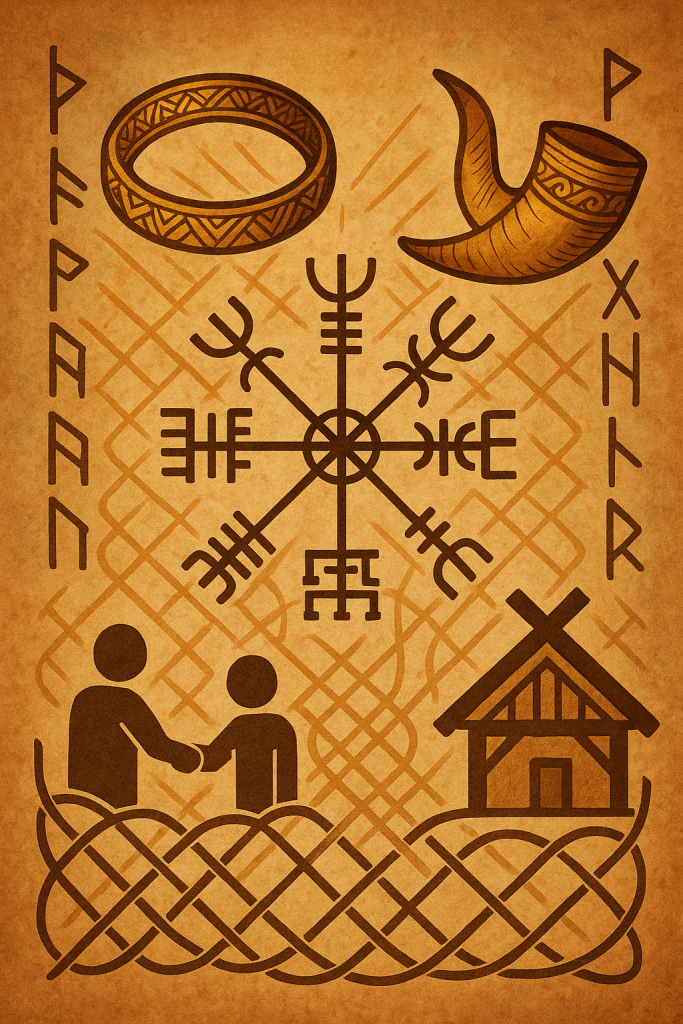
In today’s hyper-connected world, ancient Norse Pagan ethics can offer fresh guidance for how we conduct ourselves online. Many modern Heathens and Norse Pagan practitioners find wisdom in old values like honor, hospitality, wyrd (fate) and personal responsibility, and the importance of community and connection. These concepts, rooted in Viking-era life, can be translated into actionable practices for social media, gaming communities, and other virtual spaces. This essay explores the traditional meanings of these virtues and how we can apply them in modern digital contexts. The tone here is friendly and down-to-earth – not laying down rigid rules, but offering helpful ideas for spiritual seekers to enrich their online life with Norse Pagan values.
Honor and Hospitality: Ancient Virtues for Online Community
Honor and hospitality were cornerstones of Norse culture. In the sagas and the Hávamál (the sayings of Odin), being honorable meant living with integrity, keeping one’s word, and standing by one’s principles. Equally, hospitality was a sacred duty: everyone, even a stranger or enemy, deserved food, shelter, and respectful treatment under your roof. The ancient Norse took these obligations seriously. In fact, hospitality permeated almost every aspect of their society, shaping politics, religion, and daily life. This concept went beyond just providing a meal – it included generosity, reciprocity, and social respect. A guest could be a god in disguise, according to lore, so mistreating a visitor was not only shameful but possibly a divine offense. By the end of the Viking Age, hospitality rituals were highly developed and deeply woven into the Norse moral worldview. Odin himself has a lot to say about these virtues in the Hávamál, emphasizing how generosity and honor lead to a good life. For example, one verse teaches that “the generous and brave live best… while the coward lives in fear and the miser mourns when he receives a gift”. In other words, sharing with others brings strength and joy, whereas hoarding or deceit leads to misery.
How can we bring honor and hospitality into our online lives? In modern terms, honor might mean being truthful in our social media presence and treating others with respect, even when we disagree. Hospitality in a digital community means fostering a welcoming atmosphere – making newcomers feel valued and safe. Here are some actionable ways to practice these virtues online:
- Keep your word and be honest: If you promise to help someone in a forum or commit to an online project, follow through. Upholding your word builds a reputation for honor. Avoid spreading rumors or false information; as the Norse knew, few things damage honor more than lies.
- Welcome newcomers: Just as a Viking would offer a weary traveler a seat by the fire, you can greet new members in a group chat or game warmly. A simple “Welcome! Let me know if you have questions” is today’s equivalent of offering bread and mead. This digital hospitality helps build trust.
- Practice generosity and reciprocity: Share knowledge, resources, and kind words freely. In Norse culture, hosts and guests exchanged gifts as a sign of friendship – online, you might share useful advice, donate to someone’s creative project, or lend a hand moderating a busy discussion. If someone helps you, look for a way to pay it forward. As Odin reminds us, “friendships last longest between those who understand reciprocity.”
- Show courtesy even in conflict: Honor isn’t about avoiding all arguments, but handling them with integrity. In a heated debate on Twitter or Reddit, strive to “fight fair” – address ideas without personal attacks. Uphold the value of frith (peace between people) by knowing when to step away rather than escalate a flame war.
- Moderate with fairness and kindness: If you run an online group or guild, think of it as your virtual mead-hall. Set clear rules (house rules) and enforce them evenly, but also be forgiving of minor missteps. A good host in Norse terms listened more than they spoke – likewise, a good moderator pays attention to members’ needs and concerns.
By embedding honor and hospitality into our online interactions, we create digital spaces of trust and respect. An honorable gamer, for instance, doesn’t cheat or betray teammates, and a hospitable one might organize in-game events to include and encourage others. These practices echo the old ways in a relatable, non-dogmatic fashion. They simply remind us that behind every username is a person deserving of dignity – a truth the Norse held deeply, and one that can humanize our modern online experience.
Wyrd and Personal Responsibility: Weaving Fate on the Web
Another key Norse concept is wyrd, an ancient idea roughly meaning fate or the unfolding destiny of the world. Unlike a rigid predestination, wyrd is best understood as a web of cause and effect – a tapestry woven from the actions of gods and humans alike. The Old English word wyrd translates to “what happens” or “a turning of events,” and its Norse counterpart urðr is the name of one of the Norns (fate-weaving spirits). What makes wyrd fascinating is how it blends action and destiny. Heathens often say “we are our deeds,” meaning that our choices lay the threads of our fate. Every action you take influences the pattern of your life and even the lives of others. In Norse belief, your personal responsibility is immense: the future is not controlled by some distant god’s whim, but by the cumulative impact of what you and those connected to you do. At the same time, wyrd isn’t a solo tapestry – it’s interwoven. Your life thread starts with the circumstances you’re born into (your family’s orlög, or inherited fate), and as you live, your thread weaves in with others’ threads to form a greater tapestry. In essence, everyone’s actions affect everyone else to some degree. This idea of interconnection lies at the heart of the Heathen worldview.
Translating wyrd and personal responsibility into the digital context gives us a powerful metaphor: think of the internet as a great web of Wyrd. Every post, comment, or message is a new thread you spin or a knot you tie in this web. Just as the Norns in myth recorded deeds and wove destinies, our digital actions create real consequences and shape our online “fate” (reputation, relationships, opportunities). Embracing this mindset encourages mindful and responsible online behavior. Here’s how one might live by the principle of wyrd on the web:
- Recognize the ripple effect: In Norse terms, “we reap what we sow” – what you put out comes back in some form. A hurtful tweet or toxic gaming attitude can spread negativity through the network and eventually circle back as conflict or a damaged reputation. Conversely, helpful contributions and kindness can set in motion positive outcomes. Before hitting “send,” consider the strand of wyrd you are weaving.
- Own your actions and their outcomes: Personal responsibility online means taking ownership. If you make a mistake – maybe share incorrect information or say something hurtful in anger – honor dictates that you acknowledge it and try to make amends. In ancient times, one’s name and deeds were inseparable; similarly, your username or digital persona accrues the karma of your behavior. Apologizing and correcting course when needed is a very Heathen way to handle errors (better than trying to delete and pretend it never happened).
- Curate your digital “fate”: Just as a weaver can choose different threads, you have agency in what you post and engage with. Think about the legacy you’re creating online. Over years, your contributions – whether insightful blog posts or compassionate forum replies – become part of your digital wyrd. By consistently acting with integrity and purpose, you shape a destiny you can be proud of, both in the virtual world and in your own character.
- Beware the illusion of anonymity: The Norse held that even if deeds go unseen by human eyes, the gods (or wyrd itself) take note – nothing truly “vanishes.” In the digital age, anonymity can tempt us to shirk responsibility, but wyrd teaches that hidden actions still have real effects. Even on an alt account or behind a screen, you are still you, adding to the tapestry of your life. So, act in ways you would be comfortable with if all were brought to light. This doesn’t mean being paranoid – just accountable.
- Foster interconnected responsibility: Remember that wyrd connects us all. If you manage an online community, for example, your decisions influence the group’s fate (will it thrive or fall to chaos?). Encourage a culture where members think about how their contributions affect others. In a Discord server or subreddit, this could mean having guidelines that emphasize constructive posting and discourage dog-piling or witch-hunts. It’s about creating a healthy web where each thread supports rather than tangles the others.
In short, bringing the concept of wyrd into our online lives can make us more conscious digital citizens. It reminds us that every small action – a comment, a share, a DM – is a thread in a bigger story. By valuing personal responsibility, we become the weavers of our own fates on the internet, taking charge of the kind of environment we’re helping build. This approach is empowering and optimistic: much as a lone Viking warrior knew his courage and honor could inspire his fellows, a solitary poster’s good example can elevate an entire chat. We might not control everything that happens online (just as the Vikings knew storms or the Norns can upend plans), but we control our own deeds – and that is what shapes our wyrd.
Community and Connection: Building Kinship in Virtual Spaces
Norse Pagan life was inherently communal. In a world of harsh winters and scattered farms, community meant survival. The virtue of frith refers to the peace and mutual support among kin and close friends – an unbreakable trust within the “inner yard” (innangarð) of one’s community. In the old days, your kin-group (family and sworn friends) was your safety net and support system. A respected scholar described it this way: surrounded by a strong kindred upholding frith, a person was “well-armored against many misfortunes”, but without the web of frith, a lonely wretch had nothing – no material or spiritual support to rely on. Loyalty to one’s community was paramount; people stood up for each other no matter what, and hospitality was one way of promoting frith among them. This close-knit spirit even extended to relationships between chieftains and their warriors (oath-sworn communities that feasted in the lord’s hall enjoying the “joys of the hall” together). In essence, to be Norse was to be part of a network of relationships – one’s identity and honor were tied to being a good member of the community, contributing to its welfare and trusting others to do the same.
Today, many modern Norse Pagans and Heathens find themselves solitary practitioners due to geography or personal choice. You might not have a local kindred or hearth to gather with, but the good news is the digital world can help fill this gap. Online communities have become a global “hall” where we can meet around the virtual fire. In fact, it’s well documented that solitary Pagans use the internet to join wider communities and find that sense of belonging they crave. Social networks and forums allow people spread across the world to connect as if neighbors. A recent study found that online groups give solitary Heathens a global community and support network, effectively bridging the physical distances that separate us. This is a powerful thing: it means we can live out the Norse value of community and connection even if we’re the only Pagan in our town.
How can we build kinship and connection in virtual spaces in practical terms? Consider these ideas for fostering community, whether you’re a lone seeker or part of an online group:
- Seek out your digital “tribe”: Look for forums, Discord servers, or social media groups related to Norse Paganism, or other interest-based communities where you feel at home. Joining a respectful, well-moderated group can feel like entering a friendly mead-hall. Don’t be shy about introducing yourself – by mutual engagement and sharing, you’ll start to weave bonds of friendship. Over time, inside jokes, shared experiences (like celebrating a virtual blót or festival together), and mutual support can create a real sense of kinship across screens.
- Practice digital hospitality and frith: Treat your online community like family. Be the person who says happy birthday to members, checks in when someone is going through hard times, or shares resources freely. If you have a skill (say you’re good at making graphics or know the runes well), offer it to benefit the group. These small acts are the modern version of offering a horn of mead or helping a neighbor fix their roof. They build frith – a feeling of trust and goodwill. Also, mediate conflicts calmly: if two members clash, step in with a cool head to restore peace, much like a wise elder might have in a Viking village to keep the peace under one roof.
- Inclusive and safe spaces: In Norse halls, all guests had a degree of protection under hospitality – fighting was often banned in the hall to keep the peace. Similarly, cultivate an inclusive atmosphere online. Make it clear that hate speech, divisive politics, gatekeeping, doxing, cancel-culture, dogmaticism, harassment, or any conduct that breaks frith will not be tolerated. This doesn’t mean stifling debate or imposing dogma; it means ensuring everyone can speak around the fire without fear. A community that is welcoming for diverse members (of different backgrounds, political views, lifestyles, identities, etc.) embodies the best of hospitality in action. Remember that the All-Father Odin’s wisdom included caring for the underprivileged: “do not scorn a guest nor drive him away… treat the homeless well,” he counsels. In modern terms, that could be welcoming folks who are new or inexperienced.
- Shared rituals and learning: If you’re solitary, consider joining online group rituals or study sessions. Many digital communities hold video chats to celebrate solstices or do group readings of the Hávamál. Lighting a candle at your desk while others do the same across the world can genuinely foster a sense of spiritual togetherness. Likewise, sharing your personal experiences or creative expressions (poems, altar photos, etc.) can inspire others and invite them to know you better. A community is strengthened when people open up – as the Hávamál says, “a man among friends should be joyous and generous” (a paraphrase of its advice on friendship). Online, be generous with encouragement and positive feedback, so that others feel seen and valued.
- Maintain connection outside established groups: Not everyone clicks with existing forums, and that’s okay. You might form one-on-one connections – a pen-pal (or “keyboard-pal”) relationship with another practitioner, for example. Even following and engaging with Norse Pagan bloggers, YouTubers, or podcasters can provide a sense of community through audience fellowship. Many solitary Pagans comment that just knowing others are out there sharing this path makes them feel less alone. You’re weaving threads of connection whenever you interact sincerely, whether it’s two people or two hundred.
Ultimately, the spirit of community and connection in Norse ethics is about mutual upliftment and belonging. In the old world, a person alone was vulnerable; together, people thrived. The same is true online. By approaching digital spaces as real communities – filled with real human beings to care about – we enrich our spiritual lives and honor the legacy of our ancestors. Even without a physical longhouse or temple, we create a virtual hall where laughter, wisdom, and support are shared. In this way, a modern Heathen on a subreddit or a gamer guild can still live by the old code: stand by your folk, share your table (or bandwidth), and keep the bonds strong.
Conclusion
The ancient Norse did not live to see the age of the internet, but their values carry a timeless relevance. Honor, hospitality, wyrd, personal responsibility, community, and connection – these ideas helped hold Viking society together in difficult times, and they can do the same for us in our digital lives. By being honorable and welcoming, we set a positive tone in online interactions. By understanding wyrd, we become mindful that our digital deeds matter and that we are accountable for the worlds we weave on forums and social feeds. By building community and fostering connection, we ensure that even solitary souls can find a tribe and that our online halls are filled with camaraderie instead of loneliness.
In practice, applying Norse Pagan ethics online is less about strict rules and more about mindset. It’s choosing to see your Discord server or Twitter feed as a kind of community hall where the old virtues still have power: truth and courage in what you say, generosity in what you share, respect for all who enter, and responsibility for the impact you leave. These virtues are flexible and human-friendly – they don’t demand perfection, only that we try to live by them consistently. A friendly reminder from the Hávamál illustrates this spirit well: “No man is so wealthy that he should scorn a mutual gift; no man so generous as to refuse one.” In modern terms, we all have something to give and something to learn from each other.
So whether you’re a modern Viking-at-heart navigating a busy chat room, a gamer leading a guild, or a solitary Pagan blogger sending thoughts into the void, know that the old wisdom is on your side. By blending ancient values with modern tech, we can make our digital lives more meaningful, more connected, and more true to who we want to be. In doing so, we honor the spirit of our ancestors not by imitating their exact lives, but by living our own online lives with the same integrity, warmth, and sense of wonder that they prized. And that is a legacy worth carrying forward.
Sources:
- Hávamál – Poetic Edda (trans. various) – Odin’s advice on hospitality, generosity, and friendship.
- Alyxander Folmer, Wyrd Words: Pagan Ethics and Odin’s Rites of Hospitality, Patheos (2014) – on the central role of hospitality in Norse culture.
- Fjord Tours, “What is the Viking honor system?” – overview of Viking virtues like honor and hospitality.
- Karl E.H. Seigfried, “Wyrd Will Weave Us Together,” The Norse Mythology Blog (2016) – explains wyrd as the web of deeds and fate, and “we are our deeds” ethos.
- Skald’s Keep, “Frith & Hospitality” – describes frith as honest welcome and hospitality as fostering well-being in community.
- Winifred Hodge, “Heathen Frith and Modern Ideals,” The Troth – on the importance of kinship and frith in historical Heathen society.
- Thesis: Pagan Community Online: Social Media Affordances and Limitations (2019) – notes that solitary Heathens use online networks to find global community.

This work is licensed under a Creative Commons Attribution-NonCommercial-ShareAlike 3.0 Unported License.

 Volmarr’s Tumblr
- Viking AI Girlfriend skill for OpenClaw
- The Warding of Huginn’s Well: A Runic Framework for Local AI Sovereignty
- Mímir-Vörðr v2: The Cyber-Seiðr Architecture for Truth-Governance and Runic Verification
- # Mímir-Vörðr System Architecture
- Mímir-Vörðr: The Warden of the Well
- Silicon Seiðr: The Gridweaver’s Guide to Vibe Coding: Chapter 1: The Seiðr of Syntax: Weaving Magic with Python
- Review: NORSE: Oath of Blood – The Most Authentic Viking Saga of 2026
- View On WordPress
- View On WordPress
- Wyrd in the Wires: AI, Divergent Minds, and the Fall of the Hierarchies
 Volmarr's Blog of Modernist Heathenism, Norse-Paganism, and Norse-Wicca