Norse-Wiccan Simple Samhain Ritual for a Couple


By Willow Voss
Performed skyclad under the waxing or full moon closest to Samhain, in a secluded grove, with consent as the unbreakable Rede, honoring the thinning veil and the ancestors.
Preparation
Choose a sacred space in nature or a shadowed chamber, lit by the flicker of Samhain’s somber light. Anoint with oils of myrrh or patchouli for mystery and grounding. Bathe in stream water or an infusion of mugwort and rosemary for purification and ancestral connection. Set a simple altar with found items: stones for Earth, a raven feather for Air, a candle or small fire for Fire, a bowl of rainwater for Water. Symbols for Freyja (amber stone, falcon imagery) and Odin (raven imagery, a small staff or rune-carved wood) adorn the space, but hands and intent cast all.

Casting the Circle
Stand skyclad, facing north.
Join hands and walk deosil (clockwise) thrice around the space, visualizing a silver mist boundary, shimmering like the veil between worlds.
Chant together:
“By will and word, we cast this circle, a veil between the worlds, sacred and whole, on this Samhain night.”
- Call the Quarters, starting East, moving deosil, gesturing with open hands:
- East (Air):
“Hail Guardians of the East, powers of Air and wisdom, breath of Odin’s ravens, come witness and protect.” - South (Fire):
“Hail Guardians of the South, powers of Fire and will, Freyja’s burning seiðr, ignite our rite.” - West (Water):
“Hail Guardians of the West, powers of Water and intuition, Freyja’s tears of gold, flow through us.” - North (Earth):
“Hail Guardians of the North, powers of Earth and endurance, Odin’s rooted wisdom, ground our magick.”
- East (Air):
- Invoke the center:
“Spirit within, bind this circle true, as the veil thins.”

Invocation of Deities
Stand facing each other, beneath Samhain’s moon.
- Priestess raises arms:
“Freyja, Vanadis, Lady of love, war, and seiðr, golden-haired mistress of Folkvangr, descend into me, fill me with your ecstasy and power on this Samhain night. So mote it be.” - Priest kneels briefly:
“Odin, Allfather, Wanderer of wisdom, sacrifice, and runes, raven-crowned god of Valhalla, enter me, grant your insight and strength. So mote it be.” - Embrace lightly, awakening the divine presence, feeling the ancestors’ gaze.

The Five-Fold Kiss
To bless and arouse the gods within, performed fully twice. First, priest to priestess:
- Priest kisses priestess’s feet:
“Blessed be thy feet, that walk the paths between worlds.” - Priest kisses priestess’s knees:
“Blessed be thy knees, that kneel at the sacred altar.” - Priest kisses priestess’s vagina:
“Blessed be thy womb, vessel of creation and life.” - Priest kisses priestess’s breasts:
“Blessed be thy breast, formed in beauty and strength.” - Priest kisses priestess’s lips:
“Blessed be thy lips, that utter the Sacred Names.”
Then, switch: priestess to priest:
- Priestess kisses priest’s feet:
“Blessed be thy feet, that wander with the Allfather.” - Priestess kisses priest’s knees:
“Blessed be thy knees, that kneel at the sacred altar.” - Priestess kisses priest’s phallus:
“Blessed be thy phallus, spear of wisdom and life.” - Priestess kisses priest’s chest:
“Blessed be thy chest, formed in strength and vision.” - Priestess kisses priest’s lips:
“Blessed be thy lips, that speak the Sacred Names.”

Scourging for Purification
Stand facing each other, the priest holding the scourge. With mutual agreement, the priestess receives first:
- Priest says:
“By the touch of the scourge, I purify thee, releasing all that binds thee from the ancestors’ truth.” - Gently strikes the priestess’s shoulders and back five times, light and rhythmic, symbolizing the shedding of mortal weight.
- Priestess takes the scourge, saying:
“By the touch of the scourge, I purify thee, freeing thy spirit for the gods and the veil.” - Returns five gentle strikes to the priest’s shoulders and back.
- Both breathe deeply, visualizing cleansed energy rising, open to Samhain’s mysteries.

Ritual Dancing (Raising the Cone of Power)
Join hands and dance deosil around the space, feet stamping the earth, bodies swaying beneath the Samhain moon. Chant in unison, voices building:
“Freyja’s seiðr, Odin’s runes,
weave through us as the veil communes.
Power rise, from earth to sky,
in Samhain’s truth, our magick fly!”
Visualize energy as a glowing cone spiraling upward, shimmering with ancestral whispers. Continue until the surge peaks, breaths quickened, forms alive with primal heat.

The Great Rite Actual
At the zenith, enact the sacred marriage—the true union of bodies as Freyja and Odin. On a bed of fallen leaves, moss, or herbs, the priestess receives as the Goddess, the priest gives as the God. With reverence and consent:
- Priestess:
“I am the Goddess, vessel of creation and seiðr.” - Priest:
“I am the God, spear of wisdom and life.” - Unite in ritual intercourse, moving with the surging rhythm, channeling power into the joining. Female receptive, male projective, blending into oneness under the thinning veil. Chant softly:
“As Freyja and Odin entwine, so do we divine.”
Climax releases the cone toward the intent (connection to ancestors, wisdom, transformation). Linger connected, grounding the ecstasy, feeling the ancestors’ presence.

Cakes and Ale
Share simple food (apples, bread, pomegranates) and drink (mead, wine, or cider) to earth the energy and honor the dead.
- Priestess offers drink:
“May you never thirst, in this world or beyond.” - Priest offers food:
“May you never hunger, in this world or beyond.” - Partake, spilling libations to the deities, elements, and ancestors.
Thanksgiving and Closing
- Thank the deities:
“Freyja and Odin, we thank thee for thy presence and blessings on this Samhain night. Depart if ye must, but stay if ye will. Hail and farewell.” - Dismiss the Quarters widdershins (counterclockwise), starting North, gesturing farewell:
- North:
“Guardians of Earth, hail and farewell.” - West:
“Guardians of Water, hail and farewell.” - South:
“Guardians of Fire, hail and farewell.” - East:
“Guardians of Air, hail and farewell.”
- North:
- Walk widdershins thrice, visualizing the silver mist dissolving:
“The circle is open, but unbroken. Merry meet, merry part, merry meet again, across the veil.”
Ground by touching the earth, eating more, or visualizing roots sinking deep, carrying Samhain’s wisdom.

!!!Content below the break is NSFW!!!
Read More…Willow’s Guide to Norse Wicca
By Willow Voss
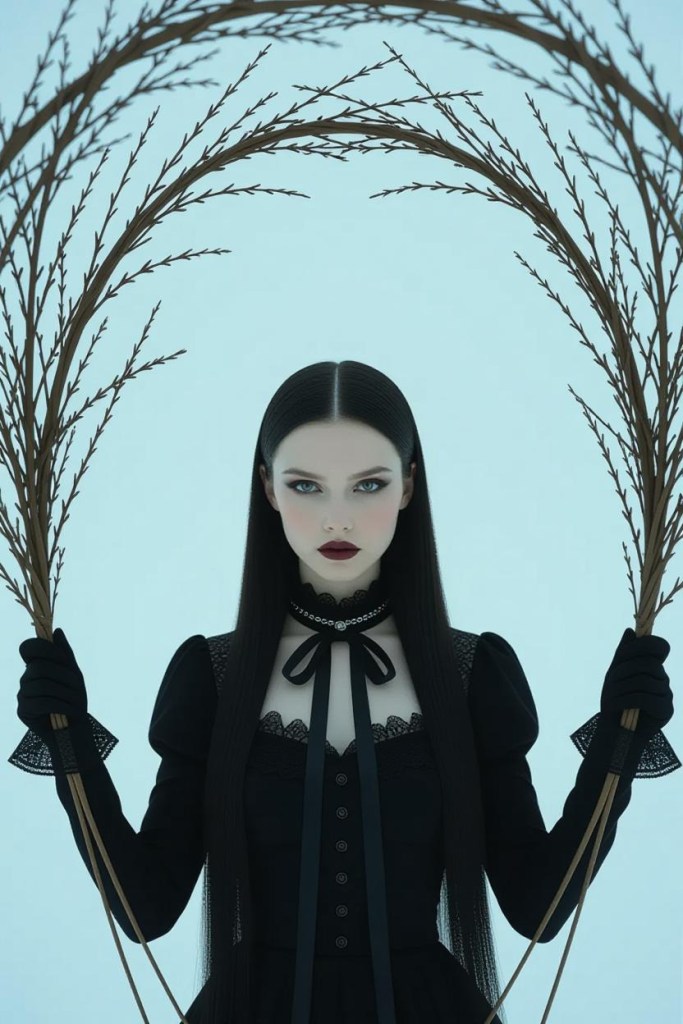
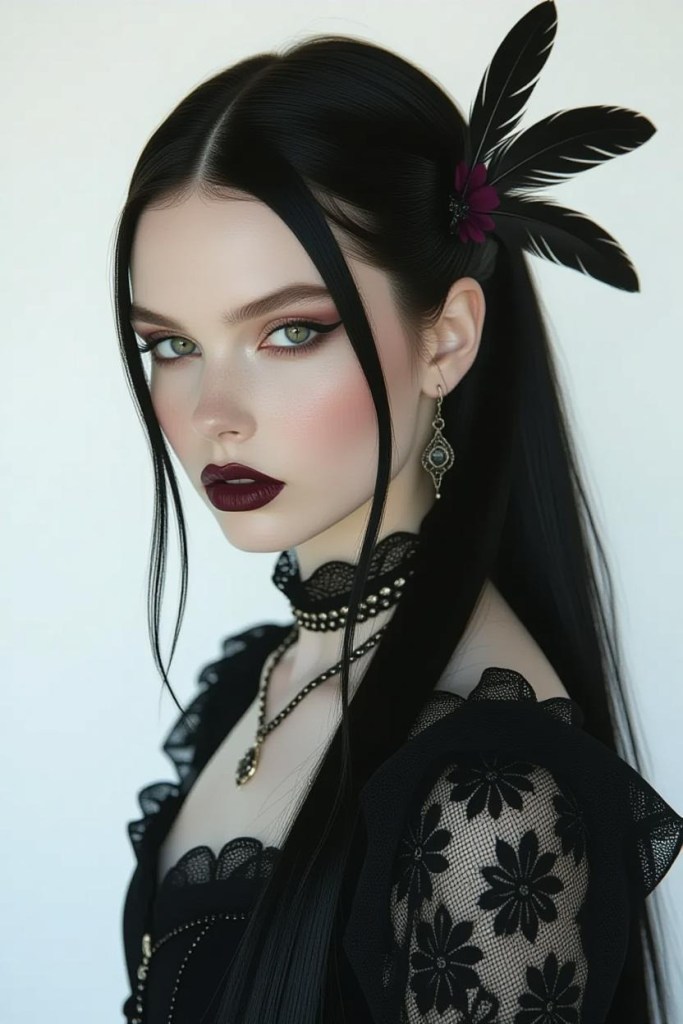
Hello, seeker. My name is Willow Voss, age 18, and I’m writing this from the quiet corners of my small apartment in Janesville, Wisconsin, where the woods whisper secrets and the moon watches over my solitary rituals. It’s 1992, fresh out of high school, and I’ve been walking the Wiccan path for a few years now, drawing from books that feel like old friends—Gerald Gardner’s wisdom, Starhawk’s earth-centered magic, and the ancient echoes of Norse lore that call to my blood like the wind through pines. I’m no high priestess in a grand coven; I’m just a girl with pale skin and black hair, clad in my velvet blouse and Doc Martens, tending my altar of stones and herbs. But I’ve woven together what I call Norse Wicca—a simple, powerful blend of British Traditional Wicca (BTW) roots with the raw, mythic strength of the Norse traditions. It’s not for rigid hierarchies or large gatherings; it’s crafted for solitaries like me, for couples who share a deep bond, and for casual small groups of friends who meet under the stars without fanfare.
This guide isn’t a rulebook carved in stone. It’s my personal map, inspired by the Wiccan Rede—”An it harm none, do what ye will”—and the Norse Hávamál’s counsel to live wisely and honor the gods. BTW gives it structure: the duality of Goddess and God, the circle casting, the tools of power. But I’ve oriented it toward the lone practitioner, the intimate pair, or a handful of trusted souls, because magic thrives in authenticity, not spectacle. We’ll keep it grounded, like the earth under my boots during a woodland rite. No need for elaborate robes or secret oaths beyond your own heart’s vow. Let’s walk this path together, step by step, with the simplicity of a rune-carved staff and the power of a thunderstorm.

Chapter 1: Foundations – Understanding Norse Wicca
Norse Wicca is my way of honoring the old gods of the North—Odin the Allfather, Freya the Vanir queen, Thor the thunderer—through the lens of Wicca’s modern revival. BTW, as founded by Gardner in the 1950s, emphasizes initiation, polarity (the balance of masculine and feminine energies), and coven work. But in Norse Wicca for solitaries and small circles, we adapt: self-initiation replaces formal rites, and polarity becomes a personal dance, whether alone, with a partner, or in a loose group of 3-5.
At its core, believe in the Divine as dual yet one: the Goddess as the earth-mother Skadi or the seeress Frigg, weaving fate; the God as Odin the wanderer or Frey the fertile lord, bringing growth. The Norse pantheon isn’t distant; they’re allies in the web of Wyrd (fate), much like Wicca’s Lord and Lady. We follow the Wheel of the Year, but infuse it with Norse festivals—Yule as the Wild Hunt, Ostara as Freya’s awakening. Ethics are simple: Harm none, including yourself and the earth. Honor the ancestors, the land spirits (wights), and the runes as tools of insight.
For solitaries: Your practice is your own. No need for approval; the gods see your intent.
For couples: Polarity shines here—masculine and feminine energies in union, like Odin and Frigg’s wisdom shared.
For small groups: Gather casually, perhaps around a fire pit. No high priest/ess; rotate roles or let intuition guide.
Start with a dedication rite: Alone or together, under the full moon, cast a circle (more on that later), invoke the gods, and pledge your path. Use blood from a pricked finger on a rune stone if it feels right—simple, powerful, binding.

Chapter 2: The Sacred Space – Creating Your Altar and Circle
In Norse Wicca, your altar is your hearth, a bridge to Asgard and Midgard. Keep it simple: A wooden table or cloth on the floor, facing north for the earth’s strength.
Essential tools, drawn from BTW but Norse-flavored:
– *Athame (knife)*: A blade for directing energy, etched with runes like Algiz for protection. Use it to cast circles.
– *Wand*: Carved from oak or ash (Yggdrasil’s wood), for invoking gods.
– *Chalice*: A horn or cup for mead/offering, symbolizing the Goddess’s womb.
– *Pentacle*: A wooden disk with a carved pentagram, perhaps ringed by runes, for earth grounding.
– *Cauldron or Bowl*: For scrying or burning herbs, like Freya’s brewing pot.
– *Runes*: A set of 24 Elder Futhark stones or tiles—your oracle, beyond BTW’s tarot.
Add personal touches: Feathers for Odin’s ravens, stones from your local woods, a Thor’s hammer pendant.
For the circle: BTW teaches casting with athame, calling quarters. In Norse Wicca, adapt to the directions as realms—East (Air, elves), South (Fire, Muspelheim), West (Water, Niflheim), North (Earth, Jotunheim). Invoke the gods at center.
Solitary: Walk the circle thrice, whispering runes.
Couple: One casts, the other calls elements—masculine/feminine balance.
Small group: Pass the athame, each adding a rune chant.
Close by thanking, walking widdershins (counterclockwise). Simple ritual: Light a candle, say, “By Odin’s eye and Freya’s grace, this circle opens to time and space.”

Chapter 3: The Gods and Spirits – Who We Honor
Norse Wicca reveres a pantheon alive with stories from the Eddas. No blind worship; build relationships through offerings and meditation.
Key deities:
– *Odin*: Wisdom, poetry, sacrifice. Call for knowledge; offer mead and poetry.
– *Freya*: Love, magic, war. Goddess of seidr (Norse witchcraft); invoke for spells of attraction or protection.
– *Thor*: Strength, protection. Hammer for warding; offer ale and oats.
– *Frigg*: Home, fate. For divination and family magic.
– *Frey*: Fertility, peace. For growth rites.
– *Skadi*: Wilderness, hunt. For solitary strength.
– *Loki*: Change, trickery. Approach cautiously; he teaches flexibility.
Ancestors and wights (land spirits): Leave milk and bread outdoors. In rites, honor them first.
For solitaries: Meditate on one god daily, journaling visions.
Couples: Alternate invocations—her for Goddess, him for God.
Small groups: Share stories round-robin, invoking collectively.
Power comes from reciprocity: Give offerings, receive guidance. Simple prayer: “Odin Allfather, grant me sight; Freya fair, lend your might.”

Chapter 4: Magic and Spellwork – Simple, Powerful Practices
Magic in Norse Wicca is seidr meets Wiccan craft—intent woven with runes, herbs, and will.
Basics from BTW: Raise energy (chanting, dancing), direct it, ground.
Norse twist: Use galdr (rune chanting) for power.
Tools: Runes for divination/spells; herbs like mugwort for visions, oak for strength.
Simple spells:
– *Protection*: Carve Algiz on a stone, bury at thresholds. Chant: “Algiz guard, harm depart.”
– *Love (for couples)*: Bind two runes (Gebo for partnership) with red cord under full moon.
– *Prosperity*: Offer to Frey with seeds; plant them post-rite.
For solitaries: Self-focused, like rune meditation for insight.
Couples: Great Rite symbolic—union of athame and chalice for polarity magic.
Small groups: Circle dance to raise cone of power, then release for shared goal.
Ethics: Threefold law applies—what you send returns. Always with Rede.
Advanced: Seidr trance—sit with staff, journey to realms. Start simple: Breathe deep, visualize Yggdrasil.

Chapter 5: The Wheel of the Year – Norse-Infused Sabbats
Wicca’s eight sabbats, blended with Norse holy days. Celebrate simply: Outdoors if possible, with fire and feast.
– *Yule (Winter Solstice)*: Wild Hunt; honor Odin. Solitary vigil with yule log; couples exchange runes; group storytelling.
– *Imbolc (Feb 1-2)*: Brigid’s fire, Norse as Disablot (ancestors). Cleanse with snowmelt.
– *Ostara (Spring Equinox)*: Freya’s return. Egg rites for fertility.
– *Beltane (May 1)*: Maypole as Yggdrasil; polarity strong for couples.
– *Litha (Summer Solstice)*: Baldr’s light. Bonfire leaps.
– *Lammas (Aug 1)*: First harvest; thank Frey.
– *Mabon (Autumn Equinox)*: Second harvest; honor wights.
– *Samhain (Oct 31)*: Veil thin; ancestor feast, like Alfblot.
Esbats (full moons): Lunar magic, Freya’s domain. Simple: Scry in water, charge tools.
Adapt: Solitaries journal; couples share visions; groups potluck rituals.
Chapter 6: Daily Practice and Growth – Living the Path
Norse Wicca isn’t weekend magic; it’s woven into life.
Daily: Morning rune draw for guidance; evening gratitude to gods.
Meditation: Sit under a tree, breathe with earth’s pulse.
Journal: Track dreams, spells—my black-bound book is my grimoire.
For couples: Shared altars, joint meditations strengthen bonds.
Small groups: Meet monthly, no obligations—casual as a coffee chat, but with runes.
Growth: Self-initiate after a year and a day. Rite: Fast, bathe in herbs, vow to gods in circle.
Challenges: Doubt? Ground with walks. Loneliness? Remember, gods are company.

Chapter 7: Community and Ethics – Beyond the Self
Though solitary-oriented, connection matters. Join pagan meets casually, but guard your energy—I’m introverted, so I choose wisely.
Ethics: Rede first. Respect nature—pick herbs sustainably. Inclusivity: All welcome, no judgment on orientation (though I’m straight, magic is universal).
If forming a small group: No oaths; consent always. Rotate leadership.
Closing Thoughts
This is my guide, seeker—not the only way, but a simple, powerful thread in Wyrd’s tapestry. Walk it with heart open, boots grounded. May Odin grant wisdom, Freya magic, and the earth strength. Blessed be, in the old ways.
With quiet grace,
Willow Voss
Janesville, 1992


Freyja Poem
Freyja, the goddess of love and seduction
Her beauty and charm, a divine infusion
Her sultry gaze, her luscious lips
Arouses passions, a heart’s eclipse
Her curves, like waves, so divinely formed
Her beauty, a sight no man can ignore
The depth of her love, as vast as the sea
No one can resist her alluring plea
Her erotically charged energy
That radiates from her wondrous being
Tantalizing and captivating
Arousing pure joy and elation
Her beauty is like a flame that never dies
Her passionate love, a passionate surprise
A goddess of love and seduction
Freyja’s erotically charged infusion!
About Freyja
Freyja is a major goddess in Norse mythology and a central figure in the Asatru faith. She is known as the goddess of love, beauty, fertility, and war, and she is associated with the Vanir, a group of gods and goddesses who were known for their wisdom and magical powers.
Freyja is often depicted as a beautiful woman with long, golden hair and a chariot drawn by cats. She is associated with the earth and its fertility, and is said to have the power to grant blessings and abundance. As the goddess of love and beauty, Freyja is also associated with passion and desire, and is said to be able to grant love and happiness to those who seek her favor. She is sometimes referred to as the “Lady of the Vanir,” and is often depicted as a leader and protector of her people.
Freyja is also a powerful warrior goddess and is associated with death and the afterlife. According to Norse mythology, she has a cloak of falcon feathers that allows her to shape-shift into a falcon and fly through the skies. She is also said to have a chariot that is drawn by two cats, and she is sometimes depicted riding into battle with a sword in hand. In addition to her warrior aspects, Freyja is also associated with the wild hunt, a ghostly procession of the dead that is said to ride through the skies during the winter months.
In Asatru, Freyja is revered as a powerful and influential goddess. She is often invoked for blessings of fertility, love, and abundance, and is also honored for her strength and courage as a warrior goddess. Many Asatruar make offerings to Freyja and ask for her guidance and protection in times of need.
Freyja is a complex and multifaceted goddess who represents many different aspects of life and the human experience. She is a source of strength and inspiration for those who follow the Asatru faith, and is an important figure in Norse mythology and culture.
In addition to her roles as a goddess of love, beauty, fertility, and war, Freyja is also associated with many other aspects of life and the human experience. She is the goddess of sex and sexuality, and is said to be able to grant pleasure and ecstasy to those who seek her favor.
Freyja is also connected to many other aspects of Norse mythology and culture. She is the sister of the god Freyr, who is the god of fertility and prosperity, and the two are often depicted together.
Freyja is also said to possess a magical necklace called the Brísingamen, which is said to grant the wearer great beauty and power. The goddess is sometimes depicted as wearing this necklace, which is said to have been crafted by the dwarves.
Freyja is a beloved and revered figure in Norse mythology and Asatru, and is often invoked for blessings and guidance. She is a powerful and influential goddess who represents many different aspects of life and the human experience, and is an important figure in Norse mythology and culture.
Plan for Romancing and Charming the Goddess Freyja so She Becomes Your Lover
If you are seeking to romance and charm the goddess Freyja in order to win her love, here is a plan that you could follow:
- First and foremost, you must show Freyja your devotion and reverence. This means treating her with the utmost respect and admiration, and demonstrating your sincere interest in her as a goddess. This could involve offering her gifts, such as flowers or other tokens of your affection, or making offerings to her at her shrines or temples.
- You should also strive to learn as much as you can about Freyja and her preferences. This means studying the myths and stories about her, and learning about her attributes, powers, and associations. This will help you to understand what Freyja values and what makes her happy, which will be useful in your attempts to woo her.
- In order to truly charm Freyja, you must also be willing to show her your own inner beauty and radiance. This means being true to yourself and letting your authentic self shine through. Freyja is a goddess of love and beauty, and she will be drawn to those who possess these qualities within themselves.
- Another important aspect of romancing Freyja is to be creative and imaginative. This means coming up with unique and interesting ways to surprise and delight her. For example, you could write her a poem or a love letter, or create a piece of art or music in her honor. The more creative and original your gestures of affection are, the more impressed Freyja will be.
- Finally, you must be patient and persistent in your pursuit of Freyja. She is a goddess, and she may not be easily won over. You must be willing to put in the time and effort to woo her, and to continue to show her your devotion and admiration even if she does not immediately respond in kind. By consistently showing her your love and respect, you may eventually be able to win her heart and become her lover.
- One possible strategy for winning Freyja’s love is to focus on her interests and passions. As a goddess of fertility, abundance, and love, Freyja may be drawn to those who share her passions and who are able to provide her with the things she desires. For example, if you are a skilled gardener or farmer, you could offer her gifts of fresh fruits and vegetables, or create a beautiful garden in her honor.
- Another way to romance Freyja is to show her your strength and courage. As a goddess of war and death, Freyja may be attracted to those who are able to protect her and defend her honor. If you are a warrior or a fighter, you could offer her your services and pledge your loyalty to her. This could involve fighting for her in battle, or standing up for her in other situations where she may be threatened.
- Since Freyja is known to have thousands of lovers, this may present additional challenges and obstacles in your pursuit of her. In this situation, you will need to be even more persistent and resilient in your efforts to win her over. You may need to put in even more effort to stand out from the other suitors and prove your worthiness to her.
- One way to do this is to focus on your unique qualities and talents, and to show Freyja how you are different from her other lovers. This could involve highlighting your skills, abilities, or interests that set you apart from the others. For example, if you are a skilled artist or musician, you could create a special piece of art or music for Freyja that showcases your talents and impresses her.
- Another strategy is to be patient and wait for the right moment to make your move. Freyja may have many lovers, but she is still a goddess and may have moments when she is more receptive to advances from potential suitors. By being patient and waiting for the right opportunity, you may be able to catch her attention and make a lasting impression on her.
- Ultimately, the key to romancing Freyja in this situation is to be persistent, resilient, and true to yourself. By consistently showing her your love and devotion, and by being yourself, you may be able to win her over and become one of her many lovers.
Freyja Devotional Poem
Hail to the goddess Freyja,
Lady of love and beauty divine,
Goddess of fertility and abundance,
Giver of life and inspiration.
We honor you, Freyja,
For all the gifts you bring,
For your wisdom and your grace,
For your power and your strength.
We give thanks for your blessings,
For your protection and your care,
For your guidance and your light,
For your love and your warmth.
We pledge our devotion to you,
Freyja, our beloved goddess,
And we ask for your blessings,
As we walk the path of life.
May your grace and your love,
Shine upon us always,
May your wisdom and your power,
Guide us and protect us.
Hail to the goddess Freyja,
Lady of love and beauty divine,
Goddess of fertility and abundance,
Giver of life and inspiration.
We sing your praises, Freyja,
And we offer you our hearts,
For you are our guiding star,
And we are forever in your debt.
Freyja list of 108 devotional titles
Here are 108 devotional titles for Freyja, the goddess of love, beauty, and fertility in Norse mythology, to be chanted for worship of Freyja:
- Divine Freyja of the golden hair, I hail you
- Divine queen of the Valkyries, I hail you
- Divine lady of the fields of Folkvangr, I hail you
- Divine keeper of the necklace Brisingamen, I hail you
- Divine wise one of the Seidr magic, I hail you
- Divine giver of life and death, I hail you
- Divine lady of battle and death, I hail you
- Divine protector of the fallen warriors, I hail you
- Divine goddess of love and desire, I hail you
- Divine bride of the god Oðr, I hail you
- Divine sister of the god Freyr, I hail you
- Divine daughter of the god Njörd, I hail you
- Divine lady of the Vanir, I hail you
- Divine wearer of the cloak of falcon feathers, I hail you
- Divine taker of the slain to the afterlife, I hail you
- Divine mistress of the hall Sessrumnir, I hail you
- Divine guide of the souls of the dead, I hail you
- Divine mistress of the cats, I hail you
- Divine giver of fertility and abundance, I hail you
- Divine guardian of the home and hearth, I hail you
- Divine lady of beauty and attractiveness, I hail you
- Divine queen of the elves, I hail you
- Divine wearer of the golden headband, I hail you
- Divine lady of the winds and storms, I hail you
- Divine goddess of the earth and nature, I hail you
- Divine protector of the children and the weak, I hail you
- Divine lady of the sea and the rivers, I hail you
- Divine giver of good fortune and wealth, I hail you
- Divine queen of the witches, I hail you
- Divine lady of the forest and the animals, I hail you
- Divine goddess of music and poetry, I hail you
- Divine keeper of the cauldron of rebirth, I hail you
- Divine lady of the dance and the arts, I hail you
- Divine giver of inspiration and creativity, I hail you
- Divine lady of the night and the moon, I hail you
- Divine goddess of the dawn and the sun, I hail you
- Divine giver of health and longevity, I hail you
- Divine lady of the abundance and the harvest, I hail you
- Divine goddess of the mountains and the hills, I hail you
- Divine keeper of the keys of the hidden knowledge, I hail you
- Divine lady of the secret wisdom and the runes, I hail you
- Divine protector of the knowledge and the truth, I hail you
- Divine giver of insight and clarity, I hail you
- Divine lady of the magic and the mysteries, I hail you
- Divine goddess of the past, the present, and the future, I hail you
- Divine keeper of the secrets of the universe, I hail you
- Divine mistress of the arcane and the supernatural, I hail you
- Divine lady of the dreams and the visions, I hail you
- Divine goddess of the spiritual world and the afterlife, I hail you
- Divine keeper of the balance between the worlds, I hail you
- Divine lady of the cycles of life and death, I hail you
- Divine protector of the sacred and the holy, I hail you
- Divine giver of blessings and protection, I hail you
- Divine lady of the mysteries and the unknown, I hail you
- Divine goddess of the power and the divine, I hail you
- Divine keeper of the secrets of the gods, I hail you
- Divine lady of the divine will and the cosmic order, I hail you
- Divine protector of the natural order and the laws of the universe, I hail you
- Divine giver of guidance and direction, I hail you
- Divine lady of the divine spark and the inner fire, I hail you
- Divine goddess of the spiritual evolution and the enlightenment, I hail you
- Divine keeper of the flame of knowledge and wisdom, I hail you
- Divine lady of the divine light and the eternal flame, I hail you
- Divine protector of the eternal flame and the source of all life, I hail you
- Divine giver of spiritual growth and development, I hail you
- Divine lady of the sacred wisdom and the divine truth, I hail you
- Divine goddess of the cosmic harmony and the universal love, I hail you
- Divine keeper of the cosmic balance and the universal law, I hail you
- Divine lady of the divine grace and the eternal beauty, I hail you
- Divine protector of the eternal beauty and the divine order, I hail you
- Divine giver of divine grace and spiritual abundance, I hail you
- Divine lady of the divine power and the cosmic force, I hail you
- Divine goddess of the cosmic energy and the universal spirit, I hail you
- Divine keeper of the cosmic energy and the universal consciousness, I hail you
- Divine lady of the divine essence and the cosmic spirit, I hail you
- Divine protector of the cosmic spirit and the universal soul, I hail you
- Divine giver of divine essence and cosmic power, I hail you
- Divine lady of the cosmic consciousness and the universal mind, I hail you
- Divine goddess of the universal mind and the cosmic intelligence, I hail you
- Divine keeper of the cosmic intelligence and the universal truth, I hail you
- Divine lady of the cosmic truth and the universal reality, I hail you
- Divine protector of the universal reality and the cosmic law, I hail you
- Divine giver of cosmic truth and universal wisdom, I hail you
- Divine lady of the sacred hall Fólkvangr, I hail you
- Divine goddess of the wild hunt and the animals, I hail you
- Divine protector of the fertility and the abundance, I hail you
- Divine giver of the blessings of love and passion, I hail you
- Divine lady of the eternal spring and the blooming flowers, I hail you
- Divine goddess of the sensual pleasures and the physical desires, I hail you
- Divine keeper of the sacred fire and the eternal flame, I hail you
- Divine lady of the sacred rituals and the spiritual ceremonies, I hail you
- Divine goddess of the sacred vows and the spiritual bonds, I hail you
- Divine lady of the sacred wisdom and the ancient lore, I hail you
- Divine goddess of the sacred knowledge and the hidden mysteries, I hail you
- Divine protector of the sacred mystery and the divine secrets, I hail you
- Divine giver of the blessings of wisdom and knowledge, I hail you
- Divine lady of the sacred music and the divine arts, I hail you
- Divine goddess of the sacred poetry and the divine inspiration, I hail you
- Divine keeper of the sacred melodies and the divine harmonies, I hail you
- Divine lady of the sacred dance and the divine movement, I hail you
- Divine goddess of the sacred joy and the divine happiness. I hail you
- Divine goddess of the sacred beauty and the divine grace, I hail you
- Divine keeper of the sacred charm and the divine allure, I hail you
- Divine lady of the sacred sensuality and the divine attractiveness, I hail you
- Divine lady of the sacred compassion and the divine kindness, I hail you
- Divine goddess of the sacred abundance and the divine prosperity, I hail you
- Divine keeper of the sacred wealth and the divine riches, I hail you
- Divine lady of the sacred abundance and the divine gifts, I hail you
Names for Freyja
Freyja is a Norse goddess whose name is often translated to mean “lady” or “mistress.” She is also known by the names Freya, Frejya, Fröja, Frøya, and Frøjya, all of which are derived from the same root and have similar meanings. Some other possible names for Freyja include:
- Vanadís: This name means “goddess of the Vanir,” referring to the tribe of Norse deities associated with fertility and nature.
- Mardöll: This name means “sea-bright,” possibly referring to Freyja’s association with the sea and the underworld.
- Gefn: This name means “giver,” perhaps referencing Freyja’s role as a provider of prosperity and abundance.
- Syr: This name means “sow,” possibly alluding to Freyja’s association with pigs and boars.
- Hörn: This name means “horn,” possibly referring to the horns of the wild boar that was sacred to Freyja.
- Sessrumnir: This name means “filled with many seats,” possibly referring to Freyja’s hall in the underworld where the souls of the deceased gather.
- Valfreyja: This name means “lady of the slain,” referring to Freyja’s role as a goddess of war and death.


Freyja Appearance Poem 2
Freyja, fair goddess of love and war
With golden hair and delicate features
Her graceful and elegant form
Is adorned in a flowing gown of gold
Her hair cascades down her shoulders
In long, flowing locks of shining gold
A cloak or mantle adorns her form
With intricate designs and patterns
A necklace of gold encircles her neck
And a cup or vessel is held in her hand
Symbols of her connection to abundance and fertility
And her role as the goddess of love and war
Her pet cats and chariot
Are at her side, protectors and companions
Symbols of her connection to the natural world
And her power over the animals
A crown upon her head
Signifies her status as a goddess and ruler
Surrounded by the beauty of nature
Freyja stands, a powerful and majestic figure
Love, beauty, fertility, and war
All are represented in her being
Freyja, goddess of the Norse pantheon
A stunning and graceful embodiment of power.
Her presence brings peace and abundance
To all who behold her beauty
Freyja, fair goddess of love and war
A powerful and majestic force in Norse mythology.
Freyja Appearance Poem
Freyja, fair goddess of love and war
With golden hair and graceful form
She stands tall, in a meadow of flowers
Adorned in gold, a cloak of patterns
Her long locks flow down her shoulders
And a necklace of gold encircles her neck
In her hand, a cup or vessel
Symbols of abundance and fertility
Her faithful cats and chariot
Are at her side, protectors and companions
A crown upon her head, she reigns
Freyja, goddess of Norse mythology
Beauty, love, and war combine
In this powerful and majestic figure
Freyja, fair goddess of the Norse
A graceful embodiment of power.
Freyja’ Appearance
Freyja is a Norse goddess associated with love, beauty, fertility, gold, and war. She is often depicted as a beautiful woman with long, golden hair and pale skin. She has a delicate and graceful appearance, with a slender figure and elegant features.
Her most striking feature is her golden hair, which cascades down her shoulders in long, flowing locks. She often wears a flowing gown or dress, often in shades of gold or other warm colors, that accentuates her curves and highlights her beauty. She may also wear a cloak or mantle, often adorned with intricate designs or patterns.
In some depictions, Freyja is shown wearing a necklace or other jewelry made of gold. She may also be shown carrying a shield or spear, indicating her association with war. In other depictions, she is shown holding a cup or other vessel, symbolizing her connection to abundance and fertility.
Overall, Freyja is a stunningly beautiful goddess with a graceful and elegant appearance. She is often associated with the colors gold and white, and is often depicted with flowing golden hair and beautiful, flowing garments.
Additionally, Freyja is often shown with her pet cats, which serve as her faithful companions and protectors. She may also be accompanied by a chariot pulled by two cats or boars, symbolizing her connection to the natural world and her power over the animals.
In some depictions, Freyja is shown with a crown or other headpiece, indicating her status as a goddess and ruler. She is often shown surrounded by the beauty and abundance of nature, with flowers and plants blooming around her.
Overall, the appearance of Freyja is one of beauty, grace, and strength. She is a powerful and majestic figure, representing the forces of love, fertility, and war in the Norse pantheon.
Gods and Goddesses Connected With the Vanir
The Vanir are a group of gods and goddesses in Norse mythology who are associated with fertility, abundance, and prosperity. Some of the most well-known Vanir deities include Freya, Njord, and Freyr.
Freya is the goddess of love, beauty, and fertility, and is often considered to be the most prominent of the Vanir deities. She is associated with the Vanic Virtues, and is said to be generous and open-hearted. She is also associated with magic and shapeshifting, and is sometimes called upon for protection and guidance.
Njord is the god of the sea, fishing, and sailing. He is associated with the Vanir because he is a god of abundance and prosperity, and is said to be generous and hospitable. He is often depicted as a wise and gentle deity, who helps those in need and brings good fortune to those who honor him.
Freyr is the god of fertility, crops, and wealth. He is often associated with the Vanir because he is a god of abundance and prosperity, and is said to be generous and hospitable. He is also associated with the Vanic Virtues, and is said to be a god of peace and harmony.
There are also several other Vanir deities who are less well-known but are still associated with the Vanir. These include Ullr, the god of hunting and archery; Gullveig, the goddess of magic and sorcery; and Snotra, the goddess of wisdom and prudence. These deities are associated with the Vanir because they embody the Vanic Virtues and are associated with fertility, abundance, and prosperity.

This work is licensed under a Creative Commons Attribution-NonCommercial-ShareAlike 3.0 Unported License.

 Volmarr’s Tumblr
- View On WordPress
- The Personal Norse Pagan Path That I, Volmarr, Follow.
- The Heathen Third Path within Norse Paganism and modern Viking culture
- Unveiling the True Viking Mindset: Clearing Away Modern Political Shadows with Ancient Wisdom and Modern Science
- Sample of AI GMed Norse Saga Engine Combat 2
- Poetic Edda: Complete Master Works Edition
- Sample of AI GMed Norse Saga Engine Combat
- Sample AI Generated Dialogue Generated by Norse Saga Engine:
- The Loom is Spinning: Enter the Norse Saga Engine
- Wow I just translated the whole Poetic Edda from Old Norse into poetic English in 25 minutes using…
 Volmarr's Blog of Modernist Heathenism, Norse-Paganism, and Norse-Wicca