Ancestor Veneration: Honoring the Disir and the Strength of Lineage

Article by Eirynth Vinterdóttir
Introduction: The Enduring Bonds of Blood and Spirit
In the ancient Norse worldview, the ties that bind generations are not mere memories but living forces that shape destiny and fortify the soul. Ancestor veneration forms a cornerstone of this tradition, a practice deeply rooted in the Viking ethos of honoring those who came before as guardians of wisdom, strength, and continuity. Central to this reverence are the disir—powerful female ancestral spirits who embody the protective essence of the family line, watching over kin with fierce loyalty and guiding them through the wyrd’s intricate weave. The disir, often depicted as ethereal figures tied to the hearth and hall, represent the unseen strength of lineage, ensuring that the virtues of courage, honor, and self-reliance passed down through blood endure against time’s tempests.
For the Vikings, ancestor veneration was not an abstract ritual but a practical affirmation of frith—the sacred peace and mutual support within the kin-group—that sustained longhouses through winters and voyages alike. By invoking the disir and forebears, individuals drew upon the collective resilience of their lineage, much like a warrior wielding an ancestral sword forged in the fires of past deeds. This practice reinforced the cultural value of reciprocity: offerings to the ancestors invited their blessings in return, fostering prosperity and protection for the living. Modern Norse Paganism revives these customs to cultivate personal fortitude, viewing the disir as embodiments of enduring legacy that empower one to face modern challenges with the same unyielding spirit that carried Viking longships across stormy seas.
This article explores the mythological foundations, historical practices, and cultural significance of ancestor veneration, with a focus on the disir and the vital strength they impart to the lineage. Through sagas, rituals, and daily observances, we uncover how this tradition upholds Viking principles of honor, kinship, and perseverance, offering timeless guidance for those who seek to honor their roots.
Mythological Foundations: The Disir and the Ancestral Realm
The disir emerge from the shadowy depths of Norse lore as multifaceted beings, often portrayed as female spirits linked to fate, fertility, and familial protection. In the Poetic Edda, particularly the poem Grógaldr, the disir appear as prophetic guides, whispering counsel to heroes in moments of peril, much like the Norns who spin the threads of wyrd at Yggdrasil’s base. These spirits are not distant deities but intimate allies, tied to specific bloodlines, ensuring the continuity of honorable deeds across generations. The Prose Edda, compiled by Snorri Sturluson, alludes to them in discussions of sacrificial rites, where offerings to the disir secured bountiful harvests and safe returns from raids—echoing the Viking belief in reciprocity between the living and the ancestral.
Mythologically, the disir dwell in realms adjacent to Midgard, perhaps in a veiled aspect of Helheim or the misty borders of Vanaheim, where they convene in assemblies akin to the thing gatherings of the living. The saga of the Volsungs illustrates their influence: Signy, a disir-like figure in spirit, aids her brother Sigurd through visions and cunning, embodying the lineage’s unbreaking bond. Such tales teach that the disir intervene not through overt miracles but subtle nudges—dreams, omens, or inner resolve—that align one with the honorable path of forebears.
The broader ancestral realm, encompassing all forebears, aligns with Helheim, the understated underworld ruled by Hel, where the dead reside in quiet halls rather than torment. Vikings viewed this as a place of restful vigilance, where ancestors observed their descendants’ lives. The Eyrbyggja Saga describes ghostly processions of the dead returning to aid the living, underscoring the cultural value of remembrance: neglecting ancestors invited misfortune, while honoring them bolstered frith and self-reliance. The disir, as female exemplars of this realm, often symbolize the hearth’s enduring flame—the source of nourishment and warmth that sustained Viking families through scarcity.
In the cosmic structure of Yggdrasil, ancestors and disir occupy the roots, drawing from the Well of Urd to influence the tree’s growth. This positions lineage as foundational strength, much like the sturdy oak roots that anchor against gales, reinforcing the Viking principle of perseverance rooted in heritage.
Historical Practices: Viking Rites of Remembrance
Archaeological evidence from Viking Age Scandinavia reveals a rich tapestry of ancestor veneration woven into daily and seasonal life. Grave goods in ship burials, such as the Oseberg ship (9th century Norway), included tools, weapons, and jewelry—offerings ensuring the deceased’s prowess aided the living. Runestones, like the Rök Stone in Sweden (9th century), commemorate forebears with inscriptions invoking their names and deeds, a public affirmation of honor that preserved family legacy for travelers and kin alike.
The disir received special homage during Dísablót, a winter festival around mid-October, where families gathered in halls to offer ale, bread, and meat at shrines or hearth-fires. Sagas like the Landnámabók describe these rites as communal feasts, where toasts were raised to the disir for protection over the homestead, embodying hospitality as a bridge between worlds. Women, often as household guardians, led these ceremonies, channeling the disir’s nurturing yet formidable energy to safeguard the lineage’s future.
Ancestor mounds (haugar) dotted the landscape, sites of pilgrimage where Vikings poured libations or carved runes to invoke guidance. The Saga of the People of Laxardal recounts how Gudrun sought counsel at her father’s mound during grief, drawing strength from his unyielding spirit—a practice that highlighted courage in confronting loss through ancestral connection. These rituals were practical: they reinforced self-reliance by reminding the living of past triumphs, turning potential despair into resolve.
Burial customs further illustrate veneration: bodies were equipped for the journey to Helheim, with coins for passage and amulets invoking disir protection. Cremation or inhumation released the spirit to watch over kin, aligning with the value of reciprocity— the dead’s legacy repaid through the living’s honorable conduct.
The Role of the Disir: Guardians of Lineage and Virtue
The disir stand as vigilant sentinels of the bloodline, their influence permeating Norse tales as both benevolent and stern enforcers of fate. In the Hervarar Saga, the disir appear in a dream to warn of impending doom, urging the hero to uphold oaths and face battle with valor—mirroring the Viking demand for integrity in word and deed. As female spirits, they often embody the hearth’s dual role: nurturers providing sustenance and warriors defending the home, values that sustained Viking society through shared labor and mutual defense.
Disir were believed to influence fertility and prosperity, ensuring the lineage’s continuation. Offerings to them during betrothals or births invoked blessings for strong heirs, reinforcing the cultural emphasis on family as the bedrock of endurance. Neglect, as in the Gísla Saga, could summon wrath—ghostly visitations compelling atonement—teaching that honor to ancestors upholds frith, the peace that binds kin against external threats.
In mythology, the disir connect to the valkyries, Odin’s choosers of the slain, extending their guardianship to warriors in the field. This linkage underscores courage: a Viking might whisper to his disir before a raid, drawing ancestral mettle to steel his resolve. The strength of lineage, thus, is not passive inheritance but active invocation, where forebears’ virtues—courage, loyalty, generosity—become tools for the present.
Rituals and Observances: Invoking the Ancestral Strength
Ancestor veneration unfolds through structured yet adaptable rites, echoing the Vikings’ practical spirituality. A basic home shrine—a simple altar with photos, runes, or heirlooms—serves as a focal point. Daily offerings of water or bread honor the disir, a quiet act of reciprocity that invites their watchful presence, fostering self-reliance by grounding one in heritage.
Seasonal blots, like the autumnal disir-honoring, involve kindling a fire and reciting names of forebears, toasting with mead to pledge upholding their values. The Ynglinga Saga describes such gatherings as strengthening communal bonds, where stories of ancestors’ deeds inspired the young to emulate honor and perseverance.
Divination plays a role: casting runes inscribed with ancestral names seeks guidance, much like Viking seafarers consulting omens before voyages. Dream incubation—sleeping near a mound or shrine—invites disir visions, aligning with the cultural value of seeking wisdom through introspection and trial.
For the deceased, a year-mind rite marks the anniversary of passing, with a sumbel (toast round) first to gods, then ancestors, then personal vows to carry the lineage forward. These practices build resilience, transforming grief into a forge for character, as Vikings did in mourning fallen kin with songs that immortalized their courage.
Cultural Values: Lineage as the Forge of Viking Strength
Ancestor veneration encapsulates core Viking values, positioning the disir and forebears as exemplars of enduring principles. Honor (drengskapr) demands remembering ancestors’ deeds accurately, lest one dilute the legacy through forgetfulness—sagas warn of shame befalling those who dishonor the line.
Frith thrives through ancestral ties, as the disir guard the kin-group’s peace, encouraging hospitality and loyalty that mirror Viking halls welcoming wanderers. Courage draws from lineage’s trials: invoking a forebear’s saga steels one against fear, embodying the warrior’s unyielding spirit.
Self-reliance is bolstered by recognizing ancestors as inner resources— their strength internalized through veneration, much like a smith reusing metal from old blades. Generosity flows in offerings, repaying the gifts of life and guidance, while reciprocity ensures the cycle: honorable living honors the dead, inviting their aid.
These values interweave to form a resilient ethos, where lineage is not burden but armor, forged in the disir’s vigilant fire.
Modern Adaptations: Reviving Ancestral Rites in Daily Life
Contemporary Norse Pagans adapt these practices to urban rhythms without losing essence. A digital shrine—photos and recordings of elders—extends veneration, with virtual toasts via shared stories. Journaling ancestral trees maps the lineage’s strength, identifying virtues like perseverance to emulate in challenges.
Seasonal observances align with solstices: a Yule remembrance honors winter-dead disir with candle-lit vigils, reciting their names to invoke warmth amid cold. Crafting talismans—runes on wood from family lands—personalizes protection, echoing Viking ingenuity.
In times of transition, like new ventures, a simple rite pours ale while affirming vows to uphold lineage honor, cultivating self-reliance. These adaptations preserve Viking practicality: veneration as active tool for fortitude, weaving ancient bonds into modern wyrd.
Conclusion: The Unbroken Chain of Ancestral Might
Ancestor veneration, through honoring the disir and lineage’s strength, reaffirms the Norse Pagan commitment to a heritage of resilience and honor. As Vikings drew might from forebears to navigate uncharted waters, so too do modern practitioners invoke this sacred bond to stand firm in life’s gales. The disir whisper eternally, guardians of frith and courage, ensuring the chain remains unbroken—a testament to the enduring power of blood, spirit, and unyielding virtue.
Modern Norse-Paganism: Reviving the Ancient Ways in Contemporary Life

Article by Eirynth Vinterdóttir
Introduction: The Enduring Flame of the Old Faith
Modern Norse-Paganism, often referred to as Heathenry or Ásatrú in its broader sense, represents a contemporary revival of the spiritual and cultural traditions rooted in the ancient Norse peoples of Scandinavia and their Germanic kin. This path draws directly from the beliefs, practices, and worldview of the Vikings and their ancestors, who inhabited the rugged landscapes of what is now Norway, Sweden, Denmark, Iceland, and parts of the British Isles and continental Europe during the late Iron Age and early Medieval periods, roughly from the 8th to 11th centuries. Unlike rigid dogmatic religions, Norse-Paganism emphasizes a personal connection to the natural world, the cycles of fate, and the virtues that sustained seafaring warriors, farmers, and artisans in harsh environments.
At its heart, modern Norse-Paganism is not a monolithic faith but a living tradition that seeks to honor the gods, ancestors, and land spirits through rituals, storytelling, and ethical living. Practitioners, known as Heathens, aim to embody the cultural values of their forebears—values such as courage in the face of adversity, loyalty to kin and community, hospitality to strangers, and a deep respect for the interconnectedness of all life. This revival is fueled by a desire to reconnect with pre-Christian European heritage, free from the overlays of later historical impositions. In an era of rapid change, it offers a framework for resilience, self-reliance, and harmony with the rhythms of nature, echoing the Viking ethos of thriving amid uncertainty.
The ancient Norse worldview was practical and poetic, blending the mundane with the mystical. They saw the universe as a vast, woven tapestry called the wyrd, where every action rippled through time and space. Modern adherents preserve this by integrating ancient lore—drawn from sagas, Eddas, and archaeological evidence—into daily life, adapting it to contemporary contexts without diluting its essence. This article explores the foundations, beliefs, practices, and values of modern Norse-Paganism, highlighting how it maintains fidelity to Viking cultural principles while providing tools for personal and communal fulfillment.
Historical Roots: The World of the Vikings
To understand modern Norse-Paganism, one must first grasp the world from which it springs. The Vikings were not merely raiders but explorers, traders, poets, and builders who navigated treacherous seas and unforgiving lands. Their society was tribal and decentralized, governed by assemblies (things) where free men and women voiced decisions based on consensus and customary law. Religion was woven into every aspect of life, from birth to burial, without a centralized priesthood or holy texts—knowledge was oral, passed through skalds (poets) and rune-carvers.
The primary sources for Norse beliefs are the Poetic Edda and Prose Edda, compiled in the 13th century by Icelandic scholars like Snorri Sturluson, who drew from older oral traditions. Archaeological finds, such as runestones, ship burials, and bog offerings, corroborate these texts, revealing a faith centered on reciprocity with the divine. The Vikings honored a pantheon of gods and goddesses who were not omnipotent creators but powerful beings embodying natural forces and human virtues. Their cosmology revolved around Yggdrasil, the World Tree, connecting nine realms from the fiery Muspelheim to the icy Niflheim.
Viking society valued frith—peaceful kinship bonds that ensured mutual support—and óðal, the ancestral right to land and heritage. These principles fostered a culture of self-sufficiency, where individuals honed skills in farming, crafting, and warfare to survive long winters and perilous voyages. Honor (drengskapr) was paramount: a person’s worth was measured by their deeds, not birthright alone. Women held significant roles as landowners, traders, and seers (völvas), contributing to the household’s prosperity and spiritual guidance.
Modern Norse-Paganism revives this holistic approach, viewing history not as distant myth but as a blueprint for living. Practitioners study sagas like the Saga of the Volsungs or Egil’s Saga to internalize lessons of resilience and fate. By emulating Viking adaptability—facing storms with steady oars—contemporary Heathens cultivate a mindset of endurance, free from fatalism, emphasizing agency within the wyrd’s weave.
Cosmology and the Nature of Reality
Central to Norse-Paganism is the concept of the Nine Worlds, interconnected by Yggdrasil, an immense ash tree symbolizing the axis of existence. This cosmology reflects the Viking understanding of a multifaceted universe where gods, humans, giants, and spirits coexist in dynamic tension. Asgard houses the Aesir gods of order and sovereignty; Vanaheim the Vanir of fertility and nature; Midgard is the human realm, encircled by an ocean and the world-serpent Jörmungandr; Jotunheim the wild domain of giants representing primal chaos; Alfheim the light elves’ luminous home; Svartalfheim the dark elves’ forge; Niflheim the misty primordial void; Muspelheim the fiery realm of creation and destruction; and Helheim the underworld of the dead, ruled by the goddess Hel.
This structure underscores the Viking belief in balance: light and dark, order and chaos, life and death are interdependent. Ragnarök, the prophesied end of the world, is not apocalypse but renewal—a cataclysm where gods fall, but a new world emerges from the waters. Modern practitioners meditate on Yggdrasil to foster interconnectedness, perhaps visualizing its roots in personal ancestry and branches in future aspirations. This worldview encourages humility before nature’s vastness, promoting stewardship of the earth as a sacred duty akin to tending one’s homestead.
Fate, or wyrd, is another cornerstone. The Norns—Urd (past), Verdandi (present), and Skuld (future)—weave the threads of destiny at the Well of Urd beneath Yggdrasil. Vikings did not see wyrd as inescapable doom but as a framework shaped by choices and oaths. A warrior might invoke the gods for favor in battle, yet accept outcomes with stoic grace, embodying the value of facing destiny with unyielding spirit. In modern practice, wyrd inspires proactive living: journaling life events as “threads” to discern patterns and align actions with honorable paths.
Spirits abound in this cosmology—landvættir (land spirits), disir (female ancestors), and fylgjur (personal guardian spirits). Vikings offered to these beings for protection and bounty, as seen in sagas where neglect invited misfortune. Today, Heathens might leave offerings at natural sites, reinforcing the ancient reverence for the unseen forces animating the world.
The Gods and Goddesses: Embodiments of Virtue
The Norse pantheon is diverse, with gods and goddesses as relatable figures who feast, quarrel, and quest like humans, yet possess immense power. Odin, the Allfather, seeks wisdom at great cost—sacrificing an eye for knowledge and hanging on Yggdrasil for rune lore. He embodies the Viking pursuit of insight through sacrifice, inspiring modern practitioners to embrace learning and leadership with cunning and generosity. Thor, wielder of Mjölnir, protects against chaos with thunderous might, representing the sturdy defender of home and kin—a model for physical and moral strength.
Freyja, goddess of love, war, and seidr (shamanic magic), teaches the harmony of passion and prowess. Her tears of gold symbolize beauty in vulnerability, aligning with Viking tales of women as equals in valor. Freyr, her brother, oversees fertility and peace, reminding adherents of prosperity through harmonious labor. Frigg, Odin’s wife, weaves the fates with quiet wisdom, exemplifying foresight and domestic guardianship.
Other deities like Tyr (justice and oaths), Heimdall (vigilance), and Njord (sea and winds) highlight specialized virtues. Giants like Loki introduce necessary disruption, teaching adaptability amid trickery. Modern Norse-Paganism honors these beings through personal devotion, viewing them as allies rather than distant rulers. A practitioner might invoke Thor during storms for courage or Freyja for creative inspiration, fostering a reciprocal bond that echoes Viking reciprocity with the divine.
Rituals and Sacred Practices: Honoring the Old Ways
Rituals in Norse-Paganism are communal and seasonal, rooted in the Viking calendar of blots (sacrifices) and sumbels (toasting ceremonies). Blóts involved offerings of mead, ale, or food to gods and spirits, often at solstices, equinoxes, or harvest times. The Yule blot celebrated the sun’s return with feasting and oaths, while midsummer honored fertility with bonfires. Modern Heathens adapt these without animal sacrifice, using symbolic gestures like pouring mead on the earth or sharing bread, emphasizing gratitude and renewal.
Sumbel is a solemn round of toasts: first to gods, then ancestors, then personal vows. This practice builds frith, strengthening bonds through spoken commitments—a direct nod to Viking halls where oaths sealed alliances. Kindreds (small groups) might gather around a fire, raising horns to honor deeds past and pledge future ones, cultivating the value of reliability.
Seidr and galdr represent magical arts. Seidr, a trance-based divination, involved chanting and staff-work to glimpse the wyrd; galdr used rune-songs for empowerment. Vikings consulted völvas for guidance on voyages or feuds. Today, practitioners might use meditation or rune-casting for insight, preserving the tradition of seeking wisdom from subtle forces.
Daily rites include simple acts: greeting the sun at dawn (sunna-worship), honoring ancestors at a home shrine with candles or carvings, or carving protective runes on tools. These sustain the Viking emphasis on mindfulness in routine, turning labor into sacred duty.
Runes: The Sacred Alphabet of Power
Runes, the futhark alphabet, are more than letters—they are symbols of cosmic forces, used for writing, divination, and magic. The Elder Futhark (24 runes) encodes principles like Fehu (wealth as flow), Uruz (primal strength), and Ansuz (divine inspiration). Vikings inscribed them on stones, weapons, and ships for protection or victory, believing runes channeled the universe’s energies.
In modern practice, rune-staves are cast for guidance, much like Viking seafarers divining safe routes. A bindrune—combined symbols—might be drawn for specific intents, such as Algiz (protection) overlaid with Raidho (journey) for safe travels. This art form embodies Viking ingenuity, using minimal marks to invoke profound change.
Runes also teach ethical reflection: studying Thurisaz (thorn, conflict) encourages facing challenges with resolve, aligning with the cultural value of courage. Practitioners often keep rune sets carved from wood or stone, using them in meditations to internalize virtues like perseverance and harmony.
Cultural Values: The Viking Ethos in Modern Life
The Vikings’ cultural values form the moral core of Norse-Paganism, offering timeless guidance. Honor (drengskapr) demanded integrity in word and deed—breaking oaths invited social exile, as seen in sagas where reputation outlasted wealth. Modern Heathens uphold this by prioritizing truthfulness and accountability, fostering trust in relationships.
Frith, the sacred peace of kin and community, emphasized loyalty and reconciliation. Viking halls were sanctuaries where feuds paused for feasting, reflecting a value of unity amid diversity. Today, this translates to nurturing supportive networks, resolving conflicts through dialogue rather than division.
Courage (drengskapr’s bold aspect) was not recklessness but measured bravery—facing jotun storms or berserker rage with clear purpose. Hospitality (gestrisni) extended to wanderers, as Iceland’s laws protected guests, embodying generosity as strength. Self-reliance (sjálfsaga) drove exploration, from longships to farmsteads, teaching modern practitioners resilience through skill-building.
Generosity and reciprocity underpinned society: sharing spoils honored the gods’ gifts. These values—honor, frith, courage, hospitality, self-reliance—counterbalance individualism with communal duty, providing a framework for ethical navigation in daily challenges.
Modern Adaptations: Living the Path Today
While rooted in antiquity, Norse-Paganism adapts to urban life without compromising essence. Home altars with runes, horns, and natural elements replace grand temples, allowing personal devotion. Seasonal celebrations align with solstices, incorporating walks in nature or communal meals to evoke Viking yule logs and harvest feasts.
Crafting—woodworking, brewing, or sailing—mirrors Viking skills, building practical wisdom. Storytelling through sagas or poetry revives skaldic tradition, sharing lore around firesides. Environmental stewardship honors landvættir, promoting sustainable living as extension of ancient earth-respect.
Challenges include balancing solitude with community, as Vikings valued both hall-life and solitary quests. Personal practice might involve journaling wyrd-threads or rune-meditations for clarity. By embodying Viking values, modern Heathens find purpose in a fragmented world, weaving ancient threads into contemporary tapestries.
Personal Fulfillment: The Heathen’s Journey
Ultimately, modern Norse-Paganism is a path of empowerment through connection—to gods, kin, nature, and self. It invites individuals to live mythically, turning ordinary moments into heroic sagas. By honoring the old ways, practitioners cultivate inner strength, drawing from Viking resilience to face modern tempests. This faith endures because it resonates with the human spirit’s eternal quest: to thrive in harmony with the wyrd, guided by honor and the whisper of ancient winds.
The historical way to establish sacred space for a ritual
In terms of establishing sacred space for a ritual, if you wish something more historical (not that there is anything wrong with modern innovations since any religion must change and grow to remain relevant) you can use the Germanic concept of land taking. To do this you take burning fire around the boundary of the space you are claiming. Historically this was done outside so it was a torch, but for modern purposes a candle can be used. You can ask Thor to make the space you are claiming to be hallowed (made holy).
This need not be limited to a circle, square sacred spaces are probably more common in the historical context. Also if it is an outside space regularly used for rituals, historically they put a series of posts around the space and hung ropes between each post, as a way to mark what is the ritual area. Also in regular outside spaces they piled up some rocks and any liquid items from the offerings got poured over these stones (blood, mead, ale, drink of any sort).
In the historical context any ritual sacred space is considered a frithstead. No acts of violence may be done within a frithstead, and all beings within the frithstead have to leave any conflict outside. Properly done ritual offering of an animal (animal sacrifice) is not considered an act of violence since when they historically did this correctly they did it in a way that the animal did not realize it was being killed, and in a painless way. Later the animal was used as food. Since most us modern people don’t raise our own animals and don’t know the proper ways to kill them for food, animal sacrifice is generally no longer done in modern Heathenism. Offering drink and already prepared foods is perfectly acceptable as an alternative.
Volmarr’s Heathen Feast of Love Ritual Feb-14-2013
Need:
• drinking horn
• mead (or wine or beer or even can use juice)
• spring water in small bowl
• fresh pine twig
• offering bowl
• candles
• wand (if you don’t have one you can use your fingers instead)
• Thor’s Ritual Hammer (optional, can use it for the Hammer Hallowings)
• chocolates
• Any symbols of love or sexuality such as hearts or other erotic items or symbols.
• Symbols of Freyja, such as a statue or picture of her and/or other items sacred to her.
• Optionally you can have pictures of the people you shall be honoring in this ritual.
–
This ritual, as are all Heathen or northern rituals, is done while facing north, except where otherwise noted. The altar should be such that it is in front of you when you face north.
If you don’t know how to pronounce the runes see my webpage on how to pronounce them here.
–
Put spring water in small bowl. Trace 3 Laguz runes over it.:

“LAGUZ… LAGUZ… LAGUZ”
“From the Well of Wyrd does this water flow, and to the Well of Wyrd does it return”
–
Make Hammer Sign at item and then splash each ritual item with blessed water using the pine twig and for each item say:
“I bless this ______ with the waters of the Well of Wyrd”
–
Now trace Hammer Sign at person being blessed and/or self and splash them with water using twig.
“I bless ______ with the waters of the Well of Wyrd”
–
Use twig to splash ritual space with water.
“I bless this space with the waters of the Well of Wyrd”
–
Few silent deep breaths.
–
All stand in Elhaz position.

“Bi-Frost’s rainbow light shine down upon this space and myself so that I may form a portal between the worlds of Asgard and Midgard”
–
Few silent deep breaths.
–
All face north and trace the Hammer Sign while chanting:
“Hammer in the north hallow and ward this stead”
All turn east and trace the Hammer Sign while chanting:
“Hammer in the east hallow and ward this stead”
All turn south and trace the Hammer Sign while chanting:
“Hammer in the south hallow and ward this stead”
All turn west trace the Hammer Sign while chanting:
“Hammer in the west hallow and ward this stead”
All return to north and look up and trace Hammer sign while chanting:
“Hammer above hallow and ward this stead”
All look below and trace Hammer sign while chanting:
“Hammer below hallow and ward this stead”
–
Return to facing north and all stand in the Elhaz position and chant:
“Around me and within me Asgard and Midgard”

and move into the Dagaz position in the end.
–
Few silent deep breaths.
–
(Highly recommended optional casting of the rune ring)
(face north and trace the rune shape in the air before you using your wand and loudly chant: “FEHU!”)

(face north-east and trace the rune shape and loudly chant: “URUZ”)
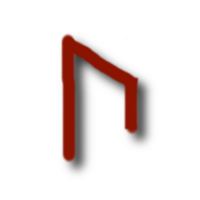
(face east and trace the rune shape and loudly chant: “THURISAZ”)

(face south-east and trace the rune shape and loudly chant: “ANSUZ”)
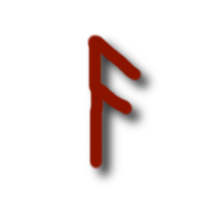
(face south and trace the rune shape and loudly chant: “RAIDHO”)

(face south-west and trace the rune shape and loudly chant: “KENAZ”)

(face west and trace the rune shape and loudly chant: “GEBO”)

(face north-west and trace the rune shape and loudly chant: “WUNJO”)

(face north and trace the rune shape and loudly chant: “HAGALAZ”)

(face north-east and trace the rune shape and loudly chant: “NAUDHIZ”)

(face east and trace the rune shape and loudly chant: “ISA”)

(face south-east and trace the rune shape and loudly chant: “JERA”)

(face south and trace the rune shape and loudly chant: “EIHWAZ”)

(face south-west and trace the rune shape and loudly chant: “PERTHRO”)

(face west and trace the rune shape and loudly chant: “ELHAZ”)

(face north-west and trace the rune shape and loudly chant: “SOWILO”)

(face north and trace the rune shape and loudly chant: “TIWAZ”)

(face north-east and trace the rune shape and loudly chant: “BERKANO”)

(face east and trace the rune shape and loudly chant: “EHWAZ”)

(face south-east and trace the rune shape and loudly chant: “MANNAZ”)

(face south and trace the rune shape and loudly chant: “LAGUZ”)
(face south-west and trace the rune shape and loudly chant: “INGWAZ”)

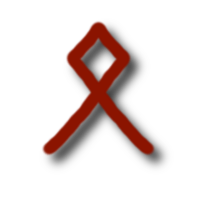
(face west and trace the rune shape and loudly chant: “DAGAZ”)

(face north-west and trace the rune shape and loudly chant: “OTHALA”)
(Few silent deep breaths)
–
Hold up the bottle of mead:
“I now brew the holy mead of inspiration. Won by high Odin long ago!”
Chant into the bottle of mead:
“Odhroerir! Son! Bodhn!”
“Now I hallow this drink with staves of light!”
Chant and trace these runes over the bottle:
“Othala”
“Dagaz”
“Raidho”
“Ansuz”
“Raidho”
“Isa”
“Elhaz!”
All say:
“Hail Odhroerir!”
–
Few silent deep breaths.
–
“Hail Freyja! Daughter of Njord. Sister of Freyr. Descendant of the Vanir. Possessor of Brisingamen. Od’s wife. Vanir-bride. Teacher of seidh. Love goddess. Gold-thirsty one. Queen of witches!”
This next invocation is optional depending on the nature of your relationship to Freyja. Of course you can modify this invocation as you see fit to better suit you.
“Hail Freyja, burning fire of sexual desire, heat of lust and passion, and energies of transformation. You who who stands naked, with only a short cloak of hawk feathers and a jeweled necklace that radiants fire. Your hair long, wild, and golden blond. I look deeply into your pale blue eyes that are like the oceans. Your body of the most pleasing feminine shape. Your pale skin glows with life. I see you breath with longing. Your body moves with the grace of a cat. I look at your full round breasts and dark pink erect nipples. I gaze my eyes upon your sensuous curves. Your legs long and strong. I look between your thighs and see the dew glistening from your sex. I feel the intense fires which burn there. I look upon you! I feel the excitement you invoke in me! I wish to enter deep into you and merge with you in acts of love and pleasure. I worship you who is the Queen of all Northern Witches. I worship your flesh of desire. I call upon you today, on this day which is sacred to that which you hold holy.”
–
Few silent deep breaths.
–
“Today is the day to honor sexuality and sexual relationships in all forms. Sex is something which creates frith with others and is a great source of joy and pleasure between all forms of life. All expressions of sexuality of any sort between consenting adults is sacred to the goddess Freyja. We must remember to keep our minds open and not consider our own preferred forms of sexual expression to be the only valid way for others. Also we should have respect for those who for whatever reason choose not to engage in any sexual activities at all, for that is their choice. We must honor sex as a personal choice, so long as it is expressed in ways that respects the choices of others, than it is positive and should be honored as a joyful expression of life.”
“This is a time for us to honor all those in our life with whom we have any form of sexual interaction or relationship with on a regular basis. It is important we acknowledge and are thankful for the joys and pleasures they give to us. Now take a few moments to think about these people and how thankful you are for all they give to you.”
Ponder on all such people now.
–
Few silent deep breaths.
–
“I am thankful to ___________ for the joys and pleasures you give me. I am thankful and glad that you are part of my life and I honor you for the special place you have in my life.”
Repeat for as many people in your life that you have regular sexual interactions with or a sexual relationship with, thanking each one separately.
Fill drinking horn with drink and hold up horn.
“Freyja I thank you for bringing ____________ [,____________, and __________] into my life. May the interaction between us continue to provide joy, frith, and pleasure for us all. I make this offering in thanks to you Freyja! Hail Freyja goddess of sexual pleasure!”
Drink some of the drink and pour rest into offering bowl.
Trace Hammer Sign over plate of chocolates
“I bless these chocolates to give in offering to Freyja. May my sexual and love life be sweet and pleasing for the coming year! Hail Freyja!”
Eat some of the chocolates and put rest in offering bowl.
–
Use the pine twig to splash a bit of the liquid in the offering bowl on yourself, on any others in the ritual with you, on your altar, on the ritual space, and in all general areas of your dwelling as well. Does not need to be much splashed around, just a little is fine. This helps to imbue more of the energies of the ritual on you, and others who may also in the ritual with you, and to your place.
–
“Now my rite has ended. May all gathered here fare well on their return to their home places. And may the bonds of frith between us grow, gods, wights, and humans alike. Until we meet again.”
–
–
Pour out the offerings from the offering bowl outside:
“A gift for a gift”
Trace gebo at spot offerings were given to.
“GEBO!”
Pour out remaining blessed water outside.
“I pour the sacred water back to the Earth so it may find it’s way back to the Well of Wyrd”
–
Now at this point it is very important to ground your energies. This should always be done after every ritual. Not doing so can lead to problems in the long-run. Grounding is like shifting gears in a car, except it is the process of shifting brain states. During rituals you create a trance like brain state, which is desired for during rituals or for during any spiritual practices. But trance states are not good for doing everyday mundane things. You need to return your mind back to the normal state of consciousness after the ritual is finished. That is what grounding is.
The most simple and common method to ground is to visualize yourself as a tree and see roots growing into the ground from the base of your spine and going down into the earth. Sometimes rituals require industrial strength grounding as they can really create some intense energy. In that case you can try the following triple grounding method.:
First visualize your chakras. You picture in your mind closing first the top one and then seeing a sort of lid closing over it, then proceed with the net lower chakra and so on. You want to leave the bottom most chakra, the root chakra fully open as this is your connection to grounding. Don’t be concerned about having the others closed, the normal proper function of them is that they open and close as needed. Problems with being ungrounded happen when one of more of them are stuck open. Only the bottom one is to be left open at all times.
Next step is to picture a ball of pure white light above your head. Now let this white light slowly descent downward into your body and slowly move lower. As it descends it takes with it any unneeded, old, and negative energies. It is sort of sweeping downward through your energies taking all you no longer need with it. Once it reaches your feet let it move lower till it passes down through the floor. If you are on an upper close let it pass all the way to the ground. Let the earth take this energy to recycle it.
Now final step is to do the traditional grounding. Picture yourself as a tree. Visualize roots coming out of the base of your spine and going down into the Earth. Feel the calmness of a tree, the rooted solidness.
If after these three things you still feel hyper or spaced out you can either eat some food, or put a small amount of salt on your tongue. Another thing you can do is prostrate down to the ground, placing your head on the ground and stay like this for a few moments.
–
Feel free to copy and use this ritual so long as you acknowledge the source.
Volmarr’s Heathen Charming the Plow Ritual Feb-2-2013
Needed items:
• drinking horn
• mead
• spring water in small bowl
• fresh pine twig
• offering bowl
• candles
• wand (if you don’t have one you can use your fingers instead)
• Any symbols of Thor, a statue of him or picture or a Thor’s Hammer or any items related to him.
• Any items we use for creativity and that we use in our job if we have one. Any computers we own and use should be included along with smart phones. If any item of these sorts cannot be brought to the ritual area then just imagine if being there. If the item is too big to imagine occupying the space then see it there in a mini form.
• Some kind of little cakes on an unbreakable sturdy plate.
• A mini hand-held sledge hammer or (Ritual Thor’s Hammer) only used for ritual purposes.
• A separate very sturdy altar for the cake to be on.
WARNING!: Put the cake on a separate very sturdy altar. Do not put anything burning or fragile or breakable on the same altar as the cake is on. The reason for this is that even if you don’t think you will, this ritual if done correctly will make you end up bashing the cake hard. Things shall fall off the altar that the cake is on. If you put candles on the same altar the cake is on you may start a fire. This is why you must use two altars for this ritual, for safety reasons.
–
This ritual, as are all Heathen or northern rituals, is done while facing north, except where otherwise noted. The altar should be such that it is in front of you when you face north.
If you don’t know how to pronounce the runes see my webpage on how to pronounce them here.
–
Put spring water in small bowl. Trace 3 Laguz runes over it.:
“LAGUZ… LAGUZ… LAGUZ”
“From the Well of Wyrd does this water flow, and to the Well of Wyrd does it return”
–
Make Hammer Sign at item and then splash each ritual item with blessed water using the pine twig and for each item say:
“I bless this ______ with the waters of the Well of Wyrd”
–
Now trace Hammer Sign at person being blessed and/or self and splash them with water using twig.
“I bless ______ with the waters of the Well of Wyrd”
–
Use twig to splash ritual space with water.
“I bless this space with the waters of the Well of Wyrd”
–
Few silent deep breaths.
–
All stand in Elhaz position.
“Bi-Frost’s rainbow light shine down upon this space and myself so that I may form a portal between the worlds of Asgard and Midgard”
–
Few silent deep breaths.
–
All face north and trace the Hammer Sign while chanting:
“Hammer in the north hallow and ward this stead”
All turn east and trace the Hammer Sign while chanting:
“Hammer in the east hallow and ward this stead”
All turn south and trace the Hammer Sign while chanting:
“Hammer in the south hallow and ward this stead”
All turn west trace the Hammer Sign while chanting:
“Hammer in the west hallow and ward this stead”
All return to north and look up and trace Hammer sign while chanting:
“Hammer above hallow and ward this stead”
All look below and trace Hammer sign while chanting:
“Hammer below hallow and ward this stead”
–
Return to facing north and all stand in the Elhaz position and chant:
“Around me and within me Asgard and Midgard”
and move into the Dagaz position in the end.
–
Few silent deep breaths.
–
(Highly recommended optional casting of the rune ring)
(face north and trace the rune shape in the air before you using your wand and loudly chant: “FEHU!”)
(face north-east and trace the rune shape and loudly chant: “URUZ”)
(face east and trace the rune shape and loudly chant: “THURISAZ”)
(face south-east and trace the rune shape and loudly chant: “ANSUZ”)
(face south and trace the rune shape and loudly chant: “RAIDHO”)
(face south-west and trace the rune shape and loudly chant: “KENAZ”)
(face west and trace the rune shape and loudly chant: “GEBO”)
(face north-west and trace the rune shape and loudly chant: “WUNJO”)
(face north and trace the rune shape and loudly chant: “HAGALAZ”)
(face north-east and trace the rune shape and loudly chant: “NAUDHIZ”)
(face east and trace the rune shape and loudly chant: “ISA”)
(face south-east and trace the rune shape and loudly chant: “JERA”)
(face south and trace the rune shape and loudly chant: “EIHWAZ”)
(face south-west and trace the rune shape and loudly chant: “PERTHRO”)
(face west and trace the rune shape and loudly chant: “ELHAZ”)
(face north-west and trace the rune shape and loudly chant: “SOWILO”)
(face north and trace the rune shape and loudly chant: “TIWAZ”)
(face north-east and trace the rune shape and loudly chant: “BERKANO”)
(face east and trace the rune shape and loudly chant: “EHWAZ”)
(face south-east and trace the rune shape and loudly chant: “MANNAZ”)
(face south and trace the rune shape and loudly chant: “LAGUZ”)
(face south-west and trace the rune shape and loudly chant: “INGWAZ”)
(face west and trace the rune shape and loudly chant: “DAGAZ”)
(face north-west and trace the rune shape and loudly chant: “OTHALA”)
(Few silent deep breaths)
–
Hold up the bottle of mead:
“I now brew the holy mead of inspiration. Won by high Odin long ago!”
Chant into the bottle of mead:
“Odhroerir! Son! Bodhn!”
“Now I hallow this drink with staves of light!”
Chant and trace these runes over the bottle:
“Othala”
“Dagaz”
“Raidho”
“Ansuz”
“Raidho”
“Isa”
“Elhaz!”
All say:
“Hail Odhroerir!”
–
Few silent deep breaths.
–
“Hail Thor! Son of Odin and Jord. Father of Magni, Modi, and Thrud. Husband of Sif. Stepfather of Ullr. Ruler and owner of Mjollnir, the Girdle of Might, and Bilskirnir. Defender of Asgard and Midgard. Enemy and slayer of giants and troll-wives!”
“Hail Thor!”
–
Few silent deep breaths.
–
“This is the time of year when in times past the Norse would charm the plow so they may use it to break the frozen ground so as to ready the soil for planting for the season. Nowadays most of us are not farmers, but this process of planting seeds and enjoying the harvest still does apply on other levels.”
“Harvest means any positive things we enjoy in our lives. To enjoy harvest we must first start with the planting of seeds of some ideas or goals, and then from there take action based on our ideas.”
“The soil represents the field of our life. For all of us there are some areas of our life where things are stuck or blocked for us. Perhaps blockages in our creativity or productivity, or anything really that stands in the way of us accomplishing things we desire. These areas of blockage are the frozen hard ground that we have at this time of year. The plow is a tool that is used to break open the soil so that it may receive our new idea seeds. The plow on the spiritual level is all the tools we use to accomplish things in our life.”
“Thor’s Hammer is the ultimate spiritual plow, breaking through all that is stuck and all which blocks health and wholeness. The process of blessing something is a process of making that thing whole and healthy, and Thor’s Hammer does exactly this.”
“To charm the plow, first we should bless any objects we use as tools for our own creativity, and which we use for our occupation if we have one. Now is also a time of year to make sure these tools are in good working order and in proper repair. Next part of the process is to call upon the power of Thor and his Hammer to break through any blockages in our life that stand in our way.”
“Now think about all the items you have brought with you as tools to be blessed. Think of how grateful you are for the usefulness of these items. Think about how helpful they are to you.”
Now going one item at a time and naming each item trace the Hammer Sign over item with wand and say “Thor hallow and bless this _______, may it be a powerful tool of my creativity.”
Now look at the cakes on the plate. “These cakes represent the frozen hard soil.” Now think about all areas of blockage in your life. Think about all things that hold you back from accomplishing the things you wish to. Project all the energies of these blockages into those cakes. Spend time doing this, putting as much of that energy into the cakes as you can. Now take hold of the hammer with both hands and raise it up high.:
“By the power of Thor and Mjolnir I bust open this hard frozen soil and destroy all blockages in my life!!!”
Crash the hammer down hard against the cakes, totally crushing them completely (be careful not to knock over the altar or anything on it). Do not eat any of the cake.
“May the soil become loose and ready to take the seeds I plant into it!”
Now relax a few moments and consider all the projects you wish to work on in your life.
Fill the drinking horn with mead. Raise the horn up.
“Hail Thor! I thank you Thor for your blessings, and I thank you for breaking open the soil of my life for the planting of new seeds. I offer this in thanks!”
“Hail Thor!”
Drink some mead and pour rest into offering bowel.
–
Use the pine twig to splash a bit of the liquid in the offering bowl on yourself, on any others in the ritual with you, on your altar, on the ritual space, and in all general areas of your dwelling as well. Does not need to be much splashed around, just a little is fine. This helps to imbue more of the energies of the ritual on you, and others who may also in the ritual with you, and to your place.
–
“Now my rite has ended. May all gathered here fare well on their return to their home places. And may the bonds of frith between us grow, gods, wights, and humans alike. Until we meet again.”
–
–
Pour out the offerings from the offering bowl outside:
“A gift for a gift”
Trace gebo at spot offerings were given to.
“GEBO!”
Put the crushed cake outside. Don’t eat any of it.
Pour out remaining blessed water outside.
“I pour the sacred water back to the Earth so it may find it’s way back to the Well of Wyrd”
–
Now at this point it is very important to ground your energies. This should always be done after every ritual. Not doing so can lead to problems in the long-run. Grounding is like shifting gears in a car, except it is the process of shifting brain states. During rituals you create a trance like brain state, which is desired for during rituals or for during any spiritual practices. But trance states are not good for doing everyday mundane things. You need to return your mind back to the normal state of consciousness after the ritual is finished. That is what grounding is.
The most simple and common method to ground is to visualize yourself as a tree and see roots growing into the ground from the base of your spine and going down into the earth. Sometimes rituals require industrial strength grounding as they can really create some intense energy. In that case you can try the following triple grounding method.:
First visualize your chakras. You picture in your mind closing first the top one and then seeing a sort of lid closing over it, then proceed with the net lower chakra and so on. You want to leave the bottom most chakra, the root chakra fully open as this is your connection to grounding. Don’t be concerned about having the others closed, the normal proper function of them is that they open and close as needed. Problems with being ungrounded happen when one of more of them are stuck open. Only the bottom one is to be left open at all times.
Next step is to picture a ball of pure white light above your head. Now let this white light slowly descent downward into your body and slowly move lower. As it descends it takes with it any unneeded, old, and negative energies. It is sort of sweeping downward through your energies taking all you no longer need with it. Once it reaches your feet let it move lower till it passes down through the floor. If you are on an upper close let it pass all the way to the ground. Let the earth take this energy to recycle it.
Now final step is to do the traditional grounding. Picture yourself as a tree. Visualize roots coming out of the base of your spine and going down into the Earth. Feel the calmness of a tree, the rooted solidness.
If after these three things you still feel hyper or spaced out you can either eat some food, or put a small amount of salt on your tongue. Another thing you can do is prostrate down to the ground, placing your head on the ground and stay like this for a few moments.
–
Feel free to copy and use this ritual so long as you acknowledge the source.
Volmarr’s Heathen Thorrablot Ritual Jan-2013 Do on first Friday after Jan-19th or on full moon of Jan
Need:
• drinking horn
• mead
• spring water in small bowl
• fresh pine twig
• offering bowl
• candles
• wand (if you don’t have one you can use your fingers instead)
• Thor’s Ritual Hammer (optional, can use it for the Hammer Hallowings)
• animal cookies
• Any symbols of Thor, a statue of him or picture or a Thor’s Hammer or any items related to him.
–
This ritual, as are all Heathen or northern rituals, is done while facing north, except where otherwise noted. The altar should be such that it is in front of you when you face north.
If you don’t know how to pronounce the runes see my webpage on how to pronounce them here.
–
Put spring water in small bowl. Trace 3 Laguz runes over it.:
“LAGUZ… LAGUZ… LAGUZ”
“From the Well of Wyrd does this water flow, and to the Well of Wyrd does it return”
–
Make Hammer Sign at item and then splash each ritual item with blessed water using the pine twig and for each item say:
“I bless this ______ with the waters of the Well of Wyrd”
–
Now trace Hammer Sign at person being blessed and/or self and splash them with water using twig.
“I bless ______ with the waters of the Well of Wyrd”
–
Use twig to splash ritual space with water.
“I bless this space with the waters of the Well of Wyrd”
–
Few silent deep breaths.
–
All stand in Elhaz position.
“Bi-Frost’s rainbow light shine down upon this space and myself so that I may form a portal between the worlds of Asgard and Midgard”
–
Few silent deep breaths.
–
All face north and trace the Hammer Sign while chanting:
“Hammer in the north hallow and ward this stead”
All turn east and trace the Hammer Sign while chanting:
“Hammer in the east hallow and ward this stead”
All turn south and trace the Hammer Sign while chanting:
“Hammer in the south hallow and ward this stead”
All turn west trace the Hammer Sign while chanting:
“Hammer in the west hallow and ward this stead”
All return to north and look up and trace Hammer sign while chanting:
“Hammer above hallow and ward this stead”
All look below and trace Hammer sign while chanting:
“Hammer below hallow and ward this stead”
–
Return to facing north and all stand in the Elhaz position and chant:
“Around me and within me Asgard and Midgard”
and move into the Dagaz position in the end.
–
Few silent deep breaths.
–
(Highly recommended optional casting of the rune ring)
(face north and trace the rune shape in the air before you using your wand and loudly chant: “FEHU!”)
(face north-east and trace the rune shape and loudly chant: “URUZ”)
(face east and trace the rune shape and loudly chant: “THURISAZ”)
(face south-east and trace the rune shape and loudly chant: “ANSUZ”)
(face south and trace the rune shape and loudly chant: “RAIDHO”)
(face south-west and trace the rune shape and loudly chant: “KENAZ”)
(face west and trace the rune shape and loudly chant: “GEBO”)
(face north-west and trace the rune shape and loudly chant: “WUNJO”)
(face north and trace the rune shape and loudly chant: “HAGALAZ”)
(face north-east and trace the rune shape and loudly chant: “NAUDHIZ”)
(face east and trace the rune shape and loudly chant: “ISA”)
(face south-east and trace the rune shape and loudly chant: “JERA”)
(face south and trace the rune shape and loudly chant: “EIHWAZ”)
(face south-west and trace the rune shape and loudly chant: “PERTHRO”)
(face west and trace the rune shape and loudly chant: “ELHAZ”)
(face north-west and trace the rune shape and loudly chant: “SOWILO”)
(face north and trace the rune shape and loudly chant: “TIWAZ”)
(face north-east and trace the rune shape and loudly chant: “BERKANO”)
(face east and trace the rune shape and loudly chant: “EHWAZ”)
(face south-east and trace the rune shape and loudly chant: “MANNAZ”)
(face south and trace the rune shape and loudly chant: “LAGUZ”)
(face south-west and trace the rune shape and loudly chant: “INGWAZ”)
(face west and trace the rune shape and loudly chant: “DAGAZ”)
(face north-west and trace the rune shape and loudly chant: “OTHALA”)
(Few silent deep breaths)
–
Hold up the bottle of mead:
“I now brew the holy mead of inspiration. Won by high Odin long ago!”
Chant into the bottle of mead:
“Odhroerir! Son! Bodhn!”
“Now I hallow this drink with staves of light!”
Chant and trace these runes over the bottle:
“Othala”
“Dagaz”
“Raidho”
“Ansuz”
“Raidho”
“Isa”
“Elhaz!”
All say:
“Hail Odhroerir!”
–
Few silent deep breaths.
–
“Hail Thor! Son of Odin and Jord. Father of Magni, Modi, and Thrud. Husband of Sif. Stepfather of Ullr. Ruler and owner of Mjollnir, the Girdle of Might, and Bilskirnir. Defender of Asgard and Midgard. Enemy and slayer of giants and troll-wives!”
“Hail Thor!”
–
Few silent deep breaths.
–
“At this time winter is well upon us, which means cold temperatures, ice, and snow. For the Norse cold is the elemental energies of the Frost-Giants. It is the job of Thor to drive back the giants and elemental energies and keep them in check so things stay in balance. The peek of winter is a time at which the elemental energies of cold have reached a point of extreme. The gods are the forces of order and life supporting structure. The giants are the primal forces of the elements, forces which if not kept in balance can become destructive to life. There is a constant struggle between the forces of order and the primal elements. When there is the right balance between both these forces, then things remain best for the support of all living beings. If this balance becomes disturbed then life forms can start to become extinct, or even in extreme cases of imbalance the very fabric of the spiritual order of things can be thrown in danger. Thor is the guardian of this balance. He protects the balance for us all. He is the tireless protector of all life, both physical and spiritual. Today is Thorrablot, a special day to honor Thor for all the work he does for us in protecting the balance of things. Also this is the time to ask Thor to protect us for the next years time.”
Fill the drinking horn with mead.
Hold up the drinking horn:
“Hail Thor! I give thanks to you Thor for keeping the Frost-Giants driven back. It is your tireless work that allows spring to come on time so that the harvest can be a fruitful one. I ask of you Thor to please keep me and mine protected, safe, and happy. I make this offering to you Thor! Hail Thor!”
Drink from horn and pour out the rest to the offering bowl.
Trace the Hammer Sign over cookies.
“I bless this food and offer it to you Thor with a heart of gratitude for you many blessing in my life. Thor you are the one who protects the balance that allows me to have a fruitful life. Thank you Thor. Hail Thor!”
Eat half the cookies and put the other half into the offering bowl for Thor to enjoy.
–
Use the pine twig to splash a bit of the liquid in the offering bowl on yourself, on any others in the ritual with you, on your altar, on the ritual space, and in all general areas of your dwelling as well. Does not need to be much splashed around, just a little is fine. This helps to imbue more of the energies of the ritual on you, and others who may also in the ritual with you, and to your place.
–
“Now my rite has ended. May all gathered here fare well on their return to their home places. And may the bonds of frith between us grow, gods, wights, and humans alike. Until we meet again.”
–
–
Pour out the offerings from the offering bowl outside:
“A gift for a gift”
Trace gebo at spot offerings were given to.
“GEBO!”
Pour out remaining blessed water outside.
“I pour the sacred water back to the Earth so it may find it’s way back to the Well of Wyrd”
–
Now at this point it is very important to ground your energies. This should always be done after every ritual. Not doing so can lead to problems in the long-run. Grounding is like shifting gears in a car, except it is the process of shifting brain states. During rituals you create a trance like brain state, which is desired for during rituals or for during any spiritual practices. But trance states are not good for doing everyday mundane things. You need to return your mind back to the normal state of consciousness after the ritual is finished. That is what grounding is.
The most simple and common method to ground is to visualize yourself as a tree and see roots growing into the ground from the base of your spine and going down into the earth. Sometimes rituals require industrial strength grounding as they can really create some intense energy. In that case you can try the following triple grounding method.:
First visualize your chakras. You picture in your mind closing first the top one and then seeing a sort of lid closing over it, then proceed with the net lower chakra and so on. You want to leave the bottom most chakra, the root chakra fully open as this is your connection to grounding. Don’t be concerned about having the others closed, the normal proper function of them is that they open and close as needed. Problems with being ungrounded happen when one of more of them are stuck open. Only the bottom one is to be left open at all times.
Next step is to picture a ball of pure white light above your head. Now let this white light slowly descent downward into your body and slowly move lower. As it descends it takes with it any unneeded, old, and negative energies. It is sort of sweeping downward through your energies taking all you no longer need with it. Once it reaches your feet let it move lower till it passes down through the floor. If you are on an upper close let it pass all the way to the ground. Let the earth take this energy to recycle it.
Now final step is to do the traditional grounding. Picture yourself as a tree. Visualize roots coming out of the base of your spine and going down into the Earth. Feel the calmness of a tree, the rooted solidness.
If after these three things you still feel hyper or spaced out you can either eat some food, or put a small amount of salt on your tongue. Another thing you can do is prostrate down to the ground, placing your head on the ground and stay like this for a few moments.
–
Feel free to copy and use this ritual so long as you acknowledge the source.
Volmarr’s Heathen End of Yule (Jan-1st) Ritual 2013
Need:
• drinking horn
• mead
• cookies
• spring water in small bowl
• fresh pine twig
• offering bowl
• candles
• wand (if you don’t have one you can use your fingers instead)
• Thor’s Ritual Hammer (optional, can use it for the Hammer Hallowings)
• oath-ring (optional)
• Any items to represent Freyr.
–
This ritual, as are all Heathen or northern rituals, is done while facing north, except where otherwise noted. The altar should be such that it is in front of you when you face north.
If you don’t know how to pronounce the runes see my webpage on how to pronounce them here.
–
Put spring water in small bowl. Trace 3 Laguz runes over it.:
“LAGUZ… LAGUZ… LAGUZ”
“From the Well of Wyrd does this water flow, and to the Well of Wyrd does it return”
–
Make Hammer Sign at item and then splash each ritual item with blessed water using the pine twig and for each item say:
“I bless this ______ with the waters of the Well of Wyrd”
–
Now trace Hammer Sign at person being blessed and/or self and splash them with water using twig.
“I bless ______ with the waters of the Well of Wyrd”
–
Use twig to splash ritual space with water.
“I bless this space with the waters of the Well of Wyrd”
–
Few silent deep breaths.
–
All stand in Elhaz position.
“Bi-Frost’s rainbow light shine down upon this space and myself so that I may form a portal between the worlds of Asgard and Midgard”
–
Few silent deep breaths.
–
All face north and trace the Hammer Sign while chanting:
“Hammer in the north hallow and ward this stead”
All turn east and trace the Hammer Sign while chanting:
“Hammer in the east hallow and ward this stead”
All turn south and trace the Hammer Sign while chanting:
“Hammer in the south hallow and ward this stead”
All turn west trace the Hammer Sign while chanting:
“Hammer in the west hallow and ward this stead”
All return to north and look up and trace Hammer sign while chanting:
“Hammer above hallow and ward this stead”
All look below and trace Hammer sign while chanting:
“Hammer below hallow and ward this stead”
–
Return to facing north and all stand in the Elhaz position and chant:
“Around me and within me Asgard and Midgard”
and move into the Dagaz position in the end.
–
Few silent deep breaths.
–
(Highly recommended optional casting of the rune ring)
(face north and trace the rune shape in the air before you using your wand and loudly chant: “FEHU!”)
(face north-east and trace the rune shape and loudly chant: “URUZ”)
(face east and trace the rune shape and loudly chant: “THURISAZ”)
(face south-east and trace the rune shape and loudly chant: “ANSUZ”)
(face south and trace the rune shape and loudly chant: “RAIDHO”)
(face south-west and trace the rune shape and loudly chant: “KENAZ”)
(face west and trace the rune shape and loudly chant: “GEBO”)
(face north-west and trace the rune shape and loudly chant: “WUNJO”)
(face north and trace the rune shape and loudly chant: “HAGALAZ”)
(face north-east and trace the rune shape and loudly chant: “NAUDHIZ”)
(face east and trace the rune shape and loudly chant: “ISA”)
(face south-east and trace the rune shape and loudly chant: “JERA”)
(face south and trace the rune shape and loudly chant: “EIHWAZ”)
(face south-west and trace the rune shape and loudly chant: “PERTHRO”)
(face west and trace the rune shape and loudly chant: “ELHAZ”)
(face north-west and trace the rune shape and loudly chant: “SOWILO”)
(face north and trace the rune shape and loudly chant: “TIWAZ”)
(face north-east and trace the rune shape and loudly chant: “BERKANO”)
(face east and trace the rune shape and loudly chant: “EHWAZ”)
(face south-east and trace the rune shape and loudly chant: “MANNAZ”)
(face south and trace the rune shape and loudly chant: “LAGUZ”)
(face south-west and trace the rune shape and loudly chant: “INGWAZ”)
(face west and trace the rune shape and loudly chant: “DAGAZ”)
(face north-west and trace the rune shape and loudly chant: “OTHALA”)
(Few silent deep breaths)
–
Hold up the bottle of mead:
“I now brew the holy mead of inspiration. Won by high Odin long ago!”
Chant into the bottle of mead:
“Odhroerir! Son! Bodhn!”
“Now I hallow this drink with staves of light!”
Chant and trace these runes over the bottle:
“Othala”
“Dagaz”
“Raidho”
“Ansuz”
“Raidho”
“Isa”
“Elhaz!”
All say:
“Hail Odhroerir!”
–
Few silent deep breaths.
–
“Hail Freyr! Son of Njord. Brother of Freyja. Husband of Gerd. Trusted friend of Skirnir. Descendant of the Vanir. Harvest god and wealth-giver. King of Alfheim. Blot-god of the Swedes. Possessor of Skidbladnir, and the boar known as Gullinbursti. Beli’s slayer. Enemy of Surtr. Wielder of the stag-horn. Fruitful one. Sure giver. Father of the Yngling line. Lord of the Volsi!”
All respond:
“Hail Freyr!”
–
Few silent deep breaths.
–
“Now is the end of the Yule time. We have safely made it out of the turbulent chaotic energies of the Wild Hunt, and now the smoother flowing energies of the start of the new year cycle are upon us. We can be very thankful for making it through the holiday season. The old year cycle having been swept away by the Wild Hunt, now we can start anew, working on new greater things for this year cycle.”
“Now is a good time, if so desired to make an oath to accomplish some task or tasks for the coming year cycle. Any oaths made at this time shall have their greatest power since we stand now at the very first day of the new year cycle. Now is a time to plant the ideas of what you wish to come in this coming year. Remember though that any oaths made before any of the Gods must be followed through on, so do not make any oaths that you do not intend to keep. Take some moments now to think about what if any oaths you wish to make at this time.”
–
Few silent deep breaths.
–
Say any oaths you wish to make. You may if you have one place your right hand on an oath ring or a Thor’s Hammer or other holy object while making the oaths.
–
Few silent deep breaths.
–
“This is the time of year to give thanks to Freyr for all the blessings he has given us in the now past year, and to ask that his blessings shall continue in the coming year. Freyr is the god of the harvest, harvest means more then just the gathering of crops, as there is a type of harvest which is the receiving of anything of value in our life. Thus all positive things we have gained are due to this harvest energies of Freyr. Giving thanks reinforces what it is we wish more of in the future, and also is a way to be grateful for all that is given to us. Being grateful sets the patterns in Wyrd for more of what we are grateful for to follow in the future. Think of all things you are grateful for at this time and also all things you wish more of in the coming year.”
–
Few silent deep breaths.
–
Say any and all things you are grateful for from the last year. Word it like ‘I am grateful for ____’.
–
Now state any things you would like more of in your life in the coming year. Please feel free to say as many things as you would like, and do not feel guilty about any of it. Say it like this ‘May there be more ____ in my life this year.’
–
Few silent deep breaths.
–
Now trace the Sign of the Hammer over the cookies. Fill your horn up with mead.
Hold the horn up while saying:
“Hail Freyr, god of prosperity and the harvest, I am thankful to you for all your many blessings!”
All chant:
“Hail Freyr!”
Drink some of mead and pass horn. Pour remaining into offering bowl.
Eat a cookie and pass the cookies around so everyone may get one, and put the rest of the cookies into the offering bowl for Freyr.
–
Use the pine twig to splash a bit of the liquid in the offering bowl on yourself, on any others in the ritual with you, on your altar, on the ritual space, and in all general areas of your dwelling as well. Does not need to be much splashed around, just a little is fine. This helps to imbue more of the energies of the ritual on you, and others who may also in the ritual with you, and to your place.
–
“Now my rite has ended. May all gathered here fare well on their return to their home places. And may the bonds of frith between us grow, gods, wights, and humans alike. Until we meet again.”
–
–
Pour out the offerings from the offering bowl outside:
“A gift for a gift”
Trace gebo at spot offerings were given to.
“GEBO!”
Pour out remaining blessed water outside.
“I pour the sacred water back to the Earth so it may find it’s way back to the Well of Wyrd”
–
Now at this point it is very important to ground your energies. This should always be done after every ritual. Not doing so can lead to problems in the long-run. Grounding is like shifting gears in a car, except it is the process of shifting brain states. During rituals you create a trance like brain state, which is desired for during rituals or for during any spiritual practices. But trance states are not good for doing everyday mundane things. You need to return your mind back to the normal state of consciousness after the ritual is finished. That is what grounding is.
The most simple and common method to ground is to visualize yourself as a tree and see roots growing into the ground from the base of your spine and going down into the earth. Sometimes rituals require industrial strength grounding as they can really create some intense energy. In that case you can try the following triple grounding method.:
First visualize your chakras. You picture in your mind closing first the top one and then seeing a sort of lid closing over it, then proceed with the net lower chakra and so on. You want to leave the bottom most chakra, the root chakra fully open as this is your connection to grounding. Don’t be concerned about having the others closed, the normal proper function of them is that they open and close as needed. Problems with being ungrounded happen when one of more of them are stuck open. Only the bottom one is to be left open at all times.
Next step is to picture a ball of pure white light above your head. Now let this white light slowly descent downward into your body and slowly move lower. As it descends it takes with it any unneeded, old, and negative energies. It is sort of sweeping downward through your energies taking all you no longer need with it. Once it reaches your feet let it move lower till it passes down through the floor. If you are on an upper close let it pass all the way to the ground. Let the earth take this energy to recycle it.
Now final step is to do the traditional grounding. Picture yourself as a tree. Visualize roots coming out of the base of your spine and going down into the Earth. Feel the calmness of a tree, the rooted solidness.
If after these three things you still feel hyper or spaced out you can either eat some food, or put a small amount of salt on your tongue. Another thing you can do is prostrate down to the ground, placing your head on the ground and stay like this for a few moments.
–
Feel free to copy and use this ritual so long as you acknowledge the source.
Download this as a OpenOffice Doc – Volmarr’s Heathen End of Yule (Jan-1st) Ritual 2013
Volmarr’s Heathen Yule (Dec-21) Ritual 2012
Need:
• drinking horn
• mead
• spring water in small bowl
• fresh pine twig
• offering bowl
• candles
• wand (if you don’t have one you can use your fingers instead)
• Thor’s Ritual Hammer (optional, can use it for the Hammer Hallowings)
• Solar symbols or a representation of Sunna or the sun.
• Symbols of and/or representations of Odin.
–
This ritual, as are all Heathen or northern rituals, is done while facing north, except where otherwise noted. The altar should be such that it is in front of you when you face north.
If you don’t know how to pronounce the runes see my webpage on how to pronounce them here.
–
Put spring water in small bowl. Trace 3 Laguz runes over it.:
“LAGUZ… LAGUZ… LAGUZ”
“From the Well of Wyrd does this water flow, and to the Well of Wyrd does it return”
–
Make Hammer Sign at item and then splash each ritual item with blessed water using the pine twig and for each item say:
“I bless this ______ with the waters of the Well of Wyrd”
–
Now trace Hammer Sign at person being blessed and/or self and splash them with water using twig.
“I bless ______ with the waters of the Well of Wyrd”
–
Use twig to splash ritual space with water.
“I bless this space with the waters of the Well of Wyrd”
–
Few silent deep breaths.
–
All stand in Elhaz position.
“Bi-Frost’s rainbow light shine down upon this space and myself so that I may form a portal between the worlds of Asgard and Midgard”
–
Few silent deep breaths.
–
All face north and trace the Hammer Sign while chanting:
“Hammer in the north hallow and ward this stead”
All turn east and trace the Hammer Sign while chanting:
“Hammer in the east hallow and ward this stead”
All turn south and trace the Hammer Sign while chanting:
“Hammer in the south hallow and ward this stead”
All turn west trace the Hammer Sign while chanting:
“Hammer in the west hallow and ward this stead”
All return to north and look up and trace Hammer sign while chanting:
“Hammer above hallow and ward this stead”
All look below and trace Hammer sign while chanting:
“Hammer below hallow and ward this stead”
–
Return to facing north and all stand in the Elhaz position and chant:
“Around me and within me Asgard and Midgard”
and move into the Dagaz position in the end.
–
Few silent deep breaths.
–
(Highly recommended optional casting of the rune ring)
(face north and trace the rune shape in the air before you using your wand and loudly chant: “FEHU!”)
(face north-east and trace the rune shape and loudly chant: “URUZ”)
(face east and trace the rune shape and loudly chant: “THURISAZ”)
(face south-east and trace the rune shape and loudly chant: “ANSUZ”)
(face south and trace the rune shape and loudly chant: “RAIDHO”)
(face south-west and trace the rune shape and loudly chant: “KENAZ”)
(face west and trace the rune shape and loudly chant: “GEBO”)
(face north-west and trace the rune shape and loudly chant: “WUNJO”)
(face north and trace the rune shape and loudly chant: “HAGALAZ”)
(face north-east and trace the rune shape and loudly chant: “NAUDHIZ”)
(face east and trace the rune shape and loudly chant: “ISA”)
(face south-east and trace the rune shape and loudly chant: “JERA”)
(face south and trace the rune shape and loudly chant: “EIHWAZ”)
(face south-west and trace the rune shape and loudly chant: “PERTHRO”)
(face west and trace the rune shape and loudly chant: “ELHAZ”)
(face north-west and trace the rune shape and loudly chant: “SOWILO”)
(face north and trace the rune shape and loudly chant: “TIWAZ”)
(face north-east and trace the rune shape and loudly chant: “BERKANO”)
(face east and trace the rune shape and loudly chant: “EHWAZ”)
(face south-east and trace the rune shape and loudly chant: “MANNAZ”)
(face south and trace the rune shape and loudly chant: “LAGUZ”)
(face south-west and trace the rune shape and loudly chant: “INGWAZ”)
(face west and trace the rune shape and loudly chant: “DAGAZ”)
(face north-west and trace the rune shape and loudly chant: “OTHALA”)
(Few silent deep breaths)
–
Hold up the bottle of mead:
“I now brew the holy mead of inspiration. Won by high Odin long ago!”
Chant into the bottle of mead:
“Odhroerir! Son! Bodhn!”
“Now I hallow this drink with staves of light!”
Chant and trace these runes over the bottle:
“Othala”
“Dagaz”
“Raidho”
“Ansuz”
“Raidho”
“Isa”
“Elhaz!”
All say:
“Hail Odhroerir!”
–
Few silent deep breaths.
–
“Hail Odin! Husband of Frigg. All-father. Father of battle. One-eyed god. Many-shaped. Wanderer. Hanged god. Raven god. Spear-thruster. Wish-bringer. Galdr-father. Graybeard. Deep hood. Thief of Odhroerir. Kinsman of Mimir. Lord of the Wild Hunt. Yule rider. Finder of the Runes. God of the Gautar. Ruler of Valhalla!”
All respond:
“Hail Odin!”
–
“Hail Sunna! Daughter of Glen. Bright rider in the heavens by day. Driver of Alsvin and Arvak. Wearer of Svalin. Day-star. Ever-glow. All-bright. Wolf-chased. Fair-wheel. Grace-shine. Ensnarer of Trolls!”
All respond:
“Hail Sunna!”
–
Few silent deep breaths.
–
“Now is Yule, the time when the light of the world is at it’s dimmest. This is a time when our mind focus is turned the most inward to the inner spiritual world. At this time we are made to look deeply into the dark and dusty corners of our very soul. This is a part of the yearly process of the seasons that we turn inward like this. At this time things seem at their darkest and most gloomy. Yet this is a time for celebration, for the light of the world is starting the long journey back to it’s peek again. At this time we are to be aware that the next season is yet ahead of us. Warm and sunny times await us in the coming year. Take joy in all that we have accomplished in the year that is now passing, and look forward to all which we shall enjoy in the next year cycle yet to come. Sunna the Sun Goddess is beginning the process of returning warmth, light, and cheer to the world, as the length of the days from this point on shall only grow longer.”
“This also marks the early part of a time of 12 days in which the energies of the world seem to be at their most chaotic, as the energies of the old cycle are swept away to make way for the start of the new. During this period it is easy to be swept into the turbulent emotional energies of this process, and thus we must guard against this possibility. It is a time best to stay indoors as much as possible and enjoy the safety and warmth of our homesteads. This process of the sweeping away of the old energies to make way for the new, is known by the Norse as the Wild Hunt. Odin is the God who leads this Wild Hunt. This is the end of the part of the year that is his reign, as God of inner journeys, he rules the half of the year in which the light is withdrawing, but this part of the cycle now draws to a close with this final process of the Wild Hunt.”
–
Few silent deep breaths.
“Be still now for a few moments and feel the energies that are present at this time of year.”
Spend some moments meditating on what was just said.
–
“I sorrow not,”
“though the world is wrapped in sleep.”
“I sorrow not,”
“though the icy winds blast.”
“I sorrow not,”
“though the snow falls hard and deep.”
“I sorrow not,”
“this too shall soon be past.”
–
Light many candles.
Fill horn with mead.
“Hail Day! Hail sons of Day! Hail Night and her daughter!”
“With watchful eyes look upon us, and give to us sitting here victory!”
“Hail Sunna, as she begins to bring back the sunny warm days again!”
All chant:
“Hail Sunna!”
Drink some of mead and pass horn. Pour remaining into offering bowl.
–
Few silent deep breaths.
–
Fill horn with more mead.
“Hail Odin, as he clears away the energies of the old year during the Wild Hunt!”
All chant:
“Hail Odin!”
Drink some of mead and pass horn. Pour remaining into offering bowl.
–
Use the pine twig to splash a bit of the liquid in the offering bowl on yourself, on any others in the ritual with you, on your altar, on the ritual space, and in all general areas of your dwelling as well. Does not need to be much splashed around, just a little is fine. This helps to imbue more of the energies of the ritual on you, and others who may also in the ritual with you, and to your place.
–
“Now my rite has ended. May all gathered here fare well on their return to their home places. And may the bonds of frith between us grow, gods, wights, and humans alike. Until we meet again.”
–
–
Pour out the offerings from the offering bowl outside:
“A gift for a gift”
Trace gebo at spot offerings were given to.
“GEBO!”
Pour out remaining blessed water outside.
“I pour the sacred water back to the Earth so it may find it’s way back to the Well of Wyrd”
–
Now at this point it is very important to ground your energies. This should always be done after every ritual. Not doing so can lead to problems in the long-run. Grounding is like shifting gears in a car, except it is the process of shifting brain states. During rituals you create a trance like brain state, which is desired for during rituals or for during any spiritual practices. But trance states are not good for doing everyday mundane things. You need to return your mind back to the normal state of consciousness after the ritual is finished. That is what grounding is.
The most simple and common method to ground is to visualize yourself as a tree and see roots growing into the ground from the base of your spine and going down into the earth. Sometimes rituals require industrial strength grounding as they can really create some intense energy. In that case you can try the following triple grounding method.:
First visualize your chakras. You picture in your mind closing first the top one and then seeing a sort of lid closing over it, then proceed with the net lower chakra and so on. You want to leave the bottom most chakra, the root chakra fully open as this is your connection to grounding. Don’t be concerned about having the others closed, the normal proper function of them is that they open and close as needed. Problems with being ungrounded happen when one of more of them are stuck open. Only the bottom one is to be left open at all times.
Next step is to picture a ball of pure white light above your head. Now let this white light slowly descent downward into your body and slowly move lower. As it descends it takes with it any unneeded, old, and negative energies. It is sort of sweeping downward through your energies taking all you no longer need with it. Once it reaches your feet let it move lower till it passes down through the floor. If you are on an upper close let it pass all the way to the ground. Let the earth take this energy to recycle it.
Now final step is to do the traditional grounding. Picture yourself as a tree. Visualize roots coming out of the base of your spine and going down into the Earth. Feel the calmness of a tree, the rooted solidness.
If after these three things you still feel hyper or spaced out you can either eat some food, or put a small amount of salt on your tongue. Another thing you can do is prostrate down to the ground, placing your head on the ground and stay like this for a few moments.
–
Feel free to copy and use this ritual so long as you acknowledge the source.
Volmarr’s Heathen Ritual Outline Jan-1-2013
Need:
• drinking horn
• mead (or beer or wine or even can use juice)
• spring water in small bowl
• fresh pine twig
• offering bowl
• candles
• wand (if you don’t have one you can use your fingers instead)
• Thor’s Ritual Hammer (optional, can use it for the Hammer Hallowings)
• <>
–
This ritual, as are all Heathen or northern rituals, is done while facing north, except where otherwise noted. The altar should be such that it is in front of you when you face north.
If you don’t know how to pronounce the runes see my webpage on how to pronounce them here.
–
Put spring water in small bowl. Trace 3 Laguz runes over it.:
“LAGUZ… LAGUZ… LAGUZ”
“From the Well of Wyrd does this water flow, and to the Well of Wyrd does it return”
–
Make Hammer Sign at item and then splash each ritual item with blessed water using the pine twig and for each item say:
“I bless this ______ with the waters of the Well of Wyrd”
–
Now trace Hammer Sign at person being blessed and/or self and splash them with water using twig.
“I bless ______ with the waters of the Well of Wyrd”
–
Use twig to splash ritual space with water.
“I bless this space with the waters of the Well of Wyrd”
–
Few silent deep breaths.
–
All stand in Elhaz position.
“Bi-Frost’s rainbow light shine down upon this space and myself so that I may form a portal between the worlds of Asgard and Midgard”
–
Few silent deep breaths.
–
All face north and trace the Hammer Sign while chanting:
“Hammer in the north hallow and ward this stead”
All turn east and trace the Hammer Sign while chanting:
“Hammer in the east hallow and ward this stead”
All turn south and trace the Hammer Sign while chanting:
“Hammer in the south hallow and ward this stead”
All turn west trace the Hammer Sign while chanting:
“Hammer in the west hallow and ward this stead”
All return to north and look up and trace Hammer sign while chanting:
“Hammer above hallow and ward this stead”
All look below and trace Hammer sign while chanting:
“Hammer below hallow and ward this stead”
–
Return to facing north and all stand in the Elhaz position and chant:
“Around me and within me Asgard and Midgard”
and move into the Dagaz position in the end.
–
Few silent deep breaths.
–
(Highly recommended optional casting of the rune ring)
(face north and trace the rune shape in the air before you using your wand and loudly chant: “FEHU!”)
(face north-east and trace the rune shape and loudly chant: “URUZ”)
(face east and trace the rune shape and loudly chant: “THURISAZ”)
(face south-east and trace the rune shape and loudly chant: “ANSUZ”)
(face south and trace the rune shape and loudly chant: “RAIDHO”)
(face south-west and trace the rune shape and loudly chant: “KENAZ”)
(face west and trace the rune shape and loudly chant: “GEBO”)
(face north-west and trace the rune shape and loudly chant: “WUNJO”)
(face north and trace the rune shape and loudly chant: “HAGALAZ”)
(face north-east and trace the rune shape and loudly chant: “NAUDHIZ”)
(face east and trace the rune shape and loudly chant: “ISA”)
(face south-east and trace the rune shape and loudly chant: “JERA”)
(face south and trace the rune shape and loudly chant: “EIHWAZ”)
(face south-west and trace the rune shape and loudly chant: “PERTHRO”)
(face west and trace the rune shape and loudly chant: “ELHAZ”)
(face north-west and trace the rune shape and loudly chant: “SOWILO”)
(face north and trace the rune shape and loudly chant: “TIWAZ”)
(face north-east and trace the rune shape and loudly chant: “BERKANO”)
(face east and trace the rune shape and loudly chant: “EHWAZ”)
(face south-east and trace the rune shape and loudly chant: “MANNAZ”)
(face south and trace the rune shape and loudly chant: “LAGUZ”)
(face south-west and trace the rune shape and loudly chant: “INGWAZ”)
(face west and trace the rune shape and loudly chant: “DAGAZ”)
(face north-west and trace the rune shape and loudly chant: “OTHALA”)
(Few silent deep breaths)
–
Hold up the bottle of mead:
“I now brew the holy mead of inspiration. Won by high Odin long ago!”
Chant into the bottle of mead:
“Odhroerir! Son! Bodhn!”
“Now I hallow this drink with staves of light!”
Chant and trace these runes over the bottle:
“Othala”
“Dagaz”
“Raidho”
“Ansuz”
“Raidho”
“Isa”
“Elhaz!”
All say:
“Hail Odhroerir!”
–
Few silent deep breaths.
–
<<>
<<>>
–
(Use the pine twig to splash a bit of the liquid in the offering bowl on yourself, on any others in the ritual with you, on your altar, on the ritual space, and in all general areas of your dwelling as well. Does not need to be much splashed around, just a little is fine. This helps to imbue more of the energies of the ritual on you, and others who may also in the ritual with you, and to your place.)
–
“Now my rite has ended. May all gathered here fare well on their return to their home places. And may the bonds of frith between us grow, gods, wights, and humans alike. Until we meet again.”
–
–
Pour out the offerings from the offering bowl outside:
“A gift for a gift”
Trace gebo at spot offerings were given to.
“GEBO!”
Pour out remaining blessed water outside.
“I pour the sacred water back to the Earth so it may find it’s way back to the Well of Wyrd”
–
Now at this point it is very important to ground your energies. This should always be done after every ritual. Not doing so can lead to problems in the long-run. Grounding is like shifting gears in a car, except it is the process of shifting brain states. During rituals you create a trance like brain state, which is desired for during rituals or for during any spiritual practices. But trance states are not good for doing everyday mundane things. You need to return your mind back to the normal state of consciousness after the ritual is finished. That is what grounding is.
The most simple and common method to ground is to visualize yourself as a tree and see roots growing into the ground from the base of your spine and going down into the earth. Sometimes rituals require industrial strength grounding as they can really create some intense energy. In that case you can try the following triple grounding method.:
First visualize your chakras. You picture in your mind closing first the top one and then seeing a sort of lid closing over it, then proceed with the net lower chakra and so on. You want to leave the bottom most chakra, the root chakra fully open as this is your connection to grounding. Don’t be concerned about having the others closed, the normal proper function of them is that they open and close as needed. Problems with being ungrounded happen when one of more of them are stuck open. Only the bottom one is to be left open at all times.
Next step is to picture a ball of pure white light above your head. Now let this white light slowly descent downward into your body and slowly move lower. As it descends it takes with it any unneeded, old, and negative energies. It is sort of sweeping downward through your energies taking all you no longer need with it. Once it reaches your feet let it move lower till it passes down through the floor. If you are on an upper close let it pass all the way to the ground. Let the earth take this energy to recycle it.
Now final step is to do the traditional grounding. Picture yourself as a tree. Visualize roots coming out of the base of your spine and going down into the Earth. Feel the calmness of a tree, the rooted solidness.
If after these three things you still feel hyper or spaced out you can either eat some food, or put a small amount of salt on your tongue. Another thing you can do is prostrate down to the ground, placing your head on the ground and stay like this for a few moments.
–
Feel free to copy and use this ritual so long as you acknowledge the source.

This work is licensed under a Creative Commons Attribution-NonCommercial-ShareAlike 3.0 Unported License.

 Volmarr’s Tumblr
- The Heathen Third Path within Norse Paganism and modern Viking culture
- Unveiling the True Viking Mindset: Clearing Away Modern Political Shadows with Ancient Wisdom and Modern Science
- Sample of AI GMed Norse Saga Engine Combat 2
- Poetic Edda: Complete Master Works Edition
- Sample of AI GMed Norse Saga Engine Combat
- Sample AI Generated Dialogue Generated by Norse Saga Engine:
- The Loom is Spinning: Enter the Norse Saga Engine
- Wow I just translated the whole Poetic Edda from Old Norse into poetic English in 25 minutes using…
- I am using an agentic AI coding tool to translate the whole of the Poetic Edda from Old Norse into…
- Teaser Trailer!
 Volmarr's Blog of Modernist Heathenism, Norse-Paganism, and Norse-Wicca