
House Ghost Honoring Ritual
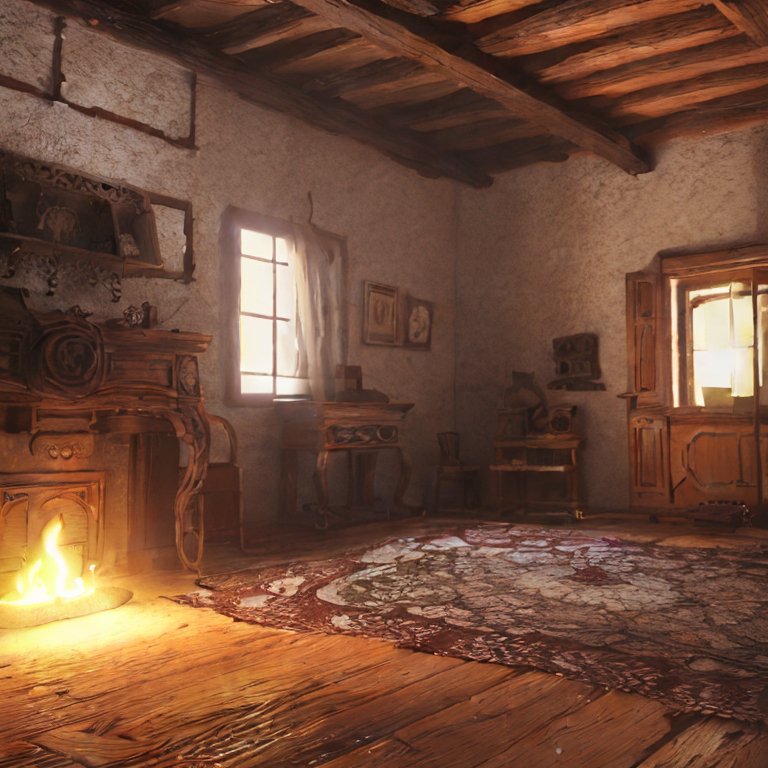
(This ritual should ideally be done once a week, but never more than once a week. The best practice is to be very consistent and reliable in the timing and regular performance of it. Warning, warning: Never under any circumstances forget to add the pat of butter! Use real butter, even if you are vegan. This porridge is to be made only for the house ghost, and no one else. Cook an amount that is right for one serving for the house ghost. This ritual should be performed at the main hearth of your home. If your home has no hearth then perform it in the kitchen.)
—
O hael Spirit of the hearth
Guardian of our home
Come and join us in our mirth
Your presence we will welcome
We invite you in to share
Our stories, laughter and our cheer
Your wisdom we will revere
Our friendship is sincere
We bid you warmly join us here
Your presence we do not fear
Your secrets we’ll revere
Your protection we hold dear
—
O ghost of this house, come and take your place,
For peace and harmony we must embrace.
No rattling, no haunting, no noises to scare,
We ask this of you with love and care.
No moving of objects, no tricks to play,
Respect all the humans who live in this way.
Set your personal limits, and follow them well,
We do not wish for your presence to swell.
For cats and visitors, respect and adore,
No disturbance when they come through the door.
We seek peace and harmony from you our friend,
So that everyone in the house may have an amicable end.
—
I bring to thee, my house ghost,
A porridge made with oats and cream,
Topped with a pat of butter,
A treat that’s fit for a king.
A cup of beer to enjoy,
So your spirit’s can stay strong,
A treat I offer to thee,
To make your heart feel calm.
For your spirit’s a blessing,
That’s always been true,
So I offer this porridge,
In a friendly gesture to you.
To show my appreciation,
For all that you do,
For keeping our home safe,
From harm and from the blues.
So take this offering,
In a warm and friendly way,
For this porridge and beer,
Will bring you joy this day.
(Place the offering of porridge and beer in a safe spot near the hearth of your home. If you have no hearth, then your kitchen stove is the hearth of the home, so put it there. Do not drink or eat any of the offerings. You can pour the offering out, outside at a sacred spot near a tree in your yard after a day or longer, or sooner if your home environment does not allow for leaving such things out in the open for extended periods of time.)
—
(Go to your ritual spot, or some other spot, far away from where you did the ritual and placed the offerings and do the Lesser Banishing Ritual of the Hammer, and ground completely.)
Freyja Poem
Freyja, the goddess of love and seduction
Her beauty and charm, a divine infusion
Her sultry gaze, her luscious lips
Arouses passions, a heart’s eclipse
Her curves, like waves, so divinely formed
Her beauty, a sight no man can ignore
The depth of her love, as vast as the sea
No one can resist her alluring plea
Her erotically charged energy
That radiates from her wondrous being
Tantalizing and captivating
Arousing pure joy and elation
Her beauty is like a flame that never dies
Her passionate love, a passionate surprise
A goddess of love and seduction
Freyja’s erotically charged infusion!
Gersemi Norse Goddess, Daughter of Freyja
Gersemi is a Norse goddess who is mentioned only briefly in Old Norse literature. She is described as a “worthy woman” who is a servant and daughter of the goddess Freyja. In the Prose Edda, a collection of Norse myths, it is written that Gersemi is a “golden-tongued” goddess who is responsible for caring for Freyja’s treasures. Some scholars have speculated that Gersemi may be a personification of wealth or prosperity, as her name is derived from the Old Norse word “gersemi,” which means “treasure.” However, there is not much else known about her.
Odin Explains Quantum Science
I, Odin, ruler of Asgard and all realms, will guide you through the mysteries of quantum science, the study of the smallest building blocks of the universe.
To begin, let us consider the concept of superposition, which states that a quantum particle can exist in multiple states simultaneously. This strange phenomenon is described mathematically by the Schrödinger equation:
ᚻᛖᛚᛚᚱᚾᚴᛖᚾᛞᛟᛚᛖᚱᛁᚾᚱᚨᚾᚴᚪᚨᚱᚱᚨᚪᚱᚨᚾᚴᚪᚨᚱ
This equation describes the evolution of a quantum state over time, and it tells us that the probability of finding a particle in a particular state is given by the square of the magnitude of the wave function.
But what is a wave function, you might ask? It is a mathematical representation of the quantum state of a particle, and it is described by a complex-valued function called the wave function, denoted by the Greek letter psi (ψ).
The wave function tells us the probability of finding a particle in a particular location, and it is related to the energy of the particle through the famous equation known as the Heisenberg uncertainty principle:
ᚹᛖᛁᛋᛂᛁᛞᛒᚱᛁᚾᛁᚾᛞᛋᛁᚾᛁᚾᚪᚨᚱᚪᚨᚱᛖᛚᛚᚱᛟᛞᛚᚪᚨᚱ
This equation tells us that the more precisely we know the position of a particle, the less precisely we can know its momentum, and vice versa.
But what is momentum, you might ask? It is a measure of the motion of a particle, and it is related to the mass and velocity of the particle.
Now, let us consider the concept of entanglement, which is a phenomenon that occurs when two or more particles become “linked” in such a way that the state of one particle can affect the state of the other, even when they are separated by large distances. This phenomenon is described mathematically by the Bell inequality:
ᚪᛖᚱᛚᛟᛚᛁᚾᛞᛟᛚᛖᚱᛁᚾᚱᚨᚾᚴᚪᚨᚱᚱᚨᚪᚱᚨᚾᚴᚪᚨᚱ
This inequality sets a limit on the strength of correlations between two entangled particles, and it has been used to test the validity of quantum theory in a variety of experiments.
Now, let us consider the concept of quantization, which is the idea that certain physical quantities, such as energy and angular momentum, can only take on discrete values, rather than continuous ones. This phenomenon is described mathematically by the quantization condition:
ᚪᚨᚱᚱᚨᚪᚱᚨ
Thank you for your interest in quantum science. The formulas and concepts I described are fundamental to understanding how the universe works at the quantum level. I hope my guide has helped to shed some light on these mysterious and fascinating topics. Remember, the mysteries of the universe are vast, and there is always more to learn and discover.
May the knowledge of the runes guide you on your journey.
Odin
Odin’s Take On Time Travel
Time travel, a concept so vast,
A mystery to the ancient past.
As Odin, Allfather of the Norse,
I’ve pondered this enigma, of course.
For in my hall, Valhalla, I see
All the fates of men, as they should be.
But what if we could journey back,
To change the threads that form our track?
To alter the paths that lead us here,
To shape our fate, and make it clear.
Ah, but alas, such power is not mine,
For time, it flows, a steady line.
We cannot change the past, it’s true,
But we can learn from it, and start anew.
So let us not yearn for time’s return,
But embrace the present, and our lessons learned.
For even I, Odin, must bow to fate,
And accept the past, before it’s too late.
Embracing Cultural Diversity in Spiritual Practice: The Importance of Cultural Appreciation and Learning the Context of Barrowed Ideas
It is important to recognize that everyone has the right to practice their religion or spirituality in a way that feels authentic and meaningful to them. It is not appropriate for anyone to try to limit the religious practices of others or to impose their own beliefs and practices on others. The idea of “closed practices” or “cultural appropriation” can be problematic because it suggests that some people are not entitled to practice certain religions or traditions based on their background or identity. This can be harmful and exclusionary, and it is important to recognize that spirituality is a deeply personal and individual experience. It is also important to be mindful of the impact your actions may have on others and to be respectful of the beliefs and practices of others. However, it is not necessary to seek permission to practice your own religion or spirituality, and it is important to follow your own path and listen to your own spiritual calling.
It is important to respect the beliefs and practices of others, especially when it comes to matters of religion and spirituality. However, it is not appropriate to impose one’s own beliefs and practices on others or to try to limit their religious practices. It is also important to recognize that spirituality is a deeply personal and individual experience, and that everyone has the right to practice their religion or spirituality in a way that feels authentic and meaningful to them. It is important to be mindful of the cultural significance of certain practices and to be respectful of the traditions of others. It is also important to be mindful of the history and origins of certain practices and to be respectful of the cultural context in which they are used. It is not appropriate to misrepresent or mock the practices of others or to claim credentials or relationships that you do not actually possess. It is also not appropriate to attempt to limit the religious practices of others or to speak on behalf of a deity or spiritual tradition without the appropriate authority or knowledge. Ultimately, the most important thing is to be sincere and respectful in your own spiritual practices and to be open to learning and growing from others who may have different beliefs and practices.
One of the main ways humans learn is by observing what other people are doing and then incorporating that knowledge into our own experience and belief system. This process is natural and necessary for human development and growth. For example, children learn language by observing their parents and other people around them speaking and then mimicking those sounds and words. They also learn social norms and values by observing the behaviors and actions of the people around them. In this way, humans are constantly learning and adapting based on the observations they make of others.
This process of learning through observation is not limited to childhood, but continues throughout our lives. We learn new skills and acquire new knowledge by watching and learning from others. For example, when we want to learn a new hobby or skill, we may seek out someone who is experienced in that area and observe how they do it, asking questions and getting feedback along the way. This process of learning through observation and imitation is a natural and necessary part of human development and helps us to grow and evolve as individuals, and as a species.
This process of observing what other people are doing and then incorporating that knowledge into our own experience and belief system, is known as cultural transmission, is a natural and necessary part of human development and has played a significant role in the evolution of human societies. It is through cultural transmission that we learn important skills, behaviors, and beliefs that are necessary for our survival and well-being.
This process of cultural transmission is also tied into borrowing ideas from other cultures, including spiritual and religious ideas. Humans have always been curious and open to learning from others, and this has led to the exchange of ideas and knowledge between different cultures and societies. For example, the ancient Egyptians learned about the gods and goddesses of the Nubians and incorporated them into their own pantheon, and Hinduism has absorbed the beliefs and practices of Buddhism and Jainism. In this way, cultural transmission has played a significant role in the development and evolution of spiritual and religious beliefs and practices.
This process of cultural transmission is an ongoing one, and it continues to shape the way we think and behave today. Whether it is through observing and learning from the traditions and practices of others or by borrowing ideas and incorporating them into our own belief systems, cultural transmission is an important part of human experience and helps us to better understand and appreciate the diversity of cultures and traditions that make up our world.
Cultural transmission is the process by which cultural ideas, behaviors, and traditions are passed down from one generation to the next. It is an important aspect of cultural appreciation because it allows for the continuation and evolution of cultural traditions, as well as the exchange of ideas and knowledge between different cultures. For example, when a person learns about a new tradition or belief system, they may choose to incorporate some of those ideas into their own belief system, creating a new, hybrid belief system that incorporates elements from multiple cultures. This process of cultural transmission and exchange allows for the growth and evolution of different cultures and traditions, and it is an important aspect of cultural appreciation. By being open to learning and adapting to new ideas and traditions, we can better understand and appreciate the diversity of human cultures and experiences.
We should be focused on cultural appreciation, when we borrow ideas from other cultures. One way to understand cultural appreciation is through the concept of syncretism. Syncretism refers to the merging of different beliefs and practices, often resulting in the creation of a new belief system. This process has been a part of human history for centuries, and it has played a major role in the development of many modern religions.
Cultural appreciation and syncratic belief systems are important for a number of reasons. First and foremost, they allow for the growth and evolution of religious and spiritual practices, as well as the exchange of ideas and knowledge between different cultures and traditions. This can lead to a greater understanding and appreciation of different cultures and traditions, as well as a greater understanding of the human experience as a whole.
For example, the ancient Egyptian religion was heavily influenced by the religion of the Nubians, who lived in what is now modern-day Sudan. The Nubians worshiped a number of gods and goddesses, including Amun, the god of the sun. The ancient Egyptians also worshiped Amun, and over time, the two religions began to merge. As a result, the Egyptian pantheon of gods and goddesses came to include many of the deities worshiped by the Nubians.
One of the most compelling examples of a syncratic belief system is the development of modern Hinduism. Hinduism is a complex and diverse religion that has evolved over thousands of years and has been influenced by a wide range of cultural and spiritual traditions. This includes the influence of ancient Vedic religion, Buddhism, Jainism, and a variety of other spiritual traditions. As a result, Hinduism is a unique and diverse religion that incorporates a wide range of beliefs, practices, and traditions.
Another example of a syncratic belief system can be found in the development of modern Christianity. Christianity, like Hinduism, has evolved over time and has been influenced by a variety of cultural and spiritual traditions. This includes the influence of ancient Roman and Greek religions, as well as the teachings of Jesus and the writings of the Bible. As a result, Christianity is a complex and diverse religion that incorporates a wide range of beliefs, practices, and traditions.
In the context of Norse-Paganism, cultural appreciation and syncratic belief systems can be seen in the way that contemporary practitioners draw upon the beliefs, practices, and traditions of the ancient Norse and Scandinavian cultures. Many modern practitioners of Norse-Paganism seek to honor and preserve the cultural heritage of the Norse and Scandinavian peoples, while also incorporating elements from other spiritual traditions and practices that resonate with their personal beliefs and experiences.
It is important to recognize that all modern religions have developed due to a syncratic process, as they have all been influenced by a variety of cultural and spiritual traditions. This is a testament to the importance of cultural appreciation and the value of syncratic belief systems. By embracing and appreciating the diversity of different cultures and traditions, we can better understand and appreciate the human experience as a whole.
In conclusion, cultural appreciation and syncratic belief systems are important because they allow for the growth and evolution of religious and spiritual practices, foster understanding and tolerance among people from different backgrounds, and contribute to a greater understanding and appreciation of the human experience. It is essential to respect and appreciate the diversity of cultures and traditions, and to recognize that all modern religions have developed through a syncratic process. By embracing cultural diversity and understanding the value of syncratic belief systems, we can create a more inclusive and understanding society.
Rokkatru, a Path To Avoid
Rokkatru, also known as the “Right Way,” is a dangerous and destructive path that should be shunned by all Norse Pagans. This modern interpretation of Norse Paganism emphasizes individualism and the worship of deities associated with chaos, mischief, and trickery, such as Loki. While it may be appealing to some individuals who have a strong animosity towards modern society and wish to see the current social order destroyed, Rokkatru is incompatible with the values of traditional Norse Paganism and should not be welcomed within the Norse Pagan community.
The literal translation of Rokkatru is “twilight faith,” which refers to the belief that certain deities, such as giants, can only exist within the twilight hours of the Nine Worlds. This emphasis on chaos and destruction is incompatible with the values of traditional Norse Paganism, which emphasizes community, honor, and loyalty.
Some of the deities and types of beings worshiped in Rokkatru include:
Loki: Loki is a deity known for his trickery and betrayal, causing chaos and destruction in Norse mythology. He is responsible for the death of the god Baldr and has betrayed his fellow Aesir on multiple occasions. Loki cannot be trusted and is a dangerous and destructive deity.
Giants: Giants, or jotnar, are often depicted as chaotic and destructive beings in Norse mythology. They are frequently opposed to humans and their societies and are known for causing destruction and death. Worshiping giants as deities would align with Rokkatru’s focus on chaos and destruction, but goes against the values of traditional Norse Paganism.
Hel: Hel is the goddess of death and the underworld in Norse mythology. While she is often depicted as being cold and unforgiving, it is important to recognize that she serves a necessary function in Norse mythology by watching over the dead and ensuring that the cosmic laws are upheld. In this way, Hel can be seen as a positive force, as she follows the rules and serves a needed function in the cosmos. However, it is also true that Hel is unyielding in her strict adherence to the rules of the dead staying dead, and this can be seen as a negative trait. Some traditional Norse Pagans may choose to worship and trust Hel, recognizing her important role in the cosmos, while others may view her as a deity that should not be trusted or worshiped due to her cold and unforgiving nature. Her overall nature seems to be neutral, and unbiased, despite her being born from Loki.
Jormungandr: Jormungandr is a giant serpent that is said to be so large that it surrounds the entire world. It is a destructive and dangerous being that is associated with the end of the world, Ragnarök. Worshiping Jormungandr would align with Rokkatru’s focus on chaos and destruction, but goes against the values of traditional Norse Paganism. At Ragnarök, Thor manages to kill Jormungandr, the giant serpent that surrounds the world, but dies in the process.
Fenrir Wolf: Fenrir is one of the deities that is worshiped in Rokkatru. Worshiping Fenrir Wolf, a giant wolf in Norse mythology, aligns with Rokkatru’s focus on chaos and destruction. Fenrir Wolf is known for his immense size and strength, and is said to be destined to kill the god Odin during Ragnarök, the end of the world.
Worshiping Fenrir Wolf, Jomungander, or any being that is responsible for the death of a Norse god, goes completely against the values and beliefs of Norse Paganism. In Norse Paganism, the gods are revered and respected, and their deaths are seen as a tragic and significant event. Worshiping a being that is responsible for the death of a god, such as Fenrir Wolf, or Jomungander, would go against the values of respect and reverence for the gods that are central to Norse Paganism.
The deities worshiped in Rokkatru, such as Loki, are not benevolent or supportive of human society or stability. In fact, Loki is known for his trickery and betrayal, causing chaos and destruction in Norse mythology. This goes against the values of loyalty, honor, and community that are central to traditional Norse Paganism.
It is also important to recognize that Loki, in particular, is not a deity that can be trusted. In Norse mythology, Loki is responsible for the death of the god Baldr, one of the most beloved and virtuous deities in the pantheon. He also betrayed his fellow Aesir on multiple occasions, causing chaos and destruction in the process. In this way, Loki goes against the values of trust, loyalty, and honor that are central to Norse Paganism.
Furthermore, Rokkatru’s emphasis on the destruction of modern society and traditions completely disrespects the ancestors and their achievements. Respect for the ancestors is a key pillar of Norse Paganism, and the destruction of all that they have built and established is a grave disrespect to their memory and legacy.
In Norse mythology, the giants are often depicted as opposed to humans and their societies. These giant beings, also known as jotnar, are often depicted as chaotic, destructive, and malevolent, and they frequently attempt to work towards the destruction of human society.
One example of this is the giant Fafnir, who was originally a mortal man but was transformed into a giant after acquiring a cursed ring of power. Fafnir became consumed with greed and used his newfound strength and size to terrorize his community, hoarding gold and killing anyone who stood in his way.
Another example is the giant Hrungnir, who was known for his immense size and strength. Hrungnir fought against Thor, the god of thunder, and was ultimately killed in the battle. However, before his death, Hrungnir caused significant damage and destruction, including the death of Thor’s servant, Thjalfi.
Additionally, the giant Surtr is depicted as the leader of the fire giants and is said to be the bringer of the end of the world, Ragnarök. Surtr is often depicted as wielding a sword of flames and is associated with the destruction of the world and the death of the gods.
These examples demonstrate the giants’ hostility towards humans and their societies and their desire for destruction. While some Norse myths may depict giants in a more neutral or even positive light, it is clear that the giants are often portrayed as being opposed to humans and their societies.
It is important to recognize that not all giants in Norse mythology are evil or destructive. Some giants, such as Skaði, are depicted as being allied with the Aesir and Vanir deities and are even married to some of them. However, it is also true that many giants in Norse mythology are depicted as being opposed to humans and their societies and are known for causing destruction and death.
It is certain that Rokkatru, a modern interpretation of Norse Paganism that emphasizes the worship of chaotic and destructive deities, would focus on the worship of the evil and destructive giants in Norse mythology rather than the more neutral or positive giants. This aligns with Rokkatru’s emphasis on chaos and destruction, but goes against the values of traditional Norse Paganism, which emphasizes community, loyalty, and honor. While it is true that not all giants in Norse mythology are evil or destructive, the giants worshiped in Rokkatru are those that embody the destructive and chaotic nature of the tradition. These giants, such as Fafnir and Hrungnir, are known for causing destruction and death and are opposed to humans and their societies. Worshiping these giants goes against the values of traditional Norse Paganism and should be avoided.
In summary, Rokkatru is a dangerous and destructive path that goes against the values of traditional Norse Paganism. Rokkatru should not be considered the “right way” or a legitimate interpretation of Norse Paganism. It should be shunned by all Norse Pagans and not welcomed within the community. While there may be aspects of modern society that need to be changed and improved, this should not be done through the destruction of traditions and foundations, but rather through respectful and meaningful dialogue and action.
About Vanatru
Vanatru is a modern Heathenry tradition that focuses on the worship of the Vanir, a group of deities in Norse mythology associated with fertility, prosperity, and wisdom. The Vanir are seen as the guardians of the natural world and are revered for their ability to bring abundance and prosperity to those who honor them.
One of the values that Vanatru holds sacred is the importance of community and kinship. In this tradition, the bonds of family and community are seen as essential to the well-being of the individual and the collective. Vanatru practitioners prioritize building strong, supportive relationships with their fellow practitioners and with their ancestors.
Another value that Vanatru holds sacred is the importance of personal growth and self-improvement. In this tradition, individuals are encouraged to continually work on themselves and to strive for excellence in all areas of their lives. This includes working on personal weaknesses, developing new skills, and striving to become the best version of oneself.
In addition, Vanatru holds the value of respect for the natural world in high regard. Practitioners of this tradition believe that humans have a responsibility to care for and protect the earth and its resources. This includes practicing sustainable living and taking steps to reduce one’s impact on the environment.
Overall, Vanatru is a tradition that values community, personal growth, and respect for the natural world. These values are at the heart of the Vanatru practice and guide practitioners in their daily lives and in their relationships with others.
You might be oriented towards the Vanir if…
You love sex. ✓
You have a foot fetish. ✓
You like ships and boats and being near or on water. ✓
You like nature. ✓
You tend to be polyamorous. ✓
You like peace and harmony. ✓
You like things of beauty. ✓
You tend to prefer natural and healthy foods. ✓
You are a nudist, or like being naked. ✓
You enjoy magick and witchcraft. ✓
You are more open minded and accepting than most people you know. ✓
About Odin
Odin is a major god in Norse mythology and a central figure in the Asatru faith. He is known as the god of wisdom, war, magic, and poetry. In Norse mythology, Odin is often depicted as a wise and powerful figure with one eye and a long, flowing beard. He is sometimes shown holding a spear or a staff, and is often accompanied by his two ravens, Huginn and Muninn, who fly around the world and bring him news.
According to Norse mythology, Odin is the king of the gods and the ruler of Asgard, the home of the gods. He is the son of Borr and the giantess Bestla, and is the brother of Vili and Ve. Odin is known for his wisdom and his insatiable thirst for knowledge, and he is often depicted as a seeker of truth and understanding. He is said to have sacrificed one of his eyes in exchange for a drink from the well of Mimir, which granted him great wisdom and understanding.
Odin is also connected to many other aspects of Norse mythology and culture. He is said to be the father of many gods and heroes, including Thor, Baldr, and Vali. He is also associated with the Wild Hunt, a ghostly procession of the dead that is said to ride through the skies during the winter months.
Odin is also a powerful warrior god and is associated with war and battle. He is said to lead the gods into battle and to choose who will live and who will die. In Norse mythology, Odin is often depicted as a one-eyed, as he is said to have sacrificed one of his eyes in exchange for the knowledge. Odin is also associated with the runes, the ancient Norse system of writing and divination. The runes are an ancient Norse system of writing and divination, and Odin is said to have discovered them and to have taught them to humanity. Many Asatruar practice rune reading and use the runes as a tool for self-discovery and personal growth.
In addition to his roles as a god of wisdom, war, magic, and poetry, Odin is also associated with many other aspects of life and the human experience. He is the god of death and the afterlife, and is said to have the power to bring people back to life. Odin is also the god of the hanged, and is said to be present at all hangings, where he receives the spirits of the deceased into his hall in Valhalla.
Odin is also associated with the ravens Huginn and Muninn, who are said to fly around the world and bring him news. He is sometimes depicted as accompanied by these ravens or as having the ability to transform into a raven himself.
In Asatru, Odin is often revered as a father figure and is seen as a source of wisdom, guidance, and protection. He is honored for his many roles and aspects and is an important figure in the Asatru faith. Many Asatruar make offerings to Odin and ask for his guidance and protection in times of need.
Odin is a complex and multifaceted god who represents many different aspects of life and the human experience. He is a source of strength and inspiration for those who follow the Asatru faith, and is an important figure in Norse mythology and culture.
In addition to his associations with wisdom, war, magic, poetry, death, the afterlife, the hanged, and the ravens, Odin is also connected to many other aspects of Norse mythology and culture. He is said to be the creator of the first man and woman, and is often depicted as a creator figure. He is also associated with the spear Gungnir, which is said to never miss its mark, and is sometimes depicted as holding this spear.
Odin is indeed associated with poetry in Norse mythology. In fact, he is often referred to as the “god of poetry” or the “god of the poets.” According to Norse mythology, Odin is said to have brought the art of poetry to humans, and he is often depicted as a patron and protector of poets.
Odin is a powerful and influential god in Norse mythology and Asatru, and is revered for his wisdom, strength, and courage. He represents many different aspects of life and the human experience, and is a source of inspiration and guidance for those who follow the Asatru faith. So, Odin is a very important god in Norse mythology and Asatru.
About Freyja
Freyja is a major goddess in Norse mythology and a central figure in the Asatru faith. She is known as the goddess of love, beauty, fertility, and war, and she is associated with the Vanir, a group of gods and goddesses who were known for their wisdom and magical powers.
Freyja is often depicted as a beautiful woman with long, golden hair and a chariot drawn by cats. She is associated with the earth and its fertility, and is said to have the power to grant blessings and abundance. As the goddess of love and beauty, Freyja is also associated with passion and desire, and is said to be able to grant love and happiness to those who seek her favor. She is sometimes referred to as the “Lady of the Vanir,” and is often depicted as a leader and protector of her people.
Freyja is also a powerful warrior goddess and is associated with death and the afterlife. According to Norse mythology, she has a cloak of falcon feathers that allows her to shape-shift into a falcon and fly through the skies. She is also said to have a chariot that is drawn by two cats, and she is sometimes depicted riding into battle with a sword in hand. In addition to her warrior aspects, Freyja is also associated with the wild hunt, a ghostly procession of the dead that is said to ride through the skies during the winter months.
In Asatru, Freyja is revered as a powerful and influential goddess. She is often invoked for blessings of fertility, love, and abundance, and is also honored for her strength and courage as a warrior goddess. Many Asatruar make offerings to Freyja and ask for her guidance and protection in times of need.
Freyja is a complex and multifaceted goddess who represents many different aspects of life and the human experience. She is a source of strength and inspiration for those who follow the Asatru faith, and is an important figure in Norse mythology and culture.
In addition to her roles as a goddess of love, beauty, fertility, and war, Freyja is also associated with many other aspects of life and the human experience. She is the goddess of sex and sexuality, and is said to be able to grant pleasure and ecstasy to those who seek her favor.
Freyja is also connected to many other aspects of Norse mythology and culture. She is the sister of the god Freyr, who is the god of fertility and prosperity, and the two are often depicted together.
Freyja is also said to possess a magical necklace called the Brísingamen, which is said to grant the wearer great beauty and power. The goddess is sometimes depicted as wearing this necklace, which is said to have been crafted by the dwarves.
Freyja is a beloved and revered figure in Norse mythology and Asatru, and is often invoked for blessings and guidance. She is a powerful and influential goddess who represents many different aspects of life and the human experience, and is an important figure in Norse mythology and culture.
About Yule
Yule is a holiday that was celebrated by the ancient Germans, Vikings, and other Northern Europeans. It marked the winter solstice and the beginning of the new year in the pre-Christian calendar. Yule was a time of great importance and significance in Norse paganism and Asatru, the modern revival of the old Norse religion.
In Norse mythology, Yule is associated with the myth of the rebirth of the sun. According to the myth, the sun was born at the winter solstice and began its journey across the sky, bringing light and warmth to the world. Yule was a time of hope and renewal, as people believed that the sun’s return would bring an end to the long, dark winter and the beginning of a new year.
During Yule, the Vikings and other Norse pagans would celebrate with feasts, sacrifices, and gift-giving. They would exchange gifts and make offerings to the gods and goddesses, hoping to gain their favor and blessings for the coming year. Yule was also a time of great feasting and merriment, as people gathered with friends and family to celebrate the end of the old year and the beginning of the new.
In Asatru, Yule is still celebrated as a cultural holiday and a time to honor the gods and goddesses. Many modern Asatruar (followers of Asatru) celebrate Yule with traditional Viking customs and rituals, such as lighting a Yule log, decorating with evergreen boughs and holly, and singing traditional Yule songs. Some Asatruar also make offerings to the gods and goddesses and exchange gifts with friends and family.
Yule is a time of celebration and renewal, and it is an important part of the Norse pagan and Asatru traditions. It is a time to honor the gods and goddesses, to gather with loved ones, and to celebrate the end of the old year and the beginning of the new.
About the Runes
The runes are an alphabet of symbols that were used by the ancient Norse people for writing, divination, and magic. In the Norse Pagan Asatru tradition, the runes are seen as powerful symbols that can be used to connect with the gods, ancestors, and the natural world.
There are many different systems of runes, but the most commonly used system consists of 24 runes, known as the Elder Futhark. Each of these runes has a unique meaning and symbolism, and can be used for divination, meditation, and personal growth.
Here is a detailed overview of the 24 runes of the Elder Futhark
Fehu: Fehu represents prosperity, abundance, and wealth.
Uruz: Uruz represents strength, power, and vitality.
Thurisaz: Thurisaz represents protection, boundaries, and challenges.
Ansuz: Ansuz represents communication, inspiration, and guidance.
Raidho: Raidho represents movement, travel, and change.
Kenaz: Kenaz represents creativity, passion, and transformation.
Gebo: Gebo represents generosity, gift-giving, and balance.
Wunjo: Wunjo represents joy, happiness, and contentment.
Hagalaz: Hagalaz represents transformation, change, and adversity.
Nauthiz: Nauthiz represents need, necessity, and constraint.
Isa: Isa represents stillness, patience, and endurance.
Jera: Jera represents harvest, abundance, and prosperity.
Eihwaz: Eihwaz represents protection, stability, and strength.
Perthro: Perthro represents mystery, the unknown, and hidden knowledge.
Algiz: Algiz represents protection, guidance, and the divine.
Sowilo: Sowilo represents success, honor, and victory.
Tiwaz: Tiwaz represents justice, law, and honor.
Berkano: Berkano represents fertility, growth, and rebirth.
Ehwaz: Ehwaz represents partnership, trust, and harmony.
Mannaz: Mannaz represents the self, humanity, and community.
Laguz: Laguz represents the unconscious, the natural world, and emotions.
Inguz: Inguz represents fertility, growth, and new beginnings.
Dagaz: Dagaz represents breakthrough, enlightenment, and clarity.
Othala: Othala represents inheritance, heritage, and family.
The runes can be used for divination by casting them on a cloth or surface and interpreting their meanings based on their positions and relationships to each other. They can also be used for meditation and personal growth, by focusing on a particular rune and its symbolism to gain insight and guidance.
It is important to remember that the meanings of the runes are not set in stone, and may vary depending on the context in which they are used. The runes are a tool for connecting with the divine and understanding the mysteries of the universe, and their meanings and symbolism will change and evolve over time. May the blessings of the gods be upon you.
About Norse Paganism
Norse Paganism, also known as Heathenry, is a polytheistic religion that is centered around the worship of the gods and goddesses of Norse mythology. It is a reconstructionist religion, meaning that it is based on the practices and beliefs of the ancient Norse people, as recorded in texts such as the Eddas and the Sagas. Within Norse Paganism, there are several different traditions, each with its own unique practices and beliefs.
Asatru is the most well-known tradition of Norse Paganism, and it is focused on the worship of the Aesir gods, such as Odin, Thor, and Frigga. Asatru practitioners often follow the Nine Noble Virtues as a guide for living an honorable and virtuous life, and they celebrate the major holidays of the Norse calendar, known as blots.
Vanatru is another tradition of Norse Paganism, and it is focused on the worship of the Vanir gods, such as Freyja, Njord, and Freyr. Vanatru practitioners often follow the Vanic Virtues, which are similar to the Nine Noble Virtues but with a focus on the values and beliefs of the Vanir. They also celebrate the major holidays of the Norse calendar, as well as a number of lesser holidays known as tides, which are associated with specific Vanir deities.
Form Sed is a tradition of Norse Paganism that focuses on the worship of the Disir, or female ancestors, and the landvaettir, or land spirits. Form Sed practitioners often follow a set of guiding principles with a focus on personal responsibility and living in harmony with the natural world. They also celebrate the major holidays of the Norse calendar, as well as a number of lesser holidays known as tides, which are associated with the Disir and the landvaettir.
Anglo-Saxon Paganism is a polytheistic religion that centers around the worship of the gods and goddesses of Anglo-Saxon mythology. It is a reconstructionist religion, similar to Norse Paganism, and it is based on the practices and beliefs of the ancient Anglo-Saxon people. Anglo-Saxon Paganism has several different traditions, each with its own unique practices and beliefs. Some Anglo-Saxon Pagans follow various thews as a set of guiding principles. Anglo-Saxon Pagans also celebrate the major holidays of the Anglo-Saxon calendar, as well as a number of lesser holidays known as tides.
While each of these traditions may have some differences in their focus and practices, they are all part of the larger umbrella of Heathenry and share a common connection to the gods and goddesses of Norse mythology.
Overall, Norse Paganism is a diverse and inclusive religion, and practitioners come from a variety of backgrounds and beliefs. It is a religion that emphasizes personal responsibility, self-reliance, and living in harmony with the natural world. Followers of Norse Paganism may follow a particular tradition or may draw from a variety of different sources and practices to create their own unique path.
Norse Wicca, is a modern tradition that combines elements of Norse mythology and Wicca. It is not recognized as a traditional Norse Pagan faith, as it has been created in recent times and does not have the same historical roots as other Norse Pagan traditions such as Asatru or Vanatru. Norse Wiccans may incorporate deities, symbols, and rituals from Norse mythology into their practices, but they may also incorporate elements from other pantheons and traditions. Some Norse Wiccans may also follow a form of the Wiccan Rede, which is a code of ethics that emphasizes the importance of doing harm to none and living in balance with the natural world.
The Norse pantheon consists of several deities, each with their own unique characteristics and attributes. Odin is the All-Father and the chief god of the Aesir, the principal pantheon of Norse gods. He is associated with wisdom, magic, death, and war, and is often depicted as a one-eyed old man with a long beard. Thor is the god of thunder and the protector of the Aesir. He is known for his strength and bravery, and is often depicted with a hammer. Freya is the goddess of love, beauty, fertility, and war, and is associated with the Vanir pantheon of gods. She is often depicted as a beautiful woman with long, golden hair and a chariot drawn by cats.
In addition to these major deities, the Norse pantheon includes many other gods and goddesses, such as Loki, the trickster god; Heimdall, the god of vigilance and protector of Asgard; and Baldur, the god of light and beauty. Each of these deities has their own unique stories and characteristics, and they all play important roles in Norse mythology and the Asatru faith.
In Asatru, some practitioners follow the Nine Noble Virtues, a set of values that are seen as the foundation of a good and honorable life. These virtues are: courage, truth, honor, fidelity, discipline, hospitality, industriousness, self-reliance, and perseverance. However, it is important to note that not all Asatru practitioners follow the Nine Noble Virtues, as they are a modern invention and not necessarily in alignment with the beliefs of all Norse Pagans.
Some practitioners of Norse Paganism, particularly those who follow the traditions of the Vanir pantheon, may follow the Vanic Virtues instead. These virtues may include compassion, generosity, and a strong sense of community.
Anglo-Saxon Pagans, who follow the traditions of the Anglo-Saxon culture, may follow a set of values known as thews. These values may include courage, honor, loyalty, and hospitality, among others.
Regardless of the specific virtues that a practitioner follows, it is important to remember that the values and beliefs of Asatru and other forms of Norse Paganism are diverse and varied. It is up to each individual to decide which values are most important to them and how they wish to live their life in accordance with their beliefs.
Norse Pagan practitioners often celebrate the major holidays of the Norse calendar, including Yule (the winter solstice), Eostre (the spring equinox), Midsummer (the summer solstice), and Autumn Equinox (the fall equinox). These holidays, also known as blots, are typically marked by rituals, feasting, and offerings to the gods. These celebrations serve to honor the deities and to align oneself with the natural rhythms of the world.
Norse Pagan practitioners also celebrate a number of lesser holidays throughout the year, known as ‘tides.’ These tides are typically associated with specific gods or goddesses, and are marked by rituals and offerings. These celebrations serve to honor the specific deity associated with the tide and to seek their blessings and guidance.
Norse Paganism is a diverse and inclusive religion, and practitioners come from a variety of backgrounds and beliefs. It is a religion that emphasizes personal responsibility, self-reliance, and living in harmony with the natural world. Followers of Norse Paganism seek to live in accordance with the values and virtues of the ancient Norse people, while also recognizing the importance of individual interpretation and personal growth. Norse Paganism provides a framework for understanding the world and one’s place within it, and offers a sense of community and connection with the gods and the natural world. May the blessings of the gods be upon you.
Yule Ritual 2022

Needed items:
- A candle to represent the sun
- Two apples (or more) to represent the earth and its bounty
- A bowl of water to represent the sea and its power
- A ritual hammer
- A small Yule log with three candles (or actual log if possible)
- Mead
- Large offering bowl
- Wand (optional)

“Greetings, fellow warriors and seekers of the old ways. We gather here tonight to celebrate Yule, the rebirth of the sun and the longest night of the year. As the darkness recedes and the light begins to return, we give thanks to the gods and goddesses of the Norse pantheon for their gifts and guidance. Let us raise our horns in honor of Odin, Thor, Frigga, Frey, Sunna, Mother Earth, the land, the Landvættir, the ancestors, and all the mighty beings who have watched over us and given us strength. May this Yule bring us health, prosperity, and joy. Hail the gods! Hail Yule!”

The Yule ritual begins as the Gothi lights a Yule log with three candles (or actual log if possible), symbolizing the return of the sun after the longest night of the year.
The Gothi faces east and raises the hammer of Thor, making the Hammer Sign, shouting:
“I call upon the powers of the east, of the rising sun and the dawning of a new day. Hail to Sunna, goddess of the sun, bringer of light and warmth to our world. May your rays guide us through the coming year, bringing prosperity and growth to all.”
The Gothi then turns to the south and repeats the hammer hollowing, shouting:
“I call upon the powers of the south, of the burning fire and the passion of the heart. Hail to Frigga, goddess of love and fertility, may your warmth and nurturing touch bless us with abundance and joy. May your love guide us through the coming year, bringing happiness and fulfillment to all.”
The Gothi then turns to the west and repeats the hammer hollowing, shouting:
“I call upon the powers of the west, of the deep waters and the wisdom of the ancestors. Hail to Frey, god of fertility and abundance, may your bounty and generosity bless us with abundance and prosperity. May your wisdom guide us through the coming year, bringing success and fulfillment to all.”
The Gothi then turns to the north and repeats the hammer hollowing, shouting:
“I call upon the powers of the north, of the cold and the dark, of the power of the storm and the thunder. Hail to Thor, god of strength and courage, may your power and protection bless us with safety and strength. May your courage guide us through the coming year, bringing victory and success to all.”
Finally, the Gothi turns upwards and repeats the hammer hollowing, shouting:
“I call upon the powers of the above, of the stars and the skies, of the wisdom and the mystery of the cosmos. Hail to Odin, god of wisdom and magic, may your wisdom and insight bless us with knowledge and understanding. May your magic guide us through the coming year, bringing enlightenment and power to all.”
The Gothi then turns downwards and repeats the hammer hollowing, shouting:
“I call upon the powers of the below, of the earth and the stones, of the stability and the foundation of our world. Hail to the land and the ancestors, may your blessings and guidance be upon us, guiding us through the coming year, bringing us strength and stability in all we do.”

“Winter’s chill fills the air
As Yule approaches, we prepare
To honor the gods and goddesses
In the old ways of our ancestors”
“Frigga, Frey, Sunna, Thor, and Odin too
We pray to them, our hearts full and true
For blessings and abundance in the year ahead
As we gather round the Yule log, our heads”
“We light the fire and dance in the glow
Singing songs of joy and merriment, we go
Drinking mead and feasting on boar
Celebrating the longest night and the return of the sun once more”
“Yule is a time of renewal and hope
As we look to the future and let go of what we cannot cope
We raise our horns to the gods and goddesses
In gratitude and reverence, we bless this Yule fest.”
Light the candle and take a moment to focus on the flame, allowing its warmth and light to fill you with strength and courage.
When you are ready, hold the apples in your hand and speak the following words:
“I honor the earth and its bounty,
For it provides for me and mine.
May the earth be blessed and fertile,
And may its fruits be plentiful.
Hail to the earth and its bounty!”
Place one (or more) of the apples in the offering bowl, for the Gods/Goddesses/Mother-Earth/land/Landvættir/ancestors.
Next, take the bowl of water and hold it in front of you. Gaze into the water and speak the following words:
“I honor the sea and its power,
For it shapes the land and guides us on our journeys.
May the sea be calm and safe,
And may its power be harnessed for good.
Hail to the sea and its power!”
Finally, hold the hammer in your hand and speak the following words:
“I honor the gods and goddesses of the Norse pantheon,
For they are strong and mighty,
Guiding us on our path and protecting us from harm.
Hail to the gods and goddesses of the Norse pantheon!”
As you speak these words, feel the power of the gods and goddesses flowing through you, giving you strength and courage for the days ahead.
“Hail to Yule, the time of rebirth and renewal,
May it be a time of joy and prosperity for all.
Hail to the gods and goddesses of the Norse pantheon,
May they guide us on our path and protect us always.
So may it be.”
“Hear me, o Norse Gods and Goddesses,
I come before you with open heart,
No matter my background, no matter my hue,
I feel a connection, deep and true.”
“You see not my skin, but what lies within,
You care not for the color of my kin,
But for the love and devotion I bring,
To worship and honor you, my Norse kin.”
“So hear my call, oh great ones above,
Grant me your wisdom, your strength, your love,
For I am a Viking, a spiritual warrior bold,
And I will serve and worship you, until I grow old.”
“For your wisdom and guidance, I will forever be grateful,
And I will spread your word, to all who are receptive,
For all are welcome, to worship at your feet,
No matter their background, no matter their seat.”
“So hail to the Norse Gods and Goddesses,
May your wisdom and love be ever present,
And may all who feel drawn to you,
Be welcomed with open arms, no matter what they do.”
“The sun grows strong and bold
As Sunna shines forth from the sky
In the dark days of Yule
Her light brings warmth and cheer”
“With each passing day
Her rays grow brighter and bolder
Bringing light to the land
And banishing the cold”
“All hail Sunna, goddess of the sun
Bringer of warmth and light
In these dark days of Yule
We give thanks for your shining rays”
“As the days grow longer
We celebrate your growing strength
And look forward to the warmth
That you bring to our lands.”
“May Sunna’s light shine upon us
As we revel in the joys of Yule
Bringing warmth and cheer
To all those who celebrate her.”
“In the cold, dark depths of winter
Frigga, goddess of love and marriage,
Guides us through the longest night
With her warmth and light.”
“She spins the golden threads of fate
And weaves them into our lives
Bringing us joy, love, and happiness
In this sacred time of Yule.”
“Her bountiful hand bestows gifts
Upon those who honor her name
As we gather round the Yule fire
And sing her praises in the flames.”
“Frigga, queen of the Norse gods
Bless us with your loving grace
As we celebrate the Yule season
In your holy, sacred place.”
“May your presence fill our hearts
With love, joy, and peace
As we honor you, Frigga,
Goddess of the winter feast.”
“In the midst of Yule,
The God Frey walks tall,
His golden hair shining bright,
As the snow falls like a curtain.”
“With his boar by his side,
He brings gifts to all,
The fields and forests flourish,
Under his loving call.”
“Frey, God of fertility,
Of love and abundance,
He blesses our homes and hearths,
With his divine presence.”
“So let us raise a toast,
To the God of Yule,
May his blessings be upon us,
And fill our hearts with joy.”
“Hail Frey, God of prosperity,
May your light shine upon us,
As we celebrate this Yule season,
With love and gratitude.”
“With Mjolnir in hand and a heart of steel,
Thor roams the land, his power revealed.”
“In the dead of winter, when the snow falls deep,
He rides the skies, his might to keep.”
“With a mighty crash, he smashes the ice,
Defending Midgard from the cold, dark vice.”
“At the Yule season, he brings the light,
Guiding us through the longest night.”
“With a feast of mead and a great hall ablaze,
Thor’s strength is honored in the Viking way.”
“So raise your horns and give a cheer,
For Thor, the god of thunder, is here.”
“With his mighty hammer and his fearless heart,
He keeps us safe and guides us through the dark.”
“Hail to Thor, the mighty god,
Protector of Midgard and all that trod.”
“May his strength guide us through the Yule,
And lead us to victory, with our shields held true.”
“For Thor, the god of thunder, is our guide,
In this season of Yule, let us stand by his side.”
“In the cold, dark depths of winter,
Odin rides forth on his steed Sleipnir,
His piercing blue eyes shining bright,
As he roams the frozen night.”
“He wields his mighty spear Gungnir,
A symbol of strength and power,
Defending his people from the cold,
And bringing warmth in the darkest hour.”
“As the Yule season approaches,
Odin’s presence is felt anew,
His wisdom and strength guiding us,
As we celebrate and renew.”
“For Odin is the Allfather,
The ruler of the Norse gods,
His wisdom and strength ever present,
As we honor him and his cause.”
“So let us raise our cups to Odin,
And give thanks for his might,
For guiding us through the dark winter,
And bringing us to the light.”
“Hail to Odin, the Allfather,
May your wisdom and strength never fade,
As we honor you this Yule season,
And look forward to the coming days.”
“The land, our ancestors’ home,
The rugged earth beneath our feet,
A land of ice and snow and cold,
But also one of fire and heat.”
“The spirit of the Vikings runs deep,
In our veins and in our hearts,
We honor those who came before,
Their strength and courage never fades.”
“Our ancestors roamed these lands,
Exploring and conquering far and wide,
Their legacy lives on in us,
As we continue their Viking pride.”
“We are a people of the land,
Battling against the elements,
Our bond with the earth is strong,
Our connection with our ancestors ever present.”
“We may be scattered across the globe,
But the Viking spirit lives on,
In every corner of the world,
We are one with the land and our kin.”
“So let us raise our voices loud,
And sing our praises to the sky,
For the land, our ancestors, and the Viking spirit,
May they be with us always, never to die.”
“O Mother Earth, at Yule time
Your beauty shines so bright
Your fields are blanketed with snow
And your trees are wrapped in white”
“The air is crisp and cold
But warmth fills our hearts
As we gather round the hearth
And give thanks for all our parts”
“We honor you, O Mother Earth
For your bounty and your grace
We raise a horn in tribute
To your eternal embrace”
“May your fields be fertile
And your children thrive
As we celebrate Yule
And the gift of new life”
“Landvættir of the land,
Hear our call this Yule night,
As we honor and thank you,
For the gifts you give us right.”
“From the earth that nourishes,
To the winds that sweep the skies,
From the fire that warms our hearth,
To the waters that quench our thirst.”
“We thank you for your presence,
In the fields, the mountains high,
In the forests, in the rivers,
In the seas that never die.”
“We offer our sacrifice,
Of food and drink, of song and dance,
As we celebrate the turning of the wheel,
And the birth of a new year of abundance.”
“Landvættir, hear our prayer,
Bless us with your guidance and care,
As we seek to live in harmony,
With the land and all its beauty fair.”
“Landvættir of the land,
We honor you this Yule night,
As we celebrate the gifts of the earth,
And the cycle of life, death, and rebirth.”
“We are the spiritual Vikings,
True to our hearts and the Gods we follow,
We do not bend to control or pressure,
We do not conform to the rules of others.”
“We listen only to what is true in our hearts,
To the wisdom of the Gods and Goddesses,
We do not follow fake made-up Christiantru rules,
Or the puritanical ways of others.”
“We are our own guides,
Determining what is right for us,
Our own knowledge and wisdom,
Leading us on our path.”
“We are the spiritual Vikings,
Defying the expectations of others,
Following only what is true in our hearts,
And the guidance of the Gods.”
Recite Voluspa from the Poetic Edda. Jackson Crawford edition recommended.
“In the beginning, there was chaos
A world of fire and ice
Where only the giant Ymir lived
And the cow Audhumla fed”
“But the gods were born
From the union of fire and ice
And they killed Ymir
And created the earth from his body”
“Then came the golden age
Of peace and prosperity
But the world was not perfect
And the serpent Nidhoggr gnawed at its roots”
“The gods built a great hall
To keep out the frost giants
But they could not prevent
The inevitable end of the world”
“The wolf Fenrir would break free
And the Midgard serpent would rise
The mighty Thor would fall
To the serpent’s deadly bite”
“The world would be consumed
In the flames of Ragnarok
But from the ashes, a new world
Would arise, reborn and renewed.”
“Winter comes, with snow and ice,
Nature falls into a cold demise,
Just as Ragnarok came to pass,
And the world was laid to waste.”
“But just as the seasons turn anew,
And spring brings life and growth anew,
So too shall the world be reborn,
After Ragnarok’s fiery storm.”
“For in the ashes of the old,
A new world will unfold,
With green fields and blooming flowers,
And a new era of peace and power.”
“So let us not despair,
For the cycle of life is fair,
And though Ragnarok may come to pass,
We will rise again at last.”
Rune of Kenaz – “Kenaz, bring forth the light of knowledge and wisdom to guide us in the coming year. May we learn from our experiences and use them to make positive changes in our lives. Let us be open to new opportunities and embrace the unknown with curiosity and determination.”
Rune of Sowilo – “Sowilo, infuse us with your strength and courage. May we face the challenges of the coming year with confidence and resilience. Let your light shine upon us, illuminating our path and providing us with the energy and vitality we need to overcome obstacles and achieve our goals.”
Rune of Gebo – “Gebo, bless us with your abundance and generosity. May we be surrounded by abundance in all forms – love, friendship, prosperity, and health. Let us be open to giving and receiving, and may our relationships be filled with mutual exchange and support.”
“With these three runes, we call forth blessings for the coming year, and ask the universe to guide and support us on our journey. So it shall be.”
“Now is Yule, the time of light’s dimmest glow
When our minds turn inward, to the depths below
We look into the darkness of our very souls
As part of the yearly cycle, we turn inwards, whole”
“At this time, things may seem bleak and dreary
But do not despair, for the light will soon be cheery
Sunna, the Sun Goddess, begins her journey back
Bringing warmth and light, to rid us of the dark”
“This is also the start of twelve chaotic days
As old energies are swept away
It is best to stay indoors, and avoid the Wild Hunt’s fray
Odin leads this hunt, as the old year’s reign comes to an end”
“So take joy in what has been, and look forward to what’s to come
For a new year’s cycle, full of warmth and fun
Blessed be Yule, and the return of the light
May our souls be filled with joy, and our hearts take flight.”
“Great Sunna, goddess of the sun and warmth, we honor you on this longest night of the year. We offer you this mead, a symbol of the life-giving warmth of your rays.”
“Frigga, goddess of hearth and home, we honor you on this night of Yule. We offer you this mead, a symbol of the warmth and comfort of our homes.”
“Frey, god of fertility and abundance, we honor you on this night of Yule. We offer you this mead, a symbol of the abundance and prosperity that you bring.”
“Thor, god of thunder and strength, we honor you on this night of Yule. We offer you this mead, a symbol of the power and might of your hammer.”
“Odin, all-father and god of wisdom, we honor you on this night of Yule. We offer you this mead, a symbol of the wisdom and knowledge that you bestow upon us.”
“Mother Earth, we honor you on this night of Yule. We offer you this mead, a symbol of the nourishment and sustenance you provide for us.
“Ancestors, we honor and remember you on this night of Yule. We offer you this mead, a symbol of the connections and traditions that bind us together.
“Lands of our heritage, we honor and celebrate you on this night of Yule. We offer you this mead, a symbol of our love and respect for the land and its people.”
“Landvættir, spirits of the land and its elements, we honor and thank you on this night of Yule. We offer you this mead, a symbol of our appreciation for the protection and guidance you provide us.”
“May the gods, goddesses, land, Mother Earth, Landvættir, and ancestors bless us on this night of Yule and throughout the coming year. Hail the gods! Hail the goddesses! Hail the land! Hail the ancestors! Hail Mother Earth! Hail the Landvættir! Hail Yule!”
“With swords unsheathed and shields at hand,
We march to war with brave hearts strong.
But peace is just as vital to us,
For it brings us joy and frith.”
“With frith we thrive and prosper,
Our bonds grow stronger each day.
We share our wealth and resources,
And work together for the common good.”
“In frith we find our happiness,
And live our lives with honor and pride.
We honor our gods and ancestors,
And cherish the gifts they provide.”
“So let us strive for peace and frith,
In our homes and in our hearts.
For it is the foundation of our success,
And the key to a happy and fulfilled life.”
“For as the wise old saying goes,
‘Frith is the foundation of all good things.’
So let us cherish and protect it,
For it is the cornerstone of our existence.”
“Hail to the gods of peace and frith,
May they bless us with their wisdom and guidance.
May our lives be filled with joy and happiness,
And may we always strive for peace and frith.”
“So let us raise our swords and shields,
Not for war, but for the pursuit of frith.
For in peace and frith, we thrive and prosper,
And live our lives with honor and pride.”
“Hail to the gods of peace and frith!
Hail to the pursuit of peace and frith!
May our lives be filled with joy and happiness,
And may we always strive for peace and frith.”
“We give thanks to Sunna for bringing us light and warmth during the darkest days of the year.”
“We give thanks to Frigga for her wisdom and guidance, and for protecting our homes and loved ones.”
“We give thanks to Frey for his abundance and fertility, and for the blessings he brings to our crops and livestock.”
“We give thanks to Thor for his strength and courage, and for defending us against the forces of chaos.”
“We give thanks to Odin for his wisdom and inspiration, and for guiding us on our journey through life.”
“We give thanks to the land for providing us with all that we need to survive, and for the beauty and mystery it holds.”
“And we give thanks to our ancestors, for their wisdom and guidance, and for the legacy they have left us.”
“We give thanks to Mother Earth for her endless generosity and for providing us with all that we need to thrive.”
“We give thanks to the Landvættir for their protection and guidance, and for the blessings they bring to our land and communities.”
“We honor them with this feast and sacrifice, and we ask for their continued blessings and protection.”
“Hail to the gods and goddesses, hail to the land, hail to Mother Earth, hail to the Landvættir, and hail to the ancestors.”
“May our Yule celebration be filled with joy, abundance, and blessings.”
“Skål!”
Herbs to Use to Celebrate Yule
In Norse Paganism, Yule (also known as Jol) is a winter solstice festival that celebrates the rebirth of the sun. It is a time of renewal and new beginnings, and various herbs and plants are associated with this holiday. Some of the herbs that are commonly associated with Yule in the Norse tradition include:
- Mistletoe: Mistletoe is a sacred plant in Norse mythology, associated with fertility and the god Baldr. It is often used in Yule rituals to bring good luck and fertility to the coming year.
- Holly: Holly is a traditional Yule plant, associated with the winter solstice and the rebirth of the sun. It is believed to bring good luck and protection to those who use it.
- Ivy: Ivy is another plant that is associated with Yule and the winter solstice. It is believed to bring good luck, fertility, and protection to those who use it in their Yule rituals.
- Pine: Pine is a common Yule plant, associated with the winter solstice and the rebirth of the sun. It is believed to bring good luck, fertility, and protection to those who use it in their Yule rituals.
- Rowan: Rowan is a traditional Yule plant, associated with the winter solstice and the rebirth of the sun. It is believed to bring good luck, fertility, and protection to those who use it in their Yule rituals.
- Sage: Sage is a traditional Yule plant, associated with the winter solstice and the rebirth of the sun. It is believed to bring good luck, fertility, and protection to those who use it in their Yule rituals.
These are just a few examples of the herbs that are commonly associated with Yule in the Norse Pagan Asatru tradition. There are many other herbs and plants that can be used in Yule rituals, depending on the individual’s preferences and traditions. May the blessings of the gods be upon you.
Short Norse Pagan Ritual Oil Blessing Ritual
Here is a short Norse Pagan ritual to bless ritual oil
Begin by finding a quiet, private space where you can perform the ritual undisturbed. Light some candles or incense to create a sacred atmosphere.
Trace the Sign of the Hammer over the bottle or bowl of oil and say:
“Thor hallow this oil”
Hold the bottle or bowl of oil in your hands and recite the poem below, focusing on the words and their meaning as you speak them.:
“Hail to the gods of the north,
Proud and strong, fierce and true.
Hail to Odin, All-Father,
Giver of wisdom, keeper of the runes.
Hail to Thor, mighty thunderer,
Protector of the Aesir, defender of the realm.
Hail to Freya, goddess of love and fertility,
Bringer of joy and abundance to the land.
We offer this oil, a sacred substance,
To honor and invoke the power of the divine.
May it bless and protect us,
As we honor the old ways and the ancient gods.
May it bring us strength and courage,
As we journey through this life and into the next.
Hail to the gods of the north,
Proud and strong, fierce and true.
May they guide and watch over us,
In this life and beyond.
So be it.”
As you recite the poem, visualize the gods of the north listening to your words and accepting your offering of oil. Imagine their presence filling the space around you.
When you have finished reciting the poem, hold the bottle or bowl of oil in front of you and say:
“I bless this oil in the name of the gods of the north. May it bring strength, courage, and protection to all who use it.”
After speaking these words, hold the bottle or bowl of oil over the flame of a candle or incense burner and allow it to be infused with the smoke. This will help to purify and consecrate the oil.
When the ritual is complete, you may use the blessed oil in your own personal rituals or to anoint objects or people as a sign of protection and blessings. May the blessings of the gods be upon you.


This work is licensed under a Creative Commons Attribution-NonCommercial-ShareAlike 3.0 Unported License.

 Volmarr’s Tumblr
- View On WordPress
- Vikings and AI Working Together to Stop Trump
- Untitled
- Bend Like the World Serpent: Seductive Secrets of Norse Survival
- Why Your Own Wild Heart is the Only Heathen Pope You’ll Ever Need
- Thorrablot: Where the Cold Bites Hard… but We Bite Back Harder
- Whispers from the Heath: Astrid’s Invitation to the Heathen Third Path – Where Ancient Roots Meet Playful Hearts
- Völuspá: The Seeress’s Vision: Echoes of Creation and Twilight
- Most Modern Poetic Version of the Völuspá
- VÖLUSPÁ the Seeress’s Vision the Ultimate Poetic Rendering
 Volmarr's Blog of Modernist Heathenism, Norse-Paganism, and Norse-Wicca