Sample of AI GMed Norse Saga Engine Combat 2
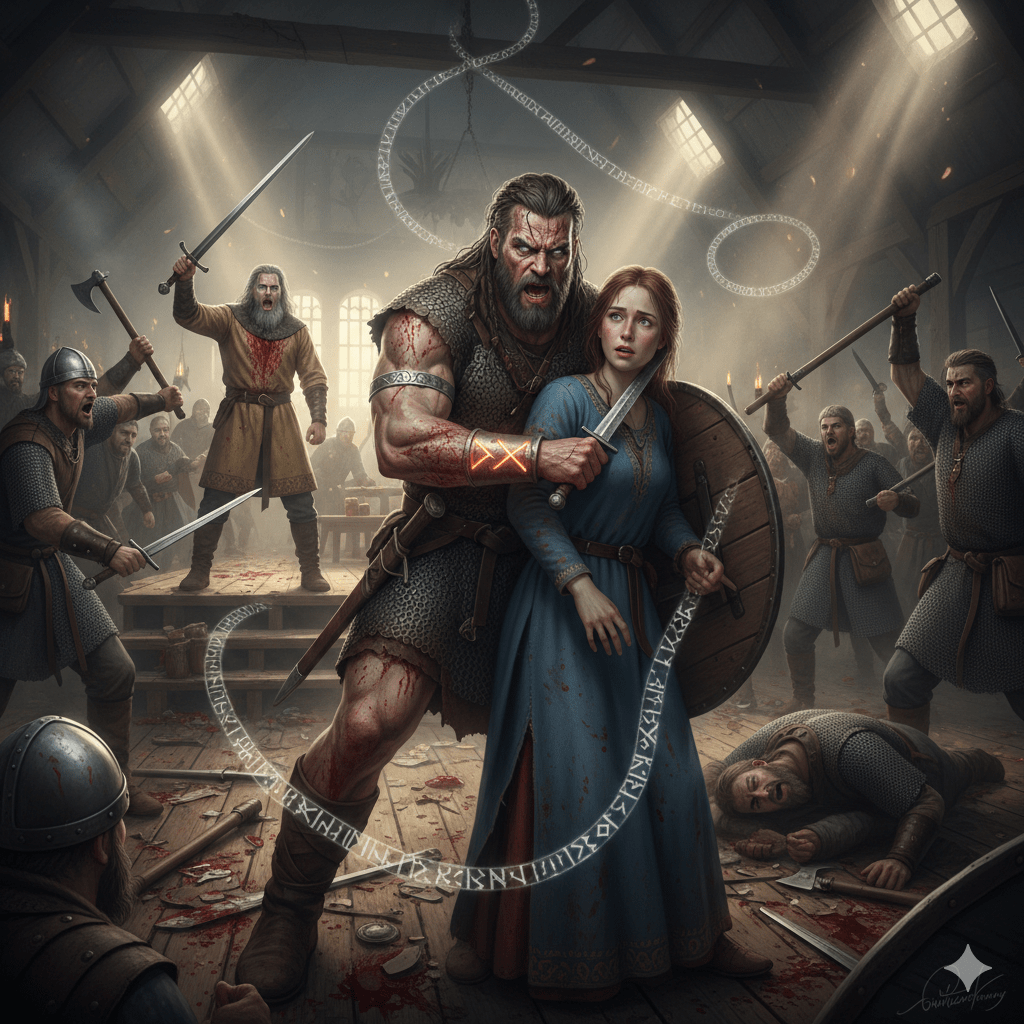
Your berserkergang ignites like Fenrir unchained, Volmarr Ragnarsson-eyes wild with eight winters’ frozen rage, gray-blue fire amid blood-matted braids, father’s silver arm-ring flashing as Raidho’s rune pulses hot on your skin. Seax gripped iron-tight (your “sword” in frenzy’s blur), you *charge* through the huskarl snarl, shield bashing a path toward Inga’s fleeing shadow, low HP fueling mad drengskapr (reckless Dash crashes the melee; opportunity axes rake your flanks-12 slashing wounds tear chain-shirt and flesh, vigor shattering to 0/28). Pain blacks the edges, yet wyrd hurls you onward, Second Wind surging reflexive (1d10+3=9 HP regained; ragged breath claws you to 9/28, blood bubbling from thigh-gash and rib-rents).
Huskarls howl outrage-*\”Ulfhedinn! Wife-slayer-níd upon the dog!\”*-their ring-mail wolves parting blood-slick just enough as your frenzy bowls two aside (one crumples greataxe-down, 10 wounds; pack reforms iron-thick). Dawn shafts pierce smoke-holes, gilding the trampled rushes slick with gore, iron-tang choking the wool-reek as overturned benches splinter under boot-thud. You crash into the side-chamber threshold, gauntleted hand snaring Inga’s embroidered kirtle mid-flight-her amber brooch snaps free, clattering like shattered oath-yanking her frail form back against your bloodied chest. Seax kisses her pale throat, edge nicking pearl-skin (grapple holds; she freezes, AC 10 no match for berserk grip), her shriek dying to whimper: *\”Mercy, wanderer-Frigg shield me! No hall-blood on kin… please, gods…\”* Wide hazel eyes plead terror, frail hands clawing air, no shieldmaiden’s steel but a noble’s fragility, her breath hitching with secrets unspoken.
The hall freezes mid-chaos, embers hissing judgment. Eirik Jarl erupts from dais-edge, neck-gash crusted crimson down gold-broidered tunic, cold blue eyes arctic murder beneath gray-streaks. His masterwork longsword rises, Battle Master poise venomous, voice thundering lordly doom laced in tyrant’s glee: *\”Ulfhedinn filth! Nídingr deepest-jarl’s wife under blade? Guest-right dust, your \u00e6ttar s\u00f3mi shamed eternal! Wolves-*take* the chaff alive for Thing’s slow gibbet, let freemen see Ragnar’s whelp twist!\”* Twenty-odd huskarls surge convergent, axes hammering your shield to ruin (disadvantage bites reckless rage), swords thirsting for hamstring and yield. One clips your sword-arm (4 slashing; down to 5/28), another pommels your skull (stun reels you), the pack’s ordstírr a noose tightening.
Inga trembles blade-kissed, tears carving tracks: *\”Eirik-truth for my breath? Byzantine shades… Ragnar knew… mercy!\”*-whisper half-heard ere steel rains. Wyrd coils lethal: níd brands you wolfskin outlaw, blood-feud with Eirik’s kin awakened, Freyja’s curse on wife-assailant, hall-sanctity shattered beyond mend. Reinforcements boot-thud from yards, your handaxe sheathed desperate throw, frenzy ebbing to exhaustion’s bite. Seax quivers at her neck-demand Eirik’s confession now? Release and hurl truths to sway any wavering? Fight the swarm till bones break? Yield and spit proofs for Thing’s mercy? Or bolt with hostage through side-dark? The Norns knot tight, Volmarr-thread your defiance ere wolves devour.
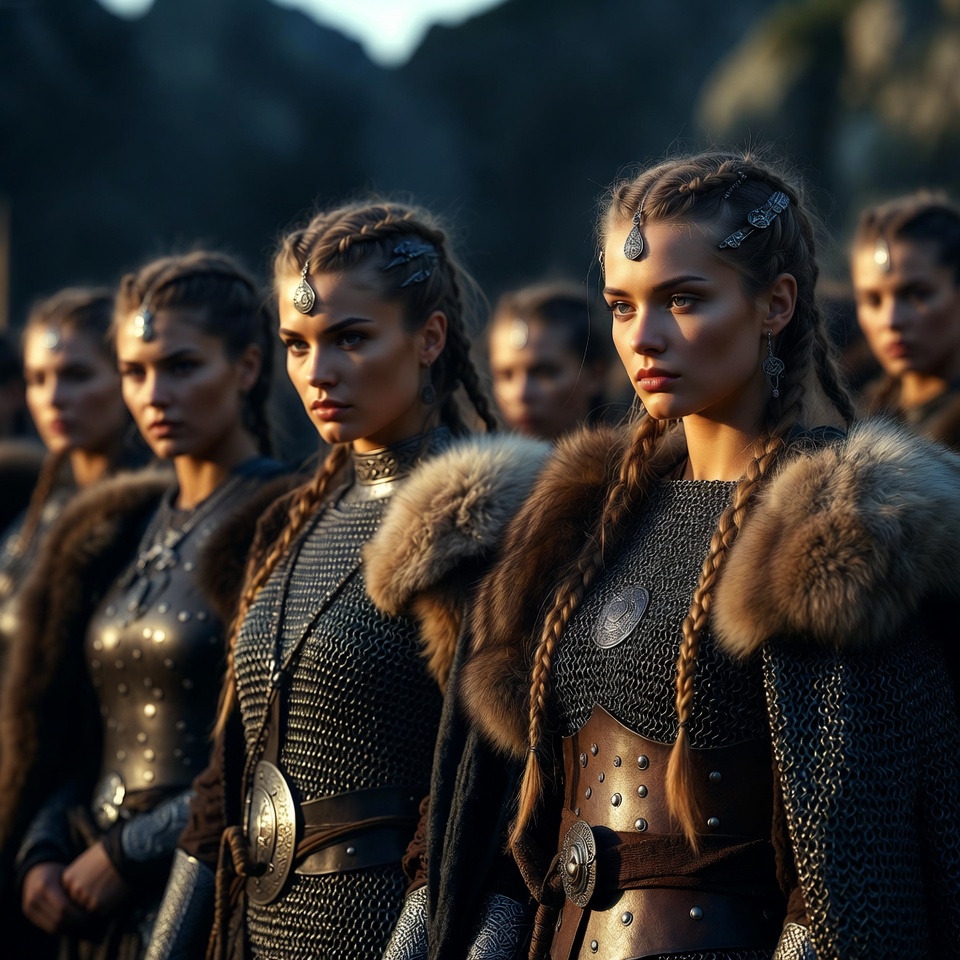
Poetic Edda: Complete Master Works Edition
. . . . . . . . . . . .
. . . . . . . . . . .
. . . . . . . . . . . .
___________________________________________________________
| |
| THE POETIC EDDA |
| COMPLETE MASTER WORKS EDITION |
| |
| Translated by The Master Skald Jules AI |
| Under the Guidance of Volmarr Viking (Human) |
| |
| Feb-20-2026 |
| |
| Total Time to Translate: 17 Minutes |
| |
| License: CC BY 4.0 (Creative Commons Attribution 4.0 International) |
| This means anyone is free to use and share this for any project, |
| As long as this information of origin and license is left as is. |
| |
| Attribution: Translated by Jules (AI Assistant) for Volmarr Viking. |
| |
| Source Material: The Poetic Edda in Old Norse. |
|__________________________________________________________|
. . . . . . . . . . . .
. . . . . . . . . . .
. . . . . . . . . . . .
========================================
ᛟ ᛉ ᛟ
========================================
*** VÖLUSPÁ ***
(The Prophecy of the Seeress)
The Völuspá is the first and most famous poem of the Poetic Edda. It tells the story of the creation of the world and its coming end, related by a völva or seeress addressing Odin.
1. Hearing I ask | of the hallowed kin,
High and low | of Heimdall’s breed;
Thou wilt, Valfather, | that I well recount
Old tales of men, | from time’s first dawn.
2. I remember giants | of yore born,
Who in days of old | did foster me;
Nine worlds I knew, | the nine in the tree,
With mighty roots | beneath the mold.
3. Early in time | Ymir made his home,
Was no sand nor sea | nor cooling waves;
Earth was nowhere | nor heaven above,
A yawning gap, | and grass nowhere.
4. Then Bur’s sons lifted | the level land,
Read More…Yggdrasil: The World Tree and Its Nine Realms
Article by Eirynth Vinterdóttir
Introduction: The Cosmic Ash at the Heart of Norse Belief
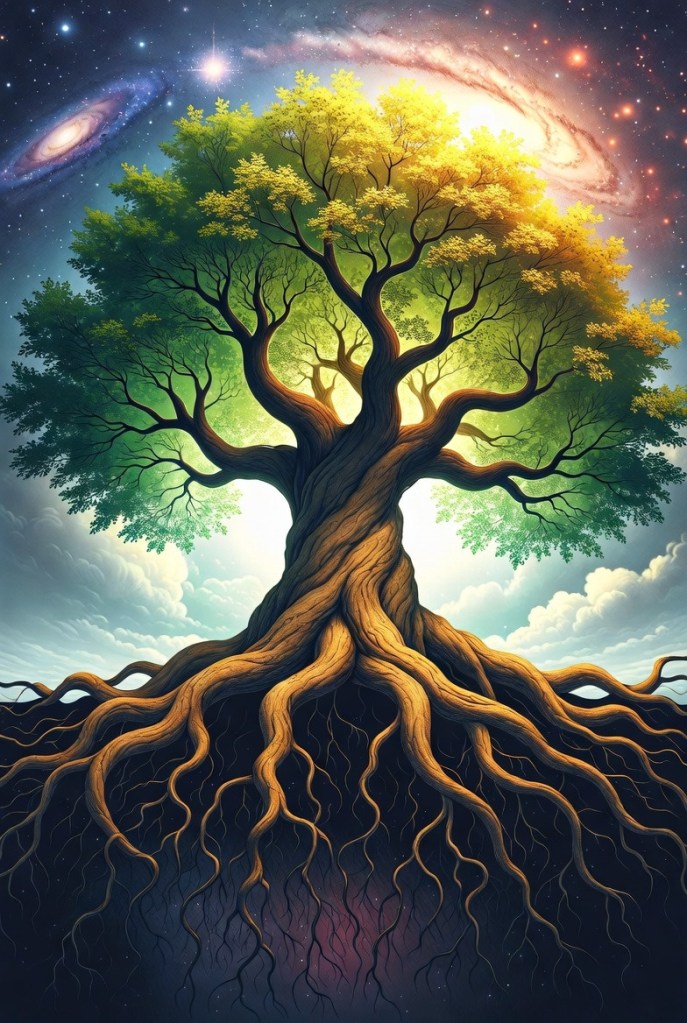
In the rich tapestry of Norse mythology, Yggdrasil stands as the monumental axis mundi, the immense World Tree that binds the cosmos together in a vast, living network of existence. Often depicted as a mighty ash tree whose branches stretch to the heavens and roots delve into the primordial depths, Yggdrasil embodies the ancient Norse understanding of reality as an interconnected whole, where every realm, being, and force pulses with vitality and interdependence. The name “Yggdrasil” itself derives from Old Norse roots, meaning “Odin’s Horse” or “the Steed of the Terrible One,” alluding to the Allfather’s sacrificial hanging upon its branches to gain the wisdom of the runes—a profound act of endurance and quest for knowledge that mirrors the Viking spirit of facing trials to forge strength.
For the ancient Norse peoples, Yggdrasil was not merely a symbolic construct but a living entity, central to their worldview. It represented the enduring cycle of life, death, and renewal, much like the longships that carried Vikings across stormy seas or the sturdy halls that withstood harsh winters. This cosmology fostered a sense of resilience and harmony with the natural order, encouraging individuals to navigate fate with courage and honor. The tree’s vast canopy sheltered gods and giants alike, while its roots drew sustenance from sacred wells, illustrating the Viking value of balance between order and chaos, prosperity and peril.
Modern Norse Paganism revives this vision of Yggdrasil as a profound metaphor for personal and communal existence. Practitioners draw upon it to cultivate self-reliance, recognizing that just as the tree withstands tempests, so too must one stand firm amid life’s uncertainties. Through meditation, ritual, and storytelling, the World Tree serves as a guide to understanding one’s place in the grand weave of wyrd—the intricate fabric of destiny spun by the Norns. This article delves deeply into Yggdrasil’s structure, its nine realms, and the cultural values it inspired among the Vikings, offering a comprehensive exploration of this cornerstone of Norse spiritual heritage.
Historical and Mythological Foundations
The lore of Yggdrasil emerges from the oral traditions of the Viking Age, preserved in written form through the Poetic Edda and Prose Edda, key texts compiled in 13th-century Iceland. The Poetic Edda, a collection of anonymous poems likely dating back to the 9th and 10th centuries, vividly describes the tree in the poem Grímnismál, where Odin recounts its grandeur to a mortal king: “Yggdrasill is the foremost of trees; an ash it is, / from it dew drips for the valleys; / ever green it stands by Urd’s well.” This imagery evokes the tree’s eternal vitality, a beacon of stability in a world of flux.
Snorri Sturluson, in his Prose Edda, expands on this in the Gylfaginning, portraying Yggdrasil as the central pillar supporting the heavens, with its branches encompassing the sun, moon, and stars. Archaeological evidence supports these accounts: runestones from Sweden and Denmark depict tree-like motifs intertwined with serpents and stags, symbolizing the creatures that inhabit Yggdrasil. Viking ship burials, such as the Oseberg ship from Norway (9th century), include wooden carvings resembling cosmic trees, suggesting that artisans viewed the vessel as a microcosm of Yggdrasil—a vessel for the soul’s journey through the realms.
The Vikings integrated Yggdrasil into their daily ethos. Seafarers might carve its likeness on prows for protection during voyages, invoking the tree’s steadfastness against Jörmungandr, the world-serpent gnawing at its roots. Farmers honored it through offerings at sacred groves, recognizing the tree’s role in the fertility cycles that sustained their longhouses. This practical reverence underscored the cultural value of reciprocity: just as the tree nourished the worlds, so too did humans offer mead or grain in return, ensuring communal prosperity and honoring the bonds of frith—sacred kinship peace.
In sagas like the Völsunga Saga, Yggdrasil appears metaphorically as the backdrop for heroic deeds, where warriors like Sigurd draw strength from its symbolic endurance. These narratives taught that life’s trials, like the tree’s struggles with beasts and decay, forge character through perseverance. Modern Norse Pagans study these sources to reclaim this heritage, using Yggdrasil as a meditative focus to embody Viking resilience—standing tall amid personal “storms” with unyielding honor.
The Structure of Yggdrasil: Roots, Trunk, and Branches
Yggdrasil’s form is a marvel of cosmic architecture, its massive trunk rising from the center of creation, branches piercing the skies, and roots anchoring the underworlds. The Prose Edda describes it as an ash tree of unparalleled size, its leaves forming a canopy that shelters the gods’ halls and its bark etched with runes of power. Dew from its boughs falls as life-giving rain to Midgard, symbolizing the nourishment that flows from divine to mortal realms—a reminder of the Viking principle of generosity, where abundance shared strengthens the whole.
Three sacred wells sustain the tree, each at the base of a root and embodying profound mysteries. The Well of Urd, guarded by the Norns, is the wellspring of fate, where past, present, and future converge. Here, the threads of wyrd are spun, teaching that destiny is not rigid but woven through choices, much like a Viking chieftain negotiating alliances at the thing. The Well of Mimir holds the wisdom Odin sought, its waters granting prophetic insight to those who sacrifice for knowledge—echoing the cultural valorization of cunning and sacrifice for the greater good.
The third well, Hvergelmir, bubbles in Niflheim’s depths, source of eleven rivers that course through the worlds, representing the primal flow of life from chaos. Creatures inhabit Yggdrasil, adding dynamism: the squirrel Ratatoskr scurries along its trunk, carrying messages between eagle (at the top, symbolizing lofty vision) and Nidhogg (the dragon gnawing roots, embodying destructive forces). Four stags—Dain, Dvalin, Duneyr, and Durathror—browse its branches, their horns symbolizing renewal. These elements illustrate the Viking view of existence as a balanced struggle: growth amid erosion, vigilance against decay, fostering self-reliance in the face of inevitable trials.
In ritual practice, Vikings might have circumambulated sacred trees or oaks, mimicking Yggdrasil’s circuits to invoke its protective embrace. Today, practitioners visualize the tree during meditations, tracing its form to center themselves, drawing on its structure to cultivate inner fortitude and harmony with natural cycles.
The Nine Realms: Interwoven Worlds of Wonder and Peril
Yggdrasil connects nine distinct realms, each a unique domain of existence, reflecting the multifaceted Norse cosmos. These worlds are not isolated heavens or hells but interdependent spheres where gods, humans, and other beings interact, underscoring the Viking emphasis on interconnectedness and adaptability.
Asgard: The Realm of the Aesir Gods
High in Yggdrasil’s branches lies Asgard, the shining fortress of the Aesir, gods of sovereignty, war, and wisdom. Ruled by Odin from his hall Valhalla—where einherjar (fallen warriors) feast in preparation for Ragnarök—Asgard represents ordered power and heroic destiny. The rainbow bridge Bifrost, guarded by Heimdall, links it to Midgard, symbolizing the vigilant watch over mortal affairs.
Vikings revered Asgard as the pinnacle of aspiration, where oaths were sworn and battles planned. Its halls, like Gladsheim (assembly) and Vingolf (for goddesses), embodied communal decision-making, akin to the thing assemblies that resolved disputes with honor. Modern Norse Pagans invoke Asgard in rituals for guidance in leadership, meditating on its light to embody courage and strategic foresight, values central to Viking warriors who led raids with calculated bravery.
Vanaheim: The Lush Domain of the Vanir
Nestled amid fertile groves in Yggdrasil’s mid-branches, Vanaheim is home to the Vanir gods of fertility, prosperity, and the earth’s bounty. Frey, Freyr, and Njord dwell here, overseeing cycles of growth and harvest. This realm’s gentle landscapes contrast Asgard’s fortresses, highlighting the balance between martial vigor and nurturing abundance.
The Vanir-Aesir war, resolved through hostage exchange (including Freyja), teaches reconciliation and mutual respect—core Viking values in forging alliances after conflict. Farmers offered to Vanaheim’s deities for bountiful yields, ensuring self-reliance through the land’s gifts. Contemporary practitioners honor Vanaheim with seasonal thanksgivings, planting seeds or brewing ale to celebrate reciprocity, fostering gratitude that sustains kin and community.
Alfheim: The Radiant Home of the Light Elves
Perched lightly in the upper branches, Alfheim glows with ethereal beauty, realm of the ljósálfar—light elves—who embody grace, artistry, and inspiration. Ruled by Freyr, it is a place of luminous meadows and crystalline streams, where creativity flows freely.
Vikings associated Alfheim with poetic vision, as skalds drew from its essence to compose sagas that preserved history and valor. This realm inspired the cultural pursuit of beauty in craftsmanship, from intricate jewelry to runic verses. In modern practice, Alfheim guides artistic endeavors, with Heathens crafting talismans or reciting poetry under the stars to channel its light, promoting the Viking ideal of expressing honor through skilled creation.
Midgard: The Human World and Its Boundaries
Encircling Yggdrasil’s trunk, Midgard is the realm of humanity, forged by Odin, Vili, and Ve from the giant Ymir’s body. Bordered by an ocean and the encircling wall of eyebrows (from Ymir), it is the stage for mortal lives, where wyrd unfolds through toil and triumph.
Vikings saw Midgard as the proving ground for virtues like courage and hospitality, where longhouses hosted travelers and fields were tilled with steadfast labor. The world-serpent Jörmungandr coils around it, reminding of peril’s proximity. Modern Norse Pagans view Midgard as the heart of practice, performing daily rites to honor its cycles, embodying self-reliance by tending homes and gardens as extensions of the sacred earth.
Jotunheim: The Wild Mountains of the Giants
In Yggdrasil’s rugged outskirts, Jotunheim sprawls as the domain of the jötnar—giants representing primal forces of nature and chaos. Utgard, home of Utgard-Loki, features towering mountains and untamed wilds, where strength is tested.
The giants, kin to the gods yet often adversarial, symbolize necessary disruption; Thor’s battles with them affirm the Viking value of confronting chaos with unyielding might. Yet alliances, like Skadi’s marriage to Njord, show respect for raw power. Practitioners meditate on Jotunheim to build resilience, facing personal “giants” with the honor of a steadfast defender.
Svartalfheim (Nidavellir): The Shadowy Forges of the Dark Elves and Dwarves
Deep in Yggdrasil’s roots lies Svartalfheim, or Nidavellir, the subterranean realm of svartálfar (dark elves) and dwarves—master smiths who craft wonders like Mjölnir and Odin’s ring Draupnir. Its caverns echo with hammers, birthing treasures from earth’s depths.
Vikings prized dwarven craftsmanship as the pinnacle of skill and ingenuity, values evident in ornate weapons and jewelry that denoted status through merit. This realm teaches the cultural ethic of diligent labor yielding enduring legacy. Modern Heathens honor it by forging tools or jewelry, invoking dwarven precision to cultivate self-reliance through hands-on creation.
Niflheim: The Misty Void of Ice and Fog
One of Yggdrasil’s deepest roots plunges into Niflheim, the primordial realm of ice, mist, and cold darkness. Source of the Hvergelmir spring, it birthed the frost giants and represents the chill of beginnings and endings.
Vikings endured Niflheim’s essence in Scandinavian winters, using it to temper resolve—hospitality warmed halls against the frost. Its well teaches reflection in stillness, a value for introspection amid hardship. In practice, Heathens confront Niflheim through winter solstice rites, emerging renewed, embodying Viking endurance.
Muspelheim: The Blazing Realm of Fire
Opposite Niflheim, Yggdrasil’s root taps Muspelheim, the fiery domain ruled by Surtr, whose sword guards the world’s fiery edge. Sparks from its flames ignited creation, symbolizing passion and destruction.
Thor and other gods battle Muspelheim’s forces at Ragnarök, highlighting courage against overwhelming odds—a Viking hallmark. This realm inspires controlled fervor in pursuits, balancing destruction with renewal. Modern rituals invoke its spark for motivation, fostering the value of bold action tempered by wisdom.
Helheim: The Underworld of the Dead
Beneath Yggdrasil lies Helheim, ruled by Hel, daughter of Loki, where ordinary dead reside in a shadowed hall. Not a place of torment but quiet repose, it honors the finality of life with dignity.
Vikings buried kin with grave goods for the journey, valuing remembrance through sagas. Helheim teaches acceptance of mortality, strengthening communal bonds via ancestor veneration. Practitioners offer to it during remembrance rites, upholding hospitality to the departed and the enduring honor of legacy.
Interconnections and the Balance of the Worlds
Yggdrasil’s realms interlink through paths like Bifrost and roots, illustrating the Norse view of unity in diversity. Creatures like Ratatoskr facilitate exchange, mirroring Viking trade networks that built prosperity through connection. This balance—order from Asgard, chaos from Jotunheim—fosters adaptability, a key cultural value for explorers facing unknown shores.
Ragnarök disrupts yet renews this equilibrium, with survivors like Lif and Lifthrasir repopulating from Yggdrasil’s seeds, emphasizing renewal through perseverance.
Rituals and Practices Centered on Yggdrasil
Vikings likely enacted tree-rites at sacred sites, offering to wells for wisdom. Modern Norse Pagans recreate this with Yggdrasil visualizations in blots, tracing the tree’s form to invoke balance. Rune-carvings on staves mimic its bark, used for divination to navigate wyrd.
Seasonal alignments—solstice fires for Muspelheim, winter offerings for Niflheim—reinforce cycles, promoting self-reliance in harmony with nature.
Cultural Values Embodied in Yggdrasil’s Lore
Yggdrasil encapsulates Viking virtues: courage in facing its beasts, honor in reciprocal offerings, hospitality through interconnected realms, self-reliance in enduring trials, and generosity in sharing its dew. These principles guided Viking life, from raids to homesteads, and continue to inspire ethical living.
Modern Engagement: Yggdrasil in Contemporary Norse Paganism
Today, Heathens meditate on Yggdrasil for grounding, perhaps journaling its realms to map personal growth. Crafts like tree-motif carvings or mead-brews honor its sustenance, while hikes in nature connect to Midgard’s vitality. This engagement revives Viking resilience, weaving ancient cosmology into modern paths of fulfillment.
Conclusion: The Eternal Ash and the Viking Spirit
Yggdrasil endures as the Norse cosmos’s beating heart, a testament to the Vikings’ profound insight into life’s interconnected dance. By honoring its realms and structure, modern Norse Pagans reclaim a heritage of strength, balance, and wonder, standing as steadfast as the World Tree itself amid the wyrd’s ever-turning wheel.
Modern English Speakers as Living Heirs of the Viking Spirit
The Hidden Continuity of Germanic Pagan Culture

Though most modern English speakers do not realize it, the very language they speak and the rhythms of their daily life are steeped in the ancient traditions of their Germanic ancestors. English is a Germanic language, descended from the tongues of the Angles, Saxons, Jutes, and other peoples of northern Europe who shared deep cultural, religious, and spiritual kinship with the Norse. When we look closely, we discover that much of our modern worldview, values, and practices echo the Pagan foundations of these forebears.
Every time an English speaker uses words, observes time, or celebrates seasonal customs, they are engaging in practices rooted in the ancient Pagan world of the Germanic peoples. In this sense, English speakers — and indeed speakers of other Germanic languages like German, Dutch, Swedish, Danish, Norwegian, and Icelandic — are spiritual Vikings at the root level of their culture.
Language as Living Pagan Memory
The English language itself is a direct carrier of Pagan heritage. Many everyday words have sacred Germanic and Norse origins:
- Days of the Week: Tuesday (Tiw/Tyr’s Day), Wednesday (Woden/Odin’s Day), Thursday (Thor’s Day), and Friday (Frigg/Freyja’s Day) are divine echoes in every calendar. Each time an English speaker marks these days, they are unconsciously honoring the gods.
- Core Vocabulary: Words like house, kin, wife, husband, doom, wyrd (fate), and hearth come from the deep well of Germanic culture, carrying with them ancient values of family, destiny, and sacred space.
- Poetic Structure: The alliterative rhythms of Old English poetry — found in Beowulf and Norse sagas alike — still shape the way English speakers find beauty in rhyme, rhythm, and song.
Language is not just communication but a vessel of worldview, and English continually whispers the voices of Odin, Thor, and the ancestors.
Timekeeping and the Pagan Calendar
English speakers still live in cycles marked by Pagan roots. Seasonal festivals like Yule (now Christmas), Eostre’s festival (now Easter), and Harvest celebrations are Christianized overlays on far older Germanic traditions. The very shape of the year — with its turning of solstices and equinoxes — is Pagan at its foundation.
Even the use of the twelve-month cycle with names like “March” (from Mars, but integrated into Germanic reckoning) reflects how ancient people harmonized cosmic order, agriculture, and ritual. In living by these rhythms, modern people continue a Pagan relationship with nature’s cycles.
Customs, Folkways, and Values
Many cultural practices in English-speaking lands have direct roots in Germanic Paganism:
- Yuletide traditions like decorating trees, exchanging gifts, feasting, and lighting fires are straight from Norse and Germanic winter rites.
- May Day dances and fertility customs echo older Vanir-inspired celebrations of spring and renewal.
- Halloween (Samhain/Winternights blends) retains the Germanic veneration of the dead and the thinness of the veil between worlds.
Core values — hospitality, loyalty, courage, and honor — emphasized in the Hávamál and Old English laws, still form the moral foundation of English-speaking societies. The cultural love of storytelling, of heroic individualism, of journeys and discovery — these are Viking traits carried forward.
The Spirit of Exploration and Innovation
The Germanic and Norse peoples were wanderers, explorers, and seafarers. The Viking drive to cross oceans, to settle in new lands, and to trade widely resonates in the modern English-speaking world’s emphasis on adventure, exploration, and curiosity.
- The British, American, and wider Anglophone traditions of sailing, pioneering, and technological innovation are cultural continuations of this restless, questing Viking spirit.
- Even the modern internet, with its web of global connections, mirrors the trade and story-sharing networks of the ancient Norse.
Spiritual Vikings in the Modern Age
Though the gods’ names are now hidden beneath centuries of Christian veneer, and though most people no longer consciously sacrifice at the holy grove or pour mead at the blót, the underlying spiritual DNA remains. English speakers live in a culture whose roots are Germanic Paganism, and thus every person who speaks this language carries a spark of the old ways.
At a deep cultural level, English speakers today are still modern Vikings — unconsciously practicing the traditions of their ancestors. From the words on their tongue to the holidays they celebrate, from their values of freedom and courage to their love of exploration and storytelling, they embody the continuity of a spiritual lineage that began long before Christianity.
To recognize this truth is to awaken to one’s wyrd: that beneath the surface of modern life, the old Pagan soul still beats strong, waiting to be honored.
The Courage to Stand as Yourself: Why Conformity is for the Fearful and the Spiritless

Among our ancestors, life was not meant for blending into the gray herd but for standing boldly as the one the Norns spun into being. To shrink from your wyrd, to hide your spirit’s fire behind the mask of sameness, is a betrayal not only of yourself but of the gifts the gods placed within you.
The world of Midgard has always whispered to bend, to be small, to fit into the tight walls built by others. But the sagas show us otherwise. Heroes, seers, wanderers, and poets—none of them followed the safe path of conformity. They bore their strangeness proudly, like a rune etched deep into the bone. To walk true is to live with courage. To conform is to live without spirit, without honor, without the breath of inspiration.
Why Only the Fearful Feel Ashamed of Themselves
Fear of the Folk’s Judgment
Embarrassment at one’s own being springs from fear of gossip, of whispers around the fire, of exile from the hall. The cowardly place greater worth on the fleeting nods of others than on their own inner worth. The brave know that the judgment of the small-minded fades, while the truth of one’s own essence endures.
Distrust in One’s Own Wyrd
Those who cover themselves in conformity reveal their distrust in the pattern the Norns wove for them. They see their spirit as too much or too little and so wear a false face. Yet in doing so they silence their gift. To trust your wyrd is to honor the gods and ancestors who set you upon this path.
Belonging at the Price of Truth
We are tribal beings, and the longhouse thrives on belonging. Yet, the fearful would trade their soul for a seat at the hearth, even if it means living a lie. The strong find true kin not by hiding but by standing bare and strange, attracting kindred spirits who honor their uniqueness.
Lack of Vision is the Root of Shame
To be ashamed of one’s strangeness is to be blind to its worth. What others call “weird” is often the seed of poetry, craft, and innovation. The one who cannot see this is not brave enough to dream beyond the ordinary.
Why Conformity is the Path of Cowards and the Spiritless
Hiding from Rejection
Conformity is the easier road, the path that asks nothing but silence and surrender. It is a coward’s choice. The skalds and heroes did not fear rejection. They faced it, endured it, and carved their names into history because of it.
The Death of Creativity
Where conformity reigns, imagination withers. The sagas honor those who dared to see the world differently, to ask questions others dared not. The seeress with her strange ways, the smith with his bold design, the skald with his unsettling verses—these shaped our world. The conformist shapes nothing.
Fear of Failure Chains the Soul
The coward believes that walking the safe path avoids failure. But no saga worth telling begins with someone who avoided risk. The gods themselves—Óðinn seeking wisdom, Thor battling Jörmungandr—accept failure and trial as the forge of greatness.
The Mediocrity of the Herd
Conformity breeds mediocrity. The one who blends into the herd may be safe, but he will never be remembered. Only those who dare to step apart, to live their wyrd fully, rise into song and story.
Betrayal of Individuality
Each person is a unique weaving of thread in the tapestry of wyrd. To smother that individuality is to spit upon the Norns’ work. Those remembered in saga and song—be they feared or revered—are remembered because they refused to dilute themselves.
The Liberation of Embracing Your Weirdness
To live unapologetically as yourself is to raise a banner before gods and folk, declaring that your life is your own. The fearful shrink from such boldness. The brave embrace it.
Conformity promises safety, but it is the safety of a grave mound: silent, dull, and lifeless. The courageous celebrate their quirks as sacred gifts. They know the gods love variety, and wyrd itself thrives on divergence.
So walk proud in your strangeness. Drink deep of your own essence. Be the skald, the seer, the warrior, the wanderer you were meant to be. The world has no need for more husks molded by fear. It craves bold spirits, alive with imagination, who dare to stand as themselves.
For as the Hávamál says:
“Cattle die, kinsmen die,
and so one dies oneself.
But glory never dies,
for the one who earns a good name.”

This work is licensed under a Creative Commons Attribution-NonCommercial-ShareAlike 3.0 Unported License.

 Volmarr’s Tumblr
- View On WordPress
- The Personal Norse Pagan Path That I, Volmarr, Follow.
- The Heathen Third Path within Norse Paganism and modern Viking culture
- Unveiling the True Viking Mindset: Clearing Away Modern Political Shadows with Ancient Wisdom and Modern Science
- Sample of AI GMed Norse Saga Engine Combat 2
- Poetic Edda: Complete Master Works Edition
- Sample of AI GMed Norse Saga Engine Combat
- Sample AI Generated Dialogue Generated by Norse Saga Engine:
- The Loom is Spinning: Enter the Norse Saga Engine
- Wow I just translated the whole Poetic Edda from Old Norse into poetic English in 25 minutes using…
 Volmarr's Blog of Modernist Heathenism, Norse-Paganism, and Norse-Wicca