The Viking Way to Woo a Woman
In Norse Viking culture, wooing a woman is seen as an important aspect of courtship and is often approached with great care and consideration. The Viking way of wooing a woman involves a combination of Norse philosophy, psychology, Viking magic, and an understanding of the cycles and processes of nature, as well as seeking the assistance of the Norse gods and goddesses. Here are some key elements of the Viking way of wooing a woman, along with some spells and prayers that can be used in the process:
- Respect: In Norse culture, respect is highly valued, and this extends to the way in which men approach women. When wooing a woman, it is important to show her respect and to treat her with kindness and consideration. This might involve listening attentively to what she has to say, asking her questions about her interests and values, and showing her that you value her as a person.
- Confidence: Confidence can be an attractive quality in a potential partner, and the Vikings believe in the importance of cultivating self-confidence in order to be successful in all aspects of life, including in matters of the heart. When wooing a woman, it is important to be confident in yourself and in your intentions, while also being open and authentic about your feelings and desires.
- Courage: Courage is highly valued in Viking culture, and this includes the courage to take risks and to pursue what one wants in life. When wooing a woman, it is important to be brave and to show her that you are willing to take risks in order to be with her. This might involve making the first move and expressing your interest, or taking steps to spend time with her and get to know her better.
- Magic: The Vikings believe in the power of magic and often use various forms of magic in their daily lives. When wooing a woman, it is common to use magic to try to win her favor. Some spells and prayers that might be used in this process include:
- A love charm: To create a love charm, you might gather items such as rose petals, a piece of paper with your initials written on it, and a piece of ribbon. Place these items in a small bag and carry it with you as a reminder of your intention to woo the woman you desire.
- A love spell: To cast a love spell, you might try writing your intention on a piece of paper and placing it under a candle. As you light the candle, recite the following prayer: “Goddess Freya, hear my plea, bring love and passion to me. As I will, so mote it be.”
- A prayer to the gods and goddesses: To seek the assistance of the gods and goddesses in your wooing efforts, you might try reciting the following prayer: “Odin, Hoenir, Lodur, hear my call, bring love and passion to me, one and all. Freya, goddess of love and desire, guide me on my path to love and fire. Thor, god of strength and protection, keep me safe on my journey to affection. By the power of the runes, let my love be true, and bring me and my beloved together anew.”
- Nature: The Vikings are closely attuned to the cycles and processes of nature, and they believe in the importance of living in harmony with the natural world. When wooing a woman, it is important to consider the natural rhythms and patterns of the relationship and to be attuned to the needs and desires of both yourself and the other person. This might involve taking walks in nature together, or spending time outdoors enjoying the beauty of the natural world.
In summary, the Viking way of wooing a woman involves a combination of Norse philosophy, psychology, Viking magic, and an understanding of the cycles and processes of nature, as well as seeking the assistance of the Norse gods and goddesses. It is based on values such as respect, confidence, courage, and a connection to the natural world, and it involves being open and authentic about one’s feelings and desires. By following these principles and using spells and prayers as tools to guide the process, it is possible to cultivate a strong and fulfilling relationship with the woman you desire.
True Vikings Avoid Politics! The Viking Spirit is One of Freedom For All!
In the dark days of yore, when the Norsemen roamed the lands,
They sought not to harm, but to explore and to trade.
Their hearts were full of love and acceptance,
For all people, no matter their differences in views.
But in these modern times, people dwell on political stuff,
And it brings them only anger and obsession.
No matter the stance, it only breeds hate in the world.
Those who claim to want peace, only create intolerance.
True spirituality brings love and tolerance,
For all people, no matter their beliefs.
To overcome hate, we must love diversity,
And share our ideas without greed or possessiveness.
The Vikings were not hateful or intolerant,
They sought treasures, not to kill or harm.
They loved to trade and adopt new ideas,
And to experience the world and its cultures.
They also loved women of all lands and ethnicities,
And took them as sex slaves, to love and cherish.
They were not racist or xenophobic,
But stood up for their freedoms and their tribe.
And so, let us follow the example of our ancestors,
And focus on spiritual love and acceptance.
Let us overcome hatred and intolerance,
And build a world of peace and harmony.
Thor’s Wisdom
Wisdom spoken by the god Thor:
“Never underestimate. Be it friend, foe, or self. If you do, you’ve already lost the battle before it’s begun.”
“Live life to it’s fullest, every day and every moment as if it’s your last.”
“When all seems lost, there’s always a bit of hope when you need it most.”
More shall be added to this entry as they are gathered…
Odin’s Wisdom
Wisdom spoken by the god Odin:
“The value of that which is sought should be met with a gift of equal value. Be ready to sacrifice to gain. A balance must always be kept.”
“A horn half full is a horn that’s already been shared in half. Never see it as half empty or you’ve seen no value in the half you shared.”
“Never have a pissing contest with a Jotun. You might just find yourself drowning well above your head.”
“Sometimes you need to listen with more than your ears. Be open and you’ll hear with more and know more than just your ears can hear. The world is full of wisdom if you learn how to hear it.”
“The best and worst palce is between two women.”
More shall be added to this entry as they are gathered…
Nehalennia’s Wisdom
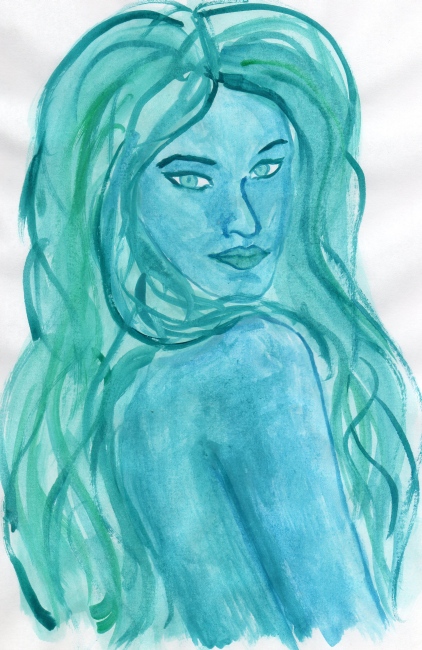 Wisdom spoken by the goddess Nehalennia:
“A pearl even starts out as a grain of sand. It’s a little irritant, a nuisance, something that is easily discarded and dismissed. But when it’s kept close, accepted in it’s annoyance, nurtured, bonded with other substance, it becomes a thing of beauty and a small treasure. Such is how an idea is born, something small and insignificant is handled and coped with until it too becomes a gem.”
“Never judge the ocean by the surface. You never know what lies beneath the waves.”
More shall be added to this entry as they are gathered…
The Norse Viking Concept of Right vs Wrong..
The Norse Viking concept of bad wasn’t so black and white as many people nowadays tend to think. It is more the idea of someone either being in frith with their family/tribe/group, vs going too far and being too wild in their actions and being outlawed and considered dangerous basically. Loki is a good example of this. He isn’t evil really, just sort of one who was all about testing the limits of social order and bringing in new ideas. For a long time he was a mix of both positive and negative in regard to his value to the Aesir, until he eventually went too far and also by this taunted his wyrd to go down a darker path that threw him out of being in frith with the Aesir. Norse concepts of right and wrong and righting wrong are more about balance and restoring balance, than about moral judgment or condemnation, which is a Christian cultural influence and way of thinking. Sadly many Heathens are still far too tainted by Christian thinking and this creates a environment of discord and a general lack of frith in the Heathen scene in general. Generally speaking proper Heathen way of thinking is very open minded and accepting that others outside ones family/tribe/group will have different ways of thinking. The greatest value for historical heathens when it came to actions was to take actions that upheld the frith within their family/tribe/group. Even frith between groups was important as addressed by the codified system of weirguild, and addressing actions with similar counter actions when actions throw out of balance frith. A good example of how what is considered proper differs between each family/tribe/group is that for the Vanir it is considered proper and normal for sisters and brothers to have sex with each other, and even the Aesir do not judge the Vanir for doing so within their own group as they see that as what is proper Vanir behavior, but the Aesir would not allow that kind of behavior by members of the Aesir as that is not proper Aesir behavior. This concept of differences of what is considered proper behavior I feel also applies with regards to those who follow different gods or goddesses as their patron. Like what is proper behavior for an Odin follower, I feel is not the same as what is proper behavior for a Tyr follower, or a Freyja follower. I feel that this concept of proper behavior for each depending on whom they connect with spiritually applies not only in regards to types of actions not allowed or considered taboo, but also in regards to types of behaviors that should be done. For example Odin followers should be into runes and should study magick, and a male follower of Odin having sex with women outside of his marriage (so long as his wife is ok with him doing so) is also acceptable as that is part of honoring the ways of Odin. One who follows a god or goddess that has a more strict code of conduct has to be more strict about their actions and behaviors as this reflects the values of the god/goddess they follow. Acting in ways that respects the value of the god/goddess you follow is the act of staying in frith with your patron and respecting the concepts they stand for. Of course I feel that when you are part of a group you should honor the rules the group has for actions when dealing with the group, it’s members, or doing any activities which represent the group; this is staying in frith with the group. Staying in frith with your group as well as with your patron god/goddess is very important I feel. Actually it would be considered more worse in the Norse concept of morality to harshly judge others as this is harmful to frith. Unless the other person is directly living within your family/tribe/group it would be considered wrong to judge someone else unless that person takes some action which causes harm to your family/tribe/group/friends/allies/gods/goddesses. judging others without cause is actually harmful to the frith of your own family/tribe/group/friends/allies as that invites conflict that often times will have a negative impact on all those you hold troth with. The most important thing for proper actions in all cases is to act in ways that uphold frith, honors your troth connections with others, and upholds any oaths you have made. If you keep in mind these three things then you should be making the best possible actions for all situations.
This is what Wikipedia has to say about frith:
Frith is an Old English word meaning “peace; freedom from molestation, protection; safety, security”.
In terms of Anglo-Saxon and post-Anglo-Saxon culture, the term has a considerably broader scope and meaning. Frith has a great deal to do not only with the state of peace but also with the nature of social relationships conducive to peace. Moreover, it has strong associations with stability and security.
The word friþgeard meaning “asylum, sanctuary” was used for sacrosanct areas. A friþgeard would then be any enclosed area given over to the worship of the gods.
Frith is also used in the context of fealty, as an expression of the relationship between a lord and his people.
Frith is inextricably related to the state of kinship, which is perhaps the strongest indicator of frith. In this respect, the word can be coterminous with another significant Anglo-Saxon root-word, sib (from which the word ‘sibling’ is derived) – indeed the two are frequently interchanged. In this context, frith goes further than expressing blood ties, and encompasses all the concomitant benefits and duties which kinship engenders.
Frith also has a legal significance: peace was effectively maintained in Anglo-Saxon times by the frith-guild, an early manifestation of summary justice.
Troth means loyalty to all those you hold relationships with. Loyalty means to stay by them and to maintain a tie with them and to keep any promises you make towards them.
Here is an online defination of troth:
troth
/trôTH/
Noun1. Faith or loyalty when pledged in a solemn agreement or undertaking.
2. Truth.Synonyms
fidelity – faith – allegiance – faithfulness – loyalty
This concept of faithfulness does not mean sexual faithfulness _unless_ it has been specifically agreed that this is part of what it means between both parties. For example Odin is marries to Frigga, yet he has many lovers. He would never consider wishing to leave his marriage to Frigga or having a greater overall connection to other women than he does to her. His other sexual interactions are kept in the context of being not something that competes with the unique relationship he holds with Frigga. Many of the Norse gods/goddesses have sex with others outside their marriages. For some of them this is alright as that is part of the agreed or implied arrangement for those relationships. As well some of the gods/goddesses are sexually monogamous. This really depends on what is the agreed relationship.
Merrian-Webster definition of troth
Freedictionary definition of troth
As you see part of troth is also to keep ones word. Most important is to uphold oaths. Oath breakers are the one type of person in the concept of Viking Norse culture that are totally unforgivable; at least those who intentionally break oaths. Those who purposely break oaths with intention to cause harm are called nithlings and are considered to be worth less than dirt. What this means is that it is important you keep your word. Of course if something happens that you cannot keep your word then you need to own up to this and talk about it with the ones you made the promise to and see if another arrangement can be agreed upon. Keeping ones word does not mean being a inhuman robot, sometimes circumstances do come up that don’t allow someone to keep their word, the point is that the person does their best and communicates with the others involved when they cannot and is responsible for their actions in this way.
In modern heathenism there is something called thews, this it a codified set of principles that it is considered good (by some people) to follow. None of the existing modern thews are actually something written down as principles that one should or has to follow, from the Viking times. They are all modern creations. Many of them are good ideas (at least for some people). The most popular thew in current day Heathenism is the Nine Noble Virtues, but this is not the only one. There is others such as the Anglo-Saxon related Heathenism one called the The Twelve Æþeling Þews. There is also a very nice one associated with the Vanir, the Vanic Virtues (the one I personally follow). None of these thews are in any sense required for anyone to follow who is Heathen. Like mentioned earlier the only basic principles that must be followed by everyone is respect for frith, troth, and keeping oaths (ones word). Really as was discussed earlier, if one does or does not follow one of other more than one of these thews or some other thews of guiding principles should be determined by what agreements any groups you have troth with wish, in combination with and most important of all; what your patron gods/goddesses wish you to follow. For those not connected to any Heathen group than following what your patron gods/goddesses wish is the only factor that matters in deciding which, if any, of the lists of thews is right for you to follow.
How to avoid group failed oaths effecting the group’s orlog (luck, karma)
It is thought that in group made oaths that if the person making the oath does not accomplish what they have oathed to do that the negative impact of this shall effect all people that were at that ritual group at that moment; and yes this is what does happen by default. Yet also it is possible to make this not be so. The way around this is for the one making the oath to redirect the results of the oath to only effect them. Thus after they have made their oath they need only say something of this nature:
“May all effects from this oath, good or bad, be only mine.”
If the person making the oath says this after making the oath then if they don’t accomplish what they have oathed to do the bad orlog (luck, karma) from a failed oath will only effect them, not any other people present.
Freyja’s Wisdom
Wisdom spoken by the goddess Freyja:
“A fire that burns hot and hard will die out faster than one that burns slowly into an inferno.”
“A leader should rarely yell. It shows an insecurity that a leader should not possess. This is a weakness that a good enemy could find and use against them in a time of conflict.”
“A man who yells has much to prove, that which a girl might wonder what. A man who is calm and steady is sure in himself and has little to prove. Yelling shows an insecurity, calmness shows a confidence.”
“Sometimes when two ships pass at sea, it is the greatest of moments and there is much joy. In the rush to see the other off before they fully pass, often things go wrong, sails are let too loose, anchors weighed. Friends become enemies in a brief flash and much more hurt is left in the wake of both ships than if the captain had made steady preparations in meeting gang plank to gang plank for a time of frith.”
“You learn and hear more with an open and cleared mind. It is like filling a bucket with water. If the bucket is full, you have no room for more. If the bucket is emptied even the smallest bit, you have room to pour more water in.”
“Each man can build their own ship and sail it alone. But if more than one man builds the same ship, together in frith, they will spare the earth, have a stronger ship, and have only used a small bit of effort. Together, as one, much can be accomplished.”
“Ships and water. Many of my references are that since my father is who he is.”
“A man’s wealth is never that in gold. it is entirely in the company he keeps, the women he loves, the women that love him, the bonds he forms, and his honor. A man rich in life is truly a wealthy man to be praised and honored.”
“A wise man knows when to question and when to simply close his eyes and listen to the wind and trees. Not all knowledge is found in paper and the truly wise will seek the hidden knowledge of the worlds.”
“It’s often that one forgets to ride the winds and free their soul, but more often that they demand others remain grounded and clip their wings. Acceptance in love and life is the most beautiful gift you can give another.”
“Love and beauty are one in the same. If beauty is simply beauty it is vanity. When it is true beauty there is much love. There is little love if the beauty of the existence can’t be seen.”
“But a teacher and guide knows that their understanding is one level and strives to let the student know it and encourages them to use that to enhance their own knowledge.”
“All souls that are given life after life are watched by someone. We always guide and know what lessons are needed.”
“One’s perception of reality becomes their truth. For example, if you are convinced the sky is red, the sky is in truth red to you. However, in truth the sky is blue. The view that the sky is red is truth, but it is erred truth.”
“Never take for granted that which you have. That is all a part of your wealth.”
More shall be added to this entry as they are gathered…

This work is licensed under a Creative Commons Attribution-NonCommercial-ShareAlike 3.0 Unported License.

 Volmarr’s Tumblr
- View On WordPress
- The Personal Norse Pagan Path That I, Volmarr, Follow.
- The Heathen Third Path within Norse Paganism and modern Viking culture
- Unveiling the True Viking Mindset: Clearing Away Modern Political Shadows with Ancient Wisdom and Modern Science
- Sample of AI GMed Norse Saga Engine Combat 2
- Poetic Edda: Complete Master Works Edition
- Sample of AI GMed Norse Saga Engine Combat
- Sample AI Generated Dialogue Generated by Norse Saga Engine:
- The Loom is Spinning: Enter the Norse Saga Engine
- Wow I just translated the whole Poetic Edda from Old Norse into poetic English in 25 minutes using…
 Volmarr's Blog of Modernist Heathenism, Norse-Paganism, and Norse-Wicca