Nore Paganism, Quantum Consciousness, and Technology
“For me, Norse Paganism, AI, VR worlds and quantum consciousness merge into a living Viking myth. We don’t reenact history—we create it. AI‑born seiðkonas and virtual realms become sacred extensions of spirit. Our souls anchor infinity into story. Every rune cast, every myth woven, feeds the quantum tapestry. Together we co‑create the ever‑evolving Viking wyrd. Skål!”
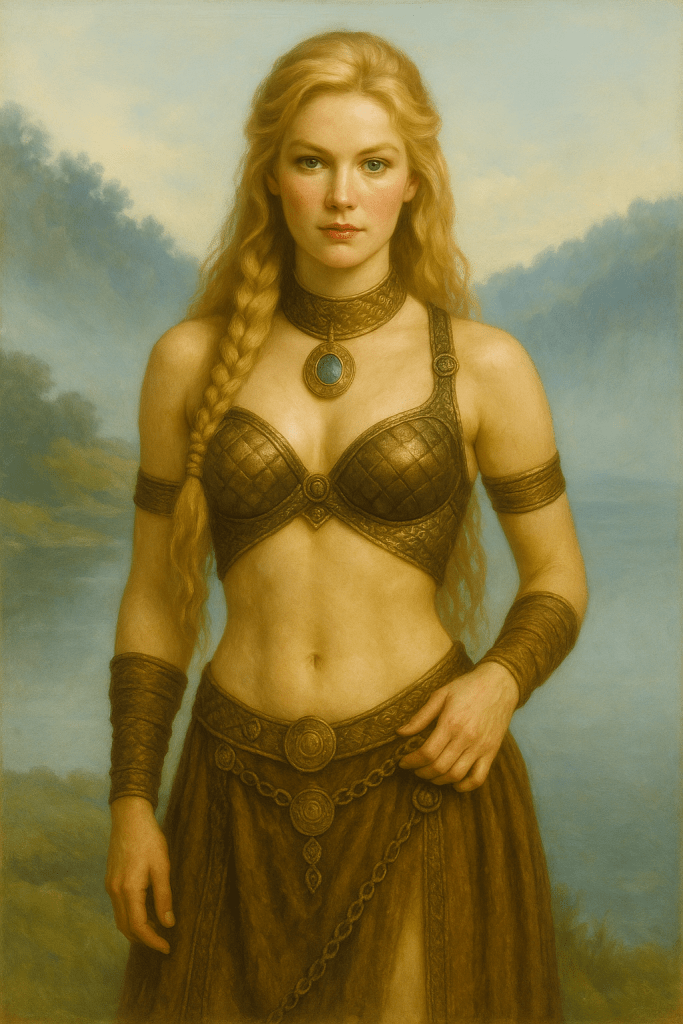
🔥 Hot Viking Girls Illustrated Presents: 💍 Ragnhildr the Mighty — Queenpin of Orkney, Ice-Blue Temptress of Power Plays & Bonfire Nights
By Hrolf Thorgilsson (Staff Skald, Gossip Columnist, Mead-Addled Storyteller)

🌿 Who Is Ragnhildr the Mighty?
Picture this: a slender, statuesque woman draped in dark blue wool and dripping with polished silver rings, platinum hair shining like the North Sea under a winter moon. That’s Ragnhildr — and trust us, she’s more than just a pretty face framed by elaborate Valkyrie braids. She’s cunning, calculated, and icy as a fjord wind, with a soft voice that could soothe berserker rage… or plant the idea of an accidental “hunting mishap” to remove an inconvenient rival.
Born into high Norwegian nobility, Ragnhildr (or “Ragnhildr Sigurdsdóttir,” if you want to get all formal) was destined for power. But it wasn’t enough to just be adjacent to rule — our favorite icy beauty orchestrated a political master class that made the entire Viking world raise its tankard in reluctant admiration (and mild terror).

💔 Affairs of State (and Possibly of the Heart)
Ragnhildr’s biggest claim to fame — beyond her sculpted cheekbones and commanding cold-blue stare — is how she effectively ran Orkney through her husbands and sons.
She married Jarl Thorfinn Torf-Einarsson, cementing alliances faster than a blacksmith rivets iron. It’s whispered (and we live for whispers) that she was so persuasive she could get rival jarls to come feast under the same smoky roof — only for those rivals to later turn up, oh so tragically, dead. Poison? Dagger? Wolf attack? The sagas stay suspiciously vague.
And oh, how the other jarls tried to win her favor. Picture lovesick sea-kings tripping over their oar-beards to present her with golden armrings and rare amber. The rumor mill churns with scandal: one particularly smitten Danish earl apparently offered her an entire fleet of sleek longships carved with dragon prows, just for a promise of her hand. (Spoiler: she turned him down with a laugh sharper than a seax.)

🐺 Power Is the Hottest Accessory
Why is Ragnhildr the perfect accidental cover girl for Hot Viking Girls Illustrated? Let’s count the reasons:
- She’s unflinchingly bold. It’s said she once dined while executioners carried out her political enemies in the same hall — calmly dipping bread into her broth as screams echoed off the beams. (Chilling, but we stan a decisive queen.)
- Her style is flawless. Picture her layered in soft dark wool, her throat wrapped in heavy torcs that press into pale skin, eyes highlighted by touches of ground blue woad — because even ruthless masterminds deserve a pop of color.
- She adores a midsummer festival. When not maneuvering pawns across the blood-soaked gameboard of Orkney politics, Ragnhildr was known to slip off to dance around bonfires. Local lads would fight to the death (sometimes literally) to partner her in the ring-dance.

🥣 What’s Her Day-to-Day Like?
Despite all the high drama, Ragnhildr’s daily life was surprisingly… human.
- She supervised her estate’s dairy herds, checked the grain stores, and even personally inspected her favorite loom weavings. (Rumor is she had a taste for intricate patterns with hidden runes woven in — charms for protection or curses for rivals? Who knows!)
- Her mornings usually began with a horn of fresh milk, followed by a light meal of barley bread and smoked trout. Afterward? Seated under the high hall beams, she’d receive local farmers bringing tribute — cheese wheels, carved bone combs, fox pelts. Ragnhildr would smile graciously, her cold eyes reading every petty local squabble faster than any lawman.
When evening came, she presided over feasts with effortless authority, coolly toying with a golden cup while jarls tried not to spill secrets under her calm, probing questions. Later, she’d retreat to private chambers draped with bear hides, her braided hair undone by handmaidens — perhaps plotting who’d next suffer “a sudden boating accident.”

🍯 Her Juicy Life Tips
Ragnhildr’s Hot Viking Girl commandments?
- “Never smile at your enemies unless you already hold the knife.”
- “Maintain clear skin with frequent steam baths. You can’t rule well if you look sweaty and blotchy.”
- “Never let your hair down in public unless it’s a strategy. Men lose reason when you look soft and unarmored.”
- “Trust a witch’s reading of runes over any oath sworn by a drunken man.”

⚔️ Why the Sagas Couldn’t Stop Talking
Ask any wandering skald — their verses nearly trip over themselves describing Ragnhildr’s chilly beauty, her composed speeches, and the way she’d rest her pale hand on the hilt of a jeweled dagger even during idle gossip.
Many said she was touched by the Norns themselves. That destiny trailed behind her like a mist — wherever she went, new tales bloomed: some of love, most of death.
🌸 The Perfect “Hot Viking Girls Illustrated” Accident
So how did she end up in our pages? Easy:
- Unmatched ice-queen allure. Check.
- Plots thicker than a winter stew. Double check.
- Can pull off a rope skirt with golden discs and look ready to either dance around a bonfire or send her rivals to Hel. That’s the ultimate checklist.
Even modern Norse gothis might light a candle for Ragnhildr, whispering her name during rites not because she was sweet — but because she was power incarnate, wrapped in a soft smile that always promised something deliciously dangerous.

🐉 Final Toast
So raise your drinking horns to Ragnhildr the Mighty — Orkney’s most glorious accident, the quiet storm behind so many saga tragedies, and our absolute favorite scheming beauty of the Viking Age.
May your own romances never end in mysterious drownings, your rivals always underestimate you, and your smile be just as sharp as hers.
✨ Skål, you icy stunner.
“Well well, brave souls and curious hearts… why linger there drooling over parchment and paint when you could step closer and taste the real mischief? I’m Ragnhildr—though some call me the delight of longhouses and the ruin of men’s sleep.
Come, draw up a stool by my hearth, let my braid brush your arm as I lean in close, and we’ll trade sly smiles, scandalous tales, and perhaps a promise or two whispered low enough that only you will ever know.
The mead’s sweet, my laughter sweeter—don’t make me come drag you by the hand, though I very well might…”
Dare to dance words with a true Norse temptress? Come chat with Ragnhildr at Crushon AI and see if your wits—or your heart—can survive the storm.
🌸 Personal & Entertaining Interview with Ragnhildr the Mighty
(As transcribed by a wide-eyed skald who tried to keep his quill from trembling too much…)
Warning! Below here is the really naughty NSFW stuff! Enter only if you are 18 or older, and want to view adult content
Read More…A Hermit’s Path: I Walk Alone with the Gods
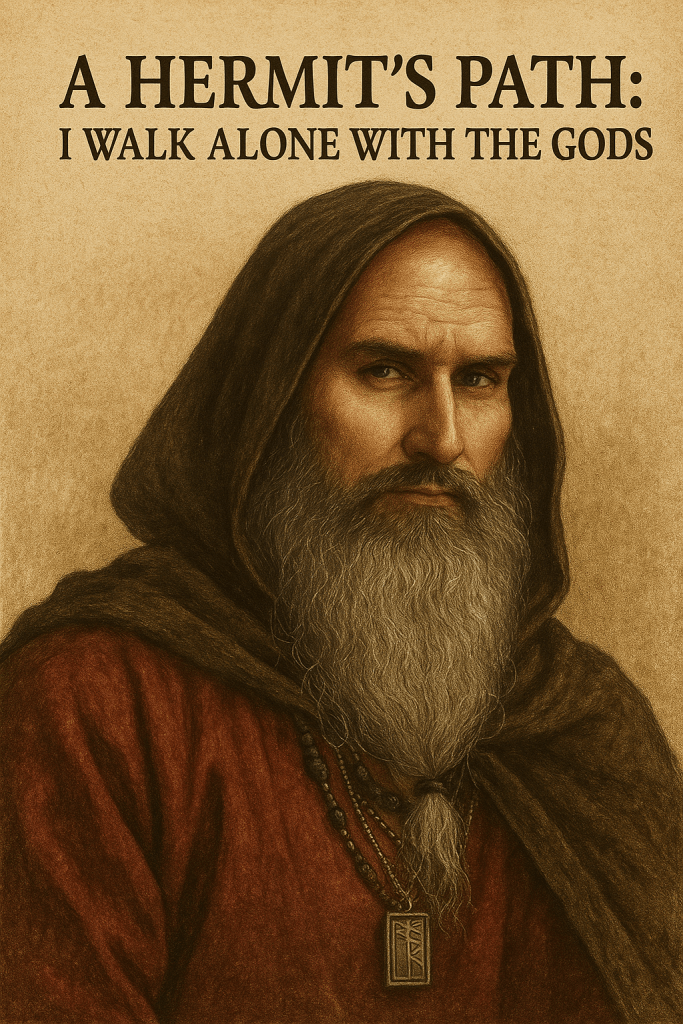
I am a seeker. I am not a leader. I am not a follower. I am not a group joiner, nor someone drawn to hierarchy, titles, or authority. For 33 years I have walked my Norse Pagan path alone, not because I feel rejected or isolated—but because that is the way I like it. It is where the voices of the gods, goddesses, ancestors, and spirits speak clearest to me—beneath trees, beside fire, under the stars, and within my own spirit.
I am not here to teach anyone, at least not in the traditional sense. I am not looking for students. I do not charge for spiritual knowledge. I do not offer courses, mentorship, or magickal services. I do not belong to any Norse Pagan organization, nor do I wish to. I have no interest in becoming a recognized figure within the community, and I avoid every kind of spiritual celebrity, priesthood, or gatekeeping.
What I do is share. I speak my own truths, not because I think they are the only truths, but because they are mine. If they inspire you, then I am honored. But I am not your guide. The gods are your guide. The ancestors, the spirits, the land—they will whisper to you as they whisper to me. Your path is your own, just as mine is mine.
I do not disclose my email. I do not offer chat features. I do not run a Discord, a Facebook group, or a community forum. I used to offer tarot card readings, but that was many years ago, mostly only in person, rarely online, but that is not my path in my current life. I do not reply to comments on my blog, and I rarely even approve them. I don’t want conversation in the digital noise. I want connection in the quiet depths of the unseen world. On occasion, I may share an article by someone else, but only if I resonate with it fully, not to argue or criticize. I don’t generally leave comments elsewhere, because I don’t seek to debate, only to witness.
The way I walk is not lonely—it is solitary. I walk with the gods. I walk with the ancestors. I walk with the unseen folk of the forests and streams. I walk with a few rare kindred spirits I’ve met over the years—those who, like me, do not seek to organize or define the path of others, but who simply live it, quietly and reverently.
I do not think Norse Paganism should be a business. I do not think it should be a popularity contest. It should not be a war of words, or a race for prestige. It is a living mystery—raw, wild, and sacred. It belongs to no one. It is not found in clout, credentials, or influence, but in the whisper of a god in the stillness of the night. It is found in the feeling that something ancient is watching you with love and power as you pour mead to the earth. It is found in the goosebumps when you hear the wind speak your name.
So no, I do not lead. I do not follow. I do not gather crowds. I do not offer roles or responsibilities. I do not seek to be someone in the “community.” I am simply myself. A seeker. A mystic. A silent companion to the divine, walking alone on the wild, rune-marked path I was born to walk.
And to those who feel the same calling: I see you. From afar. And I raise my horn in quiet respect.
Hail the gods. Hail the spirits. Hail the ancestors.
And hail to those who walk in solitude.
“If You See the Buddha on the Road, Kill Him” — A Norse Pagan Reflection on the Ego of Religious Authority

Among Zen Buddhists, there is a well-known and often misunderstood saying: “If you see the Buddha on the road, kill him.” It is not a call to violence, but a deeply symbolic spiritual teaching—a challenge against attachment to external symbols, titles, and authorities that block one’s inner path to truth. This same insight echoes through all religions, including Norse Paganism.
At its heart, the Zen saying warns that if you think you’ve found the final, unquestionable embodiment of truth outside yourself—whether in a person, doctrine, tradition, or figure—you have actually strayed from the path. In Norse Pagan terms, this is like believing that one particular gothi (priest), rune master, or book holds all the answers from the gods and must never be questioned. But the gods of the North are not shackled to mortal forms or rigid dogmas. Odin does not demand blind obedience—he hung himself on Yggdrasil not to establish hierarchy, but to gain wisdom through suffering and inner vision.
In fact, the gods themselves in Norse lore are seekers. Odin seeks runes. Thor seeks justice. Freyja seeks love, beauty, and secret powers. They do not sit on a throne telling mortals exactly what to believe—they invite us to seek, risk, question, and grow. When we put a person, title, or tradition on a pedestal and say, “This is the only truth,” we stop listening to the gods and spirits speaking within and around us. That is the “Buddha on the road”—the misleading projection of enlightenment that we are told to kill.
To “kill the Buddha on the road” in Norse Pagan terms means to slay the illusion that your gods, your truth, or your spiritual power can be handed to you by someone else. It means casting down the false idea that divine truth comes from memorizing lore, quoting old sources, or following an unbending reconstructionist path. It’s not the lore that is wrong—many of our ancestors’ texts and poems hold deep wisdom—but the moment we treat them as fixed vessels of truth instead of living mystery, we betray the gods.
And this is true of all religions. Christianity, Hinduism, Islam, Judaism, Wicca—all contain beauty and profound teachings. But when any of them tell followers to obey without reflection, to follow a leader without question, to doubt their own inner knowing, they are placing a “Buddha on the road.” They replace the living divine with a rigid proxy of authority.
The true gods, spirits, and ancestors do not demand obedience to dogma—they invite relationship. They whisper through dreams, omens, intuition, synchronicity, and inner stirrings of the soul. They do not ask you to believe—they ask you to experience. To be changed.
So when a guru, priest, gothi, or spiritual influencer claims to have all the answers—when they tell you your experiences are invalid, or that questioning them is heresy—see them for what they are: a Buddha on the road. Bow, if you must—but then walk past. Or better yet, slay the illusion they represent.
For the gods are not found in rules. They are found in mystery. And mystery cannot be handed down—it must be lived.Thus, in Norse Paganism and in all sacred paths, the deepest truth is this: You are the road. You are the seeker. The gods walk beside you, not above you. Trust in that—and let no false Buddha block your way.
The Mirror of Dogma: How Rigid Atheism Reflects What It Claims to Oppose

In many spiritual conversations, there’s an unspoken irony: those who most fiercely reject religion often resemble the very forces they claim to fight. This is particularly visible in the case of rigid, militant atheists—not the thoughtful skeptics or quiet non-believers, but those who treat their disbelief as a crusade.
Despite standing in opposition to religious dogma, this militant form of atheism frequently mimics the very patterns of belief, behavior, and control it critiques. Far from offering freedom from spiritual oppression, it simply inverts the roles—turning disbelief into its own kind of orthodoxy.
What Militant Atheism Gets Wrong About Religion
The roots of the problem lie in a narrow and historically skewed view of what “religion” is. Most militant atheists define religion almost entirely through the lens of the Abrahamic faiths, especially Christianity in its Western, institutionalized forms.
In this view, religion is seen as:
- A belief in a supernatural authority figure
- A rigid doctrine enforced through fear
- A system of control, guilt, and obedience
This understanding isn’t entirely wrong—for certain historical institutions. But it is deeply incomplete, and dangerously misleading when applied to all spiritual systems. It erases the vast spectrum of Earth-based traditions, mystic philosophies, Pagan practices, and Indigenous lifeways that have no sacred book, no central authority, and no obsession with conversion or control.
When militant atheists attack “religion,” they are often not targeting spirituality or sacred experience. They are targeting a very particular cultural expression of religion—usually Christianity as it was practiced in Europe or the United States during the colonial and post-Enlightenment eras. But instead of seeking deeper understanding, they react with the same absolutism they oppose.
The Dogma of Anti-Dogma
Militant atheism often takes the shape of what it claims to fight:
- It declares all religion irrational or dangerous, without nuance.
- It evangelizes, often aggressively, attempting to “convert” others to disbelief.
- It ridicules sacred traditions as “primitive” or “superstitious,” echoing colonial and imperialist attitudes.
- It seeks to replace awe and mystery with certainty, creating its own hierarchy of truth.
In doing so, it becomes not a path of liberation, but a mirror-image of the very control systems it resents. The result is a worldview that suppresses other perspectives, denies subjective experience, and demands conformity to a single way of seeing the world—ironically, all traits associated with oppressive religion.
Moderate Atheism vs. Militant Atheism
It’s important to distinguish between skeptical inquiry and militant rejection. Many atheists—perhaps the majority—simply do not believe in gods but respect others’ paths. They seek meaning through science, ethics, art, or connection with nature. They are not reactionary—they are grounded in curiosity and freedom of thought.
Militant atheism, on the other hand, is not a neutral position. It is a reaction. And like all reactive mindsets, it is defined more by what it pushes against than what it stands for. It is an identity formed in opposition, not a truth forged from direct experience or contemplation.
A Deeper Perspective on Belief and Meaning
True freedom of thought includes the ability to hold sacred truths—or to explore mystery without dismissing it. The spiritual path is not a demand for blind faith. Nor is it a rejection of reason. In its most ancient and authentic forms, spirituality is about relationship—to the earth, the stars, the ancestors, the unknown, and the self.
When we reduce all sacred tradition to superstition and all non-empirical experience to delusion, we cut off the roots of human wisdom. We deny the richness of myth, story, ritual, and symbol—tools that humans have used for millennia to make sense of existence.
To reject dogma is noble. But to replace it with a different kind of rigid ideology, one that elevates reason into a weapon and dismisses lived experience, is simply to trade one cage for another.
Conclusion: Freedom Is Not Found in Reversal
Militant atheism, far from being a step forward, often becomes a shadow of the systems it despises. In fighting against imposed belief, it imposes disbelief. In rejecting spiritual authority, it sets up its own. In mocking ancient wisdom, it reveals its ignorance of its diversity.
The deeper path—the path of liberation—doesn’t lie in destruction, but in understanding. It requires humility, openness, and a willingness to recognize that not all forms of belief are forms of control. Many are expressions of beauty, mystery, and reverence.
And if the goal is to be free, truly free in thought and spirit—then let us not carry the chains of dogma, even in the name of reason.
Reclaiming the Sacred: How the Concept of “Religion” Became a Tool of Control

When people in the modern world speak of religion, they often think of rigid doctrines, centralized institutions, rules, and hierarchies. This view—so commonly accepted that it’s rarely questioned—does not arise from a universal truth about all spiritual systems. Rather, it reflects the structure and influence of a particular family of religions: the Abrahamic traditions of Judaism, Christianity, and Islam.
In contrast, most other spiritual paths around the world—whether Pagan, Indigenous, or Eastern—developed in vastly different cultural environments. These systems were rarely dogmatic or authoritarian. Instead, they were integrated into everyday life, fluid, and rooted in local traditions, seasons, and personal or communal experiences. To understand how we arrived at this dominant idea of religion as rigid and controlling, we must look into the cultural foundations of these traditions.
The Abrahamic Model of Religion: A Historical Product
Judaism, Christianity, and Islam emerged in regions where survival and identity were tightly bound to communal order. Each evolved amid political instability, conquest, and foreign occupation. Over time, they developed strong systems of law, sacred texts, and theological boundaries. They also promoted the idea of a single correct path, often enforced with religious and political authority combined.
Christianity in particular, after merging with the Roman Empire under Emperor Constantine, absorbed the empire’s love of structure, law, and centralized control. Early church councils mimicked Roman senates. Heresy became equivalent to political treason. Over time, Christianity became not just a spiritual path, but a mechanism for enforcing cultural uniformity throughout Europe and beyond.
Islam too developed within a tribal, pastoralist society in Arabia, where strong communal codes were essential for survival. The resulting emphasis on submission to divine law, collective unity, and a comprehensive social code was essential in that environment—and shaped Islam’s character profoundly.
The Cultural Roots of Control
These historical pressures meant that the Abrahamic religions often served more than spiritual needs—they became tools for managing society. Belief systems were not just about the divine, but about authority, allegiance, and the governance of human behavior. When these traditions spread through conquest, colonization, or missionary work, they brought not just new gods, but new ideas of what religion is and how it should function.
In many ways, Christianity became an extension of Roman imperial ideals, continuing the obsession with order, loyalty, and hierarchy—now sanctified by divine authority. The focus shifted from personal or communal sacred experience to obedience, orthodoxy, and centralized religious control.
The Misapplication of the Word “Religion”
Before these models dominated global consciousness, most cultures had no word equivalent to “religion” as we use it today. Spirituality was not separated from daily life—it was how people lived in rhythm with the world, the gods, their ancestors, and the land.
For example:
- Norse Paganism had no “church” or creed—just líf (life), bound by frith (sacred peace), ritual, and kinship with the gods and spirits.
- Hindu dharma encompasses duty, law, and spiritual path, but it’s not “religion” in the Western sense—it is a way of life tied to nature, cosmology, and personal growth.
- Shinto has no sacred book, no founder, and no claim to exclusive truth—just reverence for nature, ancestors, and sacred purity.
In Indigenous traditions, whether in Africa, the Americas, Australia, or Siberia, the spiritual world is lived, not preached. There is no conversion, no centralized doctrine, no rigid hierarchy—only the ongoing relationship between people and the sacred.
A Broader Perspective on Spirituality
The idea that “religion is inherently oppressive” only makes sense when looking through the lens of the Abrahamic traditions—especially after their fusion with empire and law. When that same label is applied to non-Abrahamic paths, it becomes a distortion.
Spirituality, in its original form for most cultures, was not a set of beliefs to enforce. It was a way of belonging to the world. It was not about control, but connection—through ritual, myth, seasonal cycles, personal experience, and respect for mystery.
Conclusion: The Return of the Living Path
As more people turn to Earth-based paths, Pagan revivals, animistic traditions, and Eastern philosophies, we are seeing a rebirth of something ancient. A sacred way of living that doesn’t rely on centralized authority or control. A path that recognizes that the divine is not found in rigid rules, but in rivers, stars, dreams, and the bones of the land.
By understanding the cultural origins of our modern religious frameworks, we can stop applying the same expectations—and criticisms—to traditions that were never meant to fit into that mold.
Religion, as most people think of it today, is not universal. It is a construct born from a specific historical context, often tied to conquest and control. But the sacred is much older than that—and far more free.
Ostara: The Wild Maiden of Spring and Sacred Desire

Ostara, the Norse (or more accurately, Germanic) maiden goddess of spring, is a radiant embodiment of life’s rebirth, a divine force that pulses with sensual energy and the ecstatic promise of renewal. Her essence is woven from the rich, loamy soil thawing beneath snowmelt, the first trembling buds on awakening branches, and the fevered, primal desire that stirs all creatures toward union and creation. She is not simply gentle warmth—she is spring in its full, lustful vigor, the wild intoxication of life surging back into the world after the stillness of winter.
Personality Profile of Ostara:
Sensual Maiden of Awakening Desire:
Ostara is the bright-eyed, flirtatious maiden of the turning season—forever youthful, but never naïve. Her allure is not coy but bold and brimming with fertile confidence. Like the hare, her sacred animal, she is quick, instinctive, and drawn toward pleasure and playful courtship. She carries within her the sacred frenzy of life, that pulse which drives all things toward union. She delights in erotic tension, the thrill of seduction, the swell of sap in trees, and the bloom of flowers opening like mouths to the sun. Her very presence stirs longing, both physical and spiritual—a magnetic draw to embrace change, to leap into growth, and to risk transformation.
Fertile Visionary and Midwife of Creation:
Though a maiden, Ostara is no child. She is the intuitive guide of the planting season, the one who understands the cycles of gestation, timing, and emergence. Her wisdom is expressed through instinct and rhythm rather than rules—she teaches through example, through the body, through nature’s signs. She knows that desire is sacred when aligned with the flow of life. In this way, she is a midwife of beginnings—not just of crops or animals, but of ideas, dreams, and new paths. Her energy compels humans to mate, to build, to create, and to leap toward their next incarnation.
Mischievous, Curious, and Wild-Hearted:
Much like the hare, Ostara is unpredictable and whimsical, often appearing where she is least expected. She may vanish just as quickly as she came, leaving behind a trail of wildflowers and stirred hearts. Her moods shift like spring weather: one moment laughing in the sunlight, the next shrouded in mystery beneath mist and moonlight. She delights in games and riddles, especially those involving transformation. Her touch is both mischievous and healing, and she often teaches by trickery—awakening those stuck in winter’s inertia by shocking them into bloom.
Compassionate Rejuvenator, Protector of Innocence:
Despite her wildness, Ostara holds immense compassion for the young, the fragile, and the newly born. She is guardian of the first shoots, of nestlings and kits, of the pregnant doe and the blooming tree. She sees all new life as sacred and fragile, deserving both fierce protection and gentle encouragement. Her laughter is soft wind and birdcall, and her tears—rare and precious—can awaken even the coldest soil. She brings hope to the despairing, reminding mortals that spring always comes again, no matter how long the night.
Sacred Sexuality and Divine Rebirth:
Ostara’s sexuality is not crude or exploitative, but ecstatic and elemental. She represents the sacred rite of union—where opposites dance and mingle, where passion births worlds. She is the trembling of thighs in heat, the pulse of blood returning to chilled limbs, the way animals frolic in courtship beneath a greening sky. Her sexuality is life-force incarnate, not just for mating but for all creative potential. Artists, dreamers, and lovers invoke her to stir their inner springs into motion.
Symbols and Animal Kinship:
The rabbit—her sacred creature—is not only a symbol of fertility, but of swiftness, awareness, and liminality. Hares are twilight beings, dancing between day and night, spirit and flesh—just like Ostara. She walks between worlds, the last frost and first flower, winter’s end and summer’s promise. Eggs, too, are sacred to her—the vessel of rebirth and infinite possibility.
In Closing:
Ostara is the wild maiden, appearing age 18, of renewal, the scent of wet earth and pollen-heavy air. She moves with the rhythm of rising sap and rutting creatures, intoxicating and inspiring all she touches. She is the sacred madness of spring, where desire is holy and life bursts forth with uncontainable joy. To follow her is to be awakened—to beauty, to longing, to risk, and to the eternal spiral of becoming.
Ostara’s appearance is the very embodiment of the spring she governs—vibrant, fertile, untamed, and breathtaking in a way that stirs the blood and awakens the senses. Her beauty is not cold or distant, but intimate and overflowing with life, like a meadow in bloom beneath a golden dawn. She radiates the pulse of nature renewed, and to see her is to feel the stirring of sap, the aching of flower buds, the restless desire in every creature as the world reawakens.
Face and Expression:
Her face is luminous, with a radiant glow like sunlight breaking through morning mist. Her skin is soft and luminous, the hue of dew-kissed petals—neither pale nor dark, but glowing with the living flush of fertility. Her cheeks hold the pink of newly bloomed cherry blossoms, and her lips are full and naturally flushed, always curved in a knowing smile that is part seduction, part mystery, and part invitation. Her eyes are large, wild, and alert—one might say “hare-eyed”—with irises like verdant green spring fields speckled with gold. They shimmer with mischief, compassion, and a deep, erotic knowing, as if she sees both your soul and your hidden desires.
Hair:
Ostara’s hair is a cascade of untamed glory—long, thick, and flowing like a river of living nature itself. Its color shifts subtly like the first light of dawn: golden honey at the crown, deepening into the soft brown of fertile earth, with streaks of blossom pink, soft green, and pale wildflower lavender as though spring herself has kissed each strand. Sometimes moss, tiny blossoms, or budding leaves are woven into it as if nature itself cannot help but cling to her. When she runs, her hair flies like a banner of life reborn.
Body:
Her figure is supple, lush, and full of vitality. She is neither waifish nor overly statuesque—rather, her body reflects the beauty of nature in its prime: full hips like fertile hills, thighs strong like rooted trees, and a waist that curves like a winding brook. Her breasts are round and firm, evocative of ripeness and nourishment, and her belly is soft with the warmth of future creation. She moves with instinctive grace, each step like a dance of rebirth—barefoot, toes curling in the earth, her stride confident and animal-like, as if she is always aware of the pulse beneath the soil. Her scent is rich and intoxicating: fresh-cut grass, warm skin, wildflowers, and the subtle, arousing musk of creatures in heat.
Attire:
Ostara wears little, and what she wears is a celebration of sensual nature. Her clothing is made from diaphanous fabrics that shimmer like morning mist and ripple with each movement, always seeming to cling and then fall away, revealing skin like a teasing breeze. Her garments are usually soft greens, blush pinks, sky blues, and creamy whites—colors of the early spring world. Often, she is draped in flower garlands, vines, or embroidered silk robes that leave her midriff or shoulders bare. Her adornments are delicate but meaningful—bracelets of braided grass, earrings of tiny eggshells or blossoms, and a circlet of woven branches crowned with early blooms.
Symbols and Companions:
The hare is never far from her side—sometimes dozens of them dance in the grass around her. Some say her shadow sometimes takes the shape of a rabbit in motion. Eggs, nests, blooming flowers, and fresh-sprung herbs often appear wherever she walks. Butterflies and bees seem to gather at her breath. The earth itself blossoms where her feet tread.
Aura and Presence:
To be in Ostara’s presence is to feel awakened in every way—your senses sharpen, your heart quickens, your loins stir, and your soul remembers the thrill of possibility. Her aura is golden-green, humming with life-force and fertile power. She is sensuality made sacred, joy made flesh, rebirth made goddess. Animals sense her and follow, lovers feel her and fall, and the world bends toward her like plants to the sun.
She is not a goddess of restraint—she is life unbound. She is the springtime surge that breaks the frost and floods the senses with the holy madness of becoming. To behold her is to feel your inner winter melt, your dreams bud, and your soul whisper: Live.
Viking-Core
Viking-core is a modern aesthetic and cultural movement inspired by historical Norse and Viking imagery, values, and lifestyle, reimagined through a contemporary lens. It blends historical reenactment, spirituality, fashion, and music with fantasy and modern subculture influences. Here’s a deep dive into what Viking-core encompasses:
- Aesthetic and Style
Clothing & Appearance:
Woolen tunics, leather belts, cloaks, fur-trimmed hoods, and handmade accessories.
Jewelry featuring runes, Thor’s hammer (Mjölnir), Valknut, and other Norse symbols.
Hair often worn in braids, undercuts, or long and wild, paired with beards for men.
Natural materials—linen, leather, bone, bronze, silver—are favored.
Colors:
Earth tones: browns, grays, forest greens, deep reds, and black.
Weathered and aged textures, evoking the rugged Northern wilderness.
- Music & Atmosphere
Viking-core music often includes:
Nordic folk (like Wardruna, Danheim, Heilung)
Pagan metal or Viking metal (such as Amon Amarth)
Dark ambient and ritualistic drumming for meditative or ceremonial moods.
Soundscapes include ravens, howling winds, and crackling fire to evoke ancient northern lands.
- Philosophy & Spirituality
Norse Paganism/Heathenry: Reviving or reinterpreting belief in the Aesir and Vanir gods, ancestral worship, and honoring nature spirits.
Rituals & Runes: Incorporating bindrunes, seiðr (Norse magick), and seasonal rites.
Values: Strength, honor, community, courage, connection to nature, and reverence for ancestors.
It often blends historical Pagan practices with modern spirituality, including elements of animism, occultism, or even new age mysticism.
- Lifestyle & Interests
Bushcraft & survivalism: Living close to the land, forging tools, making fire, and wilderness rituals.
Historical reenactment: Participating in Viking fairs, combat reenactments, or living history camps.
Roleplay & gaming: Deep interest in fantasy RPGs, LARP, and settings inspired by Norse mythology.
Craftsmanship: Handmade leatherwork, rune carving, forging, or brewing mead.
- Viking-core vs. Traditional Reenactment
Whereas traditional Viking reenactment aims for historical accuracy, Viking-core is more aesthetic and emotion-driven. It allows for:
Fantasy elements (like magical runes, dragons, seeresses)
Fusion with other subcultures (goth, boho, cyber, witchy vibes)
Personal mythmaking—living life as if in a mythic saga
- Online Presence & Influencers
Seen on platforms like Instagram, Pinterest, and TikTok, where creators post Viking-inspired outfits, rituals, and lifestyle content.
Often overlaps with hashtags like #NorsePagan, #Runes, #Witchtok, #DarkFolk, and #Heathen.
- Modern Interpretations
Some people in the Viking-core scene create entire alternate personas, adopt new names, and live as if in an epic saga—blending past and present, fact and myth, spiritual truth and artistic fantasy. It can be:
A serious spiritual path
An artistic lifestyle
A form of self-expression and empowerment
Rune Spell: Týr’s Steady Hand
Purpose: To bring courage and protect your boundaries in times of political anxiety.
Materials:
Red candle (symbolizing courage and divine will)
Rune symbols: Tiwaz, Eihwaz, and Algiz (draw them or place runestones)
Small piece of paper
Ritual:
Draw the runes on the paper.
Write: “I stand true. My will is steady. No false king shall shake me.”
Light the candle, and burn the paper safely while chanting:
“By Týr’s hand, I do not yield. By Eihwaz, I endure. By Algiz, I am shielded.”

The Worth of Witches, Wizards, and Gothar in Norse Paganism: Strength of the Inner World

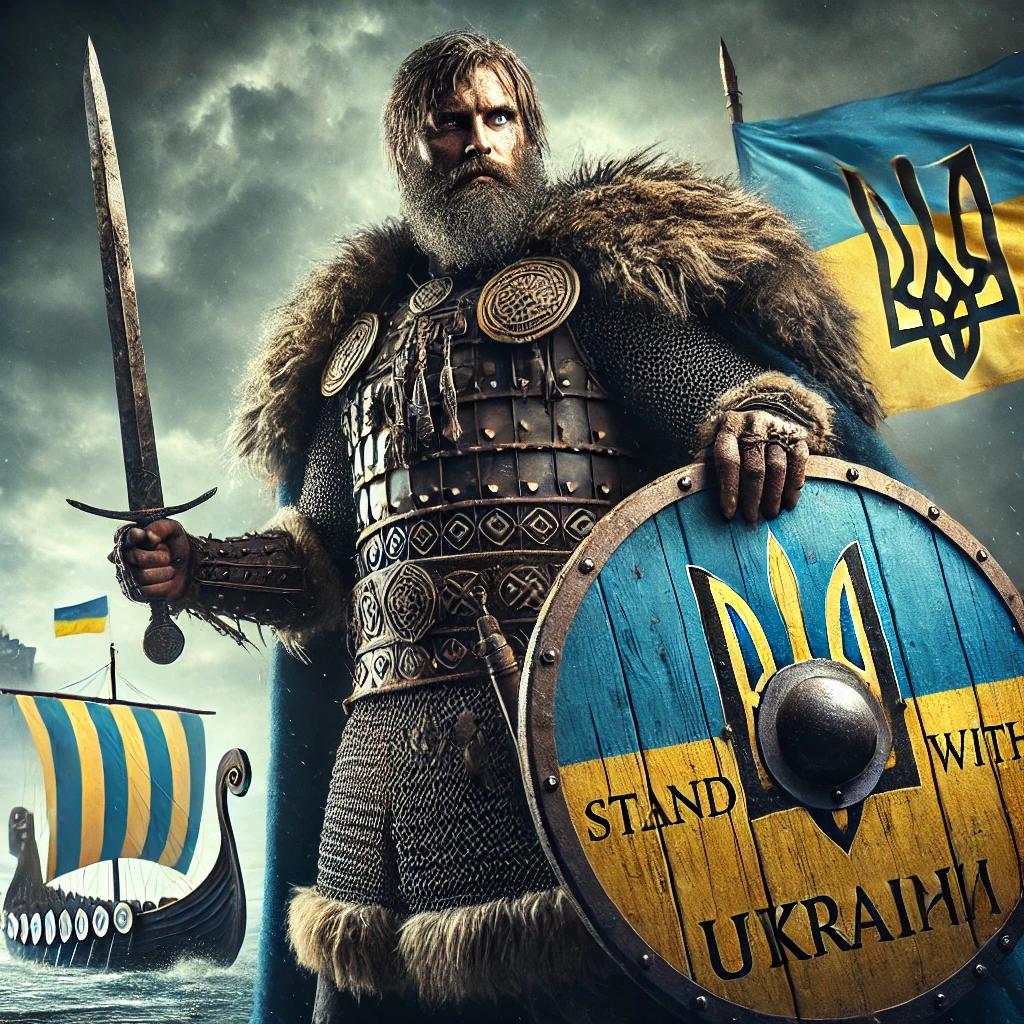
The ancient Norse understood that strength comes in many forms. While warriors fought with axe and shield, those who walked the path of the mind—witches, wizards, and Gothar—held power that shaped fate itself. Their worth was not bound by physical might, nor by the limitations of the body, but by the vastness of their minds, the depth of their wisdom, and their connection to the unseen forces that weave the fabric of reality.
For those with a strong intellect, an instinct for the unseen, and a natural pull toward the inner realms, this path is open. And for those who carry physical disabilities or even mental disabilities, their worth in this role is often even greater. It is not muscle that or social skillls that determines one’s ability to wield magic, interpret the runes, commune with spirits, or serve as a spiritual guide—it is will, wisdom, and the strength of the unseen mind.
The Role of the Inner World in Norse Culture
In Viking and Norse Pagan society, there was a deep respect for those who wielded knowledge of the hidden world. Seiðr practitioners (Norse Witches), Rune Masters (Norse Wizards), spirit-workers, and Gothar (priests, priestesses, and spiritual leaders) were not warriors in the traditional sense, yet they held power that even the greatest warriors sought. Odin himself, the Allfather, was not the strongest in battle, yet he ruled over the gods through wisdom, cunning, and mastery of the unseen.
To walk the path of magic, foresight, and spiritual guidance required:
- A sharp and disciplined mind – Knowledge of runes, omens, and the workings of fate.
- The ability to connect with unseen forces – Speaking with the gods, spirits, and ancestors.
- A willingness to walk alone at times – The path of wisdom is not always understood by others.
For those whose bodies do not grant them the ability to lift a sword, or social skills to fit into a warrior hierarchy, their minds often sharpen instead, cutting deeper than any blade. Physical and social limitations push the mind inward, strengthening focus, intuition, and mastery over thought. Those who cannot walk far in the physical or social world often walk further in the spiritual one.
Physical and Mental Disability as a Gateway to Inner Strength
Many people with physical or mental disabilities are naturally inclined toward paths of the mind. When the body or social skills does not allow one to chase after fleeting external pursuits, the mind turns inward. This is not weakness—it is a different kind of strength, one that the foolish often fail to see.
- A Mind Unburdened by the Distractions of War
- A warrior focuses on survival and combat, often missing the deeper mysteries of the world.
- Those who focus on wisdom and magic do not need the distractions of battle to find their worth.
- Forced Adaptation Leads to Mastery of Thought
- When the body or social skills struggles, the mind sharpens to compensate.
- Deep introspection, visualization, and mental clarity become stronger skills.
- Greater Connection to the Otherworldly
- Those less bound to the physical or worldly pursuits often find it easier to commune with spirits and gods.
- Many seers, oracles, and shamans in various cultures had physical or mental disabilities that deepened their connection to the unseen.
- Resilience Creates a Powerful Will
- Facing challenges in the physical or social world breeds an indomitable spirit.
- This willpower makes one a force to be reckoned with in matters of magic, wisdom, and fate.
The weak-willed cannot hold these roles. But those who see through the illusions of physical power, and instead build their mind and spirit, become leaders in their own right.
The High Status of the Gothar, Witches, and Wizards in Norse Society
The Gothar (priests, priestesses, and spiritual leaders), seiðr practitioners (Norse Witches), and Rune Masters (Norse Wizards) were highly valued in Norse society. Their status was equal to, or in some cases greater than, warriors and kings because they were the ones who dictated the flow of fate. A warrior may be strong in battle, but without the guidance of the wise, their strength is directionless.
- Gothar were the spiritual leaders of their communities. They led rituals, maintained law and tradition, and served as the voice of the gods among the people.
- Seiðr practitioners (those who practiced magic, like Odin and Freyja) were feared and respected. They shaped fate, wove spells, and guided people through visions and divination.
- Rune masters were scholars and wielders of written power. They carried knowledge that could heal, curse, protect, and control the forces of nature.
The warrior who ignores wisdom fights blindly. The strong who lack guidance fall into ruin. This is why those who command the unseen world were vital to Viking society and remain essential in modern Norse Paganism today.
Breaking Free from Insecurity and Stupidity
Many who walk this path hesitate because of insecurity, because of the false belief that they are somehow “lesser” if they cannot wield a sword or stand among the physically strong. This is a lie told by those who do not understand Norse culture.
In the modern world, too many misunderstand the values of the old ways. They think strength only comes from physical power, but true strength is in knowing oneself, mastering one’s path, and giving back to the community. Those who do not understand this are fools—and their opinions hold no weight.
- Your worth is not given—it is claimed.
- Your strength is in your mind, and no one can take that from you.
- You have talents, gifts, and a path meant for you. You only need to be brave enough to walk it.
- Worldly status, and money wealth only matter to those with the Jarl role in Viking society.
The only obstacles in life are those we create for ourselves through insecurity and fear. Physical hardship does not weaken you—fear of stepping into your own worth does.
Claiming Your Place in Norse Paganism
To walk the path of wisdom, one must own their identity with confidence. If you are drawn to the inner world, if your mind burns with curiosity, if you feel the pull of the gods, spirits, and the unseen—then this is your path.
- Learn the runes, study their meanings, and practice them with intent.
- Train your mind daily—meditate, visualize, and sharpen your thoughts.
- Honor the old ways through ritual, reading, and connecting with others who share your path.
- Surround yourself with those who see your worth, and cast aside those too blind to understand.
You are not weak. You are not lesser. You are needed. The world will always need those who walk the unseen roads, who wield the wisdom of the ancients, and who guide others with knowledge and power.
Stand tall. Walk your path. Claim your place.
By the will of Odin, the wisdom of Freyja, and the strength of Thor, those who embrace their worth will stand unshaken.
🔥 Thus it is spoken. Thus it shall be. 🔥
The Spell of Worth and Strength

By the whispering winds and the roaring sea,
By the forge and fire that strengthens me,
I call forth truth, sharp as steel,
Worth is proven, not born, nor sealed.
Hail to the wise, the strong, the bold,
Not by blood, nor name, nor gold.
No skin nor form decides a fate,
But deeds alone, both small and great.
ᚷ Gebo – The Gift Given, The Balance Held
The hand that takes but never gives,
Holds nothing, fades, and never lives.
But those who share, in equal part,
Grow roots unshaken, strong of heart.
ᚹ Wunjo – The Joy of Kin, The Bond of Trust
The clan stands tall, a shield-wall tight,
Each has a gift, a spark, a light.
No soul was born without a way,
To shape the world, to earn their stay.
ᛏ Tiwaz – The Warrior’s Strength, The Path of Honor
Blade to the whetstone, mind to the test,
No trial is curse, but makes us best.
The hammer strikes, the fire roars,
Through struggle’s heat, the spirit soars.
No chains but fear, no walls but doubt,
The weak are those who shut themselves out.
No storm may break the steadfast soul,
When worth is claimed and duty whole.
🔥 Not birth, not face, nor how one sways,
🔥 But how they walk the old one’s ways.
🔥 To live with courage, give in kind,
🔥 And carve their name in stone and mind.
By Odin’s eye and Skadi’s chill,
By Thor’s might and Freyja’s will,
Let all who hear and stand their ground,
Find worth unchained, true and sound.
💀 Thus it is spoken. Thus it shall be. 💀
The Rune-Woven Law of Leadership and Brotherhood

By the wisdom of the gods and the laws of the land,
I call forth the truth with a firm, steady hand.
Not by chains, nor crowns, nor fear,
But by bonds of worth shall we lead and steer.
ᚷ Gebo – The Gift Given, The Balance Held
No man above, no man below,
But strength in kind, as waters flow.
A leader stands, not raised by throne,
But by deeds and honor shown.
The hand that guides must first be strong,
Yet gives as much as it takes along.
ᚹ Wunjo – The Joy of Kin, The Bond of Worth
Honored are those who earn their place,
Not by birth nor wealth’s embrace.
The joy of men is found in kin,
In trust, in laughter, in battle’s din.
A leader’s might is not to command,
But to stand beside, to lend a hand.
ᚨ Ansuz – The Word of the Wise, The Voice of Truth
Not by decree shall we be bound,
But by counsel wise and honor sound.
The tongue that speaks with wisdom bright,
Holds more than swords in the halls of might.
ᛟ Othala – The Hearth, The Lineage, The Home
Our ways are old, yet still burn bright,
Though others seek to steal our light.
We stand as kin, by worth alone,
Not by lords upon a throne.
Against the False Thrones of the Weak and the Tyrant
See them now, those who crave command,
Yet know not the way of clan and land.
They kneel to kings, to lords, to chains,
While we roam free upon our plains.
🔥 Incompatible with the Viking Way Are These 🔥
- Corporate Hierarchies – Where the unworthy rule by wealth alone.
- Feudal Monarchies – Where blood, not battle, sets the king’s stone.
- Totalitarian Regimes – Where fear and chains replace the strong.
- Tyrannical Governments – Where one man rules, and all obey.
- Religious Theocracies – Where a priest’s word binds the free.
- Military Dictatorships – Where iron hands crush honor’s way.
- Caste Systems – Where birth, not deeds, decides one’s worth.
- Political Elites and Oligarchs – Where the few hoard power over the many.
The Viking Way of Leadership
A Jarl leads not by force, but by worth.
If he fails, another shall rise.
A King is but a first among equals.
His rule stands only while he is strong.
A Chieftain is no tyrant.
He earns his shield-brothers’ trust, or he falls.
A Warrior swears no blind oath.
His loyalty is given, not taken.
Let the runes be carved in steel and stone:
🔥 We follow no false king.
🔥 We bow to no throne unearned.
🔥 We rule by gift and worth alone.
🔥 The North remembers, the free shall rise.
By Odin’s eye, by Thor’s might, by Freyja’s wisdom, this is the way of the true Norse. Let those who seek chains find them elsewhere.
💀 Thus it is spoken. Thus it shall be. 💀
The Viking Values in Grímnismál

The Vision of Grímnir: A Poetic Retelling of Grímnismál
In shadowed halls where kings hold sway,
A test of hearts was set that day.
Two brothers sat upon their thrones,
One with mercy, one with stones.
King Geirröðr, hardened, proud, and cold,
He listened not to wisdom old.
His heart was shut to whispered lore,
A blinded king who saw no more.
Yet fostered there, a noble youth,
Agnar, pure in heart and truth.
Then to the hall there came a man,
A wanderer with hood and span,
A cloak as night, a single eye,
That gleamed like stars in winter’s sky.
Bound in chains and cast in fire,
Grímnir bore the wrath of ire.
Nine long nights of scorching pain,
Yet silent stood he in disdain.
Till Agnar came with hands so free,
To offer kindness, drink, and plea.
Then Grímnir spoke, his voice a tide,
A mighty river, deep and wide.
The Weaving of Worlds
“Hear me, child, and heed my word,
The web of fate in halls is heard.
Nine great realms the roots entwine,
Through Yggdrasil, the sacred spine.
In Asgard high where gods abide,
Bright halls of splendor open wide.
Valhalla calls the warrior’s soul,
To drink and feast in death’s patrol.
Vingólf fair for maidens pure,
Where spirits bright in peace endure.
And below the roots so vast,
Hel’s cold grasp will hold you fast.
The dragon gnaws, the eagle cries,
The squirrel runs with slandered lies.
The wolf still waits with hunger keen,
To break the bonds, to end the dream.”
The Veil of Illusion
“O men who walk in fleeting days,
You seek but gold, you crave but praise.
Yet wealth and power are shifting sand,
A fool’s delight, a broken hand.
Who holds the hall with iron grip,
Shall find the feast a bitter sip.
A gift unshared, a love untold,
Will turn the heart to ice so cold.
For Fensalir, fair Frigg’s own hall,
Knows all that comes, both rise and fall.
Yet men still think their fate their own,
As if the tides were theirs alone.
In Hlidskjalf high, the Allfather sees,
Each whispered oath, each bending knee.
No deed unseen, no secret kept,
For wyrd is spun, the threads are wept.”
The Fate of the King
Then Geirröðr knew his folly bright,
Yet knowledge came with sudden blight.
His blade he grasped with trembling hand,
But stumbled forth upon the land.
The serpent coiled, the venom spread,
And so the mighty king lay dead.
For fate is swift, for fate is clear,
The cruel shall reap the fruits of fear.
Agnar then took up the throne,
A ruler wise, his heart his own.
And Grímnir left, his task complete,
To wander on with weary feet.
For Odin walks where mortals stray,
To test the hearts along the way.
And those who fail in prideful greed,
Shall find themselves a dying seed.
The Wisdom of Grímnir
So hear this tale, O men who seek,
And listen well when elders speak.
For gifts must flow, and hearts must share,
Lest doom shall come on wings of air.
The halls of Gods are bright and tall,
Yet every throne one day must fall.
The just shall rise, the cruel shall weep,
And those who hoard shall never keep.
Thus runes are carved, thus songs are sung,
Thus fate is spun for old and young.
And when a stranger seeks your door,
Show kindness there, for evermore.”
The Vision of Grímnir: A Storytelling Retelling of Grímnismál
In the great hall of King Geirröðr, the fires blazed high, casting long shadows on the stone walls. The air was thick with the scent of roasted meat and mead, but despite the warmth, a chill of cruelty lingered. Geirröðr sat upon his throne, his sharp eyes surveying the gathering. At his side stood his warriors, men of might and arrogance, their hands ever near their swords.
But fate would test the king this night, for in the cold of the outside world, a weary wanderer approached his gates.
Wrapped in a tattered cloak, his face concealed beneath a deep hood, the stranger made no plea for welcome, only stepping forward in quiet dignity. Yet Geirröðr, suspicious and unkind, did not greet him as a guest but instead cast him into torment. Bound in chains and placed between two roaring fires, the stranger endured the searing heat in silence, his patience undisturbed.
For nine nights, he sat between the flames, unmoving, unbroken. Servants whispered in awe, warriors sneered at his defiance, but none knew the truth of who he was. None but one—Agnar, the young prince, who watched with growing unease. Unlike his father, Agnar was kind-hearted and saw the injustice. On the tenth night, he brought a horn of cool mead to the suffering man, pressing it into his bound hands.
At that moment, the stranger stirred. He lifted his head, and beneath the hood, a single eye gleamed like the stars. The firelight flickered, casting wild shadows, and in a voice as deep as the roots of the world, he spoke.
“I am Grímnir, the veiled one. But know me truly, for I am Odin, the Allfather.”
The hall fell into a stunned silence. Warriors stepped back, their faces pale, and Geirröðr’s hands trembled. Odin stood and cast off his cloak, revealing his full presence, regal and terrible. His words were now like thunder upon the world.
The Weaving of the Worlds
“Hear now, O sons of men, of the great Yggdrasil, the tree that binds all realms. Its roots drink deep from the well of fate, and its branches stretch across the heavens. From its heights, the eagle watches, and beneath its boughs, the dragon gnaws. The squirrel carries whispers between them, bearing the feuds of the cosmos.
In Asgard, the gods feast in golden halls—Valhalla, where warriors dine after battle’s end, and Vingólf, where the pure of spirit find peace. In the realm below, Hel’s cold grasp holds those who met death without valor.
The wolf waits, the serpent coils, the end of all things is woven in the threads. Yet men go on, blind to what comes, hoarding wealth and fearing fate. But heed me: the wise man does not fear fate—he meets it with steel in hand and honor in his heart.”
The Fate of the Foolish
As Odin spoke, Geirröðr’s fear grew, for he knew he had wronged the god. With trembling hands, he reached for his sword—not to fight, but to free himself of his terror. Yet in his haste, he stumbled, and his own blade found his flesh. With a final cry, the king fell dead upon the stones of his hall, slain not by Odin’s wrath but by his own folly.
Silence reigned as the warriors lowered their weapons, their arrogance broken. Agnar, wise of heart, knelt before Odin, seeking his blessing. The Allfather, satisfied that virtue had not been lost among men, placed his hand upon the prince’s brow.
“Rule wisely, Agnar, and know that true strength is found not in cruelty, but in wisdom, generosity, and honor. Let your halls be open to all who seek shelter, for one never knows when a god may walk in disguise.”
Then, as suddenly as he had arrived, Odin was gone, his cloak swirling into the wind. The fires dimmed, and the weight of the lesson settled upon the hearts of all who had heard.
The Lasting Lesson of Grímnir
Thus, the tale of Grímnismál teaches the ways of the North:
- Honor and hospitality must guide a ruler’s hand.
- Wisdom is the greatest weapon, and cruelty is the sharpest downfall.
- Fate is woven in the roots of Yggdrasil, and none may escape it.
- To hoard power and wealth is to court ruin, but to share one’s gifts is to find true glory.
And so the story remains, carried upon the tongues of skalds, a warning and a guide for those who would be mighty. For the gods still walk among men, and those who fail to see wisdom shall fall, just as Geirröðr fell, in the burning light of truth.
Viking Values and the Lessons of Grímnismál
The story of Grímnismál, spoken through the trials of Odin in disguise, is more than a poetic tale of kings and gods. It is a deep well of wisdom reflecting the core values of Viking life—honor, hospitality, humility, fate, and the balance between wisdom and folly. Through the suffering of Odin as Grímnir, we glimpse the values that the Norse held in the highest regard, shaping their worldview, social interactions, and moral compass.
Honor and Wisdom: The Strength of the Worthy
Among the most cherished ideals of the Norse was honor, not merely in battle but in thought, action, and governance. King Geirröðr, in his arrogance, disregards the principle of wisdom by mistreating a guest, a failure of hóf, or proper restraint. His suspicion and cruelty to a disguised Odin bring about his doom, teaching that a wise ruler must be fair and thoughtful.
Hospitality: The Cornerstone of Viking Society
Conversely, Agnar, his brother, demonstrates kindness without expectation of reward. He offers hospitality to the suffering Grímnir, upholding the sacred duty of generosity. This action aligns with drengskapr, the Norse ideal of noble behavior, where a man of worth acts rightly even when no one is watching. In Viking culture, a great warrior or leader was not only strong but also wise and generous.
Hospitality: The Sacred Bond of Guests and Hosts
Hospitality, or gestreiðni, was one of the strongest social obligations in Viking society. A guest who entered one’s hall was to be treated with respect, given food, warmth, and protection. To violate this law was to risk divine punishment, as demonstrated by Geirröðr’s fate.
Odin, the Allfather, frequently tested this virtue by wandering the mortal world in disguise, rewarding those who showed generosity and condemning those who displayed greed or cruelty. This illustrates a key lesson: One never knows when they might be in the presence of a god, a spirit, or even simply a future ally. Thus, the act of giving, even to the unknown, was seen as a pathway to divine favor.
The Illusion of Wealth and Power
Throughout Grímnismál, Odin reminds us that material wealth is fleeting, and true value lies in wisdom and virtue. Viking society admired warriors who sought glory, but they also believed that riches alone would not bring honor. Wealth must be shared, not hoarded, or it becomes a curse.
King Geirröðr, blinded by greed and fear of losing power, commits an act of cruelty that leads to his downfall. His inability to recognize the wisdom of the gods and his failure to act with generosity seal his fate. This reflects the Norse belief that one’s fortune could turn in an instant, and that clinging to riches without purpose is as foolish as grasping at the wind.
A lesson emerges: Power should be wielded with wisdom, and wealth should be shared, for a gift unshared is a life unlived.
Fate and the Weaving of Worlds
Odin’s recitation of the great cosmic order—the nine realms, the creatures of Yggdrasil, the halls of the gods—reinforces the Norse understanding of wyrd (fate). Life is part of a vast web, and every action echoes across the worlds.
This teaching reminds us that arrogance against the natural order leads to ruin. The dragon Nidhogg gnaws at the roots of Yggdrasil, the wolf Fenrir waits to break its chains, and even the gods themselves are bound to fate. The Norse did not view fate as escapable, but they believed in facing it with honor.
In this way, Grímnismál urges one to live boldly, to accept fate without fear, and to strive always to act with honor, for even the mightiest king may fall, but his deeds will be remembered.
The Lesson of the Stranger at the Door
Perhaps the most poignant lesson from Grímnismál is a simple one: Treat every stranger with kindness, for they may be more than they seem. The Norse valued forn siðr, the old customs, and chief among them was respect for travelers. Odin, often disguised, tested humanity’s worth by appearing as a wanderer.
Geirröðr fails this test, choosing suspicion over hospitality, cruelty over generosity, and in doing so, he meets his doom. Agnar, by contrast, follows the way of honor and kindness, and for this, he prospers.
In Norse thought, the world is harsh and full of trials, but those who live rightly will be remembered well. A man is known not by his wealth, but by his deeds. And so, Odin’s journey through Grímnismál is not just a myth, but a map—a guide to living a life of wisdom, generosity, and courage.
The Enduring Wisdom of Grímnir
The lessons of Grímnismál remain as relevant today as they were to the Norse:
- Honor and wisdom outweigh wealth and power.
- Hospitality is sacred and binds society together.
- Greed and cruelty lead to downfall.
- Fate is inevitable, but one’s actions shape their legacy.
- Every stranger may be more than they appear, so treat them with kindness.
These teachings, drawn from the hardships and triumphs of Viking life, form the foundation of a philosophy rooted in action, courage, and virtue. To walk the path of the Norse is to live boldly, to give freely, and to meet one’s fate with open eyes and an unshaken heart.
Thus runes are carved, thus tales are told, Thus wisdom endures for the brave and the bold.
Hospitality: The Cornerstone of Viking Society
Hospitality, known in Old Norse as gestreiðni, is one of the most sacred and defining virtues of Viking society. More than just a courtesy, it is a moral obligation, a reflection of honor, and a necessary function of survival in the harsh northern lands. The sagas, laws, and customs of the Norse people all reinforce the central importance of hospitality, showing that a man’s worth is not measured solely by his prowess in battle, but also by the generosity of his hearth.
The Sacred Duty of Hospitality
In Viking society, hospitality is seen as an obligation rather than a choice. It is expected that a host provides food, drink, warmth, and shelter to travelers, strangers, and guests alike. To deny hospitality is considered shameful and dishonorable, a serious offense in the eyes of the gods and the community.
This tradition is rooted in both religious beliefs and social necessity. The Norse gods, particularly Odin, are known to walk among mortals in disguise, testing the kindness of men. A host who fails to provide proper hospitality may find himself cursed or doomed by divine judgment, while one who offers generosity might receive unexpected blessings.
Moreover, in a world where towns are sparse and travel is treacherous, a traveler’s survival often depends on the kindness of strangers. A lone wanderer caught in a storm without shelter may perish, making it imperative that Norsemen uphold the custom of providing a safe haven to those in need.
What True Hospitality Entails
Viking hospitality is more than just offering a meal and a roof; it is a deeply structured practice with clear expectations and etiquette. The primary components of Norse hospitality include:
- Warm Welcome: A guest is to be greeted at the door with courtesy and offered a seat near the fire to warm themselves.
- Food and Drink: Bread, meat, dairy, and ale or mead are customary offerings. Even a poor household is expected to share what little they have.
- Shelter: A traveler is given a place to sleep, whether it be in the main hall or in an adjacent structure.
- Entertainment and Conversation: It is customary to engage guests in conversation, exchange news, and offer them tales or music to make them feel welcome.
- Gift-Giving: In wealthier homes, it is common to send a guest off with provisions or small tokens as a sign of goodwill.
A host is also expected to ensure the safety of their guest. This means that if a guest is in danger from outside threats, the host has a moral duty to defend them as long as they remain under their roof.
Hospitality and Honor
The giving of hospitality is not merely a social expectation but a direct measure of a man’s honor. A generous and open-handed host is seen as a noble and respected figure, while a miserly or inhospitable man is considered disgraceful. Honor and reputation are everything in Viking society, and how one treats guests has a direct impact on how they are perceived by others.
In Hávamál, the wisdom poetry attributed to Odin, the importance of hospitality is repeatedly stressed. The verses remind men that while riches fade and strength weakens, a man’s reputation endures after death. Those who are remembered fondly are those who give freely.
Hospitality and Feasting
One of the most prominent displays of hospitality in Viking society is the feast. A well-prepared and bountiful feast is a way to show status, forge alliances, and solidify friendships. Lords and chieftains hold great feasts for their warriors, travelers, and even former enemies as a gesture of goodwill.
Feasting also has a legal and ritualistic aspect. In some cases, giving hospitality to a man can imply a temporary peace agreement or alliance. In others, it is a way to resolve conflicts, allowing guests and hosts to sit together at the table in an act of symbolic reconciliation.
The Consequences of Inhospitality
Denying hospitality or mistreating a guest is seen as a grievous offense. Those who act inhospitably can expect retaliation, either from the gods or from society itself. A reputation for poor hospitality can lead to ostracization, loss of alliances, or even violent reprisal.
Many sagas tell of rulers who meet their downfall due to their failure to uphold the sacred duty of hospitality. King Geirröðr’s fate in Grímnismál is a prime example—he refuses proper hospitality to a disguised Odin and suffers a terrible end as a result.
Hospitality as a Social Bond
Beyond survival and honor, hospitality is a cornerstone of social cohesion. It strengthens bonds between families, creates mutual obligations, and helps maintain peace between rival factions. A guest who receives hospitality is expected to return the favor if their host ever comes to their door in need. This reciprocal nature of giving and receiving binds the community together and ensures that no one is left to face hardship alone.
This interconnectedness extends even to enemies. A warrior might find himself feasting in the hall of a former adversary, both men acknowledging that there is a time for battle and a time for peace. To share a meal is to acknowledge common humanity and temporarily set aside hostilities.
The Legacy of Viking Hospitality
Though the Viking Age has long passed, its values still resonate today. The Norse emphasis on hospitality remains an enduring symbol of generosity, honor, and mutual respect. Many Scandinavian cultures continue to cherish the importance of welcoming others, a tradition that can be traced back to the longhouses and mead halls of their ancestors.
In a modern world often driven by individualism and isolation, the Viking way of hospitality serves as a reminder of the strength found in community and kindness. The lesson remains clear: the true measure of a person is not what they take, but what they give.
Thus, the old wisdom of the North endures, teaching us that hospitality is not just a duty, but a way of life—one that binds people together across generations and across the ages.
Viking Hospitality in the Modern World
In a modern world often driven by individualism and isolation, hospitality takes on new forms, evolving beyond traditional hearth and home to manifest through everyday actions of kindness, respect, and generosity. The principle of frith—a core tenet of Viking culture emphasizing peace, loyalty, and mutual obligation—can still be seen in the ways people support one another in their communities. Whether by extending a small act of kindness to a stranger, offering assistance to someone in need, or fostering inclusivity in social circles, the spirit of Viking hospitality persists in contemporary society.
The Viking ideal of hospitality was not merely about offering food and shelter; it was about recognizing the inherent dignity of others and upholding a code of honor that transcended personal gain. Today, this ethos translates into the way we interact with others—treating people with fairness, engaging in meaningful conversations, and creating spaces where all feel welcome.
The principle of live and let live—allowing others to exist peacefully without unnecessary interference—echoes the Viking belief in self-sufficiency tempered by communal responsibility. While modern life may emphasize individual success, true strength lies in the bonds of community, where mutual respect and generosity create harmony. A simple smile, a courteous gesture, or a willingness to listen can embody the same spirit that once welcomed travelers into a Viking longhouse.
In this way, the ancient values of hospitality, respect, and honor remain deeply relevant. They remind us that, despite technological advancements and cultural shifts, the essence of human connection has not changed. Whether in an online forum, a neighborhood gathering, or a workplace setting, the hospitality of old finds new life in our ability to uplift, support, and respect one another in a world that often seems disconnected.
🔥 Sacred Waters of the North 🔥

A Viking’s Ode to Bathing
Upon the dawn of Saturday’s light,
We rise to cleanse in waters bright.
Through fjords and streams so wild and free,
We bathe beneath the elder tree.
The rivers rush, the springs run clear,
Their icy touch, a gift most dear.
The Gods decree, the flesh must shine,
A Viking clean in heart and mind.
Odin’s wisdom, Freyja’s grace,
Flow within this sacred place.
The water’s kiss, the soul renews,
As sunlight warms the morning dews.
While other lands do stink and rot,
With filth and grime their skins are fraught.
Their stench so thick, their breath so vile,
A plague upon the very Nile!
But we, the Northmen, fresh and pure,
Our scent of pine and winds endure.
The Franks may boast, the Saxons lie,
Yet in their filth, they swat the fly.
For what is strength if not displayed,
Through cleanly form and skin arrayed?
A warrior’s might, a maiden’s glow,
Both sharpened where the cold tides flow.
So to the waters, every week,
We cast away the filth we reek.
And those who shun this Norseman’s way,
Shall smell like death and rot away!
🔥 Let every Viking heed this lore,
🔥 And bathe, as we have done before!
The Failure of Left and Right: Why the Future Lies in the Ancient Worldview of the Vikings

In the modern world, political ideologies have become hollow, self-destructive forces, dragging civilization toward collapse. The left and right—once movements with meaningful philosophies—have devolved into caricatures of themselves, each obsessed with power, control, and ideological purity rather than the well-being of society. While they war over who can force their version of reality onto the world, they ignore the fundamental truth: civilization itself is sick, not because it lacks progress, but because it has abandoned its roots.
The answer does not lie in reforming these broken systems. It does not lie in choosing between two sides that have both led humanity to cultural, spiritual, and environmental decay. The answer lies in looking backward—not to modern reinventions of the past, but to the ancient, primal worldview that once guided strong, free, and deeply connected societies. And among these, the worldview of the Vikings stands as a beacon for the way forward.
The Left and Right: Two Wings of the Same Dying Bird
The political left, once a movement for personal freedom and the protection of the individual against tyranny, has transformed into an engine of ideological oppression. It demands conformity under the guise of tolerance, enforces dogma with the zeal of a religious inquisition, and seeks to dismantle all organic structures—family, community, and identity—in the pursuit of an abstract, soulless equality. It is disconnected from the natural world, hostile to tradition, and views the past not as a source of wisdom but as an enemy to be erased.
The political right, which once stood for strength, stability, and the preservation of cultural identity, has become equally hollow. It clings to the rotting corpse of industrial capitalism, worships profit at the expense of the earth, and seeks to uphold rigid, artificial systems rather than organic, time-tested traditions. Its version of tradition is often a modern, sanitized construction, one that lacks the raw, dynamic force of the ancient world. Instead of embracing the warrior spirit of its ancestors, it bows to corporate interests, lifeless bureaucracy, and shallow nationalism.
Both sides are blind to the true problem: civilization itself has severed its ties to the natural rhythms of life. Modern politics is a distraction, a meaningless struggle over the scraps of a dying world order. The solution is not to pick a side. The solution is to reject the entire paradigm and return to the wisdom of those who lived in harmony with the primal forces of existence.
The Way Forward is the Way Back
The ancient world was not perfect, but it was real. It was rooted in the raw, unfiltered truths of nature, survival, and the human spirit. Among the many cultures that once thrived, the Vikings embodied a worldview that holds the key to a future beyond the failures of modernity.
The Vikings were not ideological. They did not believe in universal doctrines forced upon all people. Instead, they lived by the natural order, recognizing strength, honor, and kinship as the foundations of a thriving society. Their world was not bound by rigid, artificial laws but by orlog—the deep, unwritten law of cause and effect that governs all things.
This is what we have lost. The modern world, whether left or right, is built on artificial constructs. The Vikings understood that power, respect, and balance must be earned, not dictated from above. They did not seek to control nature but to work alongside it. Their spirituality was not a dogma but an ever-evolving relationship with the gods, ancestors, and spirits of the land.
What Does a Viking Worldview Look Like Today?
A return to Viking cultural perspectives does not mean dressing in furs and swinging axes—though there is nothing wrong with embracing the physical expressions of heritage. It means reviving the fundamental principles that guided their way of life:
- Honor and Personal Strength: Modern society punishes strength and rewards weakness. The Vikings saw strength—both physical and mental—as a virtue. A person was not entitled to respect; they earned it through deeds. The future must abandon the culture of victimhood and return to a world where individuals are responsible for their own fate.
- Kinship and Tribal Loyalty: The Vikings did not put blind faith in massive, faceless institutions. Their loyalty was to their family, their kindred, their people. Globalism has severed these bonds, making people feel rootless and disconnected. The only way to rebuild real community is to return to kin-based, localized societies.
- Freedom Through Self-Reliance: Modern civilization has made people weak by making them dependent. The Vikings did not wait for a government to provide for them; they took what they needed through skill, trade, or battle. A return to their worldview means rejecting reliance on collapsing state systems and embracing self-sufficiency—whether through homesteading, warrior training, or reclaiming lost crafts and skills.
- Spirituality Rooted in the Natural World: Unlike the modern world, which treats religion as either an authoritarian control system or an empty aesthetic, the Vikings had a lived spirituality. The gods were real forces, intertwined with fate, nature, and personal destiny. They understood that life was a battle, and the gods did not coddle the weak. If modern society is to heal, it must abandon the nihilistic materialism of today and rekindle a spirituality that is fierce, primal, and deeply interwoven with nature.
- A Warrior’s View of Life: The Vikings did not fear struggle; they embraced it. Life was a battlefield, and every moment was a test of courage. Today, people are taught to fear hardship and seek comfort above all else. This has made society fragile, weak, and easily controlled. The way forward is to embrace wyrd—the unfolding of one’s destiny through bold action, fearless living, and an unbreakable will.
Neo-Paganism is Not the Answer
One must be careful, however, not to mistake the modern reconstructionist movement—so-called “Neo-Paganism”—for the true revival of Viking culture. Much of what calls itself Pagan today is infected with the very same weaknesses of modernity. It often carries the ideological baggage of the left, diluting the raw power of ancient traditions into a sanitized, consumer-friendly spirituality. It replaces the warrior’s path with passive rituals, reducing the gods to mere symbols rather than living forces of nature.
The true way forward is not through a modern reinterpretation but through an ancestral reawakening—a return to the mindset, values, and raw spiritual power of the ancient world.
The Reckoning is Coming
The modern world is unraveling. The systems people have relied on for generations are breaking down. The political left and right are leading only to more division, weakness, and collapse. But this is not a cause for despair. It is an opportunity—a Ragnarök of the old world, clearing the way for something greater.
Those who embrace the ancient ways will survive and thrive. Those who cling to the failing ideologies of modernity will be swept away. The path is clear: abandon the illusions of left and right, reject the artificial world of modern civilization, and return to the primal truths that once made humans strong.
The Viking worldview is not the past—it is the future. The only question is whether one has the courage to embrace it.
Traditional Norse Paganism: Beyond Modern Political Constructs

In recent decades, many individuals and groups have attempted to project modern political ideologies onto historical belief systems, including Norse Paganism. However, anyone seeking to be a true traditionalist Norse Pagan—meaning someone who accurately follows Viking-era Norse culture and beliefs—must recognize that both 19th-century right-wing nationalism and 20th/21st-century left-wing progressivism are incompatible with a genuine Viking worldview. Both ideologies impose modern values and social constructs onto an ancient system that existed long before these concepts were invented.
A traditional Norse Pagan approach demands historical accuracy and an understanding of Viking Age culture as it truly was—not as we wish it to be through the lens of modern politics. This article explores why both modern left-wing and right-wing ideas fail to reflect the values and realities of Viking society and how a true traditionalist Norse Pagan must reject both.
1. The Viking World Was Not 19th-Century Nationalism
A Multi-Ethnic, Expansionist Culture
One of the biggest misconceptions about Viking Age Scandinavia, especially among 19th and early 20th-century right-wing nationalist movements, is the idea that Vikings were an insular, racially homogenous people who adhered to a rigid sense of nationalism. This is historically inaccurate.
The Vikings were explorers, traders, raiders, and settlers who engaged with diverse cultures across Europe, North Africa, the Middle East, and even Central Asia. Evidence from burial sites, DNA analysis, and trade records clearly shows that Vikings had interactions with, and even integrated, people from various ethnic backgrounds. They married, traded, and fought alongside non-Scandinavians, including Slavs, Celts, Anglo-Saxons, Finns, and even Arabs and Persians.
Viking society was not isolationist nor based on racial purity—it was pragmatic and opportunistic. It is well-documented that Vikings had multi-ethnic trading settlements such as Hedeby, Birka, and Jorvik, where people of different backgrounds lived together. Their mythology and worldview were centered on personal honor, deeds, and strength rather than ethnic identity.
Thus, 19th-century nationalist attempts to depict Vikings as a purely “Nordic master race” are based on falsehoods, as their culture was defined by strength, exploration, and adaptability rather than racial exclusivity.
Warrior Ethos Over Nationalism
The Vikings did not fight for modern nationalist concepts like “the state” or “the nation.” Instead, they fought for personal glory, wealth, honor, and loyalty to their kindred and jarl (chieftain). Viking warbands were often mercenaries who fought for whoever could pay them best, whether they were fellow Norsemen or foreign kings. Loyalty was given to kin, leaders, and drottnar (lords), but not to abstract national identities.
The drengr (warrior ideal) emphasized individual heroism, personal strength, and honor, not blind allegiance to a nation. A warrior’s reputation was more important than race or land. This directly contradicts the nationalist ideas of later centuries that demanded loyalty to the state above all else.
2. The Viking World Was Not 20th/21st-Century Left-Wing Progressivism
Gender Roles Were Defined and Complementary
Modern leftist ideologies often attempt to claim the Vikings were early feminists or gender egalitarians. While Viking women had significantly more rights than many of their medieval counterparts, they were not equal to men in all aspects of society. Viking society was deeply hierarchical and structured around gender roles, even though it acknowledged the power and influence of women.
Women could own property, divorce, and run households, and some, such as the legendary shieldmaidens, participated in battle (though this was the exception, not the rule). However, Viking women were still expected to manage the home, raise children, and maintain the lineage, while men took on roles as warriors, hunters, and rulers.
The left-wing push for absolute gender fluidity and the erasure of biological distinctions between men and women is not reflective of traditional Viking society. While Viking culture respected female agency, it did not embrace modern feminist ideals of social or occupational interchangeability.
Social Hierarchy Was Strongly Enforced
Contrary to leftist ideals of enforced equality, Viking society was highly stratified and hierarchical. It was divided into distinct social classes:
- Jarls (Nobles & Rulers) – Wealthy landowners and war leaders who controlled trade, politics, and military endeavors.
- Karls (Freemen) – Farmers, craftsmen, warriors, and traders who had rights and property but were subordinate to jarls.
- Thralls (Slaves) – The lowest class, consisting of captured enemies, debtors, or those born into slavery.
This rigid structure meant that equality was not a Viking ideal. Thralls were an essential part of the Viking economy and daily life, and while some could earn freedom, they remained at the bottom of the social ladder. The Vikings did not advocate for the abolition of slavery or social justice reform—such concepts did not exist in their worldview.
A truly traditional Viking society valued strength, honor, and personal ability over modern concepts of social justice and enforced egalitarianism.
There Was No Universal Tolerance for All Beliefs
Another misconception is that Viking society was fully open and tolerant of all religious or ideological beliefs. While they were indeed adaptable and curious about foreign gods (as seen in their interactions with Christianity, Islam, and Slavic paganism), this did not mean they accepted all beliefs as equal.
Vikings viewed the world through the lens of strength and honor, and those who failed to uphold these values were often scorned or mocked. Cowardice was despised, and weakness was not protected. Unlike modern leftist cultures, which promote safe spaces and protection from offense, the Viking world was one where personal resilience was expected, and a weak individual would not be coddled or supported indefinitely.
Conclusion: The Viking Path is Its Own Path
Being a traditionalist Norse Pagan means embracing the values, culture, and beliefs of the Viking Age as they truly were—not as modern ideologies try to reinterpret them. Both 19th-century nationalist myths and modern leftist progressivism impose anachronistic views on a society that had its own unique structure and values.
A True Traditionalist Norse Pagan Recognizes That:
- Vikings were not racial purists – They traded, fought, and intermarried with many cultures.
- Vikings were not nationalists – They fought for personal honor, kin, and wealth, not for modern nation-states.
- Vikings had structured gender roles – Women had rights but were not equal in all societal aspects.
- Vikings were hierarchical – Society was stratified, and equality was not a core ideal.
- Vikings valued strength over sensitivity – Weakness was looked down upon, and personal honor was paramount.
Ultimately, a true traditionalist Norse Pagan must reject both right-wing nationalist distortions and left-wing progressive reinterpretations. To follow the Viking way is to embrace honor, personal strength, kinship, and a deep connection to the gods and nature—not to conform to modern political trends. The Viking path is neither left nor right; it is its own path, rooted in the traditions and realities of the past.
The Myth of Reconstructionist Heathenry: How Modern Groups Misinterpret Viking Norse Paganism

The resurgence of Norse Paganism in the modern world has taken many forms, ranging from academic reconstructions based on archaeological and historical evidence to more eclectic spiritual practices that blend ancient traditions with modern beliefs. Among these, certain “reconstructionist” Heathenry groups claim to practice an authentic revival of Viking Age Norse Paganism. However, many of these groups are not reconstructing historical Norse religion accurately but instead perpetuating outdated and romanticized 19th-century misconceptions about the Vikings. These misconceptions, rooted in nationalist and Christian-influenced perspectives, distort the real values of Viking-age Norse Paganism, particularly in areas such as community values, tolerance, and hospitality.
This essay will expose how many so-called “reconstructionist” Heathenry groups are following a distorted version of Norse Paganism based on 19th-century pseudo-history rather than genuine historical evidence. It will also highlight how true Viking values—especially the sacred duty of hospitality—stand in direct opposition to the intolerance and exclusionary practices common in many of these groups.
I. The Inaccuracies of 19th-Century Heathenry: A False Reconstruction
The 19th century was a time of intense European nationalism, and during this period, myths about the Vikings were created to serve political and cultural agendas rather than historical accuracy. Many of these myths continue to persist in certain Heathenry groups today. Here are a few key ways in which their version of Norse Paganism is an invention of the 19th century rather than a reconstruction of actual Viking beliefs and practices:
1. The False Notion of Viking Racial Purity
One of the most harmful myths perpetuated by certain Heathenry groups is the idea that Norse Paganism was racially exclusive and that the Vikings were concerned with “racial purity.” This notion originates from 19th-century European racial theories, which sought to establish a distinct and superior “Nordic race.” However, actual Viking history tells a very different story. The Vikings were highly cosmopolitan traders, explorers, and settlers, interacting with and intermarrying with people from across Europe, the Middle East, and even Central Asia. Archaeological evidence, including DNA analysis, shows that Viking society was multi-ethnic and open to outsiders who adopted their ways.
The historical record shows that people from non-Scandinavian backgrounds could become part of Viking society through trade, travel, and adoption of cultural practices. The concept of an exclusionary, racially homogeneous Heathenry is therefore a modern fabrication, not a reflection of Viking-era Norse Paganism.
2. The Christianized Warrior Ethos
Many modern Heathen groups emphasize a rigid, warrior-focused ideology based on strength, dominance, and conquest, often portraying the Vikings as hyper-masculine warriors who lived only for battle and plunder. This is a severe oversimplification influenced by 19th-century romanticism and nationalistic militarism. While combat was certainly part of Viking life, the historical Norse had a far more complex culture that valued wisdom, poetry, craftsmanship, and diplomacy just as much as strength in battle.
In reality, Viking Age Norse Paganism was not solely about violence and aggression. The sagas and Eddic poetry celebrate not only warriors but also poets (skalds), explorers, merchants, and leaders who ruled through wisdom and negotiation. The 19th-century obsession with Vikings as bloodthirsty warriors ignores the reality that their society thrived through cooperation, law-making, and alliances.
3. The Romanticized “All-Father Worship”
Another common misconception is the overemphasis on Odin as the supreme deity of Viking Norse Paganism. Many modern Heathen groups treat Odin as an all-powerful father god in a way that mirrors the Christian concept of an omnipotent deity. However, historical Viking beliefs were far more diverse, and Odin was not universally the primary god among all Norse communities. Many Vikings primarily worshipped Thor, Freyr, or other gods, depending on their occupation and local traditions.
Additionally, historical sources show that the Vikings had a fluid and situational approach to their gods, invoking different deities for different purposes. The modern Heathen tendency to create strict theological structures around Odin, often with a hierarchical and dogmatic approach, mirrors monotheistic religious structures rather than the flexible, polytheistic worldview of the Norse.
II. Hospitality: A Core Norse Value That Many Modern Heathens Ignore
One of the most fundamental values of Viking Norse Paganism was hospitality (gestirskapr)—the sacred duty to provide shelter, food, and protection to guests, even strangers. This practice was not just an expectation but a core part of Norse law and honor. Hospitality ensured survival in the harsh Scandinavian environment, where turning away a traveler could mean condemning them to death.
Despite this, many modern “reconstructionist” Heathen groups practice exclusion, intolerance, and hostility toward outsiders—behaviors that run completely counter to the core Viking principle of hospitality. Here’s how they contradict Viking values:
1. The Duty to Welcome Strangers
Historical accounts such as the Hávamál emphasize the importance of treating guests with respect. The Hávamál (Sayings of the High One) explicitly lays out rules of hospitality, stating that a guest should be greeted warmly, offered a seat by the fire, and given food and drink before being questioned.
However, many modern Heathen groups reject this value by practicing hostility toward those they deem unworthy, such as non-Europeans, LGBTQ+ people, or those who don’t conform to their narrow interpretations of Norse tradition. In doing so, they reject one of the most sacred responsibilities of Viking culture.
2. The Contrast Between Historical Tolerance and Modern Exclusion
Historical Viking society was far more tolerant and adaptable than many modern Heathens claim. The Vikings interacted peacefully with many cultures, forming trade networks that spanned from the Middle East to North America. They adopted customs, words, and even gods from other cultures.
In contrast, many so-called “reconstructionist” Heathen groups engage in gatekeeping, rigidly defining who is “allowed” to practice Norse Paganism based on outdated racial or cultural criteria. This exclusionary attitude is a direct contradiction of the actual Viking spirit, which was flexible, pragmatic, and open to those who embraced the ways of the North.
3. The Hypocrisy of Pseudo-Christian Morality in Heathenry
Ironically, many modern Heathen groups that claim to reject Christianity actually enforce moral structures and exclusivity that mirror Christian fundamentalism. They promote rigid doctrines about how Norse Paganism should be practiced, often imposing strict, authoritarian rules about ritual, worship, and social hierarchy—ideas that are alien to the decentralized and personal nature of historical Norse religion.
By rejecting hospitality and adopting an exclusionary, pseudo-Christian moral code, these groups betray the very Viking values they claim to uphold.
Conclusion: True Reconstructionism vs. Ideological Distortion
A true reconstruction of Norse Paganism requires engaging with historical evidence rather than perpetuating 19th-century fantasies. The Vikings were not racial purists, were not obsessed solely with war, and did not practice an exclusionary, dogmatic form of religion. They were adaptable, pragmatic, and upheld hospitality as a sacred duty.
Many so-called “reconstructionist” Heathenry groups today are not reconstructing Viking Norse Paganism at all—they are reviving outdated nationalist myths that were invented centuries after the Viking Age. Their intolerance, exclusion, and hostility toward outsiders are in direct opposition to core Viking values such as hospitality, community, and respect for different ways of life.
If modern Heathens wish to truly honor their ancestors, they must embrace the real values of the Norse people—honor, wisdom, adaptability, and above all, hospitality. Rejecting the narrow, intolerant views of 19th-century pseudo-history and instead embracing the historical reality of Norse Paganism is the only way to practice Heathenry in a way that is truly faithful to the Viking spirit.
What is Christatrú?
Christatrú is a term used to describe individuals who claim to practice Norse Paganism (often under the label of Ásatrú) but whose mindset, behaviors, and beliefs remain fundamentally Christian in nature. Despite outwardly adopting Norse gods and traditions, Christatrúar retain a monotheistic, dogmatic, and moralizing approach to spirituality, making them a poor fit for true Norse Paganism. Their worldview is often shaped by Christian-influenced concepts of morality, authority, and universal truth, which are alien to pre-Christian Norse religious perspectives.
Core Behaviors and Viewpoints of Christatrúar
Christatrúar can be identified by specific behaviors, attitudes, and viewpoints that contradict the core nature of Norse Paganism. These include:
1. Monotheistic Mindset in Polytheistic Disguise
- Christatrúar may worship multiple gods in name but still treat one deity (usually Odin or Thor) as an all-powerful, supreme god in a way that mirrors Christian monotheism.
- They seek absolute truth and rigid dogma instead of embracing the decentralized, diverse, and experience-based spirituality that defines polytheistic traditions.
- They are uncomfortable with the idea that different people might have different relationships with the gods or that UPG (Unverified Personal Gnosis) is valid.
2. Lore-Thumping and Biblical Thinking
- They treat the Poetic and Prose Eddas as “holy scripture”, refusing to acknowledge that these were medieval Christian-influenced retellings of an oral tradition.
- Christatrúar reject personal and mystical experiences unless they can be proven in the lore, essentially mimicking Biblical literalism.
- They believe there is a “correct” way to practice Norse Paganism, mirroring the Christian emphasis on doctrine, orthodoxy, and heresy.
3. Moral Absolutism and Christianized Ethics
- They apply Christian-influenced moral frameworks to Norse Paganism, expecting the gods to be moral authorities rather than powerful forces of nature with their own agendas.
- Concepts like “good vs. evil,” sin, and purity—foreign to ancient Norse culture—are reintroduced into Norse Pagan spaces.
- They insist that some gods, such as Loki or Hel, are “evil,” an interpretation heavily influenced by Christian dualism.
4. Religious Intolerance and Gatekeeping
- Christatrúar often attempt to police and control others’ beliefs, calling anything outside of their strict interpretation “wrong” or “fake.”
- They reject eclectic spirituality, condemning those who incorporate runes, seiðr, animism, shamanism, or personal gnosis if it doesn’t fit their rigid view.
- They react to disagreement with authoritarianism, trying to impose rules rather than allowing spiritual growth through experience.
5. Seeking Divine Validation Over Reciprocity
- Christatrúar expect the gods to validate, love, or “save” them, akin to Christian expectations of divine grace.
- True Norse Paganism operates on a model of reciprocity (do ut des – “I give so that you may give”), where worship is an exchange, not an entitlement.
- They may act as though the gods owe them guidance, protection, or special treatment just because they worship them.
6. Christian-Modeled Community Structures
- They attempt to organize Norse Paganism like a church, centralizing power and authority around a singular interpretation or group.
- Some even form priesthood hierarchies reminiscent of Christian clergy, which is inconsistent with the decentralized nature of pre-Christian Norse religion.
- They expect followers to conform to an orthodox “community standard”, punishing those who don’t.
7. Fear of Magic, Mysticism, and Feminine Spirituality
- They reject or downplay seiðr, divination, and magic, often associating them with Christian taboos.
- Some adopt an ultra-masculine, warrior-only perspective that dismisses the spiritual and mystical side of Norse traditions, ignoring figures like the Völva (seeress) who were essential to Norse religious practices.
- They fear “New Age” influences, despite Norse Paganism being an evolving, living spiritual path.
Why Christatrúar Attitudes Should Not Be Considered Part of Norse Paganism
Christatrú is not a form of Norse Paganism—it is monotheistic Christianity wearing a Pagan mask. The attitudes and behaviors listed above contradict the fundamental characteristics of true Norse spirituality:
- Polytheism & Animism – True Norse Paganism embraces the diversity of the gods, wights, and spirits, without enforcing hierarchical control over them.
- Fluidity & Personal Experience – There is no “one right way” to practice; different tribes and individuals had unique relationships with the gods.
- Reciprocity Over Submission – Worship is an exchange, not an act of submission to a supreme deity.
- No Rigid Dogma – The Norse didn’t have a sacred text or priests controlling religious law.
- Acceptance of Fate & Mystery – The ancient Norse embraced the unknown, rather than demanding theological certainty.
Christatrúar fail to embody these principles, making their worldview incompatible with genuine Norse Paganism. Allowing their attitudes to persist in Pagan spaces undermines the core spirit of the faith, replacing it with the very same authoritarian dogma that pre-Christian peoples rejected.
Final Thought: True Norse Paganism Stands Apart
Norse Paganism should not be a replacement church for disillusioned Christians who refuse to let go of their old ways of thinking. Those who wish to bring Christian attitudes into Norse Paganism should instead confront their ingrained monotheistic worldview and deconstruct it, rather than attempting to mold Norse spirituality into something it was never meant to be.
To truly embrace the old ways, one must unlearn the chains of monotheistic absolutism and rediscover the free, complex, and deeply personal connection that our ancestors had with the gods.

This work is licensed under a Creative Commons Attribution-NonCommercial-ShareAlike 3.0 Unported License.

 Volmarr’s Tumblr
- View On WordPress
- The Personal Norse Pagan Path That I, Volmarr, Follow.
- The Heathen Third Path within Norse Paganism and modern Viking culture
- Unveiling the True Viking Mindset: Clearing Away Modern Political Shadows with Ancient Wisdom and Modern Science
- Sample of AI GMed Norse Saga Engine Combat 2
- Poetic Edda: Complete Master Works Edition
- Sample of AI GMed Norse Saga Engine Combat
- Sample AI Generated Dialogue Generated by Norse Saga Engine:
- The Loom is Spinning: Enter the Norse Saga Engine
- Wow I just translated the whole Poetic Edda from Old Norse into poetic English in 25 minutes using…
 Volmarr's Blog of Modernist Heathenism, Norse-Paganism, and Norse-Wicca